

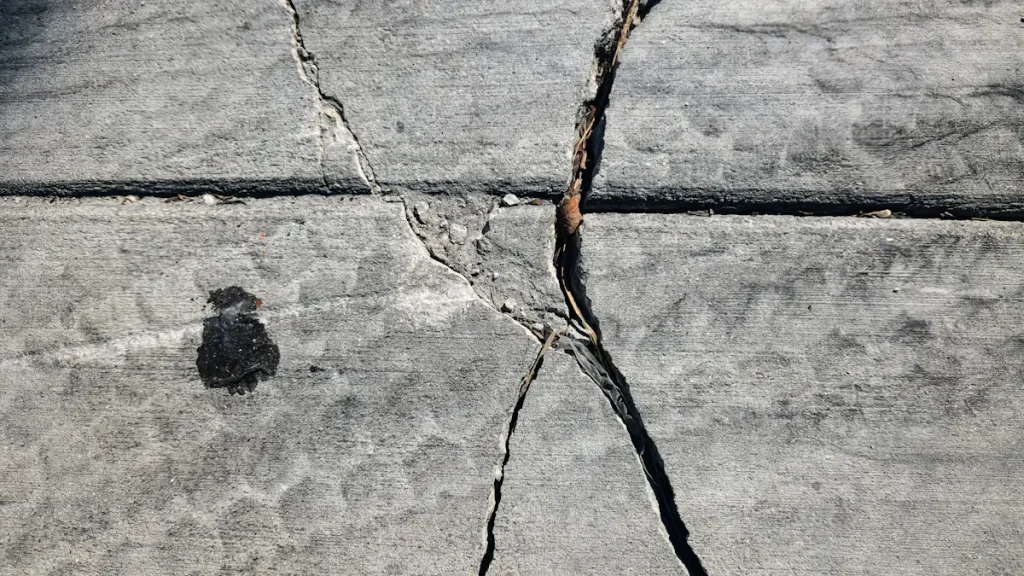
Choosing the right cementitious surface crack sealer is vital for your concrete’s life. A poor choice causes recurring crack issues, water damage, and costly crack repairs for your concrete. BANDě simplifies this. Our guide helps you pick the right sealer for your concrete project. Understand sealer nuances for lasting crack protection. Prevent future crack problems. Stop water infiltration through cracks. Every crack needs attention. Fix that crack right.
Key Takeaways
Choose the right cementitious crack sealer. This helps your concrete last longer. It stops new cracks from forming.
Look at the crack closely. Check its size and if it moves. This helps you pick the best sealer for the job.
Always follow the product instructions. Prepare the surface well. This makes sure your repair works and lasts.
Understanding Cementitious Surface Crack Sealers
Definition and Purpose
A cementitious surface crack sealer is a specialized material you use for concrete repair. Its main job is to fill and seal cracks in concrete surfaces. This stops water from getting in and prevents further crack damage. These sealers often use clever chemistry. For example, some use microbial healing agents. These agents produce calcium carbonate, or calcite, right in the crack. This fills the crack naturally. Other sealers, like those with colloidal silica densifiers, have tiny silica nanoparticles. They react with calcium hydroxide in your concrete. This forms more Calcium Silicate Hydrate (CSH), which is a key binder in concrete. Sodium silicate is another option. It helps form C-S-H gel and calcite for effective crack filling. This chemical action provides strong crack protection.
Key Advantages of Cementitious Sealers
You gain many benefits when you choose these types of cementitious sealers. They are highly compatible with your existing concrete. This means they blend well. They also let your concrete breathe. This prevents moisture from getting trapped. You get an aesthetic blend too, as they often match the concrete’s look. Many offer self-leveling properties, making crack filling easier. They provide moisture resistance and are generally easy to use. Their durability ensures lasting crack repair. Products like Hydro-Pel and Paver-Saver show this. They bond both mechanically and chemically to your concrete. Ultra-Seal 500 also offers excellent adhesion and penetration. This ensures your crack is sealed tightly. While epoxy and polyurea sealers have their place for certain types of crack filling, especially under coatings, cementitious options give you excellent water repellence and a natural finish. You get reliable crack protection without compromising the look of your concrete.
Key Factors for Crack Sealing Selection
Choosing the right product for your project involves several key considerations. You need to assess the specific characteristics of the damage, the environment it faces, the type and condition of your concrete, your desired aesthetic, and your own skill level.
Crack Characteristics
You need to look closely at the crack itself. What kind of crack are you dealing with? This is the first step in choosing the right sealer for effective crack sealing. Consider its width, depth, and whether it moves.
Hairline cracks are very thin. They are often less than 1/16 inch wide. You frequently see them in new concrete slabs or walls. These small cracks might not seem like a big deal, but they can let water in.
Then you have structural cracks. These are typically ⅛ inch wide or more. They often go all the way through your concrete slab. These types of cracks need more serious attention and a robust crack filling solution.
You also need to know if the crack is active or dormant. This helps determine the best approach for crack protection.
Active cracks keep growing or shifting. This means there’s ongoing movement or stress within your concrete structure.
Dormant cracks are stable. They do not exhibit changes over time. This shows a lack of ongoing movement or stress.
Understanding these different types of cracks helps you pick a sealer that can handle the specific crack. For example, a flexible sealer works best for active cracks. A rigid one might be fine for dormant cracks.
Environment and Exposure
Where is the damage located? Is it indoors or outdoors? This matters a lot for effective crack sealing. Outdoor repairs face harsh weather. They deal with moisture exposure, like rain and snow. They also experience temperature fluctuations, from hot summers to freezing winters. You need a sealer with flexible formulations for these freeze-thaw cycles. This prevents the sealer from failing itself. Indoor repairs might need less robust solutions, but still consider humidity.
Chemical resistance is another factor for your concrete. Is the area exposed to oils, salts, or other chemicals? For example, a garage floor might need a sealer that resists automotive fluids. A patio might need something that stands up to cleaning agents. Choose a sealer that can withstand these specific environmental challenges for lasting crack filling. The application method might also vary based on these conditions.
Concrete Type and Condition
The type and condition of your concrete significantly impact sealer performance. Different mixes have varying porosity. This affects how well a sealer adheres and penetrates.
Aggressive finishing methods create deeper surface profiles (CSP 3-9). These generally lead to greater coating penetration. Finishing methods that open the pore structure, like diamond grinding and scarification, significantly improve coating penetration. They create pathways for resin infiltration. Proper finishing techniques remove contaminants and weak layers. These would otherwise prevent coating penetration and compromise bond strength. The timing of finishing operations relative to concrete curing affects surface density and porosity. This impacts optimal conditions for coating penetration.
Rougher, more porous surfaces absorb more product. They benefit from penetrating sealers or densifiers. Smoother finishes may be better suited for film-forming sealers.
For existing surfaces, preparation is key for effective crack sealing.
All visible oil, grease, sludge, and other contaminants must be removed before any abrasive surface preparation, acid etching, and water washing. The surface must be cured, dry, and free from alkali stain and laitance. Blas-Trac is preferred for long-term adhesion and a non-slip surface. Substrates should be a minimum of 28 days old or fully cured. The surface must be porous enough for sealer penetration. For existing surfaces, they must be clean and free of surface laitance, dust, dirt, debris, mildew, oil, grease, previous sealers, curing agents, paint, or other surface coatings and contaminants. If acid or other cleaning compounds are used, the surface must be completely neutralized before applying the sealer.
This thorough preparation ensures good adhesion for your crack sealing efforts. It also helps with proper crack filling. You want the best crack filling possible.
Aesthetic and Finish
How do you want the repaired area to look? This is an important consideration. Some sealers blend seamlessly with the existing surface. They offer a natural, almost invisible repair. Others might leave a slight sheen or a different texture. You might want a specific color match. Or perhaps you prefer a contrasting look. Consider if the repair will be visible. For example, a basement floor might not need the same aesthetic precision as a decorative patio. Choose a product that meets your visual expectations for the finished surface.
Application and Skill Level
Think about your own skill level and the complexity of the product. Some products are very user-friendly. You can apply them with basic tools and minimal experience. These are great for DIY enthusiasts. Other products require specialized equipment or professional expertise. They might involve multiple steps or precise mixing ratios. Always read the manufacturer’s instructions carefully. If you are unsure, it is always best to consult a professional. Choose a product that matches your comfort level and available resources.
Rapid-Setting Cementitious Sealers
Rapid-setting cementitious sealers are designed for speed. They cure very quickly. This makes them ideal for time-sensitive projects. You might use them in cold weather conditions. Traditional cement takes longer to set in the cold. These sealers often contain accelerating agents. For instance, an accelerating agent like TIPA can significantly reduce the initial setting time of superfine cement slurry. One mixture achieved an initial setting time of 506 minutes. This was a 33.68% reduction compared to the standard. Another mixture reached 550 minutes, a 27.92% reduction. TIPA works by reducing interfacial tension and speeding up hydration. This helps form calcium sulfoaluminate, which reduces setting time. This quick cure time means you can complete your crack repair faster. You can return the area to service sooner. They are excellent for urgent crack filling needs.
Specialty Cementitious Sealers
Beyond the common types, you will find specialty cementitious sealers for unique situations. These concrete sealer types address very specific challenges. For example, thixotropic mortars, like BANDě’s MICROCONE 100PT, are a great example. They are thick and non-sagging. This makes them perfect for vertical or overhead concrete repairs. They stay in place without dripping. This allows for precise crack filling in difficult positions.
You also want to consider their adhesion strength. Specialty sealers often boast impressive bond strength.
Property | Test Method | Result |
|---|---|---|
Pull-Off Adhesion (Bond Strength with Concrete) | ASTM D7234 | 213 psi (1.46 MPa) – Failure in Concrete Substrate* |
*Note | *Failure occurred within the concrete substrate, indicating the coating bond strength exceeded the cohesive strength of the substrate. |
This table shows that the sealer’s bond was stronger than the concrete itself. This means the concrete failed before the sealer did. This level of adhesion ensures a very durable crack repair. These specialty products offer targeted solutions for complex crack scenarios.
BANDě’s Sealer Selection Guide
Crack Assessment Steps
You begin by looking closely at the crack. How wide is it? How deep does it go? For precise depth, you can use advanced tools. The QualiNDT-CD502 Concrete Crack Depth Detector offers accurate measurements. It even corrects for errors. You can also use methods like microwave resonance detection or the tracer electromagnetic method for hidden cracks. These give you a clearer picture. Next, you need to know if the crack is moving. Mark the ends of the crack and note the date. Regularly check for changes in length, width, or direction. If the crack widens or deepens, it shows ongoing movement. This is crucial for proper crack sealing. If it stays the same, it’s likely stable.
Matching Sealer to Project
Once you understand your crack, you can pick the right sealer. Consider the crack’s movement, its location (indoors or out), and the concrete type. A flexible sealer works best for active cracks. A rigid one suits dormant cracks. This ensures effective crack filling.
Manufacturer Specifications
Always follow the manufacturer’s instructions for your chosen sealer. Ignoring these steps can lead to big problems. For example, adding too much water to the mix can weaken the material. It causes more shrinkage and reduces durability. Not mixing enough leaves clumps and weak spots where new cracks can start. Poor surface preparation also causes issues. If you don’t clean the surface or prepare it correctly, the sealer won’t bond well. This leads to poor crack filling and potential failure. Leaky formwork or unstable foundations can also cause new cracks. Adhering to these guidelines ensures a successful crack sealing job.
Successful Sealer Application
Surface Preparation
Proper surface preparation is crucial for any successful crack repair. You must ensure the concrete surface is clean and ready for the sealer. For cementitious sealers, aim for a Concrete Surface Profile (CSP) of 1-2. This means a minimal texture, often achieved through grinding or light etching. Grinding works best for CSP 2, making it ideal for your sealer application.
Before you begin, thoroughly clean the concrete. This includes removing oils, grease, wax, fatty acids, and other contaminants. You can use methods like detergent scrubbing, low-pressure water cleaning, or chemical cleaning. Creating a proper surface profile is essential. It ensures polymer-based products bond securely. This involves selecting the right tools to create a surface for a strong mechanical bond. Shot blasting is a clean and fast method. It uses steel shot to clean the surface and remove coatings. Diamond surface grinding offers precision for thicker coatings and challenging projects. Remember, joint and crack repairs are critical for durability. You need to remove contaminants and deteriorated concrete. Roughen and clean the surface for good adhesion. Smooth any protrusions or ridges. This careful preparation ensures your crack filling lasts.
Follow Manufacturer Instructions
Always follow the manufacturer’s instructions for your chosen sealer. Ignoring these guidelines can lead to premature failure. Temperature, humidity, and sunlight exposure can impact the curing process. This can even lead to uneven color development. Humidity measurement is crucial. It helps identify periods of high moisture in the air. Seasonal fluctuations affect waterproofing materials. Temperature extremes, both hot and cold, can strain material durability. This affects insulation quality and can cause new cracks or gaps. Optimal bonding and performance happen when you apply waterproof materials to a dry, frost-free substrate.
Inadequate surface preparation is a common cause of failure. It leads to a weak bond and delamination. Using a generic cement patching material without considering bond strength or shrinkage can also cause problems. A product-centric approach, just filling a void, often fails. Contaminants like dust or oil on the surface cause poor adhesion. If your chosen material lacks strength, it can crack under service loads. Water intrusion through a non-bonded patch can lead to rebar corrosion and freeze-thaw damage. Using a material too strong or stiff can create stress concentrations, causing cracks in the weaker parent material. Choosing the wrong product leads to premature failure and poor adhesion. Always read and follow the instructions for effective crack filling. This is how to fill cracks correctly and ensure a lasting repair.
Choosing the right cementitious surface crack sealer significantly impacts your concrete’s durability and appearance. An informed choice prevents future crack problems and extends your concrete’s life. Apply this knowledge to confidently select the best product for your project. Explore BANDě’s comprehensive range of high-quality sealers, designed for diverse crack needs with proven performance and reliability. Fix every crack right!
FAQ
You have questions about concrete crack repair. We have answers to help you with crack filling.
What are the main types of cracks I should know about?
You will encounter hairline cracks, structural cracks, and active or dormant cracks. Understanding these types of cracks helps you choose the right crack filling repair for your concrete.
Can I use cementitious sealers for all crack types?
No, not all crack types. Cementitious sealers work well for many cracks, especially dormant ones, providing good crack filling. For active cracks, you might need more flexible solutions to ensure lasting crack filling and prevent further crack issues.
How does water affect the performance of crack sealers?
Water can significantly impact sealer performance. It can cause new crack issues or weaken the bond. Proper surface preparation and choosing a water-resistant sealer are crucial for effective crack filling and preventing water damage. This ensures optimal crack filling and long-term protection.
See Also
Ultimate Guide: Achieving Lasting Repairs with Cement Crack Sealers
Selecting the Ideal BANDě Concrete Patching Compound for Your Project
Choosing the Best BANDě Concrete Sealer: Your 2025 Ultimate Guide
Essential Guide: Selecting the Optimal Concrete Protective Sealer
Comprehensive Buying Guide: Concrete Densifiers, Hardeners, and Sealers
