

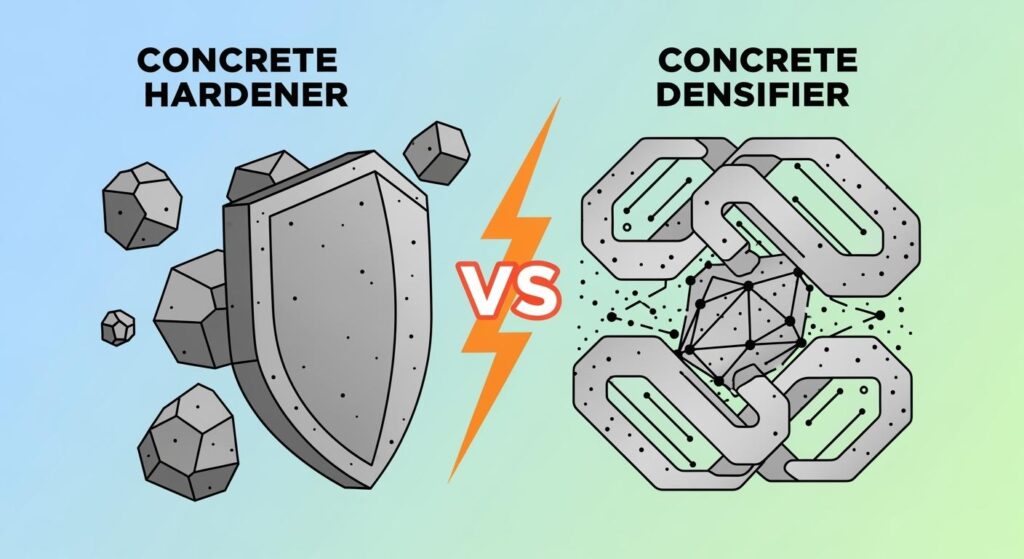
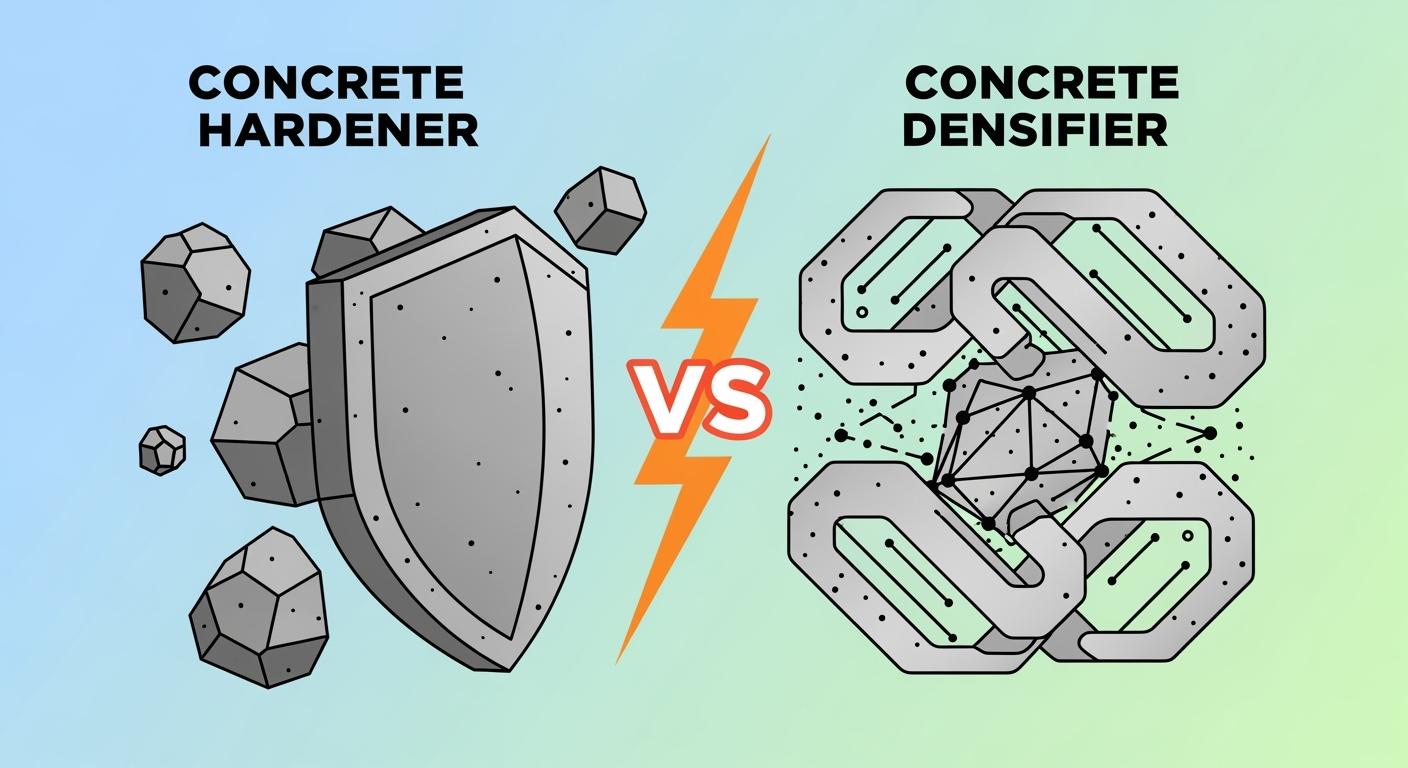
Many people mix up concrete hardeners and concrete densifiers. They look alike. But they do different things for your concrete. Both make concrete stronger. They also make it work better. This is especially true for the surface. We will tell you what each product is. We will explain what each one does. We will help you choose the right densifier. This is for your concrete job.
Key Takeaways
Concrete hardeners make new concrete surfaces strong. They are for fresh concrete.
Concrete densifiers make cured concrete denser. They fill tiny holes inside the concrete.
Pick a hardener for new concrete. It needs a tough surface. Pick a densifier for old concrete. It stops dust. It makes it stronger inside.
Core Difference: Hardening vs. Densifying
People often mix up “chemical floor hardeners” and “concrete densifiers.” They think they are the same. This is a common mistake. This blog will show you their real differences. Both products make the top layer of your concrete stronger. But they do it in very different ways.
The Fundamental Distinction in Function
Think about how each product works. A concrete hardener goes onto fresh concrete. You rub it into the surface. It becomes part of that top layer. This makes the surface much tougher. It resists wear and tear better.
A concrete densifier works differently. You spray or roll it onto cured concrete. It soaks into the concrete. It reacts with chemicals inside the concrete. This reaction fills tiny holes. It makes the concrete denser from within. This process makes your concrete stronger. It also makes it less porous.
To help you see the differences clearly, look at this comparison:
Feature | Concrete Densifier | Concrete Surface Hardener |
|---|---|---|
Primary Function | Penetrates concrete to increase density and hardness from within. | Forms a hard, durable layer on the surface of the concrete. |
Mechanism of Action | Reacts with calcium hydroxide in the concrete to form calcium silicate hydrate (CSH), filling pores and increasing internal density. | Typically a dry shake material (cement, aggregates, admixtures) applied to fresh concrete, becoming an integral part of the surface. |
Application | Applied to cured concrete, often as a liquid spray. | Applied to fresh, wet concrete and troweled in. |
Penetration | Deeply penetrates the concrete slab. | Primarily affects the top few millimeters of the concrete surface. |
Application Timing | After concrete has cured (typically 7-28 days). | During concrete placement and finishing. |
Why Terminology Matters for Your Project
Understanding these terms is very important. You need to pick the right product. The choice affects how well your concrete performs. It also impacts how long it lasts. If you want to stop dusting on an old floor, a densifier is your answer. If you are pouring new concrete and need extreme surface strength, a concrete hardener might be better. Knowing the difference helps you get the results you want. It saves you time and money. You make a smart choice for your concrete.
What is a Concrete Hardener?
Chemical Composition and Action
A concrete hardener is a material. You put it on fresh concrete. You rub it into the wet top. It becomes part of the top layer. This makes the concrete surface stronger. Many concrete hardeners use water. Silicure and Silicure Concentrate are examples. They help cure, seal, and harden. SureHard is another liquid. It hardens and stops dust. LIQUI-HARD is a clear liquid. It uses special stuff. This makes concrete hard and dust-free. These chemicals work with the concrete. They make a stronger surface.
Key Benefits and Outcomes
You get good things. When you use a concrete hardener. It makes concrete much stronger. It resists scrapes better. Your floor can take more use. Lithium-silicate (LS) hardeners make concrete denser. This means less dust. It resists scrapes better. Your concrete surface hardener makes the top very strong. Your concrete lasts longer. Even in busy spots.
Common Applications for Concrete Hardeners
You can use concrete hardeners in many spots. They are good for tough surfaces. Inorganic hardeners work in factories. Think of parking lots. Warehouses and workshops too. Organic hardeners are for special needs. Food plants need acid protection. Electronics factories need anti-static floors. Hybrid hardeners are for busy places. Like airport runways. Ports and shipping centers too. A concrete hardener gives a strong floor. It lasts a long time.
What is a Concrete Densifier?
Chemical Composition and Penetration
A concrete densifier is a special liquid. You spray it on cured concrete. Or you can roll it on. It is not for new concrete. This liquid goes deep inside. It finds small holes and cracks. Most densifiers use silicate. You can find sodium silicate. Also potassium silicate. And lithium silicate. Colloidal silica is another kind. These chemicals mix with things in your concrete. Like free lime. And calcium hydroxide. This mix makes CSH crystals. CSH is the glue in concrete. It makes it strong. More CSH fills tiny holes. This makes your concrete denser. It gets dense from the inside. For best results, clean the concrete. No sealers should be on it. Then spray the densifier. Use a low-pressure sprayer. Keep it wet for 20 minutes. This helps it soak in.
Advantages and Performance
A densifier helps your concrete. It makes the surface harder. It resists damage better. You will see less dust. The holes are filled. This also stops stains. It stops moisture. More CSH makes concrete stronger. It protects from wear. It stops efflorescence. That is white powder. Your concrete will be less open. Liquids will not get through easily. This makes it easy to clean. It is easy to take care of.
Ideal Uses for Concrete Densifiers
A concrete densifier is good for many places. Think of busy areas. Like warehouses. Garages are good too. And factories. These floors need to stop moisture. They need to stop stains. And chemical spills. Store floors also get better. If you need a fast job, use lithium. Lithium densifiers work quickly. For big areas, sodium is cheaper. Potassium is good for green projects. You can use densifiers on new concrete. It helps it cure. It stops stains. They are also good for old floors. Especially if they have many holes. Or if you want a shiny look.
Concrete Hardener vs. Concrete Densifier: A Direct Comparison
You know what each product does. Let’s compare them. This shows their main differences. You can pick the best one. This is for your project.
Mechanism and Depth of Penetration
Think about how they get in. A concrete hardener goes on fresh concrete. You rub it in. It stays on top. It does not go deep. It works on the surface.
A densifier works another way. You put it on cured concrete. It is a liquid. It soaks deep inside. It finds small holes. It reacts with chemicals. This happens below the surface. It makes your concrete denser. This is from the inside.
Impact on Surface Hardness and Abrasion
Both make your concrete tougher. But they work differently.
Feature | Densifiers | Hardeners |
|---|---|---|
Purpose | Increase inner density, hardness, and abrasion resistance | Increase surface hardness and wear resistance |
Mechanism | Chemical reaction with concrete components | Chemical reaction or surface application |
Benefits | Reduced dusting, increased strength, long-lasting | Enhanced durability, improved wear resistance |
Longevity | Permanent, becomes part of concrete | Long-lasting, often permanent |
Aesthetic Impact | Minimal change, can enhance polish | Minimal change |
Moisture Protection | Improves, but not primary function | Improves, but not primary function |
Breathability | Fully breathable | Fully breathable |
Concrete densifiers make concrete harder. They resist wear better. They also stop dust. They bind the surface. Tests show densified concrete gets 32% harder. This is in 30 minutes. These densifiers react with calcium hydroxide. This is in your concrete. This makes more CSH. CSH makes concrete strong. It resists abrasion. This happens on the surface.
Hardeners also make the top layer strong. They increase surface hardness. They resist wear. Common hardeners use lithium. They use sodium. They use potassium silicates. They react with concrete. This makes a stronger surface. It is more durable. They add strength. This is to the top 1/8 inch. This is for smooth concrete. Or polished concrete. This makes it last longer.
Some densifiers work better. A test looked at densifier types. It checked abrasion resistance. This test followed ASTM C779-05. Silica densifier worked best. It hardened the concrete. It improved abrasion resistance. Sodium silicate did not work well. This was in this test.
Effects on Dusting and Porosity
Dusting and holes are problems. Here is how each helps.
Feature | Concrete Hardener | Concrete Densifier |
|---|---|---|
Primary Function | Increases surface hardness and abrasion resistance. | Increases density, hardness, and reduces porosity. |
Mechanism | Forms a hard, protective layer on the surface. | Penetrates the concrete and reacts with calcium hydroxide to form calcium silicate hydrate (CSH), filling pores. |
Penetration | Surface application, minimal penetration. | Deep penetration into the concrete substrate. |
Dust Proofing | Helps reduce dusting by creating a surface film. | Significantly reduces dusting by hardening the concrete matrix. |
Breathability | Can create a non-breathable film. | Remains breathable, allowing moisture vapor to escape. |
A concrete hardener stops dust. It makes a film. This film keeps dust down. But this film can stop air. Your concrete cannot breathe.
A densifier works differently. It goes deep inside. It makes CSH. This fills tiny holes. This stops dust. It hardens the concrete. This is from the inside. Your concrete can still breathe. Water vapor can get out.
Visual Appearance and Maintenance
How do these change the look?
Concrete hardeners and densifiers, specifically a Zero VOC Concrete Densifier, are described as having a ‘Clear, slightly opaque color.’ When cured, this product ‘May darken concrete a bit.’
They do not change the look much. A concrete hardener might add shine. It could change the color a little. A densifier usually looks the same. It can make it shinier. This is if you polish it.
For care, a concrete surface hardener might need more. You might put it on again. This depends on traffic. A densifier is more lasting. It becomes part of the concrete. This means less care for you.
Longevity and Reapplication
How long do they last? Do you need to reapply?
A concrete hardener lasts well. But the film can wear off. You might need to reapply it. This is after some years. It depends on how busy the area is.
A densifier bonds forever. It is part of the slab. It lasts a long time. You usually do not reapply it. Treatments that densify and protect help. They make it last longer. They reduce touch-ups. This saves money. It lowers floor failure risk. A high-traffic concrete sealer helps. It minimizes downtime. Products needing frequent work cost more. Longer-lasting solutions are better. This is for your budget. And your work.
When to Choose Each: Application Scenarios
Pick the right product. Think about your concrete project.
Projects for Enhanced Surface Durability
Need a tough surface? A concrete hardener is best. Use it for factory floors. These areas get much wear. It is good for polished concrete. It makes it look better. It lasts longer. Use it on concrete slabs. It makes them stronger. It works for cement mortars. It stops dust. It adds protection. Use it for subfloors. Use it for granilites. Hardeners are for busy spots. Like factories. They handle heavy machines. They resist bad chemicals. This stops damage.
Solutions for Dusting and Porosity Control
Have dust or tiny holes? A concrete densifier helps. It fills holes inside. It uses CSH crystals. This makes concrete denser. It reduces holes. This makes it stronger inside. It resists scratches. It stops wear. Densifiers also stop dust. They bind loose bits. This makes a smooth surface. They fill pores. This makes the surface denser. It hardens the concrete. It stops small pits. This makes the slab less porous. It makes it stronger.
Achieving Specific Aesthetic Finishes
Want a great-looking floor? Both products help. Concrete densifiers make it look better. They give a shiny finish. This makes the space nicer. Hardeners and densifiers give a slight shine. They do not make a film. This keeps the natural look. You can get a very shiny finish. This makes rooms brighter. You can also control how much stone shows.
Considerations for High-Traffic Areas
Busy areas need strong protection. Concrete hardeners are great. They make the surface tough. This helps it handle constant use. Densifiers also make it last. They make concrete stronger inside. This helps it last in busy spots.
Choosing the Right Concrete Solution
Picking the best solution for your concrete floor means thinking carefully. You want to make a smart choice.
Assessing Your Concrete’s Condition
First, take a good look at your existing concrete. How old is it? Does it show a lot of wear, or is it dusting? Think about the final look you want. Do you need a super shiny floor, or just something strong? Also, consider how much traffic your floor gets. Will heavy machines drive on it? Will chemicals spill? How much time do you want to spend cleaning and maintaining it? These answers help you decide.
Defining Project Goals and Budget
Your project goals really matter. Do you need high durability to handle forklifts? Do you want a floor that is easy to keep clean and looks good? Densifiers and hardeners can help you meet these goals. They reduce dusting and keep your floor looking great without needing a thick coating. This means lower costs over the life of your floor. Polished and densified concrete can last 45% longer than other floors. This saves you money in the long run. It also helps you stay within your budget.
Consulting with Professionals
If your project is complex, or you just feel unsure, talk to concrete specialists. They can give you expert advice. They understand the different products and how they work. They help you choose the right solution for your specific needs. This ensures you get the best results for your concrete project.
You now know about concrete hardeners and densifiers. Both make your concrete better. But they work in different ways. A concrete hardener makes fresh concrete surfaces strong. A densifier goes into cured concrete. It fills tiny holes. This makes the concrete denser. It also stops dust. Knowing these differences helps you choose. You pick the best product. This makes your concrete last. It looks good. It lives a long time.
FAQ
Can I use a densifier on new concrete?
Use densifiers on cured concrete. Wait 7 to 28 days. This is after pouring. The concrete must set.
Do I need to seal concrete after densifying or hardening?
You do not always need a sealer. Densifiers and hardeners protect. A sealer can add stain protection. It can add shine. ✨
How long does it take for a densifier or hardener to work?
Densifiers work right away. They keep reacting for days. Hardeners work when you rub them in. This is on fresh concrete. You see results fast.
See Also
Unveiling The True Distinctions: Concrete Densifiers Versus Hardeners Explained
Understanding Concrete Densifiers: How This Essential Treatment Truly Functions
The Ultimate Guide To Liquid Concrete Floor Hardeners, Sealers, And Densifiers
Your Essential Buying Guide For Concrete Densifiers, Hardeners, And Sealers
Transform Your Concrete: Discover Why This Densifier Is Absolutely Essential
