

Concrete sealers and hardeners are vital. They protect your surfaces from wear, stains, and moisture. Proper application of a concrete sealer hardener unlocks maximum durability. You extend your concrete’s lifespan this way. You will learn essential steps, common pitfalls, and tips for lasting results.
Key Takeaways
Prepare your concrete surface well. Clean it thoroughly and fix any damage. This helps the sealer and hardener work best.
Choose the right products for your concrete. Apply them carefully and evenly. This protects your concrete and makes it last longer.
Take care of your sealed concrete after applying. Protect it while it dries. Clean it regularly. This keeps your concrete strong and looking good.
Essential Concrete Preparation
Proper surface preparation is the most crucial step for your concrete sealer hardener to work effectively. You cannot skip this part. It sets the stage for maximum durability.
Surface Assessment and Readiness
First, you need to look closely at your concrete. Is it ready? All cracks must be repaired. You also need to complete and cure all caulking, joint sealants, and any other surface repairs. Make sure your concrete is at least 7 days old before you even think about applying anything.
Cleaning and Degreasing Concrete
Next, you must clean the concrete thoroughly. This means removing all stains, oil, dirt, and any other impurities. You can often use a power washer for this. For tougher spots, a degreasing cleaner combined with high-pressure water works wonders. Your goal is a perfectly clean surface.
Repairing Surface Imperfections
As mentioned, fix any damage. Fill cracks and ensure all patches are fully cured. A smooth, intact surface is vital for the sealer and hardener to bond correctly.
Ensuring Proper Drying Conditions
After cleaning, your concrete surface must be dry. Most sealers need a completely dry surface. However, some water-based sealers can go on slightly damp concrete. Always check your product’s instructions. Also, pay attention to the temperature. Apply your products when it’s generally above 10°C (50°F) and below 30°C (86°F).
Protecting Adjacent Areas
Before you start, protect anything you don’t want sealed. Use painter’s tape and plastic sheeting to cover walls, landscaping, or other nearby surfaces. This prevents accidental spills or overspray.
Applying Concrete Sealer Hardener
You have prepared your concrete surface. Now, you are ready for the main event: applying the concrete sealer hardener. This step transforms your concrete, giving it lasting protection.
Selecting the Right Products
Choosing the right products is crucial. You have many options for concrete hardeners. These additives make your concrete denser and more durable. They reduce dusting and improve chemical resistance. They also boost impact and abrasion resistance. Plus, they add waterproofing. These qualities are vital for industrial, commercial, or manufacturing floors. High-quality floor hardeners also cut down on repairs and maintenance. This extends your concrete’s life and saves you money.
Consider the type of hardener. You can find metallic or nonmetallic options. They come in liquid or solid forms. Metallic floor hardeners are high-grade ferrous aggregates. Liquid floor hardeners are solutions. They use water, silicate, and other chemicals. You can even find pigmented floor hardeners, like Ressi Pigmented Hardener. These can make your floors look great too.
Think about your project’s needs.
Type of Activity: A production floor with heavy vehicles and vibrations needs tough, crack-resistant materials. A showroom, however, might prioritize a neat, shiny finish.
Time Availability: If you have tight deadlines, quick-drying liquid densifiers are a good choice. If you have more time, dry shake or epoxy can give you sturdier, more aesthetic results.
Long-term Maintenance Costs: Some materials, like silicate or densifier, have lower ongoing maintenance costs.
You might also consider polyurethane coating. It is an alternative to epoxy. Polyurethane offers better flexibility. It stays flexible, preventing cracks from concrete expansion or contraction. It also resists UV rays. This means it won’t yellow quickly in direct sunlight. It is perfect for outdoor areas or open warehouses.
Hardener Application Techniques
You apply hardeners evenly. Use a sprayer or a squeegee. Products like BANDě Concrete Densifier work well with these tools. Make sure you cover the entire surface.
Ensuring Even Hardener Coverage
Even coverage is key. You want the hardener to penetrate uniformly. This ensures consistent density and protection across your entire floor. Work in sections. Overlap your passes slightly. This prevents missed spots.
Hardener Curing and Rinsing
Allow the hardener to cure. For the first layer of concrete hardener, let it dry for 24 hours. You might need a second layer. If so, apply it after this initial drying period. Some hardeners require rinsing after curing. Check your product’s instructions for specific details.
Sealer Application Methods
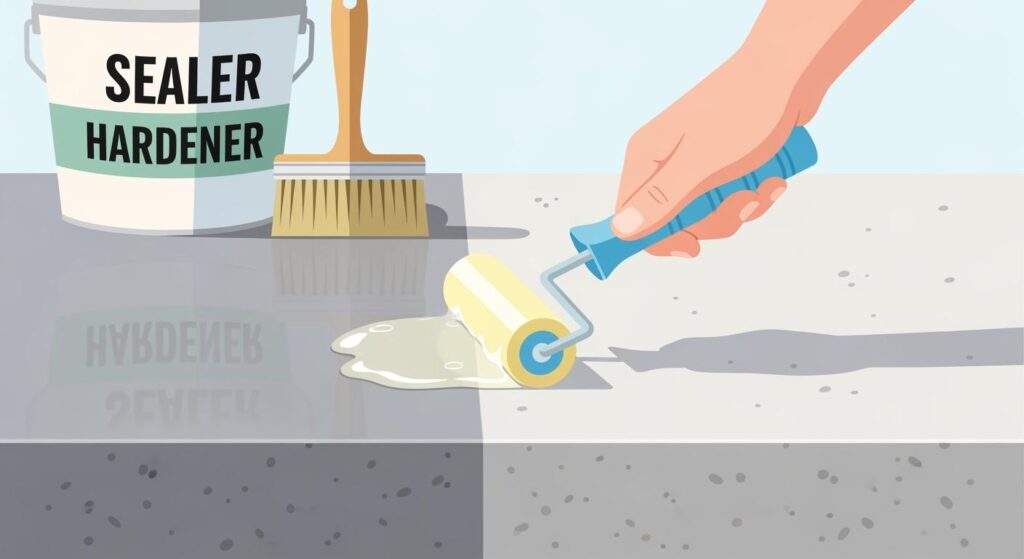
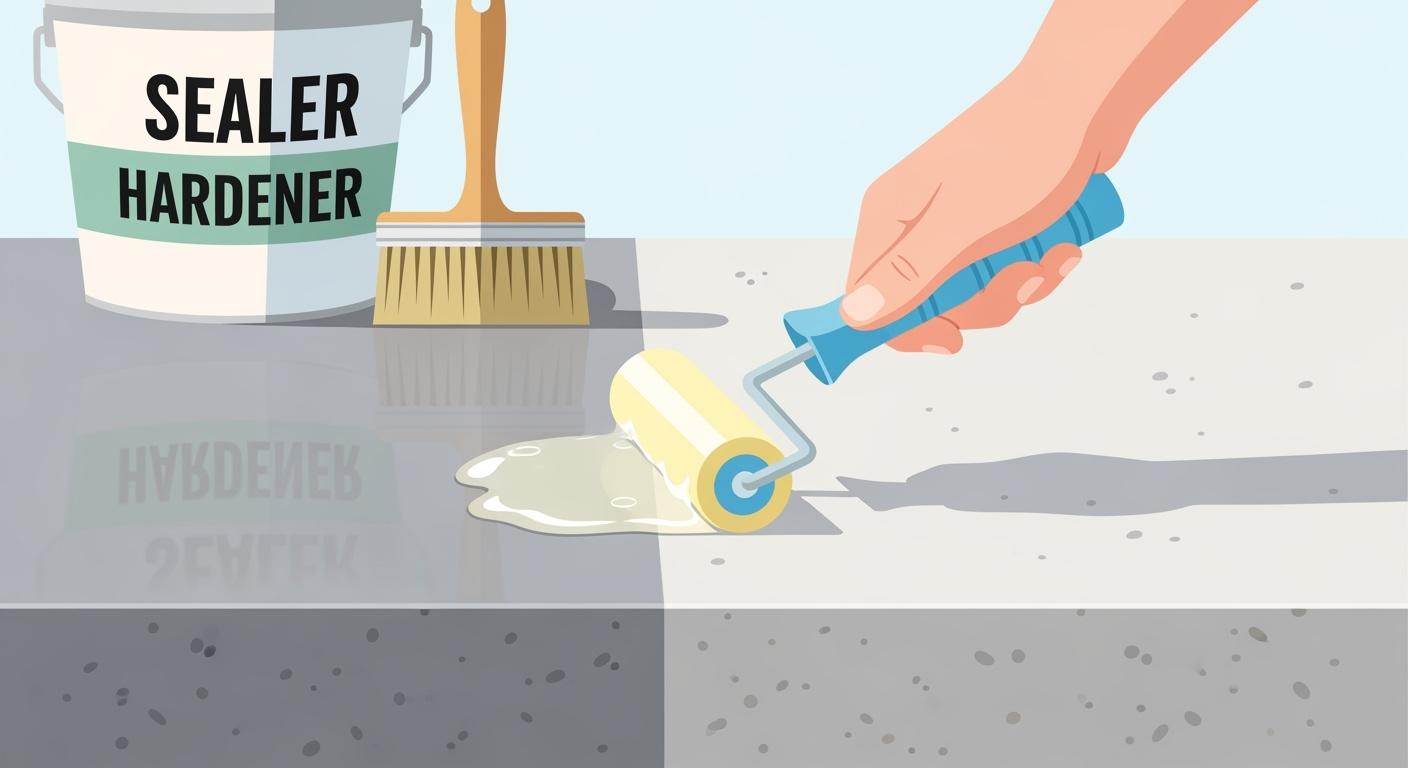
Now, it is time for the sealer. You can apply concrete sealer with a sprayer, roller, or broom. Always apply thin coats. This helps the sealer bond properly and prevents puddling.
For penetrating sealers, use a sprayer. Then, use a squeegee to remove any excess. This ensures the sealer soaks into the concrete. It does not just sit on top.
Multiple Sealer Coats and Drying
Most sealers need multiple coats. Typically, two coats are recommended. Some liquid hardeners, like Estogard LH (M), might need 2-3 coats. Very dense surfaces might only need one. Allow each coat to dry completely before applying the next. For Estogard LH (M), the drying time between coats is 1-2 hours. If you need an additional application, do it after 24 hours.
Avoiding Application Errors
Avoid common mistakes. Do not apply coats too thickly. This can lead to uneven drying and a cloudy finish. Do not apply sealer in extreme temperatures. This affects curing. Always ensure your surface is clean and dry. This prevents bonding issues. Take your time. Follow the product instructions carefully. This ensures your concrete sealer hardener performs its best.
Post-Application Care and Troubleshooting
After you apply your concrete sealer hardener, your work is not quite done. Proper care right after application and ongoing maintenance ensure maximum durability.
Initial Curing and Protection
You need to protect your newly sealed concrete during its initial curing phase. Keep foot traffic off the surface for at least 24 hours. For heavy equipment or vehicles, wait 72 hours or even longer, as your product instructions suggest. Also, shield the area from rain or excessive moisture during this critical time. This initial protection allows the sealer to fully bond and harden, which is vital for its long-term performance.
Routine Cleaning and Maintenance
Maintaining your sealed concrete is straightforward. You should sweep or vacuum regularly to remove dirt and abrasive grit. If spills happen, clean them up quickly. For general cleaning, use a mild, pH-neutral cleaner mixed with water. Avoid harsh chemicals, abrasive cleaners, or wire brushes. These can damage the sealer and reduce its effectiveness. Regular cleaning keeps your floor looking great and extends its protective life.
Reapplication Schedule
The reapplication schedule depends on how much traffic your concrete sees. For high-traffic areas, you might need to reapply every 1-3 years. Low-traffic areas could go 5-10 years between applications. Watch for signs of wear, such as dullness, water no longer beading up, or visible scratches. These are clear indicators that it is time for a fresh coat.
Addressing Common Issues
Sometimes, you might encounter issues. If you see hazing, it often comes from applying too much sealer or applying it in high humidity. You can usually fix this with a light buffing or by applying a thin layer of solvent. Peeling typically points to poor surface preparation. If this happens, you might need to strip the old sealer and reapply it correctly. Unevenness results from improper application techniques. Always follow the product instructions carefully to avoid these common problems.
Maximizing Long-Long Term Durability
To get the most out of your sealed concrete, follow all the steps you learned. Meticulous preparation, correct application, and consistent maintenance are key. Avoid dragging heavy objects across the surface. Use floor mats in areas with high foot traffic or where heavy items might sit. These simple habits help your concrete stay strong and beautiful for many years to come.
You now know the importance of careful preparation and precise application. These steps give your concrete maximum durability. Properly applied, your concrete sealer and hardener offer great protection. They also enhance its appearance and extend its life. Follow these steps. Your concrete surfaces will stay strong and beautiful for many years.
FAQ
How long does concrete sealer and hardener last?
Concrete sealers typically last 1-10 years, depending on traffic and product type. Hardeners are permanent. Reapply sealer when you notice water no longer beads on the surface.
Can I apply concrete sealer and hardener myself?
Absolutely, you can! Many DIY-friendly products exist. Just follow the product instructions carefully. Proper preparation and application are crucial for achieving excellent, long-lasting results. ✨
What if it rains right after I apply the sealer?
Rain can wash away uncured sealer, causing streaks or even product failure. Always check the weather forecast. Ensure you have a dry period, usually 24-48 hours, for proper curing.
See Also
Selecting the Ideal Concrete Densifier, Hardener, and Sealer for 2025
A Complete Buying Guide for Concrete Densifiers, Hardeners, and Sealers
Choosing the Optimal Concrete Floor Hardener: Your 2025 Selection Guide
Upgrade Your Garage Floor: Durable Liquid Hardener and Sealer Solution
Ultimate Concrete Sealer Guide: Protecting and Preserving Industrial Floors
