

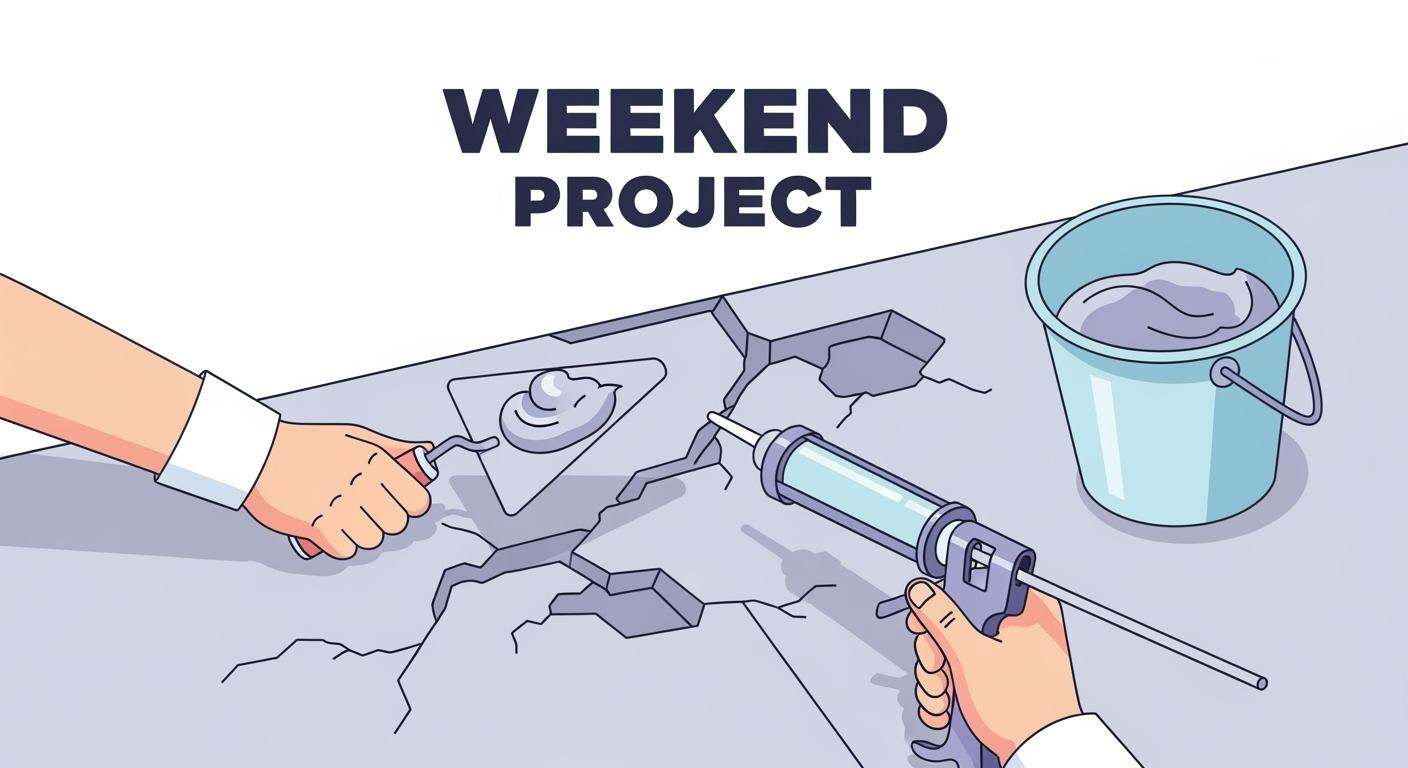
You probably feel frustrated by that unsightly crack or pothole in your driveway. However, you can tackle this crack repair yourself, even in one weekend! Professional crack sealing can cost up to £1,000, and a single pothole repair £150-£200. Doing it yourself saves money and gives immense satisfaction. You will learn how to choose the right concrete driveway crack filler and fix every crack.
Key Takeaways
You can fix driveway cracks and potholes yourself in a weekend, saving money and gaining satisfaction.
Proper preparation is very important for lasting repairs; clean the area well and choose the right filler for each type of damage.
Regular maintenance, like sealing your driveway every few years, helps prevent new damage and makes your repairs last longer.
Driveway Damage: Cracks vs. Potholes
Identifying Common Driveway Cracks
You will find different types of cracks in your driveway. Some cracks are active, meaning they change over time, while dormant cracks remain stable. You might see hairline cracks, which are very fine, or larger longitudinal and transverse cracks that run along or across your driveway. Edge cracking often happens when the material underneath settles. Structural cracks are deep and wide; they show serious foundation problems. Non-structural cracks, like crazing, are usually just cosmetic. Understanding the causes of concrete cracks helps you choose the right repair. For example, extension cracks occur when concrete expands too much. Heaving cracks result from ground movement, like freezing and thawing or tree roots. Settling cracks happen when the ground beneath the slab sinks. Overloading the slab with too much weight also causes cracks, especially on soft ground. Plastic shrinkage cracks form when water leaves the concrete too quickly during drying.
Understanding Potholes and Their Causes
Potholes are different from cracks. They are deeper depressions in your driveway surface. Small cracks form first due to vehicle wear or temperature changes. Rainwater or melted snow then seeps into these cracks. This water penetrates the road layers. Poor drainage traps water, and during freeze-thaw cycles, the water expands when it freezes, making the crack larger. Repeated thawing further erodes the roadbed until the base is weak. Constant pressure from vehicles, especially heavy ones, causes these weak spots to collapse, forming potholes. Poor installation, such as an incorrectly compacted base, also leads to faster deterioration. Water infiltration and drainage issues are major contributors to pothole formation.
Why Driveway Damage Occurs
Several factors contribute to driveway damage, leading to both cracks and potholes. Temperature fluctuations are a big problem. Materials expand when hot and contract when cold, causing surface damage. Freeze-thaw cycles are particularly damaging; water in cracks freezes, expands, and widens the crack. Temperatures above 90°F can soften asphalt, causing deformation. Precipitation, like rain and snow, also causes wear and tear. Water seeps into cracks, eroding the base material. Sun exposure makes asphalt brittle over time, leading to more cracks. UV rays degrade the asphalt binders, reducing flexibility. Chemical reactions within the concrete mix can also be causes of concrete cracks. Construction overload and errors in design or installation also contribute to damage. Regular crack repair can prevent these issues from worsening.
Essential Prep for Lasting Repairs
Proper preparation is crucial for lasting crack repair. You must ensure the area is ready before applying any filler. This step guarantees your efforts will last.
Clearing the Repair Area
First, you need to clear the repair area. Remove any loose debris, dirt, or vegetation from around the crack and inside the pothole. Use a stiff brush, a broom, or even a leaf blower to get rid of loose material. This creates a clean workspace. You want to see the full extent of the crack you are fixing.
Cleaning Cracks and Potholes
Next, thoroughly clean the crack and pothole. Dirt, dust, oil, and grease prevent fillers from bonding properly. Use a wire brush to scrub away any remaining loose particles and create clean bonding surfaces inside the crack. For stubborn oil and grease stains, apply an oil-spot primer or a degreasing cleaner. These products break down residues effectively. Scrub the stained area with a stiff brush. Then, rinse it thoroughly with water. A pressure washer can eliminate deep-seated dirt and vegetation growth within the crack. If you use chemical cleaners, ensure you neutralise them completely. This prevents adverse chemical reactions with your repair materials.
Widening and Deepening for Adhesion
Finally, prepare the crack for better adhesion. For narrow cracks, you might need to widen them slightly. Use a chisel and hammer, or an angle grinder, to create a V-shape or square edge along the crack. This provides a larger surface area for the filler to grip. Deepen the crack if it is too shallow. This ensures the filler has enough depth to form a strong bond. A well-prepared crack will hold the repair material much better.
Choosing Your Concrete Driveway Crack Filler
Selecting the correct product for your driveway damage is essential. The right choice ensures a long-lasting repair. This section guides you through the best options for your specific needs.
Matching the Right Crack Filler
You need to choose a filler that suits the type and size of your crack. For small, stable cracks in your driveway, you should use a concrete driveway crack filler specifically designed for driveways. These fillers are ideal for shallow voids in concrete surfaces. You can apply them with a caulk gun, making sure the filler reaches the full depth of the crack. Silicone caulk also offers good flexibility and weather resistance for smaller cracks.
Epoxy-based fillers are highly recommended for their strong bond and durability. They offer a faster maintenance schedule because they cure quickly. You can often complete multiple repair stages in one day. Some epoxy types set in minutes, allowing light foot traffic within an hour. They achieve functional curing in about four hours for same-day use. Epoxy fillers deliver strong adhesion, creating a permanent bond with concrete. This bond is stronger than alternatives like latex or polyurethane. They prevent adhesion failure and delamination. Epoxy fillers also resist chemicals and environmental factors, enhancing their longevity. This makes them an excellent choice when you are matching the right crack filler to your repair job.
Top Pothole Repair Products
When you tackle potholes, you need robust products. UltraCrete Permanent Pothole Repair is a highly regarded option. Many users consider it a good crack sealer for larger repairs. It works well for roads, pavements, driveways, and car parks. You can traffic it instantly, even in wet, freezing, or hot conditions. This product is compatible with existing road surfaces and you can apply it at depths up to 100mm. It offers an easy work formula, is simple to apply, and compacts easily. UltraCrete has HAPAS approval since 2011. It also creates no waste, as you can reseal the buckets.
Another durable option for patching holes is Rapid Set Concrete. You can cut thin wire mesh, mix Rapid Set Concrete with fibres, and then screed it into the hole. This product can supposedly handle traffic after 12 hours and is definitely durable. These products provide effective solutions for your pothole repairs.
Understanding Filler Types for DIYers
Understanding the different types of fillers helps you make the best choice. When comparing crack fillers, look for characteristics like self-levelling, moisture resistance, user-friendliness, and durability. These features ensure a successful repair. For example, Surecrete Elastomeric Sealant is a polyurethane option suitable for driveways and flatwork. NewLook Crack Filler, a latex/polyurethane blend, works well for decorative restoration. For vertical crack repair, you might consider a trowel-grade vinyl like Flex-C-Ment Vertical Overlay.
A good crack sealer should offer a strong, flexible bond that withstands temperature changes. This prevents the crack from reopening. When you are comparing crack fillers, consider the specific needs of your driveway. Some crack sealer brands offer specialised products for different conditions. For instance, a crack filling product designed for cold-pour application is suitable for small, stable cracks. This crack fill comparison helps you select the most effective solution for your concrete driveway crack filler needs.
Tools and Safety First
You need the right equipment and a clear understanding of safety protocols. This ensures your repair work is both effective and safe.
Must-Have Repair Tools
Gather your tools before you begin. For surface preparation, you will need blowers or brooms to remove dirt and debris. Consider using a cold joint sealer or HiTack primer to improve bond strength. For the actual crack and pothole repair, you will need flexible concrete or asphalt crack filler. A caulk gun helps you apply the filler precisely. If you have wider cracks, use a backer rod. A trowel helps you smooth the repair. You might also find a wire brush or broom useful. A pressure washer is optional but can be very effective for cleaning. For larger repairs, you might use instant lay tarmac or patch kits. Overband tape can seal repair edges and fix small cracks.
Essential Safety Gear
Protect yourself during the repair process. Always wear waterproof gloves that extend up your forearm. Long-sleeved shirts and long trousers protect your skin. Safety glasses or goggles shield your eyes from splashes and debris. Consider respiratory protection, especially in confined or windy conditions. An FFP3 disposable mask or a half mask with a P3 filter offers good protection. For longer work, a powered RPE (TH2 powered hood/helmet) is a good choice. You must have fit testing for tight-fitting masks. Wear Wellington boots or waterproof safety boots with good tread. Steel-toed boots offer extra protection.
Working Safely with Concrete Products
Always prioritise safety when you handle concrete fillers and sealants. Read the material safety data sheets for any product you use. Polyurethane adhesives and sealants contain minimal amounts of unreacted monomeric diisocyanates. These chemicals are reactive. Once fully cured, the final compounds are free of these reactive chemicals. New European ECHA regulations require training for professional users of products with more than 0.1% free monomeric diisocyanates.
When you work with hot materials, do not exceed the maximum safe heating temperature. Never allow hot material to contact water; it will react violently. Always wear recommended protective clothing, including heat-resistant gauntlet gloves, overalls, protective footwear, and a face visor. Avoid inhaling vapours, as small quantities of hydrogen sulphide may be present. If molten material contacts your skin, do not attempt to remove it. Instead, immerse the affected area in cold running water for at least 10 minutes and seek medical advice immediately.
Steps for Filling Concrete Cracks
You can effectively repair cracks in your driveway with a clear, step-by-step repair process. This section provides a detailed guide to help you achieve lasting results.
Preparing the Crack for Filler
Before you apply any filler, you must properly prepare the crack. First, ensure the crack is clean and dry. You have already cleared loose debris and cleaned the area. Now, you need to consider the depth of the crack. For deeper cracks in your driveway, you should use a backer rod. This enhances the effectiveness of the sealing process.
To insert a backer rod correctly, follow these steps:
Choose a closed-cell foam backer rod.
Select a backer rod with a diameter 1/8 inch larger than the width of the concrete expansion joint. This ensures a watertight seal.
Push the backer rod down into the joint with your hand.
Ensure the backer rod’s depth is a minimum of 1/4 inch and a maximum of 1/2 inch below the concrete pad surface.
If the joint is wider than the backer rod, twist two strands together like a rope.
Double-check that the backer rod sits beneath the surface of the concrete pad. This avoids a hump when you apply sealant.
If you have a V-groove crack, you can also use a backer rod. Select a backer rod with a diameter that fits into the base of the opened V-groove crack. Push the backer rod into the base of the crack. This backer rod prevents caulk from contacting the back wall of the crack. It allows adhesion only to the two side surfaces. If the crack is thinner than the backer rod, you can cut it down with a sharp knife. Proper preparation of the crack is vital for a successful step-by-step repair.
Applying Concrete Crack Filler
Now you are ready to apply the concrete driveway crack filler. The application technique is crucial for a durable repair. Ensure surfaces are clean, dry, and free from dirt, dust, grease, and loose particles to promote adhesion. You must choose the appropriate polyurethane sealant based on your application needs and environmental conditions. These conditions include temperature, UV exposure, and chemical exposure. Use primers when necessary to improve adhesion, especially on less compatible substrates.
You can apply one-component sealants directly onto the joint or gap using a caulk gun or similar dispensing tool. Two-component sealants require precise mixing of components before application. Then, you apply them using equipment like a trowel, brush, or pneumatic dispenser. The goal is uniform coverage and proper adhesion. Apply the sealant using recommended equipment and methods to achieve uniform coverage and a continuous seal. Tool the sealant for a smooth finish.
When you apply single-pack polyurethanes to concrete floors, avoid applying the product too thickly or allowing it to puddle in depressions. Excessive thickness can lead to a patchy appearance and significantly extend curing time due to skinning. Puddling can cause the product to foam, resulting in an unsightly creamy, patchy finish. You can prevent these issues by rolling or brushing out the product as necessary. This easy application method ensures the crack filling product performs as intended.
Curing and Finishing Crack Repairs
After applying the concrete driveway crack filler, you must allow it to cure properly. Adhere to the manufacturer’s instructions for curing. Protect the sealant from moisture, rain, dust, and debris until it is fully cured. Proper joint sizing and preparation are crucial to prevent excessive stress on the sealant and extend its lifespan.
Different products have different curing conditions. For example, Sikadur®-52 is an epoxy resin for crack repair. It is suitable for dry and damp concrete surfaces. It permeates into small cracks and hardens without shrinkage, providing a permanent seal. Other products offer specific cold-curing capabilities:
Product Name | Curing Condition |
|---|---|
Fine Crack Filler Cold Cure | 0°C |
Concrex® Cold Set | 0°C |
Concrex® Sub Zero | down to minus 20°C |
Flowpatch® Sub Zero | freezing conditions |
Road Patch Rapid | down to minus 20°C |
By understanding these conditions, you ensure the filling concrete cracks process is successful, even in challenging weather.
Tackling Driveway Potholes
You can effectively repair potholes in your driveway. This practical guide helps you achieve lasting results.
Preparing the Pothole
Proper preparation ensures your pothole repair lasts. First, you must remove any loose concrete. Use a cold chisel and a sledgehammer for this task. Next, undercut the edges of the pothole. This enhances adhesion for the new material. Roughen the interior surface. This provides a better grip for the repair mix. Use a broom or a leaf blower to clear away all debris. Power wash the area with a mild detergent. Ensure the area is completely dry before proceeding. Apply bonding agents to all interior surfaces promptly. Use a stiff paintbrush for full coverage. Keep the work area clean to avoid re-contamination. You need a clean surface, free of loose material, surface water, and oil.
Applying Pothole Repair Mix
Once you prepare the pothole, you can apply the repair mix. Follow the manufacturer’s instructions for your chosen product. Pour or shovel the pothole repair mix into the prepared area. Ensure you fill the pothole slightly above the surrounding surface. This allows for compaction.
Compacting and Levelling the Repair
Compacting the repair mix is crucial for durability. The semi-permanent method is highly effective. After clearing debris and squaring the sides, you add material. Then, you compact it using either a single-drum vibratory roller or a vibratory plate compactor. This ensures tight packing and exceptional durability. You can also use the “Throw-and-Roll Method”. Here, you shovel material into the pothole. Then, you compact it with the tyres of a work truck. This intentional compaction creates a tighter, longer-lasting patch. The “Throw-and-Go Method” involves quickly shovelling asphalt into the pothole. Compaction is often left to traffic, or workers lightly compact the asphalt with a shovel. This method is less durable due to minimal compaction. Modern techniques like infrared asphalt repair heat existing asphalt, blend it with new material, and recompact it. Spray injection patching uses a high-pressure spray nozzle to clear debris and moisture, then injects asphalt and aggregate layers. This method requires no compaction.
Protecting Your Driveway: Post-Repair Care
You have completed your driveway repairs. Now, you must protect your hard work. This ensures the longevity of your repairs and the overall health of your driveway.
Initial Curing and Traffic
After applying your chosen repair materials, you must allow them to cure properly. This is a critical step. You can permit light foot traffic on the repaired crack after 24 hours of initial curing. For light vehicle traffic, you should wait 7 days. If you have repaired a tarmac surface, you should wait a minimum of 48 hours before parking any vehicles on it. For heavy traffic flow and parking, it is advisable to wait at least 5-7 days. This patience prevents damage to your fresh crack repair.
Sealing with BANDě Densifier Hardener Sealer
You can significantly enhance the durability of your concrete driveway by sealing it with BANDě Densifier Hardener Sealer. This product increases surface hardness and abrasion resistance. It works by penetrating the concrete and reacting with free lime. This forms a dense, insoluble calcium silicate hydrate (CSH) gel. This process fills the pores within the concrete. It makes your driveway less permeable to water, oils, and other contaminants. The result is a stronger, more resilient surface. It resists dusting, efflorescence, and freeze-thaw damage. This ultimately extends the lifespan of your driveway and protects every crack. This is a good crack sealer for long-term protection.
Ongoing Driveway Maintenance
Regular maintenance prevents future damage. You should generally seal your driveway every 2-4 years. However, if the driveway appears worn or has a new crack before the two-year mark, you should seal it sooner. For concrete driveways, you may need sealing less often, approximately every 4-5 years. Regular cleaning keeps the driveway free from debris. You should also conduct regular inspections. Look for early signs of a crack or other damage. Promptly addressing small issues prevents them from escalating. Investing in high-quality materials during installation also contributes to longevity. Ensure proper grading to direct water away. This prevents erosion and drainage problems. These steps ensure your high-performance repairs last.
You can manage driveway repairs in a weekend. Choose the right products and prepare properly. These steps are key for lasting results. Take pride in your newly repaired driveway. Enjoy its extended lifespan, thanks to your DIY efforts and effective sealing with products like BANDě Densifier Hardener Sealer.
FAQ
How long do driveway repairs typically last?
Your driveway repairs can last several years. This depends on the products you use and how well you prepare the area. Regular maintenance and sealing also extend their life.
Can I repair my driveway in cold weather?
Yes, you can repair your driveway in cold weather. Some specialised products, like Concrex® Sub Zero, work effectively down to minus 20°C. Always check product specifications for temperature limits.
What is the most important step in driveway repair?
The most important step is proper preparation. Cleaning the area thoroughly and ensuring good adhesion for the filler guarantees a strong, lasting repair. Do not skip this crucial stage.
See Also
Prevent Major Damage: Simple Solutions for Concrete Crack Repair
Achieving Durable Fixes: Your Comprehensive Guide to Cement Crack Sealers
Selecting the Right Cementitious Crack Sealer for Diverse Surfaces
BANDě’s Expert Advice: Choosing the Ideal Crack Sealer for Projects
Essential Concrete Patching Compounds: What to Know for 2025
