

When considering flooring options, you may find yourself exploring various materials and finishes. One crucial aspect to contemplate is the price of floor hardener. This product enhances the durability and appearance of your floors. Understanding its importance can help you make informed decisions for your projects. As you navigate through your choices, consider how floor hardeners can impact both aesthetics and functionality.
Key Takeaways
Understanding the price of floor hardener helps you budget effectively for flooring projects.
Quality materials lead to stronger floor hardeners, enhancing durability and reducing maintenance costs.
Brand reputation matters; established brands often provide better performance and customer support.
Market demand affects prices; be aware of seasonal trends to make informed purchasing decisions.
Regular maintenance, like cleaning and sealing, extends the lifespan of your floor hardeners.
Pricing Overview
When evaluating the price of floor hardener, it’s essential to understand the average prices per square meter. This knowledge helps you budget effectively for your flooring projects.
Average Prices per m²
The prices for floor hardeners can vary significantly based on the type and brand. Here are some current average prices for various floor hardeners in Indonesia:
Type of Work | Price per m² |
|---|---|
Floor pouring or rigid road | Rp425,000,- (10cm thick) |
Finish trowel concrete floor | Rp18,000,- |
Finish trowel + natural floor hardener (3kg) | Rp20,000,- |
Finish trowel + natural floor hardener (5kg) | Rp28,000,- |
Finish trowel + natural floor hardener (7kg) | Rp35,000,- |
Finish trowel + colored floor hardener (3kg) | Rp28,500,- |
Finish trowel + colored floor hardener (5kg) | Rp43,500,- |
Finish trowel + colored floor hardener (7kg) | Rp58,500,- |
This table illustrates the range of prices you can expect based on the type of work and the quantity of hardener used.
Price Comparisons
To give you a clearer picture of how prices compare across different types of floor hardeners, consider the following chart:
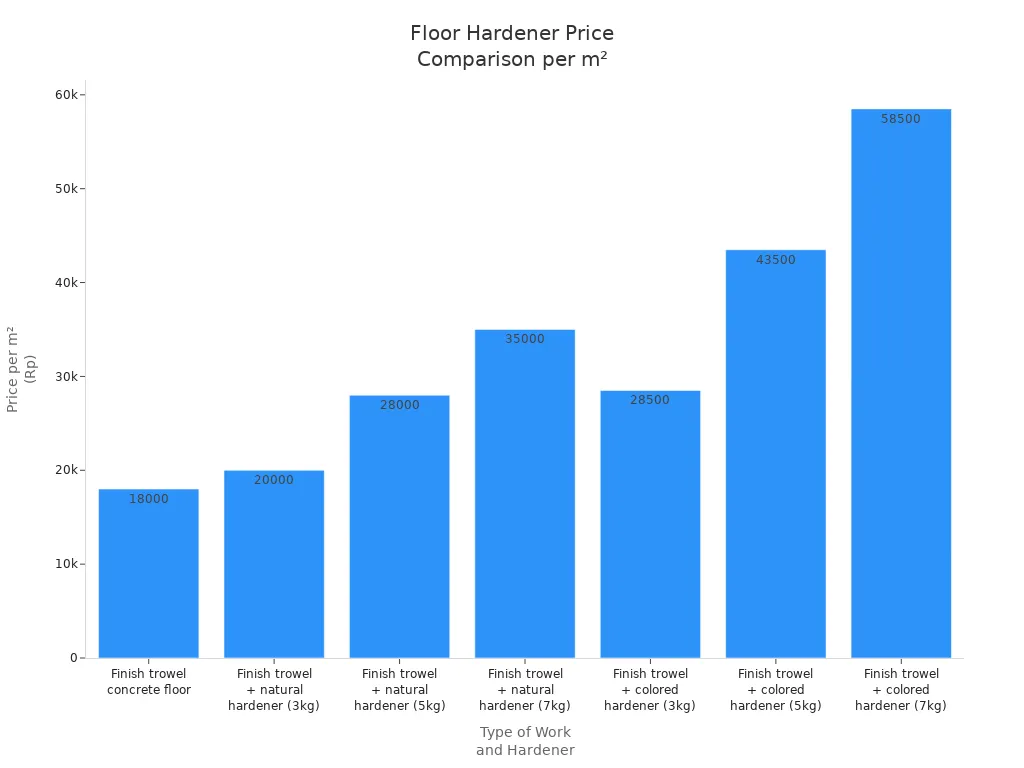
As you can see, the prices vary not only by the type of hardener but also by the quantity purchased. This information allows you to make informed decisions based on your specific needs and budget.
Understanding these price points will help you navigate the market effectively. You can choose the right floor hardener that fits your project requirements without overspending.
Factors Affecting Harga Floor Hardener
When you consider the price of floor hardener, several key factors come into play. Understanding these factors can help you make informed decisions and budget effectively for your flooring projects.
Material Quality
The quality of raw materials significantly impacts the price of floor hardener. Here are some important points to consider:
Stronger floor hardeners, which can withstand heavy loads, tend to be more expensive.
Common materials used in floor hardeners include sand, grading, cement, silica, and pigments. The type of material—whether natural or colored—also affects pricing.
The hardness level of the floor hardener plays a crucial role. Higher quality materials enhance durability and strength, leading to better performance and longevity.
Floor hardeners made from high-quality aggregates and additives provide excellent strength and durability. They resist wear, chemicals, and stains, which extends the lifespan of your flooring and reduces maintenance costs. Additionally, the combination of a trowel finish with a floor hardener improves both the appearance and quality of the flooring.
Brand Reputation
Brand reputation can influence the price of floor hardener as well. Established brands often command higher prices due to their proven track record of quality and reliability. When you choose a reputable brand, you can expect:
Consistent product performance.
Better customer support and warranty options.
Assurance of compliance with industry standards.
Investing in a well-known brand may cost more upfront, but it often pays off in the long run through reduced maintenance and replacement costs.
Market Demand
Market demand for floor hardeners fluctuates seasonally, particularly during peak construction periods that align with the dry season. This surge in demand typically results in increased prices. Factors driving demand include:
Rapid industrialization, which increases the need for durable flooring solutions.
Urbanization leading to more residential and commercial developments.
Infrastructure development projects creating a surge in flooring requirements.
Technological advancements in resin formulations that enhance product performance.
Sustainability trends pushing for eco-friendly materials in construction.
In Indonesia, variations in regional economic growth and infrastructure projects contribute to inconsistent demand and pricing across different areas. Understanding these market dynamics can help you anticipate price changes and plan your purchases accordingly.
Cost Breakdown
Understanding the costs associated with floor hardeners is essential for budgeting your flooring projects. This section breaks down the various types of floor hardeners, installation costs, and ongoing maintenance expenses.
Types of Floor Hardeners
Different types of floor hardeners come with varying price points. Here’s a brief overview of common types and their characteristics:
Epoxy: Known for its durability and resistance to chemicals, epoxy hardeners are ideal for industrial settings. They typically range from Rp 150,000 to Rp 400,000 per m², depending on thickness.
Cement: A more economical option, cement-based hardeners offer decent strength and are suitable for residential applications. Prices range from Rp 80,000 to Rp 200,000 per m².
Acrylic: These hardeners provide a good balance between cost and performance, with prices ranging from Rp 100,000 to Rp 350,000 per m².
Installation Costs
Installation costs can vary based on the complexity of the project and the type of floor hardener used. Generally, you can expect to pay between Rp 20,000 and Rp 50,000 per m² for installation. Factors influencing these costs include:
The size of the area being covered.
The condition of the existing floor.
The expertise of the installation team.
Maintenance Costs
Ongoing maintenance is crucial for preserving the integrity of your floor hardeners. Here’s a breakdown of maintenance costs based on different types of floor hardeners:
Type of Floor Hardener | Thickness (mm) | Price Range per m² |
|---|---|---|
Epoxy | 2-3 | Rp 150,000 – Rp 300,000 |
3-5 | Rp 200,000 – Rp 400,000 | |
Cement | 2-3 | Rp 80,000 – Rp 150,000 |
3-5 | Rp 100,000 – Rp 200,000 | |
Acrylic | 2-3 | Rp 100,000 – Rp 250,000 |
3-5 | Rp 150,000 – Rp 350,000 |
These costs reflect the importance of selecting the right type of floor hardener for your needs. By understanding the price of floor hardener, you can make informed decisions that align with your budget and project requirements.
Value Assessment
Evaluating the value of floor hardeners involves examining their durability, maintenance requirements, and performance metrics. Understanding these aspects helps you make informed decisions for your flooring projects.
Durability and Longevity
Durability is a critical factor when selecting a floor hardener. Different types offer varying levels of durability, especially under heavy industrial use. Here’s a comparison of common floor hardeners:
Type of Hardener | Durability Level | Best Use Case |
|---|---|---|
Dry Shake Hardeners | Very Durable | High-traffic areas, heavy machinery |
Liquid Hardeners | Less Durable | Medium-use areas |
Epoxy/Urethane Coatings | High Chemical Resistance | Areas needing aesthetic benefits |
Choosing a durable option ensures your flooring withstands wear and tear, extending its lifespan and reducing replacement costs.
Maintenance Requirements
Maintenance plays a vital role in preserving the integrity of your floor hardeners. Regular upkeep can prevent damage and prolong the life of your flooring. Here are some key maintenance tips:
Routine Cleaning: Sweep or vacuum regularly to remove debris.
Periodic Sealing: Apply sealants as needed to protect against stains and moisture.
Prompt Repairs: Address any cracks or damage immediately to prevent further deterioration.
Investing time in maintenance can lead to significant long-term benefits, including lower repair costs and enhanced appearance.
Performance Metrics
Performance metrics such as compressive strength and abrasion resistance are essential for assessing floor hardeners. Here’s how some popular products perform:
Product Name | Abrasion Resistance | |
|---|---|---|
Deltafloor HD5000 | 600 | Excellent resistance to abrasion |
MAPETOP S AR3 | 50 (3 days) – 70 (28 days) | Class 3 (Böhme abrasion resistance) |
These metrics help you determine which floor hardener best meets your needs, ensuring optimal performance in your specific environment.
By carefully assessing durability, maintenance, and performance, you can select the right floor hardener that offers the best value for your investment.
In summary, understanding the price of floor hardener is crucial for making informed decisions about your flooring projects. You should consider factors like material quality, brand reputation, and market demand.
Tip: Always compare prices and evaluate the durability of different types of floor hardeners before making a purchase.
By doing so, you can ensure that you select the best option that fits your budget and meets your needs. Investing in quality floor hardeners will enhance the longevity and performance of your flooring.
FAQ
What is a floor hardener?
A floor hardener is a material applied to concrete surfaces to enhance durability and resistance to wear. It improves the floor’s strength and appearance, making it suitable for high-traffic areas.
How do I choose the right floor hardener?
Consider factors like material quality, intended use, and environmental conditions. Evaluate durability, maintenance requirements, and performance metrics to select the best option for your project.
Can I apply floor hardener myself?
While DIY application is possible, hiring professionals ensures proper installation. They have the expertise to achieve optimal results and avoid common mistakes that could compromise the floor’s integrity.
How long does a floor hardener last?
The lifespan of a floor hardener varies based on material quality and usage. Generally, high-quality options can last 10 to 20 years with proper maintenance.
What maintenance do floor hardeners require?
Regular cleaning, periodic sealing, and prompt repairs are essential. These practices help maintain the floor’s appearance and extend its lifespan, ensuring long-term performance.
See Also
Essential Tips for Choosing BANDě Floor Hardeners in 2025
Top Floor Hardener Options for Philippine Warehouses
Optimal Floor Hardener Choices for UK Industrial Warehouses
