

Are you tired of seeing ugly water stains and mold on your walls every rainy season? The problem of ‘leaky walls during the rainy season’ makes many homeowners upset. Wetness often causes breathing problems. It can also cause skin issues. It can even lead to lung infections. Damp proof paint fixes this completely. This special paint protects for a long time. You can have a dry, healthy home. This is true even when it rains a lot. It gives your walls the best protection. It stops water damage. Say goodbye to ‘leaky walls during the rainy season’. Enjoy dry walls with this good paint.
Key Takeaways
Damp proof paint stops water from entering your walls. It prevents mold and mildew growth.
This special paint creates a strong barrier. It protects your home from rain damage for many years.
Proper surface preparation is very important. Clean, repair, and dry walls before painting.
Choose the right paint for inside or outside walls. Some areas like basements need extra strong paint.
Beyond paint, clean gutters and fix roof leaks. This helps keep your home dry.
Why Damp Proof Paint is Your Best Friend
How Rain Harms Walls: The Main Reason
Rainy season hits your home. Outside walls get attacked. Rainwater lands on them. It finds small cracks. It also finds tiny holes. Water then goes into walls. It moves through the wall stuff. This causes harm inside. You see bad wet spots inside. These wet spots help mold grow. They also help mildew grow. This makes air unhealthy. It also harms walls. This wetness makes your home weak. This happens over time.
How Damp Proof Paint Works: A Strong Guard
Damp proof paint guards your walls. This paint makes a wall. It stops water from entering. For example, Sikagard®-905 W uses a liquid resin. This resin goes deep inside walls. It is very thin. It makes a hidden wall. This wall blocks wetness well. It also stops mold. It stops other growths too. This paint uses smart science. It often has special chemicals. These chemicals make it waterproof. They make a strong layer. This keeps your walls dry.
Main Good Things: Stops Water, Stops Mold, Lasts Long
Picking good waterproof paint helps a lot. First, it stops water well. No more water gets in walls. This is true when it rains. Second, it stops mold. It stops mildew from growing. Your home air is healthier. Third, this paint lasts long. It makes a strong shield. This shield protects for years. It keeps walls safe from wetness. This paint keeps walls strong. It also keeps them looking good.
Picking the Best Waterproof Paint for Your Home
Picking the right waterproof paint is key. It keeps your walls safe. Think about a few things. This helps you get the best guard. It stops water damage.
Key Things for Good Waterproofing
When you pick paint for waterproofing, look for certain things. These make the paint work well. First, the paint must make a strong seal. This seal stops water. It keeps water from getting into your walls. It lowers mold and mildew. It also stops rot. It guards against sun damage. This stops fading. It stops things from getting old. Good waterproof paint lasts longer. It needs less fixing. You will not need many repairs. It keeps your surfaces looking nice. This paint also makes things stronger. It handles bad weather. This includes heavy rain and snow. It handles very hot or cold. It keeps your home strong. Picking a good choice saves money later. It stops moisture damage. It lowers repair costs. This is true even if it costs more at first.
Another key thing is stretchiness. This is extra important. It is for places that move. Some items are very bendy. Look at how much they stretch. This is called elongation at break.
Product Name | Elongation at Break |
|---|---|
Estokote Flexi | 150% |
Estoflex PU850 | >680% |
Estoflex PU980 AR System | >450% |
Estoproof 3P / 4P Slated | 50% (longitudinal), 60% (transverse) |
Estoproof EPDM | 10% |
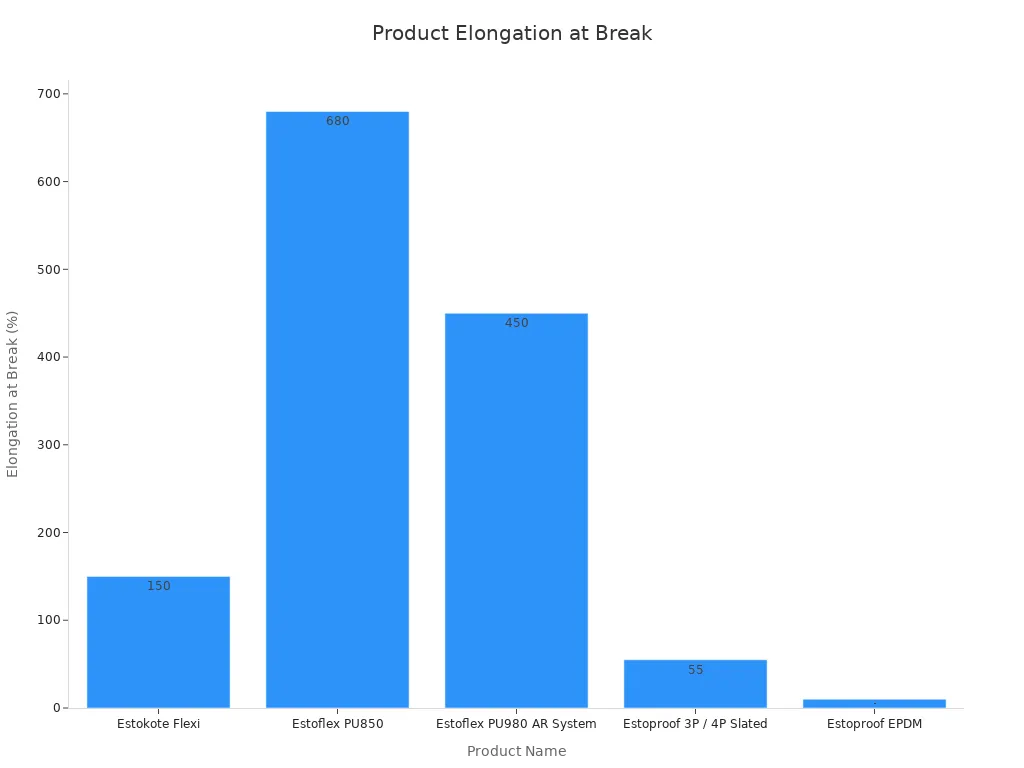
Polyurethane Elastomeric Coatings are very bendy. They stretch well for moving parts. This makes them good for roofs that move. Belzona 3111 is another roof coating. It is very stretchy. It works well with roof movements. This stretchiness helps the paint. It covers small cracks. It stops new ones from forming.
Inside vs. Outside: Picking the Right Kind
You need different paint for inside and outside walls. Outside paint must handle bad weather. It needs to be very tough. It must fight sun rays. It must fight extreme heat or cold. Inside paint often lets air pass through. It also needs to stop mold and mildew. It helps control inside moisture. Always read the label. It tells you if the paint is for inside or outside.
Special Needs: Basements, Bathrooms, Wet Areas
Some spots in your home need extra care. Basements, bathrooms, and wet spots have special issues. They often deal with water pushing in. This is called hydrostatic pressure.
For basement walls, you need a waterproof choice. It must fight this pressure. Infinito Waterproofing Cement is one choice. It is a flexible coating. It has two parts. It uses Flexi-Cem Technology. This product sticks well. It gives great waterproofing. It stops white powdery stuff. It fights hydrostatic pressure very well. You can use it for outside and inside concrete. It works for mortar and brick. It also stops water from the other side. It blocks water leaks. It is not harmful. This makes it safe for water tanks.
The AQUELLA™ waterproofing system is another choice. It is a three-part system. It stops water from moving sideways. It fights up to 10 bar of water pressure. This system is for walls that hold back earth. It works well for basements. You spray it right onto wet surfaces. It sticks in two ways. It handles weather very well. It has no solvents. You can put it on cold.
WaterGuard CrystalAdmix is a powder. You add it to concrete mixes. It mixes with lime and water in concrete. It makes crystals. These crystals seal small channels. They seal cracks up to 0.4 mm. This makes concrete much better. It stops moisture. It stops walls from getting weak. It stops leaks. This product fights high water pressure. It works for basement floors and walls. It becomes part of the concrete. It covers tiny cracks. It is easy to use. It is not harmful and lasts forever.
Step-by-Step Application to Protect Your Walls
You need a good plan to apply damp proof paint. This ensures lasting protection. Follow these steps carefully. You will get the best results.
Crucial Surface Prep: Clean, Repair, and Dry
Good preparation is the most important step. It makes sure your paint sticks well. It also makes sure the paint works. First, you must clean the surface. Remove all dirt, debris, or loose paint. Fill any cracks or holes. Make sure the surface is smooth. It must also be dry before you paint.
If your walls have old plaster and paint, you need to do more.
Remove existing plaster and paint from the entire surface. This exposes the brick or block work.
Allow the exposed surface to dry for at least 3 to 4 days.
Apply a waterproofing membrane. For example, use Water Guard 491 on the block or brick surface.
Re-plaster using good materials. Ressi SBR 5850 and Silmix are good choices.
Apply a protective coating. Paint Guard 10,000 C works well. Then you can paint over it.
You must check the moisture in your walls. This is very important. The wall must be dry enough.
Substrate Type | |
|---|---|
Cement screeds (without underfloor heating) | <6 % |
Anhydrite screeds (without underfloor heating) | <0.5 % |
Magnetite flooring (without underfloor heating) | 3–12 % (depending on organic content) |
Cement screeds (with underfloor heating) | <6 % |
Anhydrite screeds (with underfloor heating) | <0.3 % |
Magnetite flooring (with underfloor heating) | 3–12 % (depending on organic content) |
For products like Sikalastic®-590 Deckseal, the wall’s moisture content must be less than 6%. You should see no rising moisture or condensation on the surface. This ensures your repair work lasts.
Priming for Optimal Adhesion
Priming is a key step. It helps the damp proof paint stick better. It creates a strong bond. This makes your paint last longer. For decorative finishes, you can use SILCOR Primer BW N105-DT. This seals surfaces. Then you can apply any exterior quality acrylic paint.
You must let the primer dry completely. This is before you apply the first coat of damp proof paint. Drying times vary. They depend on temperature and humidity.
Substrate Temperature | Relative Humidity | Minimum Drying Time |
|---|---|---|
+20 °C | 50 % | ~2 hours |
+30 °C | 50 % | ~1 hour |
Always follow the product’s instructions for drying times.
Painting Conditions and Techniques for Waterproof Paint
Choose the right conditions to apply waterproofing paint. This helps the paint cure properly. The application temperature should be between +5°C and 40°C. Avoid painting in very hot or very cold weather. Do not paint in high humidity.
Use the right tools for the job. This helps you get an even coat.
For brush application, use a quality synthetic filament brush.
For rolling, use a short nap mohair cover.
Apply the paint in thin, even coats. Do not apply it too thick. This can cause problems. Let each coat dry fully before applying the next. This ensures maximum protection. You will protect your walls effectively.
Sealing Gaps and Cracks in Tiles and Surfaces
Damp proof paint works best on a smooth surface. You must seal all gaps and cracks. This stops water from getting in. For cracks in concrete or masonry, use a good sealant. SILCOR® LM PU Sealant is a one-part elastomeric polyurethane sealant. It works well for gap and crack filling. You can use it in concrete panels, block work, and brickwork. It sticks well to many surfaces. You can paint over it after it cures. SikaHyflex®-250 Facade is another good choice. It is a 1-part polyurethane joint sealant. It seals movement and connection joints in concrete and masonry facades. You can paint over it after it cures. Always test paint compatibility first.
You also need to seal around window and door frames. This prevents water intrusion.
Fill any nail holes with wood putty.
Caulk edges to seal gaps around window casings.
For bifold doors, you can replace old seals.
Open the bifold door fully. Secure it.
Remove old seals from the door frame. Use a sealant remover if needed. Clean the channel well.
Measure the new seal length. Cut it precisely.
Install the new seals. For self-adhesive seals, peel the backing. Apply firm, even pressure. For seals needing adhesive, apply a thin bead. Press the seal into place. Follow the manufacturer’s instructions.
Close the door. Check for tight contact. Look for no gaps. Check for drafts.
Trim any extra seal material. This makes a neat finish. It also ensures smooth door operation.
Test the door. Make sure new seals do not stop movement. Ensure the door closes properly.
Applying a sealer to door gaps is very effective. It prevents water intrusion. It offers a tidier and more waterproof solution. This method also gives protection against wind, insects, and dust.
Beyond Paint: Complete Ways to Fix Leaky Walls
Damp proof paint helps a lot. But you can do more. This stops water damage. A full plan keeps your home dry. It stops problems later.
Outside Fixes: Gutters, Roofs, and Yard
Check your home’s outside parts. Clogged gutters cause issues. Water cannot flow away. It can go into your walls. This makes wet spots. Clean gutters twice a year. Do this in the fall. This stops water damage.
Your roof needs care too. Look for roof leaks. Water stains on walls warn you. Sagging roofs show damage. Fix these fast. This stops ceiling leaks. Check your attic for water.
Your yard also matters. Use outside drains. French drains move water away. Slope the soil from your home. This stops water from seeping in. Check your yard’s slope often. This keeps water moving away.
Check-Ups and Upkeep
Check your home often. Look at gutters and roofs. Find problems early. Good airflow helps too. It lowers wetness inside. This is key in rainy times. Good airflow makes your home healthier.
Other Waterproofing Helps and Items
Other things stop water well. Crystalline stuff makes concrete better. It stops small cracks. It stops water from getting in. These can fix tiny cracks later. They make concrete last longer. Use special sheets for wet spots. Polyethylene sheets work well. They make a water-tight seal. This stops water in walls.
Protecting Floors: BANDě Crystal Floor Hardener
Your floors need care too. BANDě Crystal Floor Hardener protects floors. It stops wetness and wear. Clean the floor first. New concrete needs 28 days to dry. Remove old stuff from old floors. The floor must be clean and dry. Then, put on the hardener. Use a sprayer. This protects your floors for a long time. It stops water from coming up.
Damp proof paint is your complete solution. It eradicates water stains and mould. It solves “leaky walls during the rainy season” problems. You gain peace of mind. Your home stays healthy and dry. This is vital during the rainy season. This damp paint provides lasting protection. You can protect your walls effectively. Invest in protection now. Use this guidance. Ensure your home stays dry. This special paint keeps water out. This paint stops water from entering. The rainy season will no longer bring “leaky walls during the rainy season” to your damp walls.
FAQ
What is damp proof paint?
Damp proof paint creates a barrier. It stops water from entering your walls. This paint prevents moisture damage. It also stops mold and mildew growth. You get lasting protection for your home.
Can you use regular paint instead of damp proof paint?
No, you cannot. Regular paint does not block water. It will not stop moisture from getting into your walls. You need special damp proof paint. It has unique properties to resist water.
How long does damp proof paint protect your walls?
Damp proof paint offers long-term protection. It can last for many years. Proper surface preparation helps it last even longer. You get durable defense against water and mold.
Is damp proof paint safe for indoor use?
Yes, many damp proof paints are safe for indoor use. Look for low VOC (Volatile Organic Compound) options. These paints have fewer harmful chemicals. You can use them inside your home safely.
See Also
Alkali-Resistant Primer: The Essential Step for Preventing Paint Peeling
Permanent Solutions for Damp, Dusty Basement Concrete Floor Issues
DIY Guide: Fortifying Your Basement Against Impending Flood Season
Selecting Optimal Wall And Floor Moisture Barriers For 2025 Projects
Inorganic Anion Wall Paint: Creating Healthier Homes In 2025
