

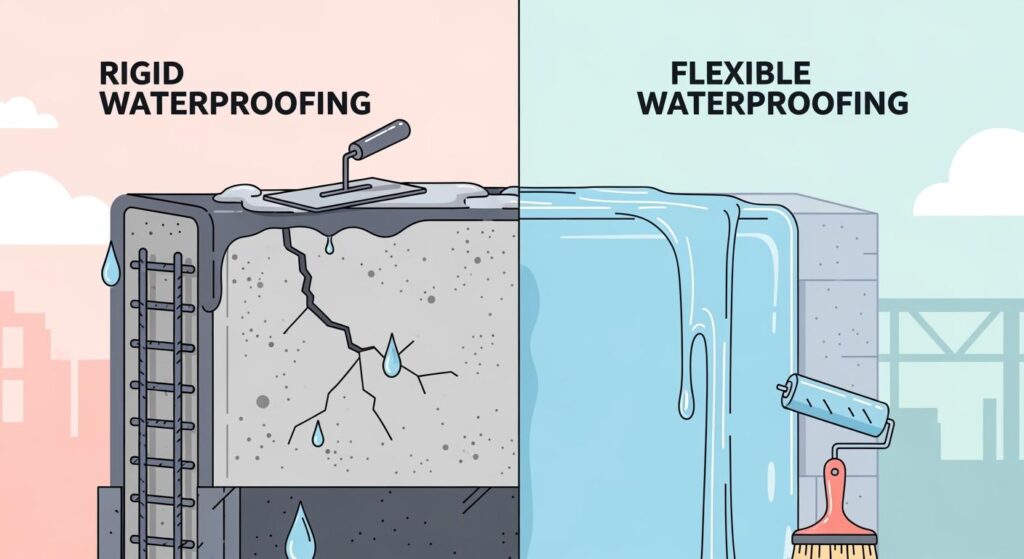
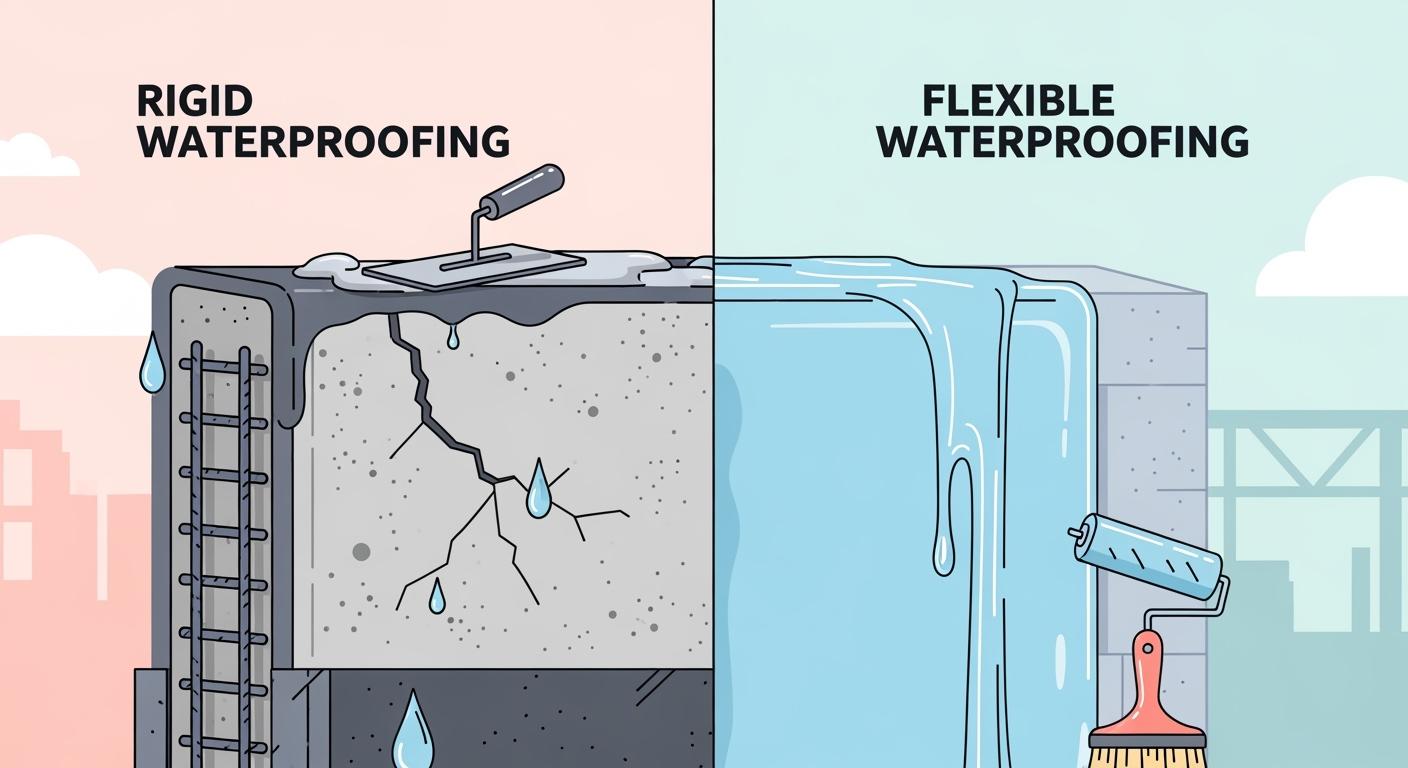
Waterproofing is crucial for protecting buildings from moisture damage. Did you know that faulty waterproofing causes leaks in almost 80% of residential buildings? Choosing between rigid vs flexible waterproofing can make a big difference. Rigid methods enhance concrete strength but may crack, while flexible solutions adapt better to movement, offering superior waterproofing.
Application Characteristics | Effectiveness | Ductility | Compactness Improvement | |
|---|---|---|---|---|
Rigid | Enhances density and strength of concrete | Poor due to susceptibility to cracking | Low | Yes |
Flexible | Made from organic materials, good adhesion | Excellent waterproofing effect, corrosion resistance | High | No |
Key Takeaways
Choosing the right waterproofing method is essential. Rigid waterproofing offers strength but can crack, while flexible waterproofing adapts to movement, preventing leaks.
Consider factors like building age, climate, and project type when selecting a waterproofing system. These elements influence the effectiveness and longevity of the solution.
Investing in the right waterproofing can save you from costly repairs in the future. Proper waterproofing protects your structure and enhances energy efficiency.
Rigid Waterproofing Overview
Rigid waterproofing is all about creating a solid barrier against moisture. This method relies on materials that enhance the structural integrity of buildings. It’s essential for protecting critical components from water damage, which can lead to costly repairs down the line.
Rigid Waterproofing Materials
When it comes to rigid waterproofing materials, several options stand out:
Polyurethane
Cementitious coating
EPDM rubber
Rubberized asphalt
Thermoplastic
Bituminous membrane
PVC waterproofing membrane
These materials are designed to provide a strong defense against water intrusion, ensuring that your structure remains safe and sound.
Applications of Rigid Waterproofing
Rigid waterproofing finds its place in various applications, both residential and commercial. Here’s a quick look at where it’s commonly used:
Application Area | Description |
|---|---|
Residential | |
Basements | Susceptible to water intrusion; methods include sealants and drainage systems. |
Crawl Spaces | Prone to mold growth; uses encapsulation and vapor barriers for moisture control. |
Bathrooms | Constant moisture exposure; requires water-resistant materials to prevent damage. |
Commercial | |
Roofs | Flat roofs prone to leaks; waterproofing membranes like TPO and EPDM are used. |
Foundations | Essential for structural integrity; involves exterior membranes and drainage systems. |
Parking Structures | Exposed to elements; uses polyurethane and epoxy coatings for protection against water damage. |
The importance of rigid waterproofing cannot be overstated. It protects against water damage, prevents structural problems, and even boosts energy efficiency by maintaining thermal resistance. By keeping moisture at bay, you ensure your building remains strong and durable for years to come.
Flexible Waterproofing Overview
Flexible waterproofing is designed to create a barrier that can adapt to the movements of a structure. Unlike rigid waterproofing, which can crack under stress, flexible systems remain intact even when the building shifts. This adaptability is crucial for areas prone to temperature changes or ground movement.
Flexible Waterproofing Materials
When it comes to flexible waterproofing materials, several options stand out:
SBS (Styrene Butadiene Styrene) Modified Bituminous membranes
Liquid-applied membranes (like Siplast TeraPROOF™ STP)
Elastomeric sheets
TPO sheets
PVC or HDPE membranes
These materials are engineered to provide excellent waterproofing capabilities while allowing for flexibility. For instance, SBS modified bituminous membranes are composite sheets that combine bitumen with reinforcement materials, ensuring they can handle various stresses without losing their waterproof properties.
Applications of Flexible Waterproofing
Flexible waterproofing finds its way into many modern construction projects. Here are some common applications:
Green roof systems with root barrier protection
Heritage restoration projects requiring flexible solutions
Expansion joints and building facades
Commercial wet areas and toilet blocks
These applications highlight the versatility of flexible waterproofing. It’s especially useful in areas where movement is expected, ensuring that structures remain dry and protected over time. The ability of these systems to bridge gaps and accommodate shifts makes them a reliable choice for many builders and homeowners alike.
Advantages of Rigid vs Flexible Waterproofing
When it comes to choosing between rigid and flexible waterproofing, each method has its own set of advantages. Understanding these can help you make an informed decision for your project.
Benefits of Rigid Waterproofing
Structural Integrity: Rigid waterproofing materials, like cementitious coatings and bituminous membranes, enhance the strength of the structure. They create a solid barrier that can withstand significant pressure from water.
Long-lasting Protection: Rigid systems often provide a durable solution that can last for many years with minimal maintenance. They are less prone to wear and tear compared to flexible options.
Energy Efficiency: By preventing water intrusion, rigid waterproofing helps maintain thermal resistance, which can lead to lower energy costs over time.
Benefits of Flexible Waterproofing
Adaptability: Flexible waterproofing materials can handle movement and shifts in the structure. This is especially important in areas prone to temperature changes or ground movement. They remain intact even when the building settles or expands.
Ease of Application: Many flexible systems are easier to install, which can save time and labor costs. Liquid-applied membranes, for example, can be sprayed on, creating a seamless barrier.
Versatility: Flexible waterproofing is suitable for a variety of applications, from basements to green roofs. Its ability to bridge gaps makes it ideal for complex structures.
Maintenance Requirements and Durability
Maintenance can vary significantly between these two waterproofing methods. Rigid waterproofing often requires less frequent upkeep due to its durability. However, if cracks do occur, repairs can be challenging and may require extensive work.
On the other hand, flexible waterproofing systems may need more regular inspections, especially in high-movement areas. As noted, “The choice in waterproofing systems can mean the difference between years of maintenance-free use or a constant series of disruptions, hassles, and repairs to maintain a safe, leak-free roofing system.” This highlights the importance of selecting the right method based on your specific needs.
Recent advancements in waterproofing materials have also improved both rigid and flexible systems. For instance, new formulations are designed to lower volatile organic compounds (VOCs), making them more eco-friendly. Additionally, developments in polyurea technology have led to hybrid coating systems that enhance performance while reducing environmental impact.
Product Type | Warranty Conditions | Key Features |
|---|---|---|
Rigid Waterproofing | Stricter conditions regarding subfloor flatness and moisture protection | Excludes water damage from leaks or hydrostatic pressure |
Flexible Waterproofing | More straightforward warranty focusing on flexibility and ease of application | Permanently flexible, no bonding agent needed |
Disadvantages of Rigid vs Flexible Waterproofing
While both rigid and flexible waterproofing methods have their strengths, they also come with notable drawbacks. Understanding these disadvantages can help you make a more informed choice for your project.
Disadvantages of Rigid Waterproofing
Rigid waterproofing is known for its durability, but it has some significant downsides:
Limited Flexibility: Rigid systems can restrict the natural movements of a building. This limitation may lead to structural issues over time, especially in areas prone to shifting or settling.
Cracking: The inflexibility of rigid materials can cause cracks, particularly in regions with temperature fluctuations. Once cracks form, they can compromise the waterproof barrier, leading to leaks.
Adhesion Problems: Sometimes, rigid layers struggle to adhere well to surfaces. This can result in peeling or flaking, which defeats the purpose of waterproofing.
Difficulty in Repairs: If modifications or repairs are needed, the rigid nature of these systems can make the process challenging. Repairing a cracked rigid waterproofing layer often requires extensive work, which can be time-consuming and costly.
Disadvantages of Flexible Waterproofing
Flexible waterproofing offers adaptability, but it’s not without its challenges:
Access Issues: Many flexible systems are installed below grade, complicating both initial placement and future repairs. If something goes wrong, getting to the waterproofing can be a hassle.
Heavy Equipment Risks: The use of excavation machinery can lead to imprecise movements. This increases the risk of damage during installation or repairs, which can be frustrating.
Subsurface Utilities: Buried utilities can complicate excavation and repair efforts. If you hit a utility line, it can delay your project and add unexpected costs.
Blindside System Vulnerabilities: These systems can increase the likelihood of waterproofing failures. If not installed correctly, the consequences can be severe.
Formwork Challenges: Large slabs may require formwork that punctures the waterproofing membrane. This necessitates multiple patches, which can be a headache.
Backfill Complications: Backfill operations can impose loads on the membrane that it wasn’t designed to withstand. This can lead to premature failure.
Reversed Installation Order: In blindside applications, the installation order can expose the membrane to potential damage from steel rebar. This oversight can lead to costly repairs down the line.
Repair Challenges and Long-Term Performance
Repairing rigid and flexible waterproofing systems presents different challenges. Here’s a quick comparison:
Aspect | Rigid Waterproofing | Flexible Waterproofing |
|---|---|---|
Requires clean, uniform concrete for effective bonding. | Often deals with multiple layers and weathered surfaces. | |
Moisture Variables | Controlled moisture levels during application. | May encounter trapped moisture and failed drainage systems. |
Application Environment | Typically has full access during installation. | Limited access can complicate repairs and maintenance. |
Performance Expectations | Designed for long-term protection. | Needs immediate problem-solving plus long-term durability. |
Substrate Preparation | Straightforward surface profiling is usually sufficient. | Extensive repair work may be required for variable conditions. |
Both rigid and flexible waterproofing systems have their place in construction. However, understanding their disadvantages can help you choose the right method for your specific needs.
Choosing Between Rigid and Flexible Waterproofing
Choosing the right waterproofing method can feel overwhelming, but it doesn’t have to be! Here are some key factors to consider when making your decision:
Building Age and Condition: Older buildings may have unique vulnerabilities. They might need specific waterproofing strategies to address their issues.
Climate and Environmental Exposure: Local weather plays a big role. For instance, areas with heavy rainfall need materials resistant to moisture and mold growth. Check out this table for a quick overview:
Climate Type | Challenges | Waterproofing Considerations |
|---|---|---|
Tropical | High humidity and heavy rainfall leading to moisture infiltration and mold | Use materials resistant to moisture and mold growth |
Arid | Extreme temperatures causing expansion and contraction | Select flexible materials that can withstand temperature changes |
Temperate | Seasonal variations with rain, snow, and temperature changes | Implement a robust system adaptable to diverse weather conditions |
Cold | Freeze-thaw cycles causing structural damage | Utilize materials that prevent ice formation and withstand cold |
Project Type: Above-grade applications face different challenges than below-grade ones. Make sure to choose a method that fits your project’s needs.
Budget and Long-term Maintenance Costs: Weigh initial costs against future maintenance expenses. Some methods may save you money in the long run.
Sustainability Objectives: If minimizing environmental impact is important to you, consider materials that align with sustainability goals.
By considering these factors, you can make an informed decision that best suits your project. Remember, the right waterproofing method can save you from costly repairs down the line!
Choosing the right waterproofing method is crucial for your project. Understanding the differences between rigid and flexible waterproofing helps you select the best option for your needs. Consider factors like site conditions, climate, and budget. Remember, effective waterproofing applications can save you from costly repairs down the line.
“Choosing the best waterproofing method isn’t a one-size-fits-all decision. Balance is essential for robust protection against water damage.”
FAQ
What is the main difference between rigid and flexible waterproofing?
Rigid waterproofing creates a solid barrier, while flexible waterproofing adapts to movement, preventing cracks and leaks.
How long does waterproofing last?
The lifespan varies by method and materials used, but most systems last between 10 to 30 years with proper maintenance.
Can I apply waterproofing myself?
Yes, some products allow DIY application. However, professional installation ensures better results, especially for complex projects.
See Also
Understanding Rigid Waterproof Sealers And Their Functionality
Comprehensive Overview Of Concrete Waterproofing Techniques
Expert Tips For Applying Waterproof Coatings Effectively
Exploring Rigid Waterproof Sealers And Home Protection Benefits
