

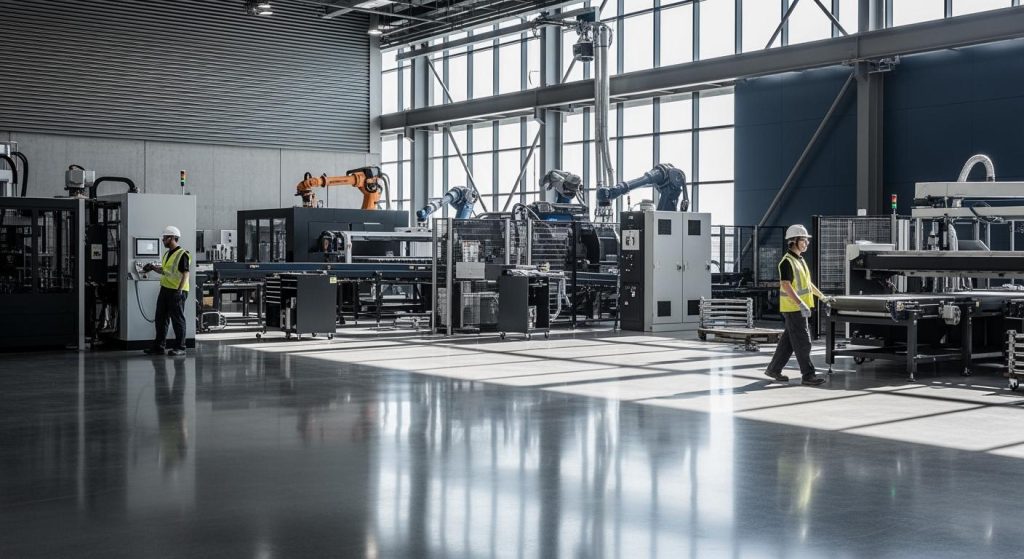
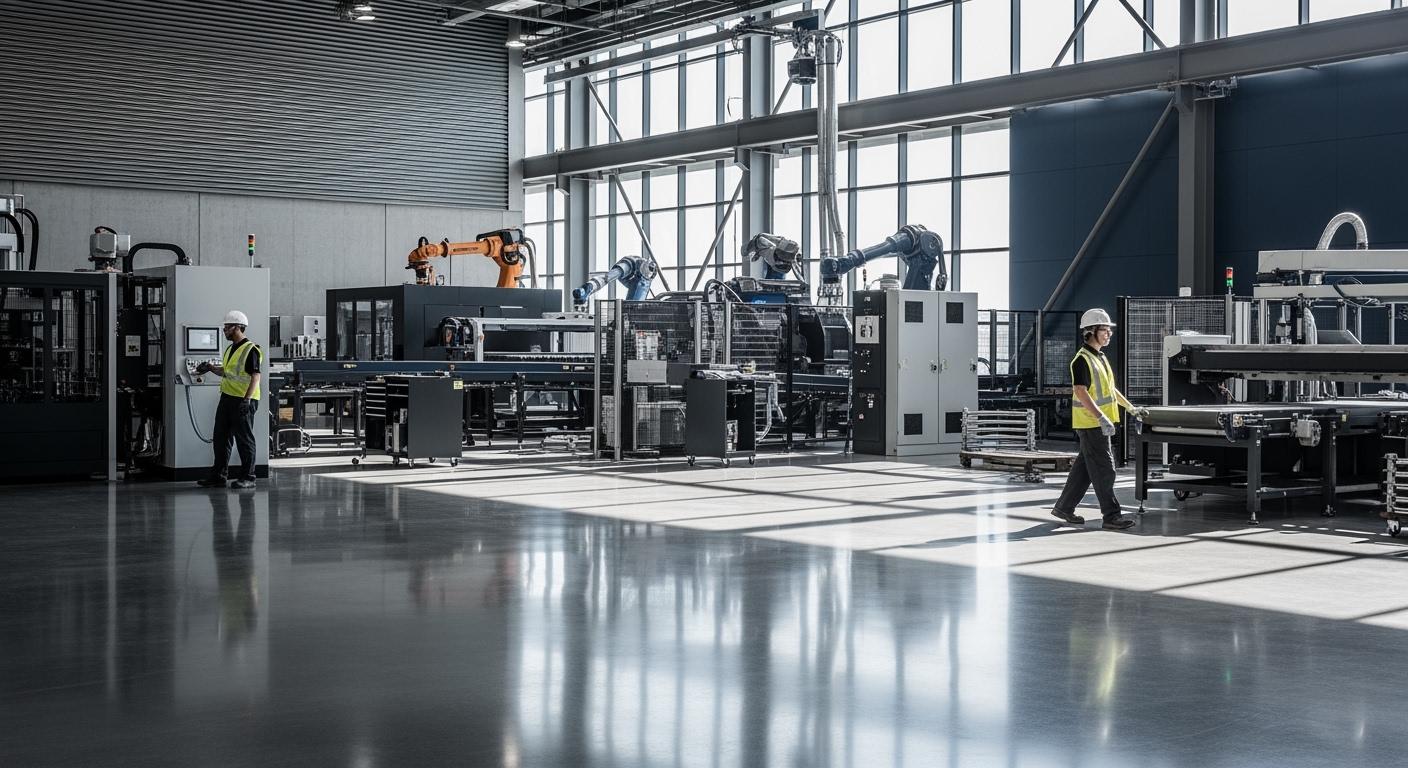
When it comes to industrial spaces, flooring plays a crucial role in safety and functionality. You want a surface that can withstand heavy use and maintain its integrity. Floor hardeners offer a fantastic solution, enhancing durability and making maintenance a breeze. With these benefits, your workspace can thrive.
Key Takeaways
Investing in floor hardeners significantly increases the durability of your concrete floors, enhancing their resistance to wear and tear.
Using floor hardeners reduces cleaning time and maintenance costs, allowing you to focus resources on other important areas of your business.
Floor hardeners improve safety by enhancing slip resistance, creating a safer work environment for employees.
Durability of Floor Hardeners
Wear Resistance
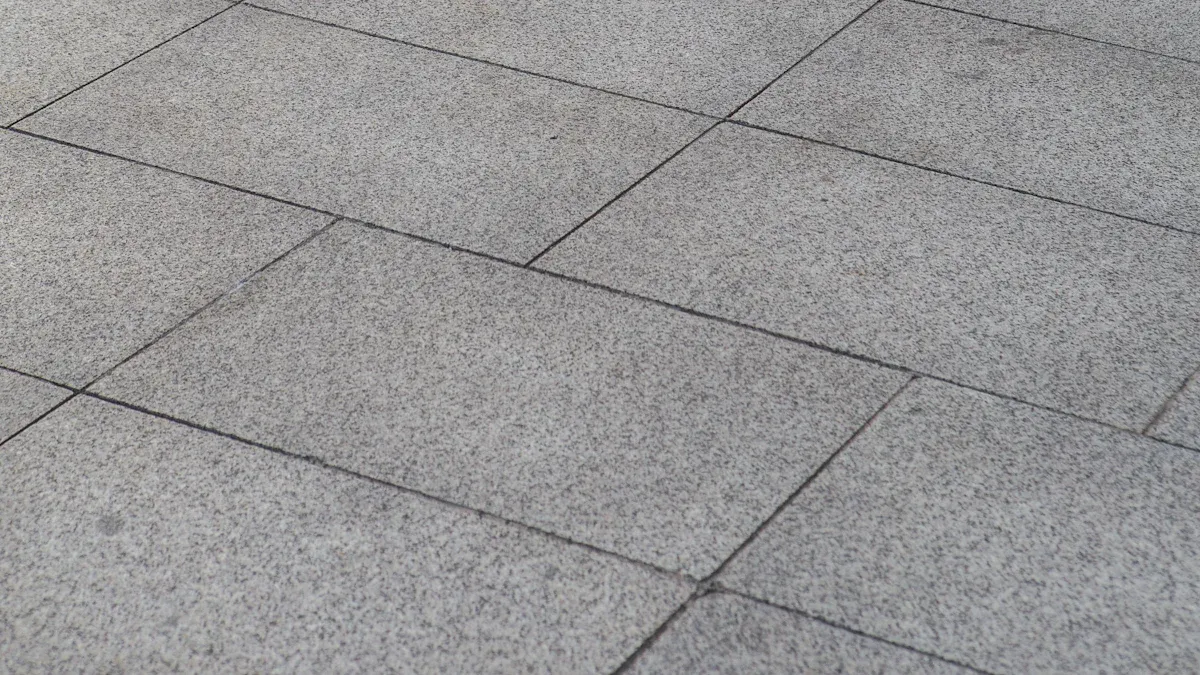
When you choose a floor hardener, you’re investing in increased durability for your industrial space. These products significantly enhance the abrasion resistance of your concrete floors. In fact, laboratory tests show that certain floor hardeners can increase abrasion resistance by up to 500% in just 15 minutes! Here’s a quick look at how different products stack up:
Product | Abrasion Resistance Increase (15 min) | Abrasion Resistance Increase (30 min) |
|---|---|---|
Duro-Nox | 500% | 145% |
Duro-Nox LS | 300% | 145% |
Duro-Nox LSC | 200% | 90% |
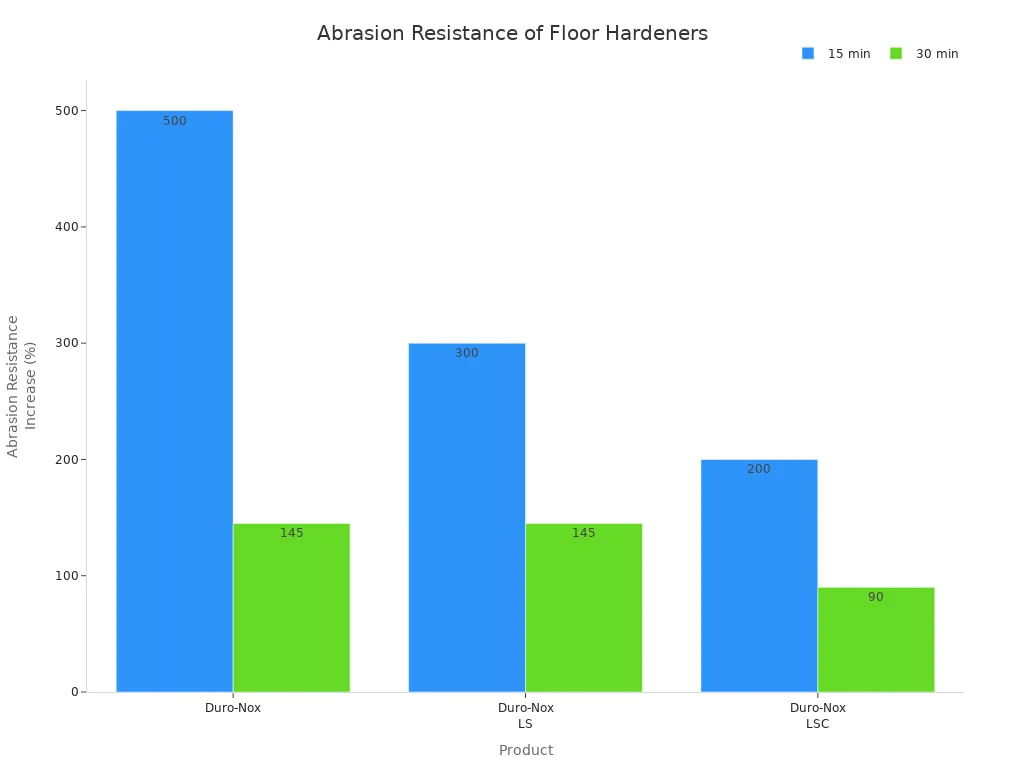
This remarkable wear resistance means your floors will withstand heavy machinery, foot traffic, and other stresses without showing signs of wear. You’ll appreciate how this better performance translates into fewer repairs and a longer lifespan for your flooring.
Longevity of Polished Floors
Polished floors treated with a concrete hardener not only look great but also last longer. These hardeners protect against corrosion and freeze-thaw damage, which can be particularly problematic in industrial environments. Here’s how they do it:
Floor hardeners enhance the durability and chemical resistance of concrete surfaces, crucial for corrosion protection in industrial settings.
They improve moisture resistance by sealing capillary pores, preventing water and chemicals from penetrating the concrete.
The ability of floor hardeners to densify surfaces and reduce dusting contributes to their protective qualities.
Additionally, they create a barrier that reduces water and deicing salt absorption, which is essential in climates with extreme temperature variations. This minimizes the risk of damage during freeze-thaw cycles, ensuring your floors remain intact and functional for years to come.
Maintenance with Concrete Hardeners
Cleaning Ease
When you apply a floor hardener, you’ll notice a significant reduction in cleaning efforts. These hardeners create a dense surface that minimizes dust and dirt accumulation. This means you spend less time sweeping and mopping. Here are some key points to consider:
The smooth finish of hardened concrete makes it easier to clean.
You’ll find that spills and stains don’t penetrate as deeply, allowing for quicker clean-up.
With lower maintenance costs, you can allocate your resources to other important areas of your business.
Repair Reduction
Using a concrete hardener leads to fewer repairs over time. The enhanced durability means your floors can withstand heavy machinery and foot traffic without showing signs of wear. Here’s how this translates into savings:
You’ll experience fewer issues like spalling and cracking, which often require costly repairs.
The cost of applying a concrete hardener can be under $1 per square foot, making it a smart investment compared to potential repair expenses.
By preventing damage before it occurs, you can significantly lower maintenance costs and keep your operations running smoothly.
Safety Enhancements
Slip Resistance
When you treat your floors with a floor hardener, you significantly boost their improved slip resistance. This enhancement is crucial in industrial settings where spills and debris can create hazardous conditions. For instance, floors treated with DurAcryl™ Cure achieve slip resistance ratings ranging from R10 to R12, depending on the aggregate used. This means you can feel confident that your employees will have better footing, reducing the risk of slips and falls.
Enhanced slip resistance helps you comply with OSHA and ANSI regulations, ensuring a safer work environment.
Choosing the right materials and installation practices can help you meet safety standards effectively.
Impact Protection
Floor hardeners also provide excellent impact protection, especially in areas where heavy machinery operates. They absorb energy and resist abrasion, which is vital for maintaining the integrity of your flooring. Here’s a quick look at how different types of floor hardeners measure up in terms of impact resistance:
Type of Floor Hardener | Impact Resistance | Energy Absorption |
|---|---|---|
FH-12 | High | |
FH-13 | Highest | 687 J |
Metallic Hardener | Dense, tough surface | Resists abrasion and impact |
Metallic floor hardeners create a dense surface that withstands impacts from industrial machinery.
Finer coarse sand in these hardeners increases impact absorption, providing an extra layer of protection.
By investing in floor hardeners, you not only enhance the safety of your workspace but also contribute to a more efficient and compliant operation.
Cost-Effectiveness of Floor Hardeners
Long-Term Savings
Investing in a floor hardener can lead to significant long-term savings for your industrial space. You might wonder how this works. Well, here are some key benefits that contribute to your savings:
Reduces dusting: Minimizes the amount of dust generated on the floor.
Prevents surface wear: Protects the floor from damage due to heavy loads.
Increases load-bearing strength: Enhances the ability of the floor to support heavy machinery.
Improves floor lifespan: Extends the time before repairs are needed.
Enhances surface shine: Provides a better aesthetic finish.
Makes cleaning easier: Simplifies maintenance routines.
Supports industrial operations: Ensures floors meet the demands of commercial use.
By reducing the frequency of repairs and maintenance, you can allocate your budget more effectively. The durability of floor hardeners means you won’t have to replace your flooring as often, leading to lower replacement frequency. This is especially important in high-traffic areas where wear and tear can be significant.
Value for Investment
When you consider the overall value of investing in floor hardeners, the numbers speak for themselves. Compared to other flooring options, floor hardeners often come out on top in terms of cost-effectiveness. Here’s a quick comparison of various flooring types:
Flooring Type | Cost per Square Foot | Durability | Maintenance Needs |
|---|---|---|---|
Epoxy | $3 to $12 | High | Low |
Hardwood | $6 to $22 | Moderate | High |
Laminate | $1 to $5 | Moderate | Low |
Tile | $1 to $15 | Moderate | Moderate |
As you can see, while some options may have a lower initial cost, they often require more maintenance and have a shorter lifespan. Floor hardeners provide a balance of affordability and durability, making them a smart choice for your facility.
In the long run, choosing a floor hardener not only saves you money but also enhances the functionality of your workspace. You’ll find that the investment pays off through reduced maintenance costs and a longer-lasting floor.
Aesthetic Improvements with Floor Hardener
Finish Options
When you think about floor hardeners, consider the variety of finishes they offer. Different types of floor hardeners can transform your concrete floors into something special. Here’s a quick overview of some options:
Type of Floor Hardener | Description | Ideal Use Cases |
|---|---|---|
Metallic Floor Hardeners | Made of metallic particles that enhance durability and resistance to wear. | Heavy-duty industrial floors like warehouses and factories. |
Non-Metallic Floor Hardeners | Composed of materials like silica and quartz to improve strength. | Floors exposed to chemicals, such as in laboratories. |
Polymer Floor Hardeners | Contain polymer resins that create a protective layer on concrete. | Areas exposed to harsh chemicals, like food processing. |
These finishes not only provide protection but also add a polished look to your space.
Visual Appeal
The visual appeal of your industrial floors can significantly impact the atmosphere of your facility. Floor hardeners come in various colors and finishes, making your concrete floors more inviting than untreated surfaces. A well-finished floor can create a professional environment that impresses both employees and visitors.
Research shows that a clean, well-maintained facility communicates to employees that they are valued. Polished floors enhance safety and organization, motivating employees to align with their environment. A bright, clean, and organized facility leads to better employee performance. By investing in aesthetic improvements, you not only elevate your workspace but also contribute to a positive workplace culture.
Incorporating branding elements, like logos in epoxy flooring, can further enhance your facility’s identity. This creates a cohesive and professional look that resonates with your brand values.
In summary, floor hardeners offer numerous benefits for your industrial space. They enhance durability, reduce maintenance costs, improve safety, and provide aesthetic appeal. Consider the following key advantages:
Durability: Floor hardeners extend the lifespan of concrete surfaces.
Maintenance: They lower cleaning frequency and repair costs.
Safety: Improved slip resistance creates a safer working environment.
Cost-effectiveness: Long-term savings arise from reduced maintenance needs.
Aesthetic appeal: Various finishes enhance the visual appeal of your floors.
Evaluate your flooring needs and think about how implementing a floor hardener can transform your facility.
FAQ
What are floor hardeners made of?
Floor hardeners typically consist of materials like metallic particles, silica, or polymer resins that enhance concrete’s durability and resistance.
How long does it take for floor hardeners to set?
Most floor hardeners set within 24 to 48 hours, but full curing may take up to 28 days depending on environmental conditions.
Can I apply floor hardeners myself?
While you can apply some floor hardeners, hiring a professional ensures proper application and optimal results for your industrial space.
See Also
Top Industrial Warehouse Floor Hardeners Available in the UK
Optimal Warehouse Floor Hardener Options in the Philippines
Understanding Floor Hardeners: Functionality and Benefits Explained
