

Maintaining your quartz countertops is very important. It helps them last longer and look good. Stains can be a big problem, detracting from the beauty of your surfaces. Regular care is key to preserving their quality. Studies show that using the right cleaning methods, including a quartz stone stain remover, can help quartz countertops retain 92% of their original shine and color after three years. Utilizing effective quartz stain remover products and adopting good cleaning habits will keep your countertops looking great.
Key Takeaways
Clean quartz countertops every day to stop stains and keep them shiny.
Use gentle soaps and stay away from strong cleaners to keep the surface safe.
Wipe up spills right away with a soft cloth to stop stains from forming.
Use coasters and cutting boards to avoid scratches and stains.
For hard stains, make a baking soda paste and let it sit before rinsing it off.
Common Stains
Stains on quartz countertops can come from many places. Knowing these common stains helps you remove them the right way.
Food and Beverage Stains
Food and drinks often leave tough stains on quartz. Some common ones are:
Coffee and Tea: These drinks can leave dark spots if spilled.
Red Wine: This drink can make deep, noticeable stains.
Fruit Juices: Citrus juices, like lemon or lime, can cause discoloration.
Tomato-based Sauces: These sauces can leave bright red marks.
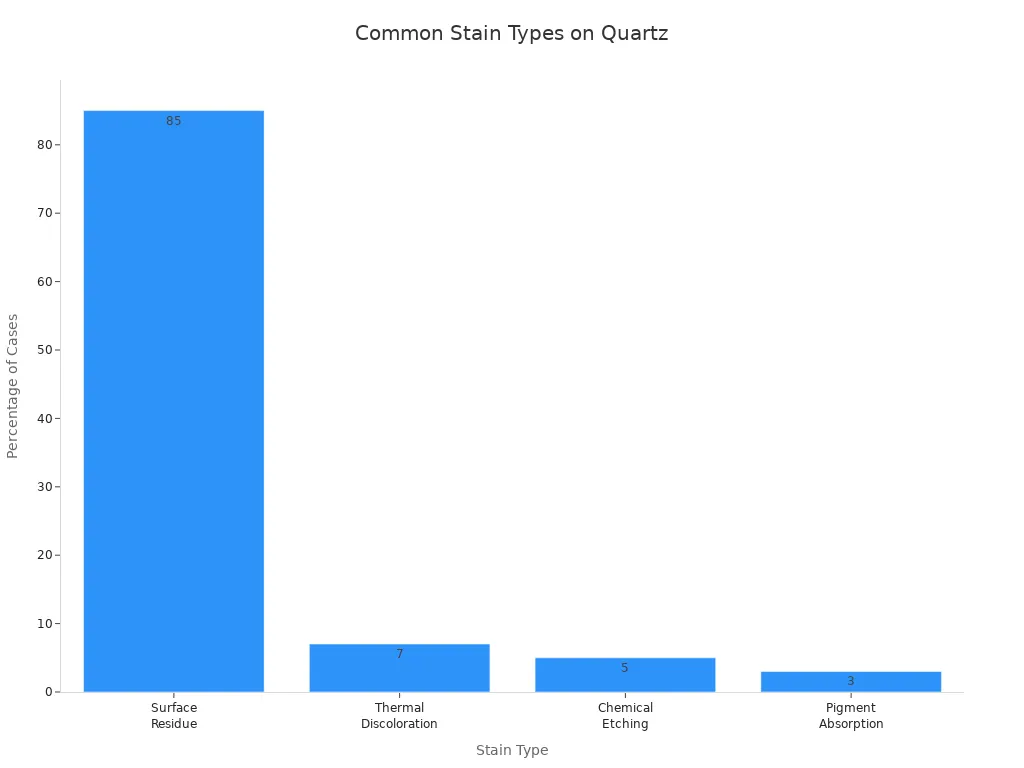
Consumer reports say that food and drink residue makes up about 85% of stains on quartz countertops. This residue includes dried coffee oils and tea tannins that sit on the resin layer.
Oil and Grease Stains
Oil and grease stains usually come from cooking. Common sources are:
Cooking Oil: Spills can leave a slippery film.
Grease: This can build up from frying foods.
Cosmetics: Products like lotions can leave oily marks.
Most oil and grease stains are just surface residues, not real stains. They do not go into the quartz but can create a film that dulls the surface. To stop these stains, wipe up spills right away.
Ink and Dye Stains
Ink and dye stains can be hard to clean. They often come from:
Permanent Markers: These can leave deep stains if not cleaned fast.
Certain Dyes: Some dyes from fabrics or foods can also cause discoloration.
If you see ink stains, act quickly. Use a gentle cleaner or a special stone-safe ink remover to lift the stain before it sets.
By knowing these common stains, you can better protect your quartz countertops and keep them looking nice.
Quartz Stone Stain Remover Products
Cleaning quartz countertops needs the right products. Here are some good choices to keep them looking nice.
Mild Detergents
Mild detergents are great for daily cleaning. They remove light stains without hurting the surface. Remember these tips:
Don’t use acidic solutions like lemon juice or vinegar. They can damage quartz.
Avoid alkaline solutions like baking soda and oven cleaners. They can also harm quartz.
Clean often with warm water and mild soap. This keeps your countertops shiny.
Rinse with cool water after using any cleaner. This stops residue from building up.
Mix mild dish soap with water for safe daily cleaning. Remove dried residue first for best results.
BANDě Stone Surface Cleaning Agent
The BANDě Stone Surface Cleaning Agent is great for cleaning quartz. It’s eco-friendly and removes stains without damage. It works on many materials, including quartz.
Safety Precautions:
Wear plastic gloves when using this product to protect your skin.
If it gets in your eyes, rinse with lots of water. Get medical help if needed.
Don’t use on metals like aluminum or copper to avoid damage.
Baking Soda Paste
Baking soda is a natural cleaner for tough stains. Here’s how to use it:
Wipe away loose dirt with a damp cloth.
Put a little baking soda paste on a damp sponge or cloth.
Rub the paste gently in circles on the stain. Don’t scrub hard.
Let the paste sit for 1–3 minutes for tough stains. Keep it damp.
Rinse with a clean damp cloth to remove paste.
Dry with a microfiber towel to make it shine.
Baking soda cleans gently without scratching. It lifts residue safely.
Using these products and methods will keep quartz countertops clean and beautiful for years.
Step-by-Step Cleaning Techniques
For Food and Beverage Stains
Removing food and beverage stains from quartz countertops requires careful attention. Follow these steps for effective cleaning:
Blot the Stain: Use a dry, lint-free microfiber cloth to blot the stain. This prevents spreading.
Apply a Cleaner: Choose a gel cleaner or a mild detergent. Apply a generous amount to a damp soft cloth.
Wipe in Circles: Gently wipe the stained area in a circular motion. This helps lift the stain without scratching the surface.
Rinse Thoroughly: Rinse the area with clean water to remove any cleaner residue.
Dry the Surface: Use a soft cloth to dry the area completely. This prevents water stains from forming.
For tougher stains, you can use a baking soda paste. Mix baking soda with water to create a thick paste. Apply it to the stain, cover with plastic wrap, and let it sit for a few hours before rinsing.
Tip: Avoid using acidic cleaners like vinegar or lemon juice. These can etch the surface of your quartz countertop.
For Oil and Grease Stains
Oil and grease stains can be tricky, but you can tackle them effectively with these steps:
Blot Fresh Spills: Quickly blot any fresh spills with a dry, lint-free microfiber cloth. This prevents the oil from spreading.
Rinse with Distilled Water: Use a spray bottle set to ‘mist’ to rinse the area. Distilled water helps avoid mineral deposits.
Air-Dry Completely: Allow the surface to air-dry before proceeding with further cleaning.
Use a pH-Neutral Cleaner: Apply a pH-neutral cleaner, such as Simple Green, with a clean microfiber cloth. Use light, circular motions for no more than 60 seconds.
Rinse Again: Mist the area with distilled water and dry with a second microfiber cloth using straight-line strokes.
For deep cleaning, consider using a cleaning paste. This helps break down oil buildup while lifting residue from the surface.
For Ink and Dye Stains
Ink and dye stains require prompt action. Follow these steps to remove them without causing discoloration:
Blot the Stain: Use a dry, lint-free microfiber cloth to blot fresh spills. This minimizes spreading.
Rinse with Distilled Water: Mist the area with distilled water to prevent mineral deposits from tap water.
Air-Dry Completely: Let the area dry before further cleaning to avoid hydrolytic swelling.
Apply a pH-Neutral Cleaner: Use a cleaner verified for quartz surfaces, such as diluted Simple Green. Apply it with a microfiber cloth using light, circular motions.
Rinse and Dry: Rinse with distilled water and dry immediately with a clean cloth to prevent streaking.
For stubborn ink stains, apply undiluted cleaner directly to the stain. Let it sit for at least 20 minutes before wiping clean.
By following these cleaning techniques, you can effectively maintain your quartz countertops and keep them looking their best. Remember, regular maintenance is key to preventing deep stains and preserving the beauty of your surfaces.
Preventative Measures
Taking care of your quartz countertops is very important. It helps them stay looking nice. Here are some good ways to prevent damage.
Regular Cleaning Habits
Cleaning your countertops every day helps keep them looking good. Here are some tips to remember:
Clean quartz countertops daily to stop stains and keep them shiny.
Wipe down surfaces a few times a day, especially after meals. This helps get rid of food bits and spills.
Clean up spills right away with a soft cloth or sponge. This stops stains from things like coffee, tea, and wine.
Use mild, pH-neutral dish soap for cleaning. Stay away from strong chemicals that can hurt the surface.
By following these cleaning tips, you can lower the chance of stains on your quartz countertops.
Using Coasters and Cutting Boards
Using coasters and cutting boards is an easy way to protect your countertops. Here’s how they help:
Put coasters under drinks to stop spills and stains. Sugary or acidic drinks can leave sticky marks that build up.
Use cutting boards when cooking. This stops scratches and stains from knives and acidic foods.
Don’t let acidic foods or drinks sit on the quartz surface. This helps avoid dull spots or etching.
These small steps can really help keep your countertops in good shape.
Sealing and Maintenance Tips
Quartz countertops usually don’t need sealing because they are non-porous. However, some people choose to seal them for extra protection. Here are some maintenance tips:
Use mild cleaners and avoid strong chemicals. This keeps the surface safe from damage.
Don’t put hot pots directly on the countertop to avoid thermal shock.
Always use a cutting board to prevent scratches.
Clean spills quickly to keep the surface strong.
By following these tips, you can make sure your quartz countertops stay beautiful and useful for many years.
Taking care of quartz countertops keeps them looking nice and lasting long. You can get rid of stains with mild soap, BANDě Stone Cleaner, or baking soda paste. Cleaning often is important to keep them in good shape.
If you take care of them right, quartz countertops stay pretty and work well for many years without needing much help from experts.
Check your countertops now and then. This helps you find weak spots and change how you use them. Clean deeply often, especially in spots you forget about, to keep them looking great. Follow these tips to have beautiful quartz countertops for a long time!
FAQ
What should I avoid when cleaning quartz countertops?
Don’t use acidic or alkaline cleaners like vinegar, lemon juice, or baking soda. These can harm the surface. Use mild detergents or special quartz cleaners for safe cleaning.
How often should I clean my quartz countertops?
You should clean your quartz countertops every day. Regular cleaning stops stains and keeps the surface shiny. Wipe up spills right away to prevent any staining.
Can I use bleach on quartz countertops?
No, you should not use bleach on quartz countertops. Bleach can change the color of the surface and hurt the resin. Use mild soap or a pH-neutral cleaner instead.
How do I remove stubborn stains from quartz?
For tough stains, use a baking soda paste. Mix baking soda with water, put it on the stain, cover it with plastic wrap, and let it sit for a few hours before rinsing.
Is sealing necessary for quartz countertops?
Sealing is usually not needed for quartz countertops because they are non-porous. However, some people choose to seal them for extra protection against stains and scratches.
See Also
Transforming Concrete Floors From Bland To Brilliant
Comprehensive Guide To Polishing Concrete With BANDě Solutions
2025 Commercial Guide To Concrete Dust Sealer Applications
