


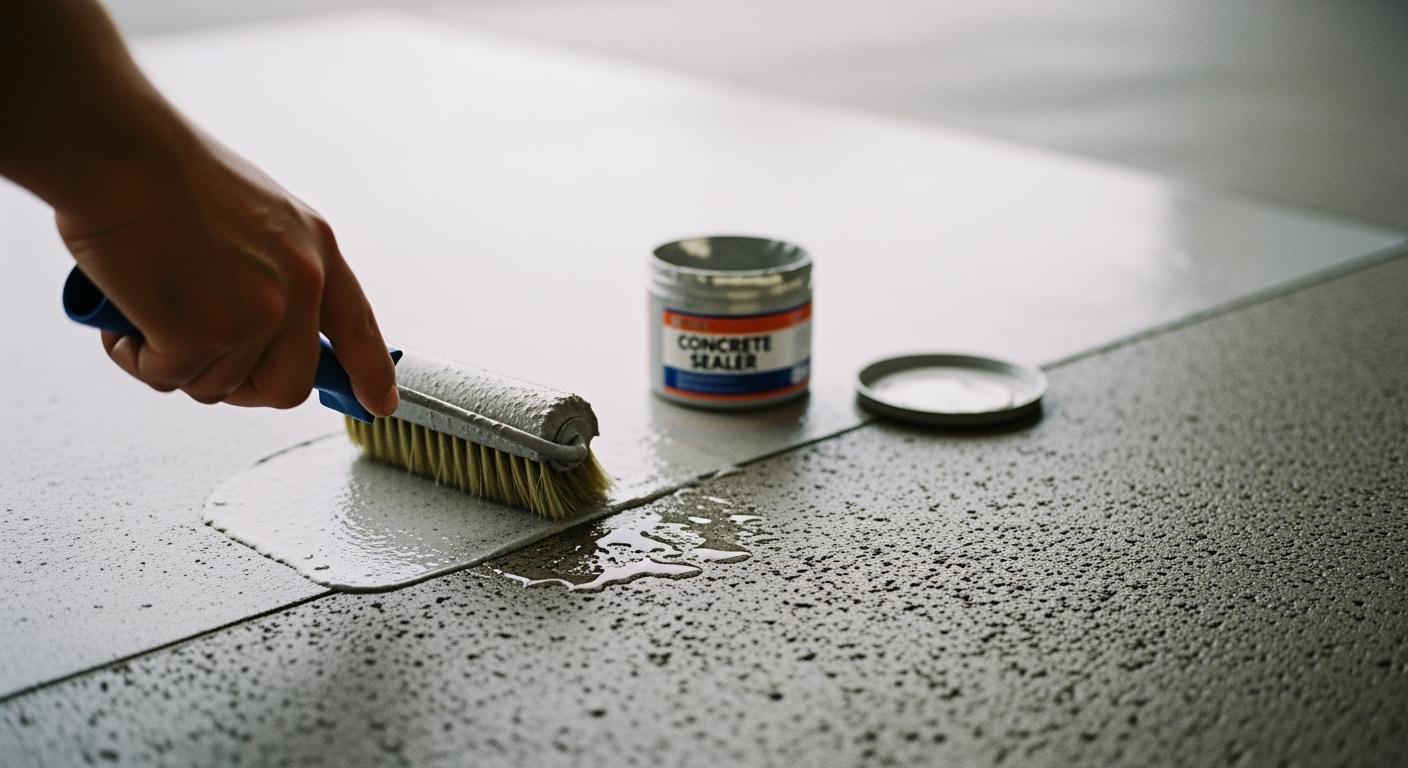
Selecting the right concrete sealer is crucial for ensuring long-lasting protection. You must consider factors such as UV resistance and waterproofing. A well-chosen concrete sealer safeguards your surfaces against harsh weather elements. This choice significantly enhances durability and maintains the appearance of your concrete.
Key Takeaways
Choose the right concrete sealer based on its UV resistance and waterproofing to ensure long-lasting protection for your surfaces.
Understand the different types of sealers available, such as acrylic, polyurethane, and epoxy, to select the best option for your specific needs.
Regularly evaluate your sealer’s performance and reapply as needed to prevent issues like bubbling or whitening, ensuring your concrete remains visually appealing.
Concrete Sealer Types

When selecting a concrete sealer, understanding the different types available is essential. Each type serves specific purposes and environments, ensuring your concrete surfaces remain protected and visually appealing.
Indoor Concrete Sealer
Indoor concrete sealers primarily focus on enhancing the appearance and durability of concrete surfaces within buildings. You can choose from several options, including:
Acrylic Sealers: These are popular for their UV resistance and aesthetic enhancement. They protect against water and deicing chemicals, making them suitable for various indoor applications. However, they can increase slipperiness, so consider this when selecting a sealer for areas with foot traffic.
Advantages | Disadvantages |
|---|---|
Can increase slipperiness | |
Non-yellowing properties | |
Aesthetic enhancement | |
Protects against water and deicing chemicals | |
Available in various colours |
Polyurethane Sealers: These sealers offer excellent chemical resistance and durability. They work well in high-traffic areas, providing a flexible surface that withstands wear and tear.
Epoxy Sealers: Known for their exceptional durability, epoxy sealers are ideal for heavy use. They resist chemicals and abrasions, making them suitable for industrial settings.
Property | Polyurethane Sealer | Epoxy Sealer |
|---|---|---|
Chemical Resistance | Resistant to acetic acid, lactic acid, and oleic acid from vegetable and animal fats | Exceptional resistance to chemicals, including sulfuric acid (especially with Novolac epoxies) |
Durability | High resistance to corrosion, UV, and weather | Designed for heavy use, abrasion resistance, and industrial settings |
Heat Resistance | High heat resistance | Increased heat resistance with Novolac epoxies |
Ideal Applications | Flexible products for foot and vehicular traffic | Warehouses, factories, and commercial garages |
Outdoor Concrete Sealer
Outdoor concrete sealers protect surfaces from harsh weather conditions, UV exposure, and moisture. In Australia, you might consider the following types:
Penetrating Sealers: These sealers are preferred in areas like Melbourne due to their ability to withstand wet conditions and UV exposure. They create a barrier without altering the concrete’s appearance.
Silane and Siloxane Sealers: These are effective for waterproofing and preventing damage from rain erosion. They penetrate deeply into the concrete, providing long-lasting protection.
Polyaspartic Sealers: Known for their superior durability, polyaspartic sealers excel in high-traffic areas. They offer UV resistance, preventing fading and yellowing from sun exposure. You can apply them in a wide range of temperatures, ensuring reliable performance in varying weather conditions.
Acrylic Sealers: While these are often used indoors, they can also serve outdoor applications. However, high gloss sealers like epoxy may degrade under UV exposure, making them less suitable for outdoor use.
When considering reapplication intervals, different sealers have varying lifespans. For example:
Sealer Type | |
|---|---|
Acrylic sealers | Every 2 to 4 years |
Polyurethane sealers | Every 5 to 7 years |
Polyaspartic sealers | Every 10 to 15 years |
Silane/Siloxane | Every 7 to 10 years |
Lithium silicate | Every 15 to 25 years |
Epoxy coatings | Every 10 to 20 years |
Choosing the right type of concrete sealer ensures your surfaces remain protected and maintain their appearance over time.
Choosing the Right Concrete Sealer
Selecting the right concrete sealer involves understanding its performance characteristics and application methods. You must consider factors such as UV resistance, waterproofing, and stain resistance to ensure long-lasting protection for your concrete surfaces.
Performance Characteristics
When evaluating concrete sealers, focus on the following performance characteristics:
UV Resistance: UV stabilisers in sealers prevent polymer breakdown. This is crucial for outdoor surfaces exposed to sunlight. Premium sealers act as a protective barrier against UV rays, preserving the appearance and functionality of surfaces like driveways over time.
Waterproofing: Different sealers offer varying levels of waterproofing. Penetrating sealers create a hydrophobic barrier by blocking pores, while topical sealers form a film on the surface. Solvent-based sealers excel in performance due to better penetration and adhesion.
Stain Resistance: The ability to resist stains varies among sealers. For instance, polyurethane and epoxy sealers provide high stain resistance, making them ideal for high-traffic areas. In contrast, acrylic sealers offer moderate stain resistance and require more frequent reapplication.
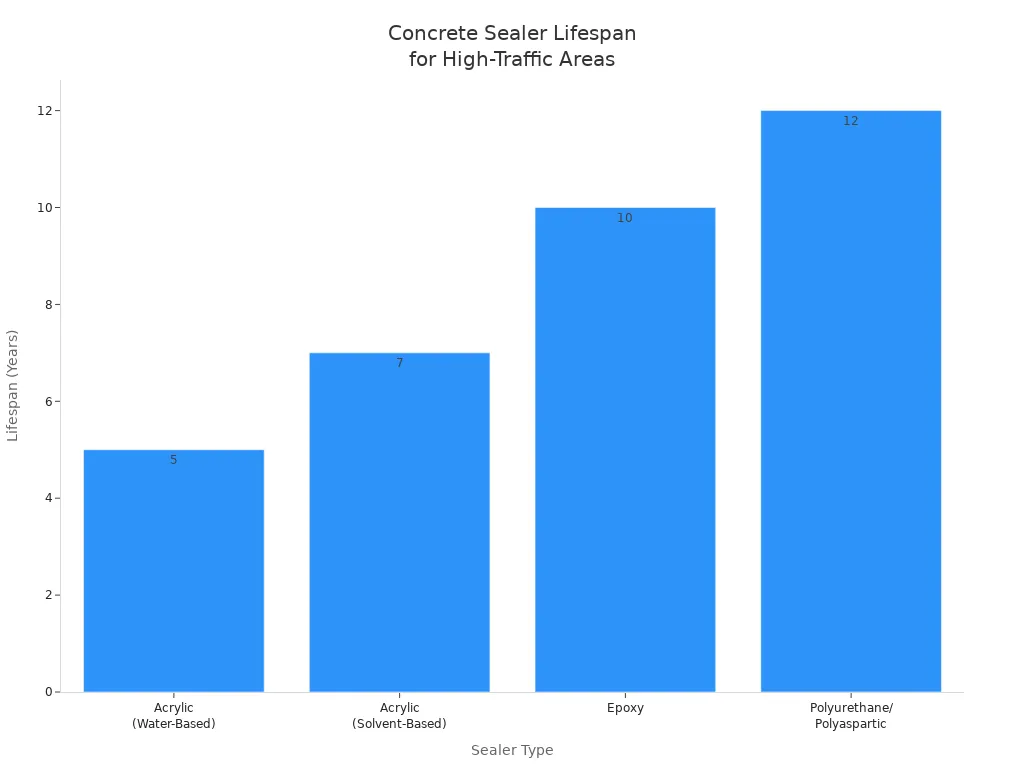
To help you compare the performance characteristics of different sealers, consider the following table:
Sealer Type | Typical Lifespan (Years) | Maintenance Frequency |
|---|---|---|
Acrylic (Water-Based) | 2–5 | Annual reapplication common |
Acrylic (Solvent-Based) | 3–7 | Every 2–3 years |
Epoxy | 5–10 | Recoat every 5 years |
Polyurethane/Polyaspartic | 7–12 | Recoat every 5–7 years |
Application Methods
The application method significantly affects the performance and durability of concrete sealers. Here are some key points to consider:
Penetrating Sealers: Apply these sealers using a wet-on-wet method. This ensures maximum protection by saturating the surface. Use a low-pressure sprayer or lambswool applicator for a true flood coat. Avoid rolling, as it can cause the product to dry too quickly.
Film-Forming Sealers: These sealers require a different approach. Ensure the surface is clean and dry before application. Follow the manufacturer’s instructions for curing times and avoid water contact during this period.
Environmental Considerations: In Australia, climate conditions play a vital role in your choice of sealer. High heat and UV exposure in regions like Brisbane necessitate UV-resistant options. Heavy rain and humidity require water-resistant sealers to prevent moisture damage.
Coastal vs. Inland Areas: Coastal areas face challenges from salt air, which accelerates concrete deterioration. Use marine-grade sealers designed for salt resistance. Inland areas experience extreme temperature variations, requiring flexible sealing systems to accommodate movement.
By understanding these performance characteristics and application methods, you can select the right concrete sealer that meets your needs and ensures long-term value for your surfaces.
Choosing the right concrete sealer is vital for protecting your surfaces. You must consider factors like UV resistance, waterproofing, and maintenance costs. For outdoor applications, select sealers that withstand harsh weather and UV exposure. Remember, informed choices lead to long-lasting protection and reduced maintenance expenses.
Tip: Regularly evaluate your sealer’s performance to avoid common issues like bubbling or whitening.
FAQ
What is the best type of concrete sealer for outdoor use?
For outdoor use, penetrating sealers offer excellent UV resistance and waterproofing, making them ideal for Australian climates.
How often should I reapply my concrete sealer?
Reapplication depends on the sealer type. Generally, acrylic sealers need reapplication every 2-4 years, while polyaspartic sealers last 10-15 years.
Can I apply a concrete sealer in wet conditions?
Avoid applying sealers in wet conditions. Ensure the surface is dry for optimal adhesion and performance.
See Also
Discovering The Ideal Concrete Sealer For Your Requirements
The Ultimate Guide To Selecting The Best Concrete Sealer
A Comprehensive 2025 Guide To Picking The Perfect Sealer
