


Functional wall coatings are specialized solutions. They offer performance beyond standard paints. These advanced coatings are crucial in modern construction. They address specific environmental challenges. You find hygienic, waterproof, and elastomeric coatings. These distinct coatings help you understand their roles. You make informed choices for your projects in 2026.
Key Takeaways
Functional wall coatings protect surfaces better than standard paints by offering custom solutions for tough environment challenges.
Hygienic coatings kill germs, waterproof coatings block moisture, and elastomeric coatings stretch to prevent surface cracks.
Advanced wall coatings save money over time by reducing repair costs and extending building lifespans.
What Are Functional Wall Coatings?
Defining Functional Coatings
Functional wall coatings are specialized, performance-driven finishes. They offer properties far beyond what standard decorative paints provide. These coatings often form significantly thicker films than typical paint. You apply them to achieve specific protective or operational benefits. Their main purpose is to provide protection beyond just aesthetics. This includes benefits like enhanced hygiene, superior waterproofing, or increased elasticity.
Industry standards define a coating as ‘functional’ by its key performance characteristics. Aesthetic properties, such as color and gloss retention, are important factors in their overall performance. However, functional coatings also offer properties like flexibility, smoothness, moisture resistance, and impact resistance. Some even provide conductivity or solderability. Other unique properties include a non-stick surface, allowing most materials to release easily. They have a low coefficient of friction, typically between 0.05 and 0.20. These coatings are often non-wetting, meaning they are both oleophobic and hydrophobic. You can find them with high heat resistance, up to 500°F continuously, and even 1112°F short-term. They also maintain cryogenic stability down to -454°F and show strong chemical resistance, remaining unaffected by most solvents. These specialized coatings also possess unique electrical properties, such as low dissipation and high dielectric strength.
Why Choose Functional Coatings?
You choose functional coatings for their ability to solve specific environmental and operational challenges. These specialized coatings offer benefits like wear resistance and corrosion protection. They can provide electrical insulation or conductivity, depending on your needs. Many also offer lubricity and chemical stability. This makes them ideal for environments where standard paints would quickly fail. Their enhanced performance ensures a longer lifespan for your surfaces.
The decision to use these advanced coatings often comes down to long-term value. While the initial investment might be higher than standard paint, the extended durability and reduced maintenance costs offer significant savings over time. These coatings protect your structures from damage, prevent issues like mold growth, and maintain critical hygienic standards. You invest in a functional wall coating to ensure the longevity and optimal performance of your facility, protecting both your assets and the people within them.
Hygienic Wall Coatings
Hygienic Coating Benefits
You need hygienic wall coatings for environments demanding strict cleanliness. These specialized coatings offer antimicrobial properties. They make surfaces easy to clean. They also resist mold and mildew growth. This ensures a sterile environment. These coatings help you meet health and safety compliance. They reduce maintenance efforts. You spend less time and resources on cleaning. They also maintain aesthetic appeal in sanitary environments. This ensures your facilities look clean and professional.
Triclosan-based coatings are effective antimicrobial additives. They inhibit the enzyme enoyl-acyl carrier protein reductase (ENR). This enzyme is vital for bacterial fatty acid synthesis. Its inhibition disrupts cell membrane formation. This leads to bacterial death. These coatings provide broad-spectrum protection. You can apply them to various surfaces. This includes metals, plastics, and textiles. They offer long-term antibacterial effects.
Hygienic Coating Applications
You will find hygienic coatings essential in many critical settings. Healthcare facilities, like hospitals and clinics, rely on these coatings. Food processing plants also use them extensively. Laboratories and schools are other key applications. These environments require high standards of cleanliness. The specialized nature of these coatings ensures superior protection.
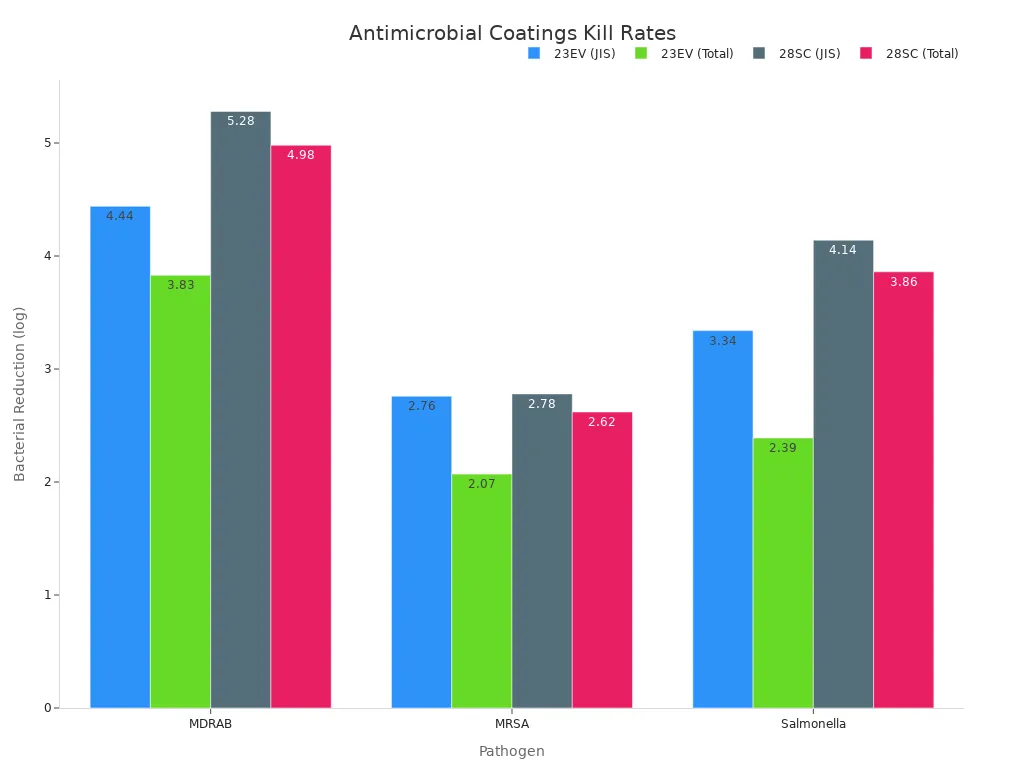
For example, specific coatings show strong efficacy against common pathogens. Coating 28SC achieved a bacterial reduction of 5.28 against MDRAB. It also reduced MRSA by 2.78 and Salmonella by 4.14. These values are from the JIS method. A bacterial reduction rate (R) greater than 2 indicates strong efficacy. These results were obtained even after bleach cleaning. This demonstrates the durability of these specialized coatings. The high level of performance is crucial for preventing the spread of infections. It protects both staff and occupants in sensitive areas.
Waterproof Wall Coatings
Waterproof Coating Advantages
You use waterproof wall coatings to create an impermeable barrier against moisture. These specialized coatings effectively seal and protect exterior masonry. They often act as a one-way moisture barrier. This means they prevent external water from entering while allowing internal vapor to escape. This unique characteristic helps maintain the structural integrity of your building. You prevent water damage and inhibit mold growth. These benefits are crucial for long-term durability.
Waterproof coatings offer enhanced protection. You can apply these coatings up to ten times thicker than standard paint. This increased thickness contributes significantly to their protective capabilities. Remember, nearly 70% of waterproofing success depends on design, detailing, and workmanship. Only 30% depends on the material itself. Common causes of failure include improper surface preparation, such as applying over dust or damp surfaces. Hydrostatic pressure exceeding the coating’s design can also lead to failure. Inflexible coatings may crack under foundation movement. These specialized coatings provide superior performance when applied correctly.
Waterproof Coating Applications
You find waterproof coatings essential in many areas prone to moisture. Basements, bathrooms, and kitchens are prime locations for these protective coatings. Exterior walls also benefit greatly, especially in regions with heavy rainfall. Swimming pool areas require robust waterproof coatings to contain water effectively. You select these coatings for their ability to withstand constant exposure to water.
However, you must choose the right waterproofing system for specific conditions. Using cementitious coatings on flexible roofs, for example, is inappropriate. Applying acrylic coatings in submerged structures or using negative-side treatment when positive-side is required also leads to failure. Inadequate surface preparation is a major issue. You should never apply coatings over dust, oil, or loose particles without repairing concrete defects. Ignoring cracks, joints, and penetrations, such as pipe penetrations or wall-floor junctions, compromises the system. Poor application and thickness control, like applying a single thin coat instead of multiple, also reduce effectiveness. You need proper curing and suitable weather conditions for optimal performance of these coatings.
Elastomeric Wall Coatings
Elastomeric Coating Properties
You will find elastomeric coatings stand out for their exceptional flexibility and elasticity. These specialized coatings possess a unique ability to stretch and return to their original shape. This characteristic allows these coatings to bridge existing cracks in substrates. They also prevent new cracks from forming. This is crucial for maintaining the integrity of your building’s envelope. You can evaluate their crack-bridging ability using standards like ASTM C1305. This test method specifically assesses how well liquid-applied waterproofing membranes, including elastomeric coatings, can span cracks. These coatings also offer excellent weather resistance and UV stability. This ensures their long-term durability against harsh environmental elements.
Their primary benefit lies in accommodating substrate movement. Buildings naturally expand and contract with temperature changes. Elastomeric coatings move with the structure. This prevents cracking and maintains the protective barrier. You can measure their elongation properties using ASTM D412 or ASTM D2370. These standards evaluate tensile strength and elongation at break. This demonstrates the coating’s ability to stretch significantly without failing. These specialized coatings form significantly thicker films. They can be up to ten times thicker than standard paint. This provides effective protection and enhances overall performance.
Elastomeric Coating Uses
You should consider elastomeric coatings for various applications where flexibility and protection are paramount. They are ideal for exterior walls, especially in areas experiencing significant temperature fluctuations. The coating’s ability to expand and contract prevents damage from thermal cycling. You can apply these coatings effectively to stucco, concrete, and masonry surfaces. These materials often develop hairline cracks over time. Elastomeric coatings bridge these imperfections. This maintains a seamless, protective layer.
Beyond walls, you also see the benefits of elastomeric roof coatings. These specialized coatings provide a durable, waterproof membrane for roofs. They offer excellent mechanical durability. This protects against foot traffic and environmental wear, extending the roof’s lifespan. Their inherent flexibility makes these coatings highly suitable for above-grade waterproofing. This ensures your structures remain dry and protected for many years. These versatile coatings extend the lifespan of your building materials. They reduce the need for frequent repairs and contribute to overall structural integrity.
Comparing Functional Wall Coatings
You understand the distinct advantages of hygienic, waterproof, and elastomeric coatings. Now, you need to see how they stack up against each other. This comparison helps you make the best choice for your project. Each type of functional wall coating offers unique properties. They serve specific primary functions. They are best suited for particular environments. They also provide key advantages.
Key Differences and Overlaps
You see clear distinctions among these specialized coatings. Hygienic coatings prioritize cleanliness and germ resistance, critical for sterile environments. They offer easy-to-clean surfaces and inhibit microbial growth. Waterproof coatings focus on moisture exclusion, forming an impermeable barrier. They are essential for areas exposed to constant dampness. Elastomeric coatings excel in flexibility and crack bridging, accommodating substrate movement to prevent surface damage. They provide long-term protection against thermal expansion and contraction. However, you will find instances where these coatings offer overlapping benefits. Some waterproof coatings, for example, possess elastomeric properties. This allows them to seal against water while accommodating minor structural movements, enhancing their overall performance and durability.
You can also find advanced hybrid coatings. These combine the best features of different types. Polysilazane-polysiloxane hybrids use polysilazane for adhesion and polysiloxane as a hydrophobic topcoat. This achieves controlled water contact angles (100–120°) and long-term water repellency while maintaining flexibility. Polysilazane-polybutadiene hybrids incorporate functionalized butadiene polymers (5–30 wt%) to improve flexibility and impact resistance. This occurs without sacrificing scratch resistance or chemical durability. Other polysilazane hybrids use non-fluorine hydrophobic resins (10–50 wt%) to reduce crack formation on flexible plastic substrates. They preserve low oxygen transmission rates. Nanoparticle-enhanced polysilazane coatings disperse hydrophobic silica nanoparticles. This promotes superhydrophobicity and enhanced water repellency. These hybrid coatings find typical applications in durable surface protection, gas barrier coatings, and flexible substrates requiring both waterproofing and elastomeric behavior.
You also encounter S/A/PU hybrid coatings. These combine the elasticity of polyurethane, the weather resistance of acrylic polymers, and the adhesion of silane-modified polymers. This results in improved mechanical performance and durability. Silane-modified polymer (SMP) membranes offer strong adhesion and flexibility, bridging the gap between waterproofing and elastomeric needs. Acrylic-silicone hybrid coatings provide a balance of water repellency and flexibility, suitable for outdoor exposure. These advanced coatings are ideal for roofing systems (flat/low-slope roofs), wet rooms (bathrooms, kitchens), foundations, and façade protection. They offer comprehensive protection.
Cost and Value Analysis
You might notice that the initial investment for functional wall coatings is higher than for standard paints. This is due to their specialized formulations and enhanced performance characteristics. However, you must consider the long-term value. These coatings offer significant savings over their lifespan. Their superior durability means less frequent repainting or repair. For example, the extended lifespan of elastomeric roof coatings reduces replacement costs.
You save money on maintenance. Hygienic coatings reduce cleaning time and the need for harsh chemicals. Waterproof coatings prevent costly water damage and mold remediation. The enhanced durability of these coatings protects your assets. They maintain the structural integrity of your building. This prevents expensive repairs down the line. You invest in a functional wall coating for its long-term performance. This ensures a better return on your investment. It provides peace of mind. You get a solution that lasts. For instance, the application of elastomeric roof coatings can significantly extend the life of a roof, deferring major capital expenditures.
Choosing the Right Functional Wall Coating
Project Needs and Regulations
You must carefully choose the right functional wall coating for your project. Consider several factors. These include environmental conditions, the type of substrate, your budget, regulatory requirements, and the desired lifespan. Environmental conditions are very important for exterior coatings. You must consider ambient temperature. High ambient temperature causes the coating to dry too quickly. This affects adhesion. Low temperature can thicken the coating and shorten its life. Substrate temperature also affects adhesion and cure. A low substrate temperature can cause the coating to thicken on contact. You also need to check the dewpoint. The ambient temperature must be at least 5°F above the dewpoint. This avoids condensation, which causes coating failure. High relative humidity slows the drying of waterborne coatings. Low humidity might be beneficial. Always check the specific range in the coating’s product data sheet.
You also need to consider the coating’s UV resistance and light stabilization. These extend the service life of exterior coatings. Resin quality and the light-stabilizer package are key. Water resistance and wear resistance protect materials from UV and water aging. You need low-VOC latexes with excellent adhesion. Dirt pickup resistance maintains aesthetics. This reduces the need for recoating. Bleach resistance and light fastness are key for exterior coatings. Encapsulated pastes provide superior alkali resistance. Gloss retention and efflorescence resistance are also important. Advances in dirt pickup resistance, adhesion, and resistance to surfactant leaching are available for broad substrates. Ponding water resistance and adhesion to roofing substrates like TPO and EPDM are also critical. Vinyl ester-modified acrylic resin reduces water absorption and improves adhesion. For decks, water-repellency and dirt pickup resistance ensure longevity. DIY consumers seek non-drip coatings and enhanced durability.
Regulatory requirements also guide your choice of coatings. In the United States, many states require dampproofing for residential basements. This is usually an asphalt-based coating. You spray or brush it onto the outside of foundation walls. For the European Union, you must follow VOC content limits. For interior matt walls and ceilings, the limit is 30 g/L. For interior/exterior gloss walls and ceilings, it is 100 g/L. Exterior walls of mineral substrates have a limit of 40 g/L. These limits apply to decorative wall coatings placed on the EU market. The VOC content is measured in grams per liter of product as supplied. Water is included in the denominator but not counted as a VOC.
Application Scenarios
You will select different coatings based on specific project needs. For a hospital operating room, you need hygienic coatings. These coatings offer antimicrobial properties. They are easy to clean. They resist mold and mildew. This ensures a sterile environment. For a leaky basement, you need waterproof coatings. These create an impermeable barrier against moisture. They prevent water damage and inhibit mold growth.
For an exterior wall in a seismic zone, you should choose an elastomeric coating. Its high flexibility and elasticity allow it to bridge cracks. It accommodates substrate movement. This prevents damage from ground shifts. For an exterior wall in an area with high temperature fluctuations, you have excellent options. Acrylic elastomeric coatings are flexible. They bridge hairline cracks. They offer good water resistance. However, their performance depends on surface preparation. Thermal cork coatings combine flexibility, breathability, water resistance, and added thermal insulation. This makes them ideal for cold climates with freeze-thaw cycles. Standard paint is often brittle. It fails under substrate movement. This leads to moisture entry. Key performance attributes for these areas include flexibility, water resistance, breathability, UV resistance, and the ability to handle freeze-thaw cycles. These coatings are designed to expand and contract with building movement. This prevents cracks and leaks. Breathability allows moisture to escape. This prevents mold and moisture buildup. These coatings offer excellent durability. They resist weathering, UV exposure, and harsh environmental conditions. This makes them suitable for areas with temperature swings. You can also use elastomeric roof coatings for similar benefits on roofs. These specialized coatings extend the lifespan of your building materials. They reduce the need for frequent repairs.
Selecting the optimal functional wall coating is crucial for project success and long-term performance. These coatings—hygienic, waterproof, and elastomeric coatings—each serve a distinct purpose. The best choice among these coatings depends on environmental demands, substrate conditions, and desired outcomes. Evaluate your project needs carefully, considering initial investment and long-term benefits of these coatings.
FAQ
What is the main difference between hygienic and waterproof coatings?
Hygienic coatings prioritize cleanliness and germ resistance. Waterproof coatings create an impermeable barrier against moisture. You choose based on your specific protection needs.
When should you choose an elastomeric coating over a standard paint?
You choose an elastomeric coating for its flexibility. It bridges cracks and accommodates building movement. This provides superior durability and weather resistance compared to standard paints.
Do functional coatings require special application techniques?
Yes, functional coatings often require specific surface preparation and application methods. Proper technique ensures optimal performance and durability. Always follow manufacturer guidelines for best results.
See Also
Comparing Organic And Inorganic Wall Coatings For Modern 2025 Homes
The Ultimate 2025 Guide To Choosing Industrial Floor Hardeners
Transform Your Interior Space With Premium Decorative Wall Coating Solutions
How To Select Perfect Moisture Barriers For Walls And Floors
Evaluating Top Rated Wall And Floor Moisture Barrier Options Today
