

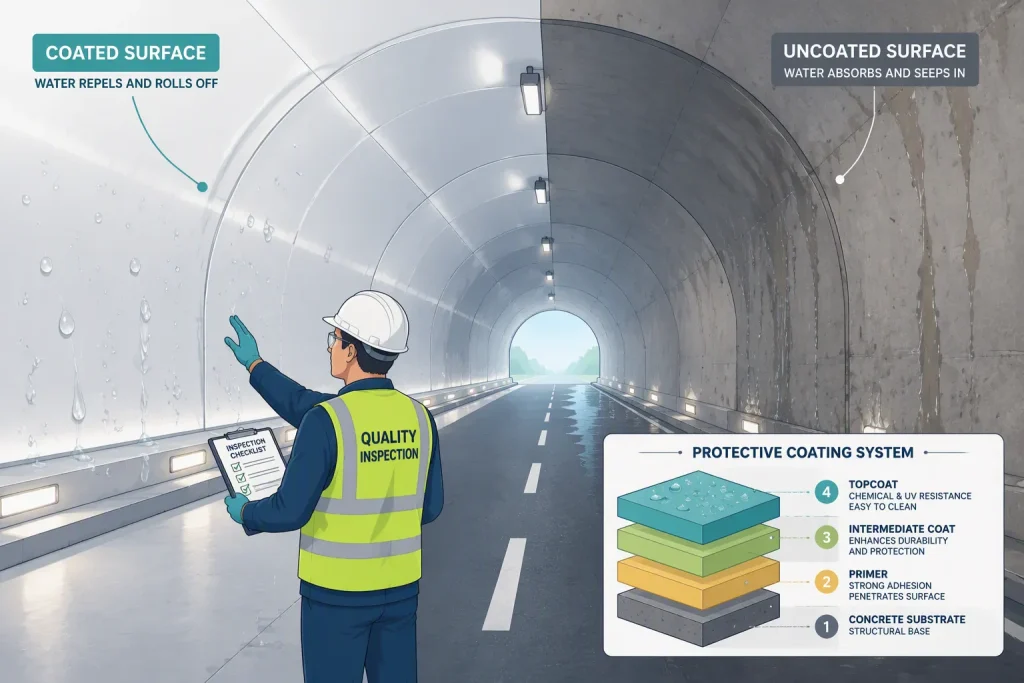
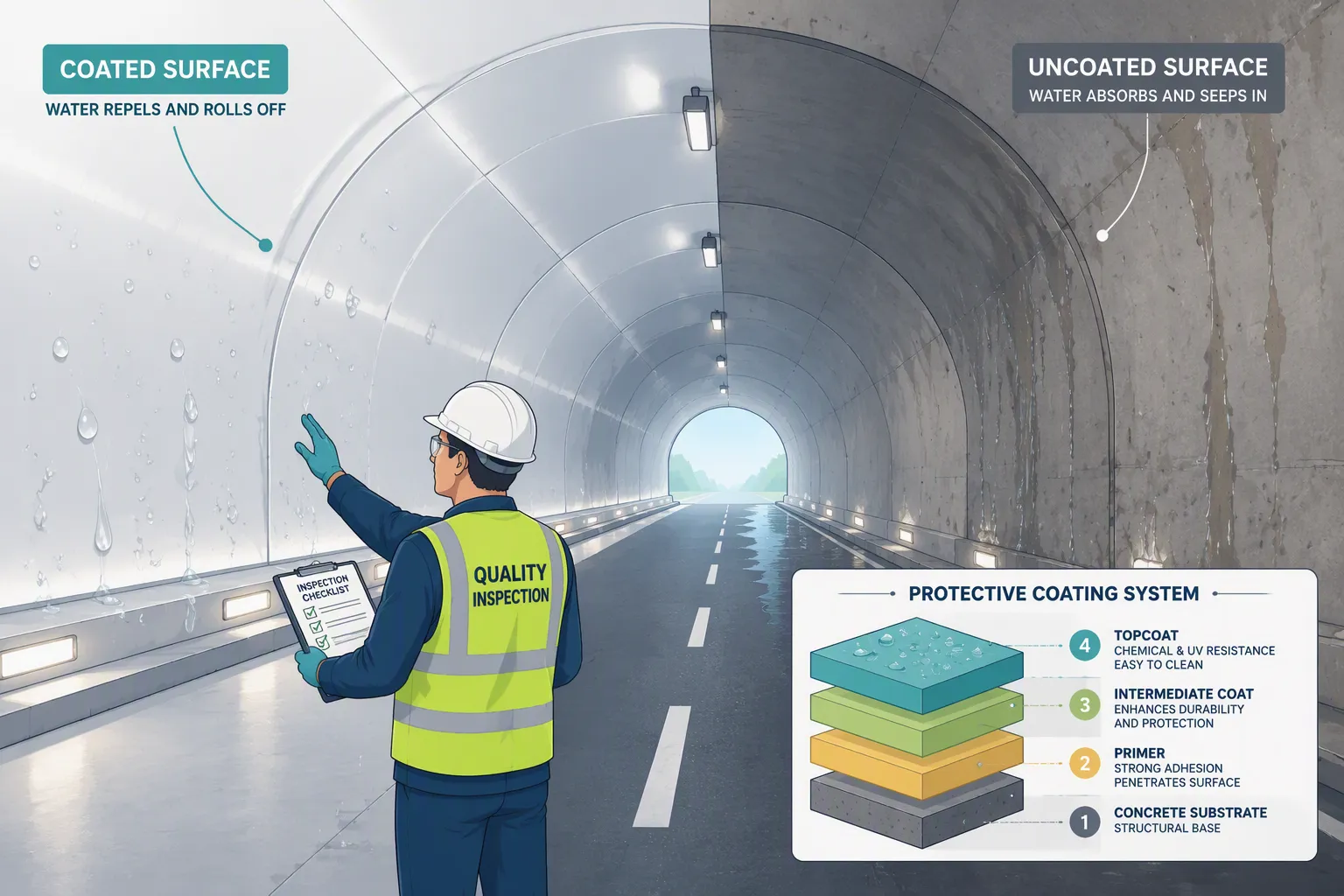
BANDě waterproof coating for tunnels delivers factory-controlled quality. This cement-based material provides vapor permeability and strong adhesion. The factory environment ensures zero defects and precise mixing. Customization fits each tunnel’s unique requirements. Quality protection reduces long-term risk.
When waterproofing fails in a subway tunnel, consequences extend beyond repair costs—service disruptions, safety risks, and public scrutiny. Long-term risk matters more than short-term material costs.
Metric
Value
Waterproofing system cost as % of total construction
Requested service life for underground structures
At least 100 years
This article examines quality control, manufacturing precision, and long-term value.
Key Takeaways
Factory production eliminates site-mixing errors, ensuring consistent quality and reliable waterproofing.
Durable coating reduces maintenance needs and extends tunnel service life for long-term savings.
Custom formulations allow engineers to tailor the material to each tunnel’s unique conditions.
Waterproof Coating for Tunnels: Factory Quality Control
Factory production transforms the waterproof coating for tunnels from a variable field operation into a precise manufacturing process. Every batch that leaves the BANDě facility undergoes rigorous examination before it reaches a construction site. This controlled environment eliminates the guesswork that plagues traditional site-mixed systems.
Zero-Defect Testing
Each production run must pass a battery of standardized tests before release. Independent testing laboratories verify that every batch meets tunnel-specific standards for vapor permeability, adhesion, and chemical resistance. These tests follow recognized European protocols that measure performance under real-world conditions.
Test Property | Standard Test Method |
|---|---|
Water vapor permeability | EN ISO 7783 |
Adhesion to concrete | EN 1542 |
Adhesion after freeze/thaw cycles | EN 13687-1 |
Resistance to severe chemical attack | EN 13529 |
The testing regimen does not stop at initial certification. Batch inspection systems catch defects early, preventing inconsistent batches from reaching the job site. Product traceability systems allow manufacturers to identify and correct specific production issues when they arise. This layered approach ensures that the material quality remains constant from the first drum to the last.
Consistent Formulation
Site-mixed cementitious coatings suffer from a fundamental weakness: human error. Workers measure ingredients by eye, mix for inconsistent durations, and adjust ratios based on intuition rather than data. The result is a coating that varies from batch to batch, with some sections performing well while others develop micro-cracks.
Inconsistent site-mixed concrete often develops micro-cracks that allow water to penetrate, corroding internal reinforcement. By utilizing factory-controlled concrete alongside properly positioned wire mesh and rebar, builders construct stable structures that maintain integrity over decades.
Factory-controlled cementitious materials incorporate precise aggregate grading and controlled air-entraining agents. These additions bolster resistance against cracking and spalling. This precision is impossible to replicate in site-mixed systems. The factory environment also enables customization that field mixing cannot match. Engineers can request a custom formulation that fits the specific chemical exposure, humidity levels, and structural demands of each tunnel project.
Quality Control Mechanism | How It Improves Consistency & Reliability |
|---|---|
Independent testing laboratories | Ensures each batch meets specifications before release |
Standard operating procedures | Reduces human error and variability in production |
Batch inspection systems | Catches defects early, preventing inconsistent batches from reaching site |
Product traceability systems | Allows identification and correction of specific production issues |
Factory automated production improves batch consistency, quality stability, and production efficiency. Manual production, typical of site-mixed systems, often causes inconsistent product quality. The BANDě factory produces a uniform membrane that adheres reliably to both new and existing concrete surfaces. This consistent formulation delivers dependable waterproof protection across the entire tunnel structure.
The 5-layer waterproofing membrane system benefits directly from this factory precision. Each layer performs its designated function because the material composition remains identical throughout the application. Contractors achieve full coverage with confidence, knowing that the product they apply today matches the product they applied yesterday. This reliability translates into long-term protection for the structure and its users.
Manufacturing Precision for On-Site Performance
Factory mixing and curing processes create a uniform coating that performs reliably on both new and existing concrete surfaces. The controlled environment eliminates variables that plague site-mixed alternatives. Workers at the factory follow precise protocols for every batch, ensuring the material arrives ready for application.
Advanced Mixing and Curing
The factory employs automated mixing systems that combine cement, aggregates, and chemical additives in exact proportions. This precision produces a consistent membrane with uniform properties throughout. Quality control teams measure the standard deviation of wet coating thickness during production. A higher standard deviation indicates less uniform coverage, so factory operators monitor this metric closely to maintain tight tolerances. This attention to detail ensures each batch delivers the same performance characteristics.
The curing process also occurs under controlled conditions. Temperature and humidity remain stable, allowing the material to develop its full crystalline structure. This controlled curing enhances the membrane’s ability to bond with concrete substrates. The result is a waterproof coating for tunnels that adheres strongly to both fresh pours and existing structures. Contractors can apply the material with confidence, knowing the factory has already optimized its performance.
The 5-layer waterproofing membrane system relies on this manufacturing precision. Each layer must maintain consistent thickness and composition to function properly. Factory production achieves this consistency through automated dispensing and continuous monitoring. Site-mixed systems cannot replicate this level of control, as workers measure ingredients manually and mix for varying durations.
Efficient Logistics
Packaging plays a critical role in preserving material quality during transit to tunnel sites. The factory packages the coating in 20 kg or 25 kg white plastic buckets. These rigid containers provide a moisture-impermeable barrier that prevents water vapor from entering during transport. The buckets protect the cementitious admixture from premature hydration, which would compromise its waterproofing properties.
Storage requirements further protect the material’s integrity. The buckets must remain indoors, sealed, and away from moisture. Direct sunlight can degrade the product, so the factory labels each container with clear handling instructions. The unopened shelf life extends to 12 months under these conditions, giving project managers flexibility in scheduling deliveries.
This efficient logistics approach reduces waste and ensures timely supply. Project managers can order materials in advance, knowing the product will maintain its quality until application. The packaging also minimizes spillage and contamination during handling. Workers can transport the buckets easily across the job site, reducing labor costs and application time.
The factory’s commitment to protection extends beyond the product itself. By delivering a consistent, high-quality material, the factory helps contractors achieve full coverage across the entire tunnel structure. This reliability translates into long-term performance, reducing maintenance needs and extending the structure’s service life. Engineers can specify the material with confidence, knowing the factory has already addressed the variables that typically cause waterproofing failures.
Cost-Efficiency and Long-Term Value
Faster Application, Lower Labor
The factory-prepared material arrives ready for immediate use. Workers skip the time-consuming steps of measuring and mixing components on site. This efficiency directly reduces labor hours and accelerates project timelines.
The 5-layer waterproofing membrane system applies smoothly over prepared surfaces. Each layer of the membrane cures quickly, allowing crews to proceed without extended waiting periods. Faster cure times mean workers complete the job sooner and move to other tasks. Project managers see tangible savings in payroll and equipment rental costs.
The material’s consistent formulation also reduces waste. Workers apply exactly what they need without worrying about batch variations. This reliability minimizes material loss and ensures complete coverage across the tunnel structure. The factory’s precision eliminates the guesswork that often leads to over-ordering or rework.
Lifecycle Savings and Sustainability
Durability drives long-term value. The coating resists UV exposure and chemical attack, maintaining its integrity for decades. This resilience reduces maintenance frequency and extends the tunnel’s service life. Engineers who specify this material protect their projects from premature deterioration.
The factory’s quality control translates directly into fewer warranty claims. Contractors gain confidence knowing each batch meets strict specifications. This reliability reduces the risk of costly callbacks and repairs. A dependable warranty program provides additional peace of mind for project owners. The extended warranty coverage reflects the manufacturer’s confidence in the product.
Low VOC emissions support green construction goals. The cement-based formulation contains no harmful solvents, making it safe for workers and the environment. Sustainable building practices increasingly demand materials that minimize environmental impact. This coating fits those requirements without compromising performance. The material also fits seamlessly into existing construction workflows.
Custom formulations allow engineers to tailor the material to specific tunnel conditions. Whether facing aggressive groundwater or extreme temperature swings, the factory can adjust the mix. This customization ensures optimal waterproof protection for each unique project. The result is a waterproof coating for tunnels that delivers both immediate savings and long-term value.
Factory precision delivers consistent quality and cost savings. This membrane provides reliable protection against corrosion and moisture intrusion. Engineers can request a custom fit for each tunnel’s unique conditions. The material’s durability reduces maintenance needs. A strong warranty backs every application. Project managers should choose BANDě for proven performance and environmental benefits.
FAQ
How does factory-controlled production improve tunnel waterproofing?
Factory production eliminates site-mixing errors. Each batch undergoes standardized testing for vapor permeability, adhesion, and chemical resistance. This precision ensures consistent membrane performance across the entire tunnel structure.
What testing standards does BANDě coating meet?
The coating passes EN ISO 7783 for vapor permeability, EN 1542 for adhesion, and EN 13529 for chemical resistance. Independent laboratories verify each batch before release. Engineers can request a custom formulation for specific tunnel conditions.
How does the coating reduce long-term project costs?
The material’s durability minimizes maintenance needs. Faster application lowers labor expenses. The warranty provides additional financial protection. The coating’s consistent fit with concrete surfaces reduces rework and extends service life.
See Also
Selecting The Ideal Flexible Waterproof Sealant: A BANDě Guide
Achieving Perfect Waterproof Coating On Every Surface Type
Comparing Film-Forming And Penetrating Concrete Sealers For Australia
Understanding Cementitious Waterproofing Slurry And Its 2025 Function
Exploring Rigid Waterproofing Sealers And Their Operational Mechanics
