

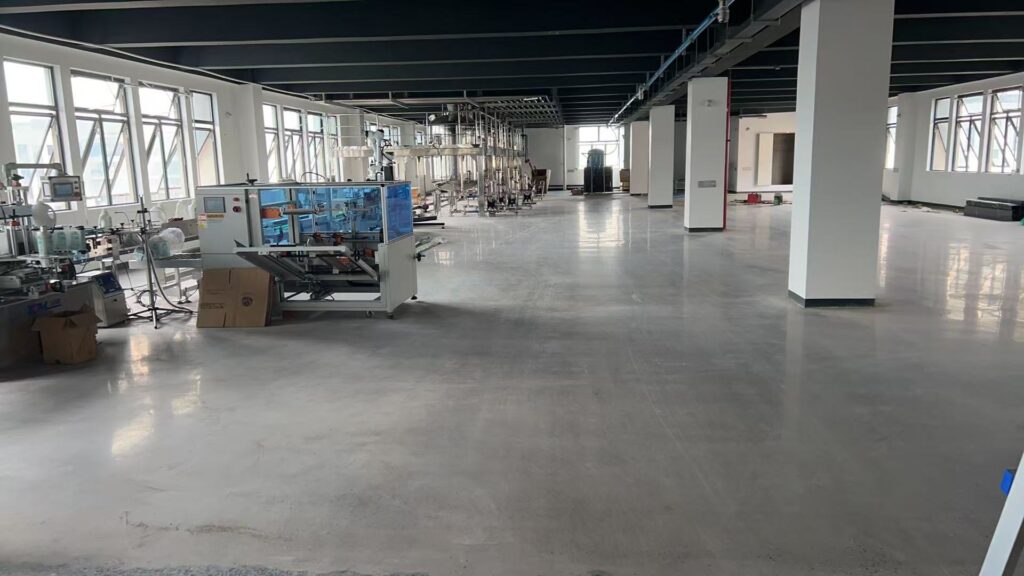
Your industrial floors in Saudi Arabia need to be incredibly durable. They face heavy traffic, chemical spills, and extreme temperatures. Concrete hardeners offer a vital solution. These concrete hardeners boost your concrete floor’s strength and longevity, making these concrete hardeners essential. This guide helps you select the optimal concrete floor hardener for your project.
Key Takeaways
Concrete hardeners make industrial floors strong. They protect floors from heavy use, chemicals, and hot weather. This helps floors last longer and cost less to fix.
Many types of hardeners exist. Silicate hardeners go into the concrete. Epoxy and polyurethane coatings sit on top. Choose the right one based on how much traffic, chemicals, and heat your floor will face.
Proper application and care are important. Clean the floor first. Apply the hardener correctly. Maintain the floor with regular cleaning and quick repairs. This makes the floor last many years.
Understanding Industrial Concrete Hardeners
What is Concrete Hardener?
Concrete hardeners are special treatments you apply to your concrete surface. They penetrate the concrete, reacting with its components to create a denser, more durable finish. Their primary function in industrial settings is to improve surface hardness and reduce issues like dusting. These treatments form a monolithic bond with your existing concrete, making it much tougher. Many common concrete hardeners use silicate-based formulations, such as lithium silicate and sodium silicate. Some high-quality surface hardeners even incorporate colloidal silica. For industrial settings, you might also find robust concrete hardeners like epoxy coatings, polyaspartic coatings, and novolac epoxy. Fluorosilicate is another chemical composition that provides chemical resistance.
Why Industrial Floors Need Hardening
Your industrial floor faces constant challenges. Continuous use, especially in busy industrial environments, leads to surface degradation, causing cracks and spalling. Environmental factors also play a role; exposure to moisture, temperature fluctuations, and chemicals can weaken the concrete structure and cause damage. External influences like ground subsidence, root intrusion, and impact damage further affect your concrete. This constant wear and tear means your floor needs extra protection. That’s where concrete hardeners come in. They provide the necessary hardening to withstand these harsh conditions.
Benefits of Hardened Floors
When you use a concrete floor hardener, you gain significant advantages. Your floor becomes much more resistant to abrasion and impact, making it strong and durable. This increased hardness dramatically reduces dusting, creating a cleaner and safer environment. Hardened floors also offer improved resistance to chemical spills and stains, simplifying cleanup. Ultimately, hardening your floor extends its lifespan, reduces maintenance costs, and enhances operational efficiency.
Types of Concrete Hardeners for Industrial Use
You have many choices when it comes to hardening your industrial floor. Understanding the different types of concrete hardeners and types of hardening materials helps you pick the best solution. These options range from traditional liquid chemical hardeners to advanced penetrating formulas and even dry shake floor hardeners. Each type works differently to make your concrete stronger and more resilient.
Silicate-Based Hardeners
Silicate-based concrete hardeners are a popular choice for many industrial settings. These are typically liquid chemical hardeners that you apply to your concrete floor. They work by penetrating the concrete surface and reacting with a component called calcium hydroxide, also known as free lime. This reaction creates a new material called calcium silicate hydrate (CSH). Think of CSH as a natural binder that fills the tiny pores within your concrete structure. This process makes your concrete denser and much more durable.
You will find several kinds of silicate densifiers:
Sodium Silicate Densifiers: These water-based solutions soak into your concrete. They react with the free lime to create a harder, more durable surface.
Potassium Silicate Densifiers: Similar to sodium silicates, these also react to produce a tougher surface. They often penetrate deeper into the concrete.
Lithium Silicate Densifiers: These densifiers offer superior performance. They react with calcium hydroxide to form a very hard, dense surface.
Colloidal Silica Densifiers: These advanced densifiers use tiny, nano-sized silica particles. They penetrate the concrete and react with calcium hydroxide to form CSH, giving you a highly dense and strong and durable surface.
Polyurethane and Epoxy Solutions
Beyond penetrating hardeners, you can also choose coating solutions like polyurethane and epoxy. These materials form a protective layer on top of your concrete floor. An epoxy coating, for example, creates a tough, seamless surface that resists chemicals and abrasion.
Polyurethane coatings are another excellent option, especially for industrial facilities. You often see them in places like commercial kitchens, hospitals, and chemical plants. They offer many benefits:
Durability: They stand up well to heavy foot traffic and machinery.
Chemical Resistance: They resist a wide range of chemicals and liquids.
UV Resistance: They resist fading, yellowing, and deterioration from UV light.
Easy to Clean: Their smooth, seamless surface makes them hygienic and easy to maintain.
Anti-slip Properties: They can help prevent slips and falls, especially in wet conditions.
Aesthetically Pleasing: You can find them in various colors and finishes.
Low Maintenance: They do not need frequent resealing or waxing.
Advanced Penetrating Hardeners
For the ultimate in concrete hardening, you should consider advanced penetrating hardeners. These products go beyond surface-level treatment, offering deep and lasting protection.
One outstanding example is BANDě Crystal Floor Hardener. This concrete floor hardener provides exceptional benefits for your industrial floor:
Deep Penetration: It penetrates 5-8mm into your concrete, ensuring long-term effectiveness.
Super Hardening: You can expect a 300%+ increase in hardness, making your floor incredibly resilient.
Lasting Mirror-like Shine: It gives your floor a beautiful, reflective finish that lasts.
Eco-Friendly: It is VOC-free and compliant with green building standards, making it a responsible choice.
Excellent Stain and Chemical Resistance: Your floor will resist many common industrial stains and chemicals.
Easy Cleaning: The hardened surface is much easier to clean and maintain.
High Durability: It achieves a Mohs hardness of 6-7, increases compressive strength by 40%, and offers a lifespan of 15+ years.
Wide Applicability: You can use it on both new and old concrete.
Advanced liquid chemical hardeners like BANDě leverage the principles of silicate hardeners. They help seal the pores in your concrete, which significantly increases its resistance to stains and chemicals. This deep hardening process transforms your concrete, making it incredibly strong and durable for the demanding environments of Saudi Arabia.
Selecting Floor Hardening Materials for Your Project
Choosing the right floor hardening materials for your industrial project is a big decision. You need to consider many factors. The right choice ensures your floor performs well and lasts a long time. Let’s explore what you should think about.
Traffic Load and Abrasion Resistance
Think about how much activity your floor will see. Will heavy machinery drive over it constantly? Do you expect a lot of foot traffic or rolling carts? Different industrial settings have different demands. For example, a warehouse with forklifts needs much stronger floor hardening materials than an office space. You need materials that offer excellent traffic load and abrasion resistance. This ensures your floor can handle the daily wear and tear without quickly showing damage. High-quality concrete hardeners significantly boost this resistance.
Chemical Exposure and Spill Risks
Many industrial environments deal with chemicals. You might have oils, acids, solvents, or other corrosive substances. If spills are likely, you need floor hardening materials that can resist them. Some concrete hardeners offer superior chemical resistance. This protects your concrete from degradation and makes cleanup easier. Always assess the types of chemicals present in your facility. Then, choose a solution that provides adequate protection against those specific substances.
Environmental Factors in Saudi Arabia
Saudi Arabia’s climate presents unique challenges for concrete. High temperatures are a major concern. They can accelerate water loss in concrete. This rapid drying leads to an increase in shrinkage cracks. You want to avoid these cracks. Therefore, selecting the right floor hardening materials and application methods is crucial. Membrane-forming curing compounds are very effective in hot climates. They create a protective barrier on the concrete surface. This barrier seals in moisture and prevents rapid evaporation. You should also consider how you store your materials. For example, a specific concrete curing compound like Setseal A90 needs storage in a dry area. Keep it away from direct sunlight. The temperature should stay between 5°C and 35°C to maintain its shelf life. Proper curing and material handling are vital for successful hardening in this environment.
Budget and Cost-Effectiveness
You always consider your budget. However, think beyond the initial cost. Investing in high-quality floor hardening materials can save you money in the long run. For instance, Armour Joints help prevent cracks. They reduce the need for expensive repairs later. This extends your floor’s lifespan. This is especially helpful in high-traffic industrial areas. Downtime for repairs can be very costly. Epoxy floors are another great example. They are easy to clean and maintain. This directly reduces your long-term maintenance costs. Their seamless surface stops dirt and bacteria from building up. This simplifies cleaning and maintenance efforts. It leads to significant cost savings over time. The hygienic nature of epoxy floors also makes them a preferred choice in industries needing high cleanliness. This indirectly reduces costs linked to extensive cleaning protocols. Choosing durable concrete hardeners means less money spent on repairs and upkeep.
Compliance and Standards
Finally, you must meet local regulations and safety standards. Saudi Arabian building codes, specifically the Saudi Building Code (SBC), mandate non-slip flooring. This is a key worker safety regulation. It applies to factory settings. You need to ensure your chosen floor hardening materials comply with these requirements. The SBC also details various types of flooring materials and applications. These are relevant to industrial settings. They include concrete floor, epoxy floor coating, jointed and jointless systems, laser screed technology, and steel fiber. Always check that your chosen solution meets all necessary safety and quality standards for your project. This ensures a safe and compliant industrial floor.
Application Techniques for Optimal Results
You want your industrial floor to last. Proper concrete hardener application is key to getting the best results. This section shows you how to apply concrete hardeners effectively. You will ensure maximum effectiveness and longevity for your floor.
Surface Preparation Essentials
Before you apply any concrete hardeners, you need an essential surface preparation. Your concrete surface must be clean, dry, and free from any contaminants. Remove all dirt, grease, oil, and old coatings. You can use mechanical methods like grinding or shot blasting. This creates a profile for the hardener to penetrate properly. A clean surface ensures the hardener reacts fully with the concrete.
Proper Application Methods
Applying concrete hardeners correctly makes a big difference. For general applications, you might use about 20 kg of hardener for every 10 square meters. If you choose pigmented hardeners, apply them at a minimum rate of 6 kg/m². The quality of your concrete mix and proper curing methods are crucial for effectiveness. Look at these specific rates:
Product | Application Type | Rate (kg/m²) |
|---|---|---|
Monoshake | Normal floors | 3 – 5 |
Monoshake | Heavy duty floors | 5 – 7 |
Monotop | Depending on color | 3 – 5 |
For products like ANQA POXY TC-300SF, you can expect coverage of 2.3 sq.m/kg with a 400-micron coat thickness.
Curing in Saudi Arabia’s Climate
Saudi Arabia’s hot climate requires special curing techniques. You must prevent rapid moisture loss from your concrete.
Use membrane-forming concrete curing compounds. These reduce early-age moisture loss.
Apply curing compounds immediately after finishing. Do this on floors, pavements, and vertical surfaces.
Choose white pigmented grades of curing compounds. They enhance heat reflectance in hot climates.
Combine mineral floor hardeners with proper joint design, curing compounds, and saw-cut sealing. This creates long-lasting floors in demanding conditions.
Post-Application Finishing
After application, you can achieve different looks and functions for your floor.
Finish Type | Appearance | Functionality |
|---|---|---|
Matte Finish | Subtle sheen, smooth, low-gloss, minimizes glare | Non-reflective, suitable where high reflectivity is not necessary |
Satin Finish | Moderate sheen, medium-gloss, enhances natural color | Versatile, balances aesthetics and practicality for various industrial settings |
High-Gloss Finish | Shiny, mirror-like, extremely reflective, adds elegance and brightness | Ideal for areas where visual appeal is as important as functionality, like showrooms |
Decorative Finishes | Rich, vibrant colors (stained), added texture (aggregate), patterns/logos (epoxy inlays) | Unique and customized solutions, enhances aesthetic appeal, reinforces branding |
You can also add rich, vibrant colors with stained concrete. Aggregate embedding adds texture. Epoxy inlays create patterns or logos.
Maintenance for Longevity
Routine Cleaning and Care
You need a solid cleaning plan for your industrial space. Daily tasks are crucial for a comprehensive warehouse cleaning strategy. The cleanliness level you need really depends on what you store. If you handle hazardous items or products for the food or pharmaceutical sectors, you’ll need deep, thorough cleaning. Sometimes, specialized companies handle this. Regular cleaning helps maintain the initial hardening.
Addressing Wear and Damage
Even with the best concrete hardeners, damage can happen. Concrete surfaces can crack from shrinkage as they harden. Armour Joints are essential here; they manage these stresses and prevent structurally damaging cracks, boosting your surface’s quality and lifespan. If you see concrete flaking or chipping (spalling), that signals a need for repair. Damaged concrete surfaces, with cracks and uneven areas, create trip hazards and unstable conditions for heavy machinery. Neglecting small damages can lead to bigger, more costly repairs or even a full replacement. Epoxy-based glue can fix broken or cracked tiles. Manufacturers suggest reapplying a barrier coat, like a hardener/sealer, every 3-5 years to keep its effectiveness.
Maximizing Floor Lifespan
A properly maintained hardened industrial floor, like epoxy flooring, can last 5 to 10 years in tough industrial settings. In lighter-duty or climate-controlled areas, it might last 10–15+ years. Thickness, traffic, and maintenance all play a big role in its longevity. Regular maintenance and quick repairs are vital for maximizing its life. You can even recoat the surface to extend its service further. Concrete flooring lasts for decades with minimal upkeep. It resists cracking, scratching, and heavy loads, perfect for industrial projects. Proper sealing keeps it free from moisture damage and surface erosion. This reduces maintenance and repair costs significantly over the long run, saving your business money. This long-term economic benefit makes the initial hardening investment worthwhile.
Selecting the right concrete floor hardener is a critical investment for your industrial facility. You now understand different types of concrete hardeners, your project needs, and proper application and maintenance. This ensures your floor gains enhanced durability, reduced maintenance, and improved operational efficiency. Evaluate your concrete requirements carefully. Consider advanced concrete hardeners like BANDě Crystal Floor Hardener for superior performance.
FAQ
What is the best concrete hardener for heavy industrial traffic?
For heavy traffic, you should choose advanced penetrating hardeners like BANDě Crystal Floor Hardener. They offer superior abrasion resistance and durability. 💪
How long will my hardened industrial floor last?
A properly hardened and maintained industrial floor can last 15+ years. Regular care and quick repairs extend its lifespan significantly. ✨
Can I apply concrete hardeners to my existing old concrete floor?
Yes, you can! Many advanced concrete hardeners, including BANDě Crystal Floor Hardener, work effectively on both new and old concrete surfaces. ✅
See Also
Top UK Floor Hardeners: Optimal Solutions for Industrial Warehouse Floors
Selecting Excellence: The Five Best Concrete Hardeners for Industrial Use
Philippines Floor Hardener: Superior Solutions for Warehouse Concrete Surfaces
Liquid Concrete: Hardener, Sealer, and Densifier for Durable Floors
2025 Guide: Choosing the Ideal Concrete Floor Hardener for Your Needs
