

Waterproofing plays a vital role in concrete structures, boosting their durability and lifespan. Without it, water damage can lead to serious issues. Engineers often worry about factors like inadequate site preparation, poor drainage, and improper curing techniques. These concerns highlight the need for effective waterproofing methods. Choosing the right concrete waterproofing supplier can make all the difference!
Key Takeaways
Choose the right waterproofing method based on your project’s needs. Options like integral and membrane waterproofing offer different levels of protection.
Select a reliable waterproofing supplier. Consider factors like application area, environmental exposure, and surface compatibility to ensure long-lasting results.
Understand the costs associated with each waterproofing method. Balancing your budget with the level of protection needed is crucial for project success.
Waterproofing Methods
When it comes to protecting concrete structures, several waterproofing methods stand out. Each method has its unique advantages and applications. Let’s dive into some of the most effective options available.
Integral Waterproofing
Integral waterproofing involves adding specific chemicals directly into the concrete mix. This method enhances the concrete’s resistance to water penetration from within. The primary benefit? It creates a uniform barrier throughout the entire structure, making it less susceptible to cracks and leaks. This approach is particularly useful for foundations and slabs, where water exposure is a significant concern. By using integral waterproofing, you can achieve long-lasting protection without relying on external coatings.
Membrane Waterproofing
Membrane waterproofing is a popular choice for various applications, including roofs, basements, and below-grade structures. This method involves applying a waterproof membrane to the surface of the concrete. The membrane acts as a barrier, preventing water from seeping through.
Application Field | Description |
|---|---|
Roofing | Used for waterproofing roofs to prevent leaks and damage. |
Terraces | Protects terrace structures from water infiltration. |
Below-Grade Structures | Essential for waterproofing underground structures. |
Basements | Prevents water ingress in basement areas. |
Podiums | Used in podiums to ensure water does not penetrate the structure. |
Bridge Decks | Protects bridge surfaces from water damage. |
Tank Lining | Used to line tanks to prevent leaks. |
Green Roofs | Supports vegetation while providing waterproofing. |
Membrane waterproofing is especially effective in areas with extreme temperature variations. However, it’s essential to consider that sealed enclosures can restrict airflow, potentially leading to heat build-up.
Cementitious Waterproofing
Cementitious waterproofing is another effective method. It involves using a mixture of cement, sand, and water to create a waterproof barrier. This method is straightforward to apply and is often used for interior surfaces, such as bathrooms and kitchens. The primary advantage of cementitious waterproofing is its ease of use and effectiveness in sealing small cracks and pores in the concrete.
Crystalline Waterproofing
Crystalline waterproofing is a unique method that transforms porous concrete into an impermeable barrier. By adding crystalline admixtures to fresh concrete, a chemical reaction occurs during the curing process. This reaction produces needle-like crystals that fill capillary pores and voids, effectively blocking moisture and chemicals.
High Durability: The crystals formed are permanent and resistant to wear.
Minimal Maintenance: Once applied, no special upkeep is required.
Self-Healing Ability: New micro-cracks can be sealed by resuming the crystallization process.
This method not only provides a cost-effective solution but also ensures long-lasting protection against moisture damage, especially when applied correctly on well-prepared surfaces.
Elastomeric Liquid Membranes
Elastomeric liquid membranes are a flexible and durable option for waterproofing. They are applied as a liquid and cure to form a seamless, waterproof layer. Here are some benefits of using elastomeric membranes:
Benefit | Description |
|---|---|
Simple, seamless, fast-cure | Provides ease of application and quick installation. |
Excellent chemical resistance | Ensures durability against various chemicals. |
Waterproof | Essential for preventing water ingress. |
Permanently flexible | Allows for movement without cracking. |
Low VOC | Environmentally friendly option. |
Easy, fast, one-coat application | Reduces labor time and complexity. |
Long-life | Ensures longevity of the waterproofing solution. |
Total adhesion | Enhances performance by preventing delamination. |
Good UV resistance | Protects against degradation from sunlight. |
Potable water certified | Safe for use in water containment applications. |
These membranes are particularly useful in areas that experience significant movement or thermal expansion, as they can stretch without losing their waterproofing properties.
Bituminous Membranes
Bituminous membranes are another reliable waterproofing solution. Made from asphalt or coal tar, these membranes are known for their durability and resistance to water. They are commonly used in roofing and below-grade applications. The primary advantage of bituminous waterproofing is its ability to withstand harsh weather conditions and temperature fluctuations. This makes it an excellent choice for areas exposed to extreme elements.
Method Comparison
When it comes to choosing the right waterproofing method for your concrete project, understanding the differences in effectiveness, cost, and supplier reliability is crucial. Let’s break it down.
Effectiveness of Methods
Different waterproofing methods offer varying levels of protection against water penetration. For instance, the PREPRUFE® SCS waterproofing system stands out for its high performance. It features a polymer mesh-reinforced cavity backed by a plastic film, which provides excellent resistance to hydrostatic pressure. This makes it one of the top choices for shotcrete foundation walls.
In general, here’s how some methods rank in terms of effectiveness:
Integral Waterproofing: Good for internal resistance but may not be sufficient for high-pressure situations.
Membrane Waterproofing: Excellent for preventing water ingress in various applications, especially in extreme weather.
Cementitious Waterproofing: Effective for sealing small cracks but may not hold up under heavy water pressure.
Crystalline Waterproofing: Offers self-healing properties and long-lasting protection.
Elastomeric Liquid Membranes: Highly flexible, making them ideal for areas with movement.
Bituminous Membranes: Durable and effective in harsh weather conditions.
Cost of Waterproofing
Cost is always a consideration when selecting a waterproofing method. Here’s a quick overview of the average costs per square meter for various waterproofing methods:
Waterproofing Method | Average Cost (PKR/sq ft) | Notes |
|---|---|---|
Liquid Waterproofing Membrane | Starting from 100 | Ideal for balconies, flat roofs, terraces |
Bituminous Waterproofing | 150 to 250 | Relevant in larger commercial and domestic furnishings |
Cementitious Waterproofing | 80 to 150 | Commonly used in basements, bathrooms, kitchens |
Polyurethane Waterproofing | 200 to 400 | Offers improved weather resistance and durability |
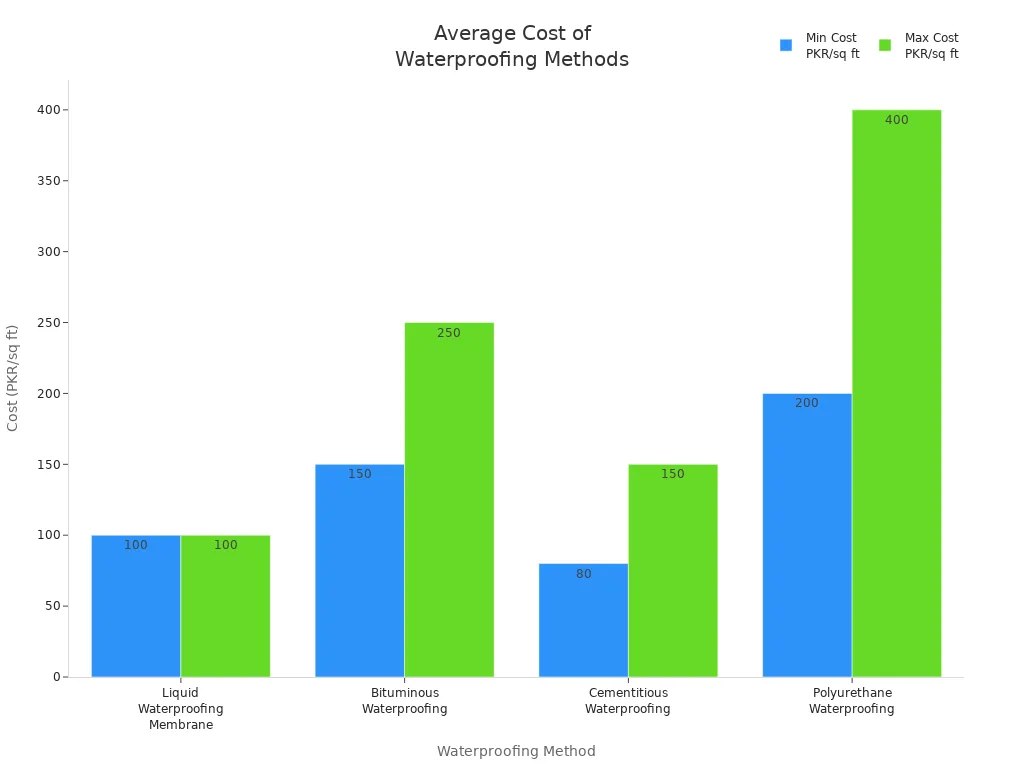
As you can see, costs can vary significantly based on the method chosen. It’s essential to balance your budget with the level of protection you need.
Choosing a Concrete Waterproofing Supplier
Selecting the right concrete waterproofing supplier can make a huge difference in the success of your project. Here are some factors to consider:
Application Area: Different areas like bathrooms, roofs, and foundations require specific waterproofing approaches.
Environmental Exposure: Outdoor surfaces need products that resist UV rays and weather conditions.
Surface Compatibility: Ensure the waterproofing materials are compatible with surfaces like concrete, masonry, and metal for proper adhesion.
Flexibility Requirements: Areas with structural movements need membranes that can adapt to crack bridging.
Expected Service Life: Long-term projects should use durable and proven systems, ideally applied by a qualified waterproofing specialist.
By keeping these factors in mind, you can choose a supplier that meets your specific needs and ensures the longevity of your waterproofing solution.
In summary, choosing the right waterproofing method is crucial for your concrete projects. Here are some key takeaways:
Effectiveness: Different methods like integral and membrane waterproofing offer varying levels of protection.
Durability: Proper selection prevents mold, structural damage, and maintains aesthetics.
Application: Fast, seamless application ensures coverage in tight corners.
Always consider your specific needs to ensure long-lasting results! 🌧️
FAQ
What is the best waterproofing method for basements?
The best method for basements is typically membrane waterproofing. It effectively prevents water ingress and protects against hydrostatic pressure.
How long does waterproofing last?
The lifespan of waterproofing varies by method. Generally, it can last from 5 to 20 years, depending on the materials and conditions.
Can I apply waterproofing myself?
Yes, many waterproofing methods are DIY-friendly. However, for complex projects, hiring a professional is recommended for best results.
See Also
Comprehensive Techniques for Effective Concrete Waterproofing Solutions
DIY Strategies for Successfully Waterproofing Your Basement
Key Considerations for Selecting the Right Concrete Sealer
Selecting Ideal Moisture Barriers for Walls and Floors in 2025
Discovering the Perfect Concrete Sealer Tailored to Your Requirements
