

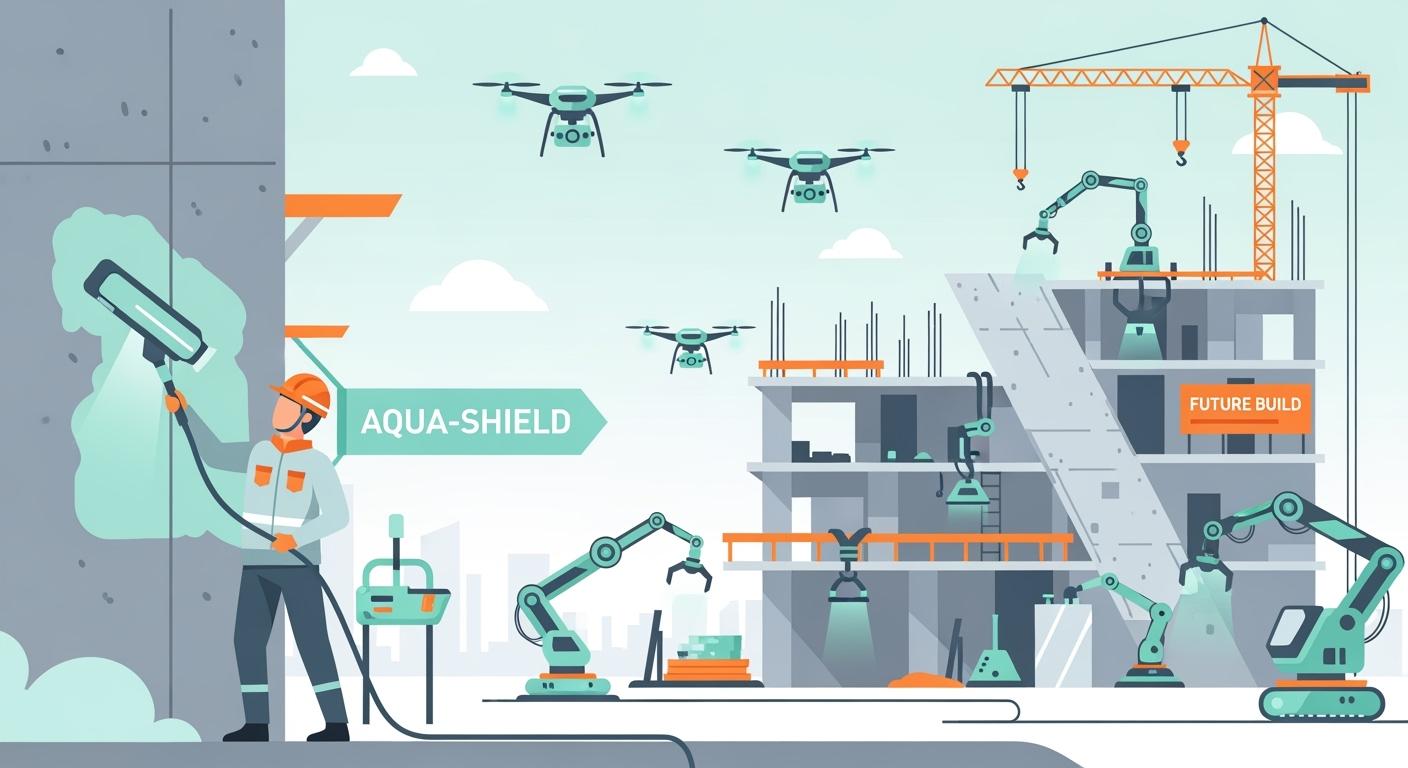
Waterproofing is crucial for concrete surfaces. Without it, you risk serious problems like structural damage and moisture-related issues, including mold and mildew. These can lead to health risks for those living or working in damp environments. In 2026, innovative methods like Cementitious waterproofing will transform how we protect concrete.
Key Takeaways
Elastomeric membranes provide a flexible and durable waterproofing solution, ideal for roofs and basements. Their seamless design prevents leaks and adapts to temperature changes.
Cementitious waterproofing is an economical choice that extends the life of buildings. It is easy to apply and effective for various surfaces, including basements and swimming pools.
Eco-friendly waterproofing solutions use sustainable materials to protect concrete while minimizing environmental impact. They offer high durability and self-healing properties, making them a smart choice for modern construction.
Elastomeric Membranes
Description
Elastomeric membranes are a popular choice for waterproofing due to their unique properties. These membranes are made from flexible materials, often polyurethane, which allows them to stretch and adapt to the movements of the concrete beneath. This flexibility is crucial because concrete can expand and contract with temperature changes. Unlike traditional waterproofing methods, elastomeric membranes form a continuous seal that effectively prevents leaks.
Applications
You might wonder where elastomeric membranes are used. Here are some common applications:
Roofs: They provide excellent waterproofing for flat and low-slope roofs.
Basements: These membranes protect below-grade structures from moisture intrusion.
Balconies and Terraces: They keep outdoor spaces dry and safe from water damage.
When comparing elastomeric membranes to traditional waterproofing methods, the benefits are clear. Check out this table for a quick comparison:
Feature | Polyurethane Elastomeric Membranes | Traditional Waterproofing Methods |
|---|---|---|
Durability | Long-lasting and resistant to harsh temperatures | Varies, often less durable |
Flexibility | Highly flexible, can expand and contract | Limited flexibility |
Waterproofing | Forms a continuous, tight seal to prevent leaks | May have seams that can leak |
UV Resistance | Excellent UV protection | Generally less effective |
Thermal Insulation | Offers substantial insulation benefits | Limited insulation properties |
The lifespan of these membranes can be impressive. Some can last 30 years or more if installed and maintained properly. This longevity makes them a smart choice for various waterproofing solutions.
If you’re considering waterproofing techniques for your next project, elastomeric membranes are worth exploring!
Cementitious Waterproofing
Description
Cementitious waterproofing is a popular choice for protecting concrete surfaces. It consists of a mixture of cement, sand, and additives that create a waterproof barrier. This method is known for its simplicity and effectiveness. It’s easy to apply and can be used on various surfaces, making it a go-to option for many construction projects.
One of the standout benefits of cementitious waterproofing is its ability to extend the life and durability of buildings. By preventing water damage, it reduces the risks and costs associated with renovations. Plus, it can increase property value by ensuring the building is free from leaks.
Applications
Cementitious waterproofing is versatile and can be applied in several scenarios. Here are some common applications:
Basements: Protects against moisture intrusion.
Water Tanks: Ensures safe storage of water.
Swimming Pools: Keeps water contained and prevents leaks.
The application process for large-scale projects typically involves a few key steps:
Protection of Lean Concrete with Water Guard 491: After excavation, apply two coats of Water Guard 491 on the lean concrete surface.
Addition of Max Flo integra 3 (powder) Admixture: This admixture enhances waterproofing in raft and retaining wall concrete.
While cementitious waterproofing is the most economical option for raw materials, labor costs can rise for larger areas due to the time-consuming application process. Compared to other methods, like polyurethane waterproofing, it offers a cost-effective solution without sacrificing quality.
In cold climates, adding Polyvinyl Alcohol (PVA) fibers can significantly improve freeze-thaw durability, making this method even more reliable.
Liquid Waterproofing Membrane
Description
Liquid waterproofing membranes are gaining popularity for their unique features. These membranes are applied as a liquid, which then cures to form a seamless barrier. This means no seams or joints that can fail over time. Here are some key benefits:
Ease of application: Liquid waterproofing can often be applied quickly, making it ideal for complex spaces.
Seamless: Cures to form one solid membrane, eliminating seams or joints that are prone to failure.
Flexibility: Adapts to temperature changes and minor structural movements, ensuring continued performance.
The average curing time for products like the SILCOR 560 liquid waterproofing membrane is about 48 hours. After this period, it’s ready for flood testing, tiling, and topping. This quick turnaround makes it a favorite among contractors.
Applications
Liquid waterproofing membranes are versatile and can be used in various applications. Here are some common uses:
Roofs: Ideal for flat roofs where traditional methods may struggle.
Balconies: Keeps outdoor areas dry and prevents water damage.
Foundations: Protects below-grade structures from moisture intrusion.
When comparing liquid waterproofing membranes to sheet-based systems, the advantages are clear. Check out this table for a quick comparison:
Type of Membrane | Advantages | Disadvantages |
|---|---|---|
Liquid Waterproofing Membranes | – Easy application on irregular surfaces | – May require multiple coats for proper coverage |
– Seamless coverage | – Application can be messy | |
– Flexible and can accommodate movements | – May not be as durable as sheet-based membranes | |
Sheet-Based Membranes | – Quick and easy installation | – May not be suitable for irregular surfaces |
– Durable and long-lasting | – Joints can be weak points for potential leaks | |
– Can be visually inspected for any damage | – May require professional installation |
With their ease of use and effective waterproofing capabilities, liquid waterproofing membranes are a smart choice for many construction projects.
Eco-Friendly Waterproofing Solutions
Description
Eco-friendly waterproofing solutions are becoming a game-changer in the construction industry. These methods use sustainable materials that not only protect concrete but also minimize environmental impact. Many of these solutions rely on innovative technologies, such as crystalline waterproofing, which creates a permanent barrier against water. This technique forms crystals that seal micro-cracks, ensuring high durability and minimal maintenance.
Here are some key benefits of eco-friendly waterproofing solutions:
High Durability: The crystals formed are permanent and resistant to destruction.
Minimal Maintenance: No special maintenance is required after application.
Self-Healing Ability: New micro-cracks can be sealed by the crystallization process.
Applications
Eco-friendly waterproofing solutions can be applied in various settings. Here are some common applications:
Terrace Waterproofing: Protects outdoor spaces from water damage while being environmentally friendly.
Bathroom Waterproofing: Ensures moisture control in wet areas, preventing mold growth.
Wall Waterproofing: Keeps walls dry and free from water intrusion, enhancing the building’s longevity.
These solutions also offer good adhesion and flexibility, making them suitable for different surfaces. They are weather-resistant, which reduces maintenance needs. Plus, there’s no need for additional overcoating, simplifying the upkeep process. By choosing eco-friendly waterproofing techniques, you not only protect your investment but also contribute to a healthier planet.
Waterproof Roof Coating
Description
Waterproof roof coatings are essential for protecting concrete roofs from water damage. These coatings create a seamless barrier that prevents leaks and extends the life of the roof. One innovative option is the Water Guard 3020N, a flexible waterproofing system designed for both cementitious and metal surfaces. It’s applied in multiple coats to ensure thorough coverage. This method helps maintain the integrity of concrete roofs over time.
Another great choice is the Enduris™ 100% Silicone Roof Coating. This advanced solution offers exceptional durability and seamless protection. It withstands UV rays, extreme temperatures, and standing water, ensuring long-term performance. Plus, it’s eco-friendly and easy to apply, which can significantly reduce cooling costs by reflecting sunlight.
Applications
Waterproof roof coatings have a variety of applications. Here are some common uses:
Flat Roofs: Ideal for commercial buildings where water pooling can be an issue.
Residential Roofs: Protects homes from leaks and moisture damage.
Industrial Structures: Ensures that large facilities remain watertight, preventing costly repairs.
Using cool roof techniques, these coatings can enhance solar reflectance. This means they help reduce cooling energy consumption, making buildings more energy-efficient. By minimizing heat gain, they improve indoor conditions and can lower overall energy use.
In summary, innovative waterproofing methods like elastomeric membranes, cementitious solutions, and eco-friendly options are changing the concrete industry. These technologies not only protect structures but also lower long-term maintenance costs. By adopting these advanced waterproofing techniques, builders can enhance property value and ensure durability for years to come.
Remember, investing in quality waterproofing today can save you from costly repairs tomorrow!
FAQ
What is waterproofing?
Waterproofing is a method used to protect concrete surfaces from water damage. It prevents moisture intrusion, ensuring the longevity of structures.
Why is waterproofing important?
Waterproofing is crucial because it prevents leaks and structural damage. It also protects against mold and mildew, promoting a healthier environment.
How long does waterproofing last?
The lifespan of waterproofing varies by method. Some solutions can last over 30 years with proper installation and maintenance.
See Also
Comprehensive Overview of Effective Concrete Waterproofing Techniques
Understanding Cementitious Waterproofing Slurry: Functionality in 2025
Enhance Your Surfaces with Top Concrete Sealers for 2025
