

Protecting your concrete is a smart investment, ensuring long-lasting protection. Not all concrete sealers are equal, especially for deep protection. Choosing the wrong concrete sealer can lead to poor adhesion or a cloudy finish. BANDě penetrating sealers offer a superior solution. This guide helps you pick the best concrete penetrating sealer.
Key Takeaways
BANDě penetrating sealers protect your concrete deeply. They soak into the concrete. This makes your concrete last longer and look better.
Choose the right BANDě sealer for your needs. Silicates strengthen concrete. Silanes and siloxanes repel water. Siliconates offer both benefits.
Prepare your concrete well before sealing. Clean it thoroughly. Fix any damage. Make sure it is dry. This helps the sealer work its best.
Understanding Concrete Sealers
What Is A Concrete Sealer
A concrete sealer is a protective material you apply to concrete surfaces. It creates a barrier. This barrier helps protect your concrete from damage. Think of it as a shield for your driveway, patio, or garage floor. A good concrete sealer extends the life of your concrete.
Types of Concrete Sealers: Surface vs. Penetrating
You will find different types of concrete sealers. Some form a film on top, while others soak in. For example, epoxy and polyurethane sealers create a thick surface layer. However, penetrating sealers work differently. They go deep into the concrete. Understanding the types of concrete sealers helps you choose wisely.
Here’s a quick look at how surface and penetrating sealers compare:
Feature | Surface Sealers | Penetrating Sealers |
|---|---|---|
Composition | Acrylics, epoxies, urethanes | Silanes, siloxanes, siliconates |
Mechanism | Form a protective film on the concrete surface | React chemically within the concrete’s pores |
Appearance | Can alter appearance (sheen, color enhancement) | Typically do not change concrete’s appearance |
Durability | Subject to wear from traffic, UV, and chemicals | More resistant to abrasion and UV degradation |
Protection | Repel water, oil, and stains; enhance aesthetics | Primarily repel water and chlorides; prevent efflorescence |
Application | Often require reapplication due to surface wear | Longer-lasting, less frequent reapplication |
Breathability | Can trap moisture if not breathable | Allow concrete to breathe naturally |
Surface sealers create a protective coating. They sit on top of your concrete surfaces. Penetrating sealers, like BANDě products, soak in. They react inside the concrete pores. This makes them more durable. They also let the concrete breathe. This prevents moisture from getting trapped. They are excellent at repelling water.
Benefits of Using Concrete Sealers
The benefits of using concrete sealers are clear. You protect your investment. A good concrete sealer prevents stains from oil, grease, and chemicals. It also stops water damage. This includes freeze-thaw cycles. These cycles can crack unsealed concrete. Sealing also reduces efflorescence, those white powdery deposits. You get a cleaner, longer-lasting surface.
Exploring BANDě Concrete Penetrating Sealer Types
You now understand the general benefits of concrete sealers. Let’s dive into the specific chemical compositions of BANDě’s superior penetrating sealers. Each type offers unique properties. They suit different project needs. Knowing these differences helps you pick the best concrete penetrating sealer for your surface.
BANDě Silicate Penetrating Sealers
BANDě Silicate Penetrating Sealers are fantastic for strengthening your concrete. They react with the concrete to form a dense, durable surface. This makes your concrete much harder. It resists wear and abrasion.
Property/Application | Description |
|---|---|
Chemical Property (Strengthening) | Silicate-based sealers strengthen concrete. |
Chemical Property (Water Repellency) | They do not repel water. |
Ideal Application | Best suited for indoor spaces and basements. |
Benefit | Resists wear. |
You should choose a silicate sealer for indoor areas. Basements and garage floors are perfect examples. These areas benefit from increased hardness. Remember, silicate sealers do not repel water. You might need another type if water repellency is your main goal.
BANDě Silane Penetrating Sealers
BANDě Silane Penetrating Sealers are your go-to for serious water protection. These sealers create a strong hydrophobic barrier. This means they actively push water away from your concrete.
Characteristic | Use Case |
|---|---|
Great for waterproofing porous surfaces | Sidewalks, driveways |
Less effective on smooth finishes | N/A |
Silane sealers are excellent for waterproofing porous surfaces. Think about your sidewalks and driveways. They face a lot of rain and moisture. Silane protects them well. However, they are less effective on very smooth concrete finishes. You want a surface that can absorb the sealer for the best results.
BANDě Siloxane Penetrating Sealers
BANDě Siloxane Penetrating Sealers are similar to silanes. They also offer excellent water repellency. Siloxanes are often used for outdoor applications. They provide great protection against harsh weather. They also resist UV degradation. This means the sun won’t break them down easily. You get long-lasting protection. These sealers are a good choice for patios, pool decks, and exterior walls. They keep water out and maintain the look of your concrete.
BANDě Siliconate Penetrating Sealers
BANDě Siliconate Penetrating Sealers combine the best of both worlds. They offer both water repellence and durability. These sealers are versatile. They work well in many situations.
Attribute/Scenario | Description |
|---|---|
Type | Siliconate-Based Penetrating Sealer |
Key Attributes | Combines water repellence and durability; may leave a slight residue |
Best Use Scenarios | Driveways, patios |
You will find siliconate sealers ideal for driveways and patios. They stand up to heavy use. They also keep water from damaging your surfaces. Sometimes, they might leave a slight residue. This is usually minimal and fades over time. These types of concrete sealers give you robust protection.
How BANDě Penetrating Sealers Work
You might wonder how these different types of concrete sealers actually protect your concrete. It’s quite clever! BANDě penetrating sealers don’t just sit on the surface. They soak deep into the concrete’s pores. Once inside, they react chemically. This reaction creates a barrier within the concrete itself. This barrier stops water and other harmful substances from entering. Yet, it still allows the concrete to “breathe.” This means moisture vapor can escape. This prevents issues like efflorescence and spalling. You get deep, long-lasting protection.
Choosing The Right Concrete Sealer: Key Factors
Now you know about BANDě’s different penetrating sealers. The next step is choosing the right concrete sealer for your specific project. This decision depends on several important factors. Thinking about these points will help you pick the best BANDě product.
Concrete Surface Type And Condition
First, look closely at your concrete surfaces. Is the concrete new or old? New concrete might need a different approach than older, more worn concrete. Also, consider its porosity. Some concrete is very porous, meaning it soaks up liquids easily. Other concrete is denser. A highly porous surface will absorb more sealer.
Check the condition of your concrete too. Does it have cracks, stains, or previous coatings? You will need to address these issues before applying any sealer. For example, you might need to clean deeply or repair cracks. The surface condition directly impacts how well a concrete sealer performs.
Environmental Exposure And Climate
Where is your concrete located? Is it indoors or outdoors? The environment plays a huge role in choosing a concrete sealer.
Moisture Handling: If your location experiences frequent rain or snow, select a penetrating sealer designed to manage high moisture levels effectively. You want something that really pushes water away.
UV Protection: For outdoor concrete applications, it is crucial to choose a sealer that offers protection against harmful UV rays. The sun’s rays can break down sealers over time. A UV-resistant sealer will last much longer outdoors.
Think about temperature swings too. Extreme heat or cold can affect how a sealer performs and lasts.
Desired Aesthetic And Finish
What do you want your concrete to look like after sealing? Penetrating sealers generally do not change the appearance of your concrete. They soak in and protect without leaving a visible film. This means your concrete will keep its natural look.
However, some penetrating sealers might slightly darken the concrete, giving it a “wet look.” Others are completely invisible. If you want to maintain the exact natural look, confirm the sealer’s finish. BANDě offers options that preserve the original aesthetic while providing deep protection.
Project Budget And Longevity
Your budget and how long you want the sealer to last are big considerations. Generally, higher-quality sealers cost more upfront but offer much longer protection. This means you save money in the long run because you do not have to reapply them as often.
Here is a look at typical budget ranges and longevity for different types of sealers, including some that are not penetrating but are good for comparison:
Sealer Type | Budget Range (per sq ft) | Longevity (Years) |
|---|---|---|
Acrylic Sealers | $0.15 – $0.50 | 1-3 |
Silane/Siloxane | $0.50 – $1.50 | 3-7 |
Epoxy Sealers | $1.00 – $3.00 | 5-10+ |
Urethane Sealers | $1.50 – $4.00 | 7-15+ |
Lithium Silicate | $0.75 – $2.00 | 10-20+ |
You can see that while acrylics are cheaper, they do not last as long. BANDě’s silane, siloxane, and siliconate options offer excellent value for their longevity. Lithium silicates (a type of silicate sealer) provide very long-term durability.
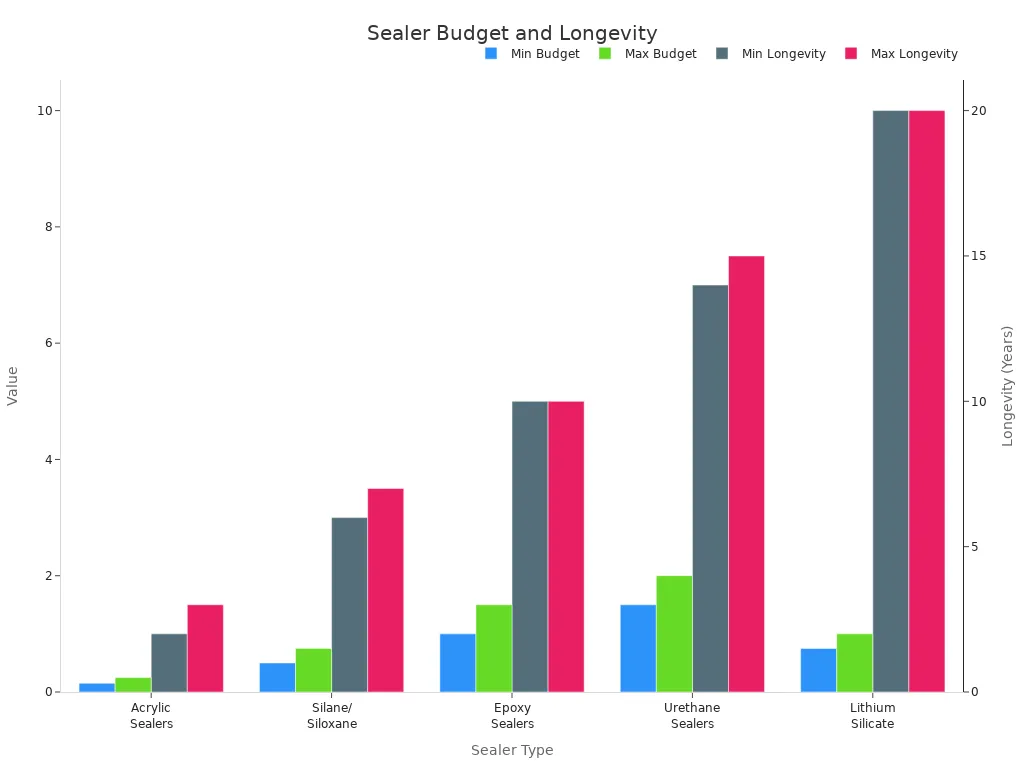
When choosing a concrete sealer, balance the initial cost with the expected lifespan. Investing a bit more now can save you time and money later.
Specific Performance Needs
Finally, think about any special requirements for your concrete surfaces. Do you need extra chemical resistance for a garage floor? Is slip resistance important for a pool deck? Some penetrating sealers offer enhanced features.
For example, if you have heavy vehicle traffic, you might want a sealer that also hardens the surface, like a silicate. If oil spills are common, look for a sealer that offers superior stain protection. Always match the sealer’s specific performance benefits to your project’s unique demands. This ensures you get the best protection possible.
Preparing Concrete For BANDě Sealer
Essential Cleaning And Etching
Before you apply any BANDě sealer, you must clean your concrete surfaces thoroughly. This is a crucial step in surface preparation. You want to remove all dirt, grease, oil, and any old coatings. Etching might be necessary for very smooth concrete. This creates a rougher profile, helping the sealer bond better. A clean surface ensures the sealer penetrates deeply and performs its best.
Repairing Surface Imperfections
Next, you need to fix any damage. This includes repairing all damaged joint edges with suitable repair products. You should also use techniques like wire brushing, grinding, or grit blasting to remove any weak material. Always remove dust, loose, and friable material from all concrete surfaces before applying the sealant. You must clean thoroughly and fix any chips or cracks. This ensures a smooth, even application.
Ensuring Proper Drying
After cleaning and repairs, you must ensure your concrete is completely dry. Trapped moisture can prevent the sealer from bonding correctly. This can lead to poor performance. You need to check moisture levels before you start. Make sure there’s no standing water. Proper drying is key for the sealer to work effectively.
Porosity Testing
Finally, consider a porosity test. This helps you understand how absorbent your concrete is. You can do a simple water droplet test. If the water soaks in quickly, your concrete is porous. This test helps you determine how much sealer you might need. It’s a smart part of your surface preparation, ensuring you apply the right amount for optimal protection.
Applying BANDě Penetrating Sealer
Recommended Application Methods
You have several ways to apply BANDě penetrating sealer. For large areas, a low-pressure sprayer works great. It helps you cover ground quickly. For smaller spots or edges, a roller or brush gives you more control. Always check the product label for specific instructions. Some sealers, especially solvent-free ones, might be easier to apply with less odor.
Achieving Uniform Coverage
Achieving uniform coverage is key for the best protection. Work in small, manageable sections. Apply the sealer evenly. Avoid puddles! If you see excess product, spread it out or wipe it away. This ensures the sealer penetrates properly and prevents unsightly marks. Remember, consistency is your friend when applying the sealer.
Curing And Reapplication Times
After applying the sealer, it needs time to cure. This means it chemically reacts and hardens. Curing times vary, but generally, you should keep the surface dry for at least 24-72 hours. Avoid heavy traffic during this period. Most BANDě penetrating sealers offer long-lasting protection, so reapplication is infrequent. Check your specific product’s guidelines for exact reapplication times.
Troubleshooting Application Issues
Sometimes, you might run into minor issues during the application process. If you see white spots, it often means trapped moisture or over-application. Puddling can also lead to uneven drying. For these issues, you can often re-emulsify the sealer with a light mist of water and then spread it evenly. These application tips help you get a perfect finish.
Maintaining BANDě Sealed Concrete
Routine Cleaning Practices
Keeping your BANDě sealed concrete looking great is simpler than you think! You just need some routine cleaning. Grab a mild detergent and some water. A soft brush or mop works perfectly. You really want to avoid harsh chemicals or abrasive cleaners, as they can actually harm the sealer over time. Regular, gentle cleaning helps maintain the integrity of your sealed concrete surfaces. This simple habit keeps them protected and looking their absolute best.
When To Reapply Sealer
BANDě penetrating sealers are built to last, but even the best protection eventually needs a refresh. So, how do you know when it’s time to reapply? Here’s a simple trick: watch how water behaves. If water no longer beads up on the surface, or if it starts soaking in, that’s your cue. The concrete might also begin to look a bit dull. Most penetrating sealers offer protection for several years. Always check the specific BANDě product you used; it will give you the most accurate reapplication timeline.
Extending Sealer Lifespan
Want to make your BANDě sealer last even longer? You absolutely can! First, clean up spills quickly. Don’t let oil, grease, or chemicals sit on your concrete surfaces for too long. Also, try to avoid dragging heavy, sharp objects across the sealed area; this prevents unnecessary scratches. Regular, gentle cleaning, as we discussed, also plays a huge role. By following these easy tips, you’ll significantly extend the life of your BANDě sealer, keeping your concrete beautifully protected for many years.
Choosing the right concrete penetrating sealer is vital for lasting protection. BANDě penetrating sealers offer superior durability. You now understand key selection factors for your concrete penetrating sealer. Confidently pick the best BANDě product for your project. You get long-term value and protection.
Explore BANDě’s full range and resources today!
FAQ
What if my concrete already has a sealer?
You must remove old sealers first. New penetrating sealers need a clean, bare surface to work correctly. This ensures proper bonding and protection.
Can I apply BANDě sealer myself?
Yes, you can! Many BANDě sealers are DIY-friendly. Follow the instructions carefully for the best results. These tips help you achieve a professional finish.
Does BANDě sealer change my concrete’s look?
Most BANDě penetrating sealers do not change your concrete’s appearance. They soak in and protect without leaving a visible film. Your concrete keeps its natural look.
See Also
Selecting the Optimal BANDě Concrete Sealer: A 2025 Buyer’s Guide
Essential BANDě Dustproofer Sealers: Your Guide to Superior Concrete Protection
Choosing the Ideal Concrete Protective Sealer: An Indispensable Buyer’s Guide
Discovering the Perfect Concrete Sealer Tailored for Your Specific Requirements
BANDě Concrete Sealers: Film-Forming Versus Penetrating for Australian Climates
