

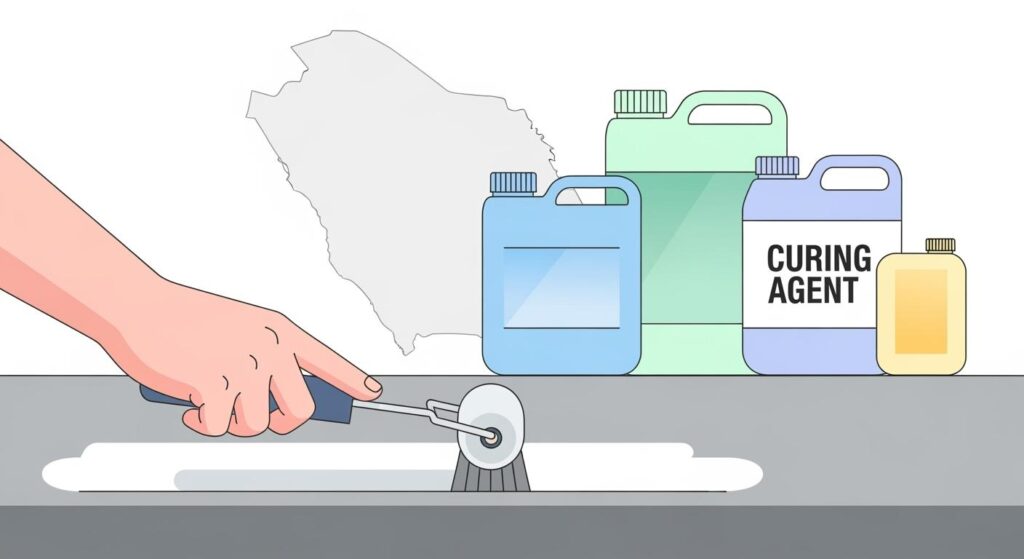
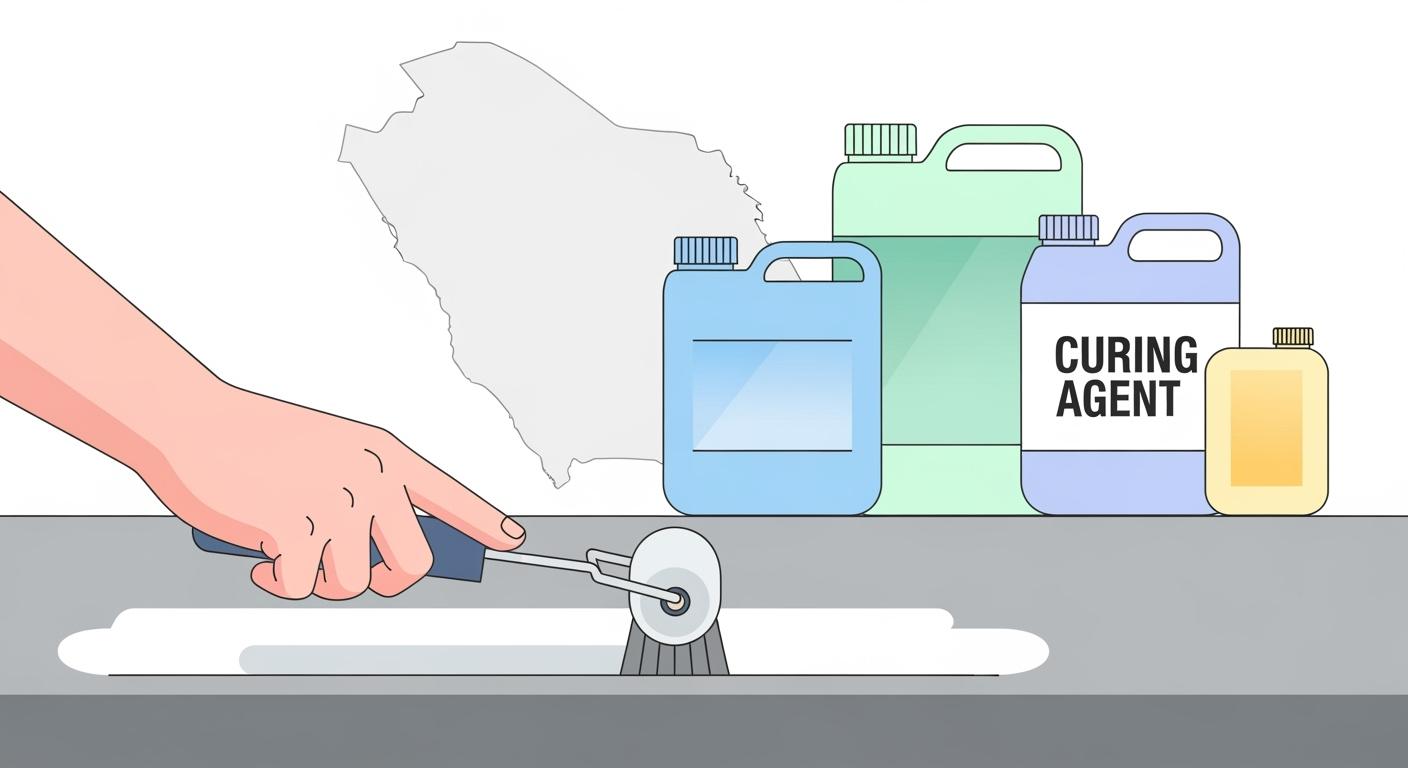
Saudi Arabia’s challenging climate makes effective concrete curing essential. It directly impacts your project’s durability and longevity. You often face a key decision: choosing between water-based and oil-based concrete curing compounds saudi arabia. This guide helps you make an informed choice for your specific needs.
Key Takeaways
Saudi Arabia’s hot climate makes good concrete curing very important. It stops cracks and makes concrete last longer.
Water-based curing agents are good for the environment and safer. Oil-based agents offer stronger protection, especially in harsh weather.
Advanced options like BANDě Concrete Densifier make concrete much harder and more durable. They are good for long-lasting projects.
Why Concrete Curing Matters in Saudi Arabia
Climate Challenges and Concrete Integrity
You face unique challenges when building in Saudi Arabia. The climate here directly impacts your concrete’s integrity. High temperatures are a major concern; extreme heat causes concrete to expand and contract, which can lead to cracking. Sandstorms also pose a threat. Dust and debris from these storms erode concrete surfaces, making them weaker over time. Constant exposure to UV radiation from the sun degrades concrete material, reducing its overall lifespan.
Beyond the heat and sand, other factors affect your projects. Water infiltration can cause steel reinforcement to rust, weakening the entire structure. Industrial chemicals and even saltwater accelerate concrete degradation. Poor drainage also contributes to problems like cracks and potholes. Effective concrete curing compounds saudi arabia are essential to protect your investment against these harsh conditions.
Expediting Construction Schedules
Proper concrete curing does more than just protect your structure; it also helps you finish projects faster. When you cure concrete correctly, it develops strength more quickly and consistently. This means you can remove forms sooner and move on to the next construction phase without unnecessary delays. Good curing reduces the risk of defects that might require costly rework, keeping your project on track and within budget. Ultimately, focusing on proper curing from the start contributes significantly to the overall longevity and efficiency of your construction timeline.
Water-Based Curing Compounds
Composition and Application
You’ll find water-based curing compounds are quite versatile. Many of these compounds, like Polyweds, use a low viscosity wax emulsion as their base. Others, such as Setseal AW309 Plus and Setseal AW, are high-solid or general-purpose acrylic formulations. You can also find highly concentrated paraffin dispersions, like Setseal CR300 and Setseal 22. You typically spray these compounds onto fresh concrete surfaces. They form a thin, protective film that helps retain moisture. This film is crucial for proper hydration.
Benefits and Environmental Profile
Choosing water-based compounds offers several clear benefits. They are significantly more environmentally friendly than many alternatives. You’ll notice their lower VOC (Volatile Organic Compound) content, which means less harmful fumes. This makes them safer for indoor applications and better for the environment overall. Regulations often favor waterborne base coats because of their reduced environmental impact. They also have a less pungent odor, which is a plus for workers and nearby residents. These compounds provide some protection against scuffing and smudges, too.
Limitations and Reapplication Needs
While water-based compounds offer many advantages, they do have some limitations. The film they form can be thinner compared to oil-based options. This might mean you need to reapply them, especially in very hot or windy conditions, to ensure continuous moisture retention. They are often preferred for residential areas or horizontal surfaces where their environmental profile is a major advantage. However, for extreme conditions or vertical applications, you might need to consider other options.
Oil-Based Curing Compounds
Composition and Film Formation
You will find that oil-based curing compounds often use a solvent as their base. These compounds, sometimes called solvent-based sealers, penetrate deeper into your concrete. They don’t just sit on the surface. This deeper penetration allows them to form a more robust and integrated film within the concrete’s pores. This creates a strong barrier.
Performance Advantages
Oil-based compounds offer significant performance advantages. They provide superior protection against many harsh elements. You get excellent resistance to chemicals, oil, and various stains. This makes them a top choice for industrial floors, workshops, or garages. They stand up well to heavy use and spills. You will notice they create a tougher, more durable surface. This enhanced protection helps your concrete last longer, even in demanding environments.
Environmental Impact and Cleanup
However, you should consider the environmental impact of oil-based compounds. They typically contain higher levels of Volatile Organic Compounds (VOCs). This means they release more fumes into the air. You might find their odor much stronger and more persistent than water-based options. Cleanup also presents more challenges. You usually need specific solvents for effective cleaning, which can be less environmentally friendly. These factors are important when you choose a curing agent for your project.
Comparing Concrete Curing Compounds in Saudi Arabia
When you choose a curing compound for your project in Saudi Arabia, you need to weigh several factors. Both water-based and oil-based options have distinct advantages and disadvantages. Understanding these differences helps you make the best decision for your specific needs.
Performance in Arid Conditions
You know Saudi Arabia’s climate is tough on concrete. High temperatures and low humidity can quickly dry out fresh concrete. This makes effective curing absolutely critical.
Water-Based Compounds: These compounds form a thin film that traps moisture. In arid conditions, this film can sometimes evaporate faster than you’d like. You might find yourself needing to reapply them, especially on large, exposed surfaces or during peak summer heat. They work well for initial curing, but their long-term effectiveness in extreme dryness can be a challenge.
Oil-Based Compounds: You’ll find these compounds create a more robust and less permeable barrier. Their deeper penetration helps them hold moisture more effectively, even when the sun is beating down. This makes them particularly good at preventing rapid drying and surface cracking in Saudi Arabia’s harsh environment. They offer superior, long-lasting moisture retention, which is a big plus for your concrete’s strength development.
Cost, Application, and Efficiency
Your budget and project timeline are always important. Let’s look at how these compounds compare in terms of cost and how easy they are to use.
Water-Based Compounds:
Cost: Generally, you’ll find the material cost for water-based compounds is lower.
Application: They are easy to apply. You can spray or roll them on, and cleanup is simple with water.
Efficiency: While the initial application is quick, you might need to reapply them in very hot or windy conditions. This can add to your labor costs and extend your curing process.
Oil-Based Compounds:
Cost: Expect a higher material cost for oil-based compounds.
Application: Application might require more care due to their solvent content. You’ll also need specific solvents for cleanup, which adds to the overall cost and complexity.
Efficiency: Despite the higher initial cost and more involved cleanup, their superior performance in arid conditions often means you only need one application. This can save you labor in the long run by preventing reapplication and reducing the risk of defects that require rework. They promote faster strength gain because they lock in moisture so well.
Environmental and Regulatory Compliance
Environmental concerns and regulations are becoming increasingly important for construction projects. You need to consider the impact of your chosen curing agent.
Water-Based Compounds: These are your eco-friendly choice. They have low VOC (Volatile Organic Compound) levels, which means fewer harmful fumes. This makes them safer for your workers and the surrounding community. Many green building certifications favor these types of products. If your project has strict environmental mandates, water-based options are usually the way to go.
Oil-Based Compounds: You should be aware that these typically contain higher levels of VOCs. They release stronger odors, which can be a concern for worker health and air quality. Cleanup also involves solvents, which can be less environmentally friendly and require careful disposal. Some projects or regions might have regulations that limit or restrict the use of high-VOC products. You need to check local regulations carefully when considering these concrete curing compounds saudi arabia.
BANDě Concrete Densifier: An Advanced Solution
You’ve explored traditional curing compounds, but what if you need something more? BANDě Concrete Densifier offers an advanced solution that goes beyond simple curing. It transforms your concrete from within, providing superior performance and long-term advantages, especially crucial in Saudi Arabia’s demanding environment.
Deep Penetration and Permanent Hardening
BANDě Concrete Densifier works differently. It uses a high-activity lithium silicate formula. This formula doesn’t just sit on the surface. It penetrates deep into your concrete, typically 5-8mm. Once inside, it reacts with the free calcium ions present in the concrete. This chemical reaction forms a dense C-S-H (calcium silicate hydrate) gel. This process achieves “hardening from the inside out.” You get a permanently hardened surface without any risk of peeling or flaking, which can happen with surface coatings.
Aesthetic and Protective Benefits
Beyond its hardening capabilities, BANDě offers significant aesthetic and protective benefits. After you grind and polish the floor, it achieves a translucent, marble-like luster. This beautiful finish actually improves with daily use. You avoid the common problem of traditional floors that look “bright for one year, dark for two, dusty for three.” Instead, your floor maintains its shine and appeal.
Moreover, BANDě provides superior protection. It effectively seals the concrete capillaries. This gives your floor P12 impermeability. It resists water, oil, and various chemicals. This makes it an excellent choice for places like food factories, garages, and hospitals, where spills and heavy use are common.
Durability and Environmental Safety
When it comes to durability, BANDě is unmatched. It increases the Mohs hardness of your concrete to 6-7. This also boosts compressive strength by over 40%. Your floors can withstand frequent forklift traffic and heavy equipment without showing wear. This significantly reduces your maintenance costs over time.
You’ll also appreciate its environmental safety. BANDě is water-based, non-toxic, and has zero VOC (Volatile Organic Compound) emissions. It’s certified as a green building material. This makes it suitable for sensitive environments like schools, kindergartens, and malls. Plus, you can walk on the treated surface within just 2 hours, minimizing project downtime.
Versatility for New and Old Concrete
BANDě Concrete Densifier offers incredible versatility. You can apply it to new concrete floors, giving them an immediate boost in performance and longevity. But it’s also perfect for renovating old, sandy, dusty, or powdery cement floors. It breathes new life into worn-out surfaces. This repair capability can save you up to 60% in costs compared to replacing the entire floor. You can see your old floors renewed and ready for use in as little as 7 days.
Selecting the Best Curing Agent for Your Project
Choosing the right curing agent is a big decision for your construction project in Saudi Arabia. You need to consider several factors to make the best choice. Think about what your project needs and what you want to achieve.
Project Type and Budget Considerations
First, you should think about your project’s specific type. Are you building a residential home, a commercial complex, or a heavy-duty industrial facility? Each project has different demands. For simpler projects with a tighter budget, a basic water-based curing compound might be sufficient. However, if you are working on critical infrastructure or a high-traffic area, investing in a more robust solution makes sense. Your budget will always guide your choices, but remember that cheaper options might cost more in the long run if they don’t perform well.
Environmental Goals and Site Conditions
Next, consider your environmental goals. Do you need to meet specific green building standards? If so, low VOC, water-based products are usually your best bet. They are safer for workers and the environment. You also must think about your site conditions. Saudi Arabia’s intense heat and arid climate demand a curing agent that can effectively prevent rapid moisture loss. Some compounds perform better than others in these challenging conditions.
Long-Term Performance Requirements
Finally, think about what you expect from your concrete over many years. Do you need it to withstand heavy loads, chemical spills, or constant abrasion? If durability and a long service life are top priorities, you should choose a curing agent that offers superior protection and hardening. This ensures the longevity of your structure. For projects demanding the absolute best, advanced solutions like concrete densifiers go beyond traditional concrete curing compounds saudi arabia, offering enhanced strength and aesthetics for decades.
You have many choices for concrete curing compounds saudi arabia. Water-based options offer environmental benefits. Oil-based compounds provide robust protection. For superior durability and longevity, consider advanced solutions like BANDě Concrete Densifier. It offers unique benefits.
Factor | Water-Based | Oil-Based | BANDě Densifier |
|---|---|---|---|
Project Type | Residential, light commercial | Industrial, heavy traffic | All types, especially high-performance |
Budget | Lower initial cost | Higher initial cost | Moderate to higher, long-term savings |
Environmental Goals | High (low VOC, eco-friendly) | Lower (higher VOC) | High (zero VOC, green certified) |
Long-Term Performance | Good, reapplication sometimes needed | Excellent, robust protection | Superior (permanent hardening, aesthetics) |
FAQ
Which curing compound is better for Saudi Arabia’s heat?
Oil-based compounds offer superior moisture retention in arid conditions. They create a robust barrier. Water-based options might need reapplication.
Can you use BANDě Concrete Densifier on old concrete?
Yes, you can! BANDě is perfect for renovating old, dusty, or powdery cement floors. It renews them and saves you money.
Are water-based curing compounds truly eco-friendly?
Absolutely! They have low VOCs and minimal odor. This makes them safer for workers and the environment. Many green building projects prefer them.
See Also
Choosing the Ideal Concrete Floor Hardener: A 2025 Selection Guide
Comprehensive Buying Guide: Concrete Densifiers, Hardeners, and Sealers Explained
Top 5 Industrial Concrete Floor Hardeners: Making the Best Choice
Selecting Perfect Concrete Densifiers, Hardeners, and Sealers: Your 2025 Guide
Essential Guide: Choosing the Best Protective Concrete Sealer Effectively
