

Saudi Arabia’s demanding industrial environment requires robust flooring. You need a durable flooring solution that withstands extreme conditions. Concrete hardener for floors in Saudi Arabia and dustproofers are crucial investments. They ensure longevity, enhance safety, and boost operational efficiency. This guide helps you select the optimal solution tailored to your specific industrial needs.
Key Takeaways
Concrete hardeners make floors strong. They protect floors from Saudi Arabia’s tough weather and heavy use.
Many types of hardeners exist. Some soak into the concrete, and others form a tough layer on top.
Choosing the right hardener saves money. It makes floors last longer and need less cleaning.
Understanding Concrete Hardener for Floors KSA: Why It’s Essential
You need to protect your industrial floors. Saudi Arabia’s unique environment presents significant challenges. A robust concrete hardener for floors in Saudi Arabia is not just an option; it is a necessity.
KSA’s Environment: Impact on Industrial Floors
Saudi Arabia’s climate severely impacts concrete. Extreme heat causes expansion and contraction, leading to cracks. Relentless sandstorms deposit abrasive dust and debris, eroding surfaces over time. Constant UV radiation degrades concrete material, shortening its lifespan. Water infiltration can rust steel reinforcement, weakening your structure. Industrial chemicals and even saltwater accelerate degradation. Poor drainage also contributes to cracks and potholes. Furthermore, heavy traffic from vehicles and machinery in high-performance industrial environments creates stress, causing structural fatigue. You must reinforce your concrete to withstand these impacts.
Key Benefits of Hardening and Dustproofing
Investing in hardening and dustproofing offers significant advantages. You will see an increased lifespan for your floors. Properly maintained polished concrete floors can last for decades. Densifiers create a denser, more durable surface. This surface withstands heavy foot traffic, machinery, and other impacts. It extends the lifespan of your concrete floors and reduces frequent repairs. You also gain reduced maintenance costs. Hardened floors significantly cut maintenance time and money. They require only weekly cleaning with water, a scrubber drier, and diamond pads. You will need less frequent waxing and resurfacing. This makes your floor a truly durable flooring solution.
Problems Solved by Effective Floor Treatment
Effective floor treatment solves many common industrial floor problems. It increases the density and surface strength of your concrete floors. You improve resistance to wear, dusting, and surface damage. This enhances durability and extends the lifespan of your concrete floors. It also reduces dust accumulation, creating a cleaner and safer working environment. Furthermore, you improve resistance to staining from chemicals, oils, and other substances. This comprehensive protection ensures your facility operates smoothly and safely.
Types of Concrete Hardeners and Dustproofers for KSA Industrial Use
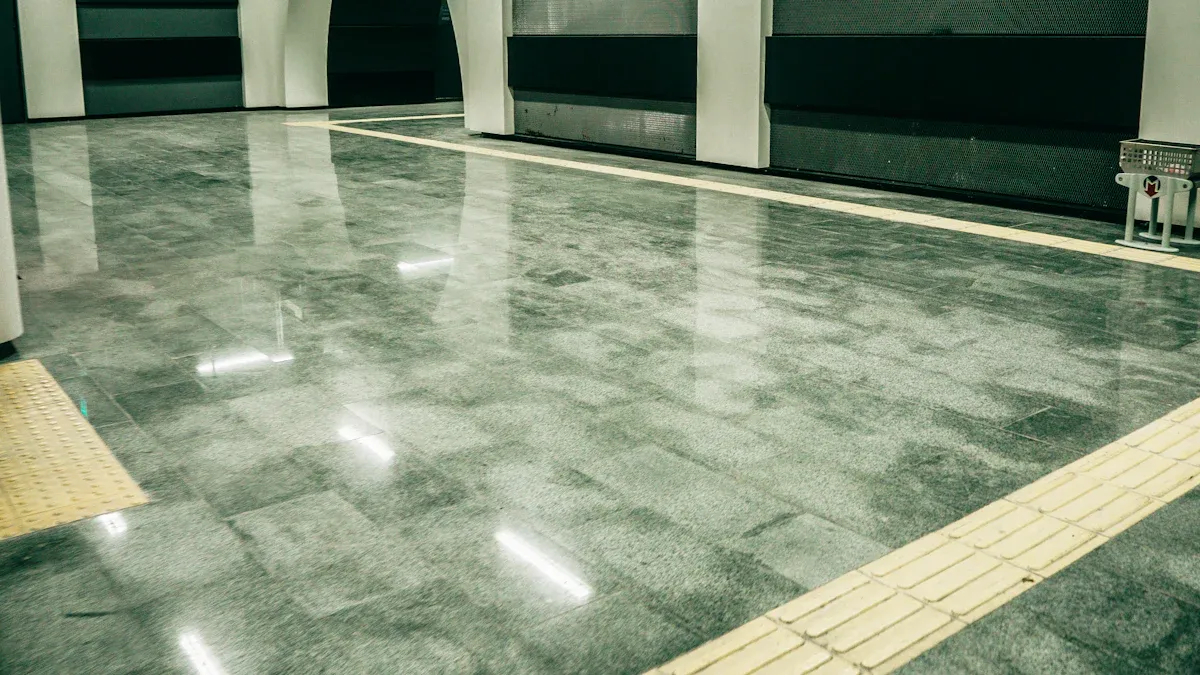
You have many options when choosing a concrete hardener or dustproofer for your industrial facility in Saudi Arabia. Each type offers unique benefits and applications. You need to understand how they work to select the best solution for your needs.
Liquid Chemical Densifiers
Liquid chemical densifiers penetrate your concrete surface. They react with the concrete to create a denser, harder floor. This process significantly improves durability and reduces dusting.
Silicate-Based Hardeners (Sodium, Potassium, Lithium)
Silicate-based hardeners are popular choices. They work by penetrating the concrete surface. These hardeners then react with calcium hydroxide, also known as free lime. This is a byproduct of cement hydration. This reaction forms calcium silicate hydrate (CSH). CSH fills the pores and voids within your concrete. This increases its density and hardness. The formation of CSH enhances compressive strength and surface hardness. This makes your concrete more resistant to wear. It also reduces dusting by sealing the pores. You will find silicate-based hardeners like SikaFloor® Cure Hard 24. This is a high solids, one-part, clear sodium silicate-based liquid. It is designed for curing and hardening concrete floors. Its purpose is to optimize curing and hardening processes. This improves floor durability and strength. Silicate-based hardeners are typically applied for curing and hardening concrete floors. They enhance their durability and strength. You can use them in warehouses, factories, and logistics centers across Saudi Arabia.
Fluosilicate-Based Hardeners (Magnesium, Zinc)
Fluosilicate-based hardeners, such as those containing magnesium or zinc, offer similar benefits. They also react with the concrete to form dense, wear-resistant surfaces. These types often provide enhanced chemical resistance. You might choose them for areas needing extra protection against specific substances.
BANDě Crystal Floor Hardener: Advanced Silicate Technology
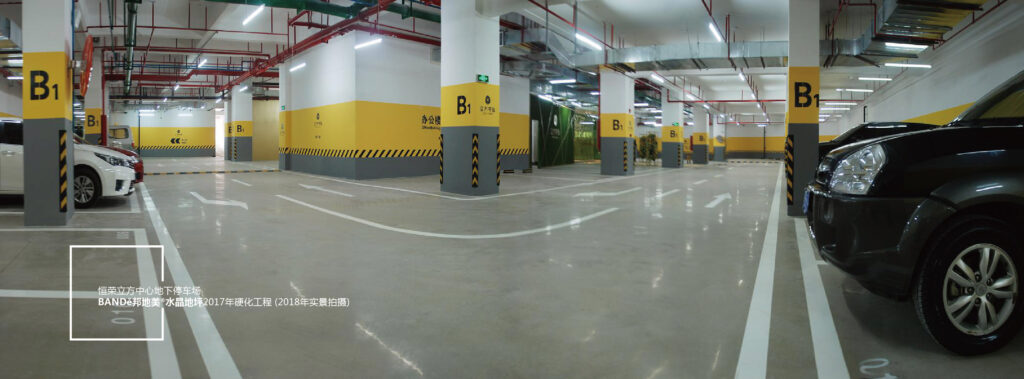
Consider BANDe Crystal Floor Hardener for an advanced solution. This product uses cutting-edge silicate technology. It offers deep penetration, reaching 5-8mm into your concrete. You will see a super hardening effect, increasing hardness by over 300%. This hardener creates a lasting mirror-like gloss. This gloss actually improves with use. It is also eco-friendly, being water-based with no VOCs. This makes it suitable for food factories and hospitals. BANDě Crystal Floor Hardener provides excellent anti-permeation properties. It resists water, oil, and various chemicals. It is highly wear-resistant, achieving a Mohs hardness of 6-7. You will also get a 40% increase in compressive strength. This product offers a lifespan of 15+ years. You can apply it to both new and old concrete surfaces.
Dry Shake Hardeners and Cementitious Toppings
Dry shake hardeners are applied to fresh concrete. They create a dense, abrasion-resistant surface. You broadcast these materials onto the wet concrete. Then, you trowel them into the surface.
Metallic and Non-Metallic Dry Shakes
Dry-shake hardeners are premixed mineral-aggregate compounds. You broadcast them onto fresh concrete. Then, you trowel them in. This process creates a dense, wear-resistant surface. This directly leads to increased abrasion resistance and improved impact durability. Mineral dry shake floor hardeners enhance floor strength and surface texture. This contributes to improved abrasion resistance. Metallic dry shakes contain iron aggregates. They provide extreme impact and abrasion resistance. Non-metallic options use quartz or other mineral aggregates. They offer excellent durability for general industrial use. Products like Emerishake and Nitoflor Hardtop are examples. You can also find Hardtop Repair for patching.
Slurry-Based Color Hardeners
Slurry-based color hardeners are another option. You apply these as a liquid or paste to fresh concrete. They provide both hardening and color to your floor. This gives you a durable and aesthetically pleasing surface. Vetotop XT538 is a cementitious floor dressing. It offers a robust surface-applied layer.
Polymer-Based Coatings and Sealants
Polymer-based coatings and sealants form a protective layer on your concrete. They offer different protective qualities.
Epoxy Flooring Solutions
Epoxy flooring solutions are very versatile. They are highly resistant to chemicals. They can withstand exposure to acids and oils. This type of flooring does not deteriorate from chemical exposure. It is not damaged by chemical exposure. It is also resistant to stains. You will find epoxy flooring offers excellent chemical resistance. It also provides a seamless, attractive finish. You can choose from various colors and textures. Epoxy flooring is ideal for food processing plants and clean rooms. It is also great for general industrial floors and showrooms. Self-leveling epoxy systems are available. These create a smooth, even surface, typically 2-3mm thick. You will find epoxy flooring provides a durable and long-lasting solution. Many facilities choose epoxy flooring for its robust performance. The best epoxy flooring will offer superior protection. You will appreciate the easy maintenance of epoxy flooring. You can count on epoxy flooring to protect your investment. Consider epoxy flooring for demanding environments. Epoxy flooring is a smart choice.
Polyurethane Flooring Systems
Polyurethane flooring systems offer flexibility and high abrasion resistance. They are also very impact resistant. Polyurethane flooring is excellent for areas with heavy machinery. It also performs well in areas requiring thermal shock resistance. You will find polyurethane flooring in cold storage and freezer flooring. Specialized polyurethane screed solutions work for cold rooms and freezer warehouses. They operate at temperatures as low as -40°C. These are designed for thermal shock resistance and low-temperature flexibility. Polyurethane flooring is also used in pharmaceutical flooring. GMP-compliant flooring solutions are available for manufacturing, cleanrooms, laboratories, and sterile environments. They feature seamless, non-porous surfaces, chemical resistance, and anti-microbial properties. Polyurethane flooring is also common in manufacturing facilities. It provides heavy-duty protection against machinery impact, chemical spills, and thermal cycling. Logistics and warehousing facilities benefit from polyurethane flooring. It offers forklift-resistant surfaces. These can withstand constant pallet movement and heavy loads. Food processing plants use polyurethane flooring. It delivers hygienic, seamless surfaces. These comply with international food safety standards, including HACCP. You will find polyurethane flooring in pharmaceutical facilities. It ensures GMP-compliant, non-porous surfaces. These are suitable for cleanroom and sterile environments.
Acrylic Sealers
Acrylic sealers are a cost-effective option. They offer good UV resistance. You can use them for light traffic areas or decorative purposes. They provide a protective layer against stains and moisture. However, they are not as durable as epoxy or polyurethane for heavy industrial use.
Key Factors for Selecting Your Industrial Floor Hardener in KSA
You need to make an informed decision when choosing a concrete hardener for floors KSA. This section guides you through the critical factors. You will select the optimal solution for your facility.
Facility Type and Traffic Load Assessment
First, you must understand your facility’s specific demands. Consider the type of operations you conduct. Is it a heavy manufacturing plant with constant machinery movement? Or a logistics center with continuous forklift traffic? Perhaps it is a food processing plant requiring stringent hygiene. Each environment presents unique challenges. You must assess the traffic load your floor will endure. High traffic areas demand solutions with superior durability. For instance, a warehouse with heavy forklifts needs a much tougher surface than a light assembly area. Your choice directly impacts the floor’s longevity and performance.
Existing Concrete Condition and Preparation Needs
The current state of your concrete floor significantly influences your selection. Is it a new pour or an existing slab? Old concrete may have cracks, spalls, or previous treatments. You must address these issues. Proper surface preparation is paramount for optimal adhesion and coating performance. You should remove all dirt, debris, and contaminants from the floor surface. This ensures the hardener bonds effectively. You must also repair any existing cracks, spalls, or structural issues. This creates a smooth and stable base. Initial grinding eliminates surface imperfections and prepares the concrete for treatment.
Before applying any hardener or coating, you must perform concrete testing. Verify the moisture content; it should be below 4%. Check the surface pH, which typically ranges from 7-9. Mechanical preparation is also crucial. Diamond grinding or shot blasting creates an optimal profile, usually CSP 2-3. You must fill existing cracks with epoxy filler and properly treat control joints. Thoroughly clean the surface, removing all dust with industrial vacuum equipment. A solvent wipe may be necessary. Finally, verify the surface profile to ensure proper roughness for a strong mechanical bond. A simple water droplet test can confirm this. Applying a quality concrete densifier or hardener is strongly recommended before epoxy flooring application. This preparatory step offers multiple benefits. It significantly reduces concrete dusting that can compromise adhesion. It increases surface hardness, providing better support for the epoxy flooring system. It also improves the molecular bond between concrete and epoxy flooring. Furthermore, it reduces moisture vapor transmission that can cause epoxy flooring delamination. Concrete hardeners penetrate the substrate, reacting chemically with free calcium to densify the surface. This creates a more uniform, durable foundation for the epoxy flooring system.
Desired Performance: Abrasion, Chemical, Impact Resistance
You need to define the performance characteristics your floor requires. Do you need exceptional abrasion resistance against constant wear? Is chemical resistance a top priority due to spills or corrosive substances? Perhaps impact resistance is crucial to withstand dropped tools or heavy loads. Consider other factors like aesthetics. Do you need a specific color or finish? Slip resistance is vital for safety, especially in wet or oily environments. You also want effective dustproofing to maintain a clean and healthy workspace. Each hardener type offers different strengths. For example, some epoxy flooring systems excel in chemical resistance, while others provide superior impact protection.
Budget, Application Costs, and Long-Term Value
Your budget plays a role, but you must consider more than just the initial material cost. Factor in labor expenses and potential downtime for application. The cost of epoxy flooring in Saudi Arabia typically ranges from 45 to 700 Saudi Riyals per square meter. This price variation depends on several factors. These include the specific type of epoxy used (e.g., standard, decorative, anti-static), the required thickness, the complexity of the design, and the extent of surface preparation needed. Basic coatings generally start at the lower end, around 45-100 Saudi Riyals per square meter. More elaborate decorative or 3D systems can exceed 500 Saudi Riyals per square meter. Prices also vary based on location and the chosen contractor. Remember, a cheaper upfront solution might lead to higher maintenance and replacement costs later. Investing in the best epoxy flooring for your needs provides long-term value. It reduces future expenses and ensures operational continuity.
Application Method, Curing Time, and Operational Impact
Consider how the hardener will be applied. Some products require spray application, others rolling, or broom application. The application method impacts labor and equipment needs. You must also account for curing time. For instance, ‘Hardtop Repair’ requires a curing time of 24 hours for the product to be absorbed by the concrete. Different products have varying curing periods. This directly affects your facility’s operations. You need to plan for potential downtime. Choose a solution that minimizes disruption to your production schedule.
KSA Environmental and Safety Regulations
Finally, you must comply with local regulations in Saudi Arabia. Ensure your chosen product meets VOC (Volatile Organic Compound) compliance standards. Adhere to all local safety and environmental guidelines. This protects your workers and the environment.
Best Practices for Concrete Hardener Application in KSA
You want your industrial floor to perform optimally. Proper application of concrete hardeners is crucial. Follow these best practices to ensure a long-lasting, high-performance surface.
Thorough Surface Preparation for Optimal Adhesion
You must prepare your surface meticulously. Clean the concrete thoroughly. Remove all dirt, grease, and contaminants. Grinding or shot blasting creates a profile for better adhesion. Patch any cracks or spalls. This ensures the hardener penetrates effectively. Proper preparation is the foundation for any successful epoxy flooring system. It guarantees the hardener bonds correctly.
Advanced Application: Laser Screed Concrete Flooring
Consider laser screed concrete flooring for new pours. This technology offers high precision. It maintains exact floor flatness with laser accuracy. Laser screed concrete flooring reduces project time by up to 50%. It achieves ultra-flat and level surfaces. This guarantees your floor meets the tightest tolerances. Laser screed concrete flooring works 4-5 times faster. It allows operations to resume quickly. Laser-guided screed machines ensure a precise and level finish. This is vital for superflat industrial floors and high traffic areas with extreme demands for flatness. Laser-guided screed machines significantly speed up projects.
Proper Application Techniques and Equipment Use
Apply the hardener according to manufacturer specifications. Use the correct coverage rates. Ensure even distribution. Different hardeners require specific equipment. Some need sprayers, others rollers. Timing is also critical. For epoxy flooring, follow the recommended recoat windows.
Curing and Post-Application Care
Allow adequate curing time. This lets the hardener fully react and strengthen the concrete. Protect the treated surface during this period. Avoid heavy traffic or spills. Initial maintenance helps the hardener achieve its full potential. This ensures the longevity of your epoxy flooring.
Common Application Mistakes to Avoid
Do not skip surface preparation. Inadequate cleaning leads to poor adhesion. Avoid applying hardener to wet or contaminated surfaces. Do not over-apply or under-apply the product. This affects performance. Rushing the curing process compromises durability. Proper application prevents costly rework. This protects your investment in epoxy flooring. You will achieve a superior epoxy flooring finish.
Maintaining Your Hardened Industrial Floor in KSA
You have invested in a hardened industrial floor. Now, you must ensure its longevity and continued performance. Proper maintenance protects your investment.
Routine Cleaning and Maintenance for Durability
You need a consistent cleaning regimen. Daily dust-mopping or sweeping removes abrasive sand and grit. This prevents surface damage. For deeper cleaning, a damp mop with a mild detergent is usually sufficient. Promptly wipe up spills, especially chemical or oil-based ones. This is crucial because your epoxy flooring is non-porous. You must avoid harsh chemicals. Use neutral pH cleaners specifically recommended for your floor type. This prevents dulling or etching. Abrasive scrubbers can damage the glossy finish. This routine ensures easy maintenance and preserves your floor’s appearance.
Reapplication and Lifespan Considerations
Your hardened floor offers exceptional durability. However, even the toughest surfaces show wear over time. If the top layer loses its shine or shows minor scratches, you can extend its life. Lightly sand the surface. Then, apply a new topcoat. This refreshes the protective layer. You will find this process provides easy maintenance for long-term performance.
Troubleshooting Common Floor Issues
You might encounter minor issues over time. Chips or gouges can occur. You should repair these quickly. This prevents further damage to the underlying concrete. Consult professionals for significant damage. They can assess the problem and recommend the best repair solution.
Selecting the ideal concrete hardener for floors in Saudi Arabia demands careful consideration. You must match the product to your specific industrial needs and the challenging Saudi Arabian environment. You make a strategic investment in longevity, safety, and efficiency. Consult local Saudi Arabian experts for tailored advice. Consider high-performance options like BANDě Crystal Floor Hardener for optimal results.
FAQ
What is the main benefit of using a concrete hardener in Saudi Arabia?
You gain superior durability against Saudi Arabia’s harsh environment. Your floors resist abrasion, dust, and chemicals, ensuring a longer lifespan and reduced maintenance costs.
How long can you expect a hardened concrete floor to last?
You can expect your hardened floor to last 15+ years. Products like BANDě Crystal Floor Hardener offer exceptional longevity, providing lasting protection and value for your investment.
Can you apply concrete hardeners to existing concrete floors?
Yes, you can apply many hardeners to old concrete. Proper surface preparation is crucial. This revitalizes your existing floors, enhancing their strength and appearance for continued performance.
See Also
Premium Liquid Concrete Solutions: Hardening, Sealing, and Densifying Floors Effectively
Top Concrete Sealers: Enduring South Africa’s Intense Sun and Heat
Philippines Floor Hardener: Optimal Solutions for Durable Warehouse Flooring
Achieving Dust-Free Floors: Applying Concrete Dust Sealer Effectively
UK Floor Hardener: Superior Solutions for Robust Industrial Warehouse Floors
