

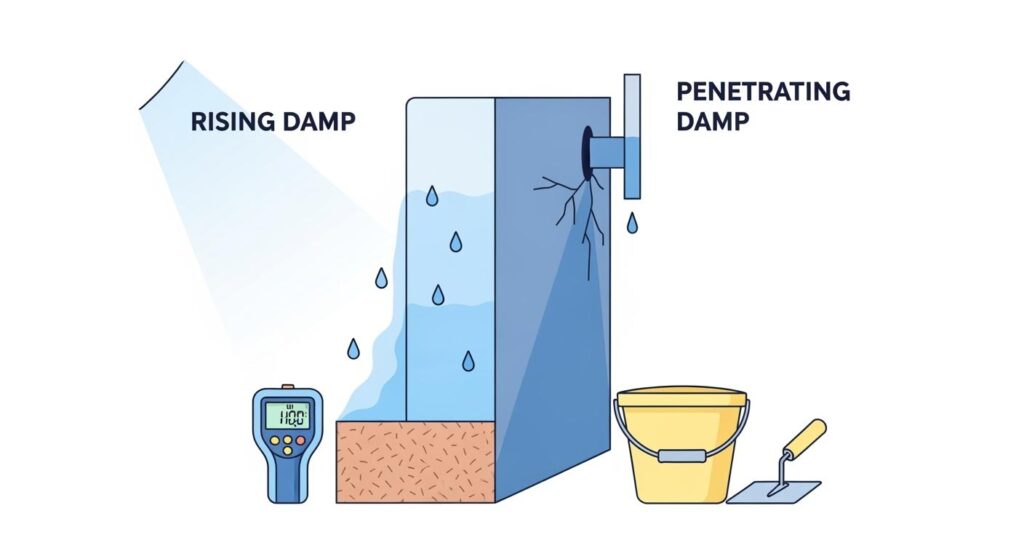
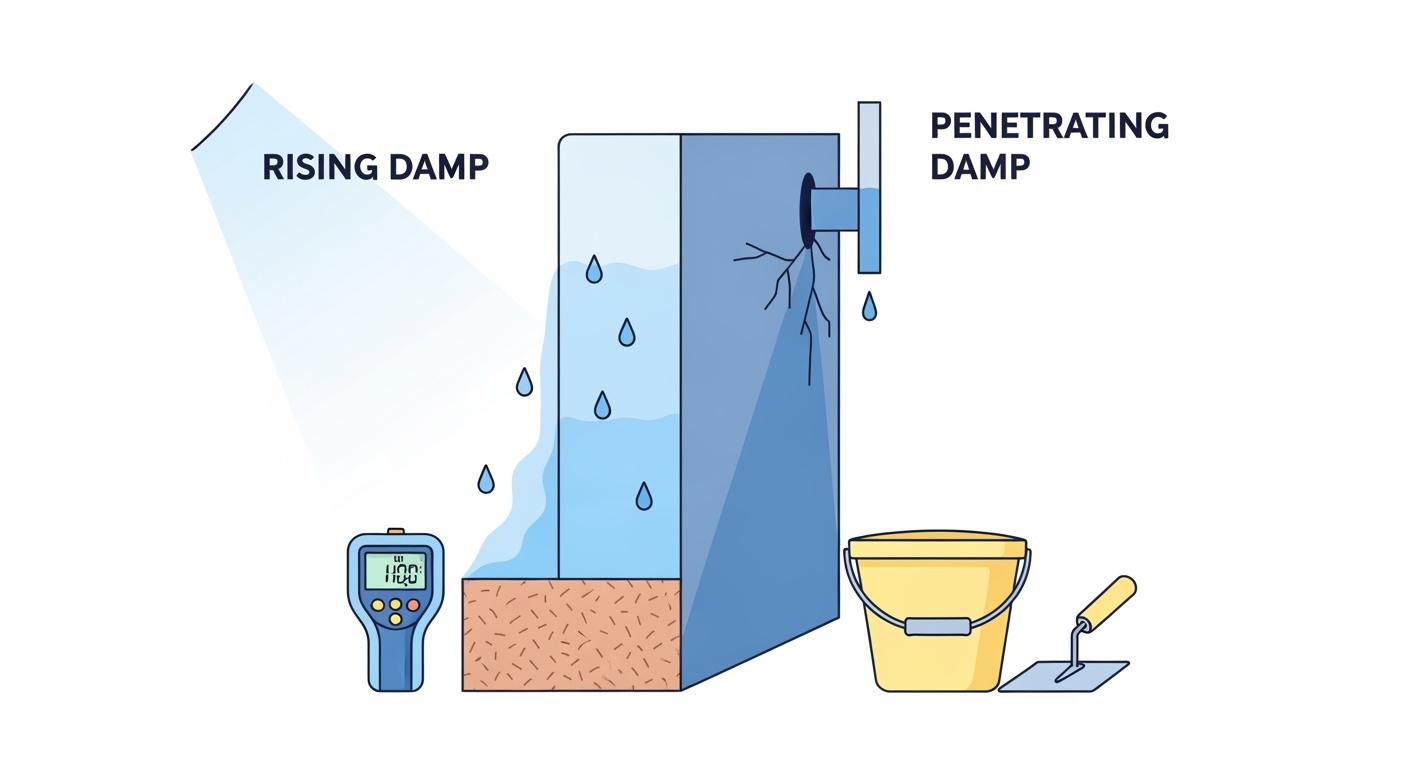
Spotting damp patches on your walls causes concern. Two percent of owner-occupiers reported damp in their home. Not all signs of damp are the same; correctly identifying the types of damp is crucial for effective treatment. We will explore rising damp and penetrating damp. This post helps you differentiate them and find solutions for your damp walls, tackling those damp patches and preventing a costly damp problem, as repairs average £80-£160 per meter.
Key Takeaways
Identify the type of damp correctly. Rising damp comes from the ground. Penetrating damp comes from outside.
Look for specific signs. Rising damp shows tide marks low on walls. Penetrating damp causes patches higher up or after rain.
Act quickly to fix damp. This prevents bigger problems. Get professional help if you are unsure.
Understanding Damp: Rising vs. Penetrating
When you notice signs of damp in your home, it is important to understand the different types of damp you might be facing. Each type has unique causes and characteristics. Knowing these differences helps you identify the problem correctly. This section will help you begin your identification process.
Rising Damp: Causes and Characteristics
Rising damp occurs when moisture from the ground travels upwards through your walls. Think of it like a sponge soaking up water. This happens because building materials like bricks and mortar are porous. They have tiny channels that draw water upwards through a process called capillary action. Water defies gravity, moving through these narrow pores. The height the water reaches depends on the material’s pore structure. For example, common bricks with larger pores allow water to rise higher than denser engineering bricks.
You might find rising damp in older homes. This is often due to issues with the damp-proof course (DPC). A DPC is a barrier, usually a layer of waterproof material, built into your walls near ground level. It stops ground moisture from rising. If your home has an ineffective, damaged, or missing DPC, moisture can bypass this barrier. Sometimes, the DPC can be ‘bridged’. This happens when something allows moisture to get past it. For instance, earth or groundworks outside might be higher than your DPC. Internal plaster connecting to a solid floor can also bridge it. Even debris or defective insulation in cavity walls can create a path for water to move upwards. New external features, like a patio, can also affect drainage and block the DPC. Heavy rain or flooding can saturate the ground, causing water levels to rise and seep into your walls.
Specific Signs of Rising Damp
You will notice specific signs if you have rising damp. Look for these indicators, usually found low down on your walls:
Damp Patches on Walls: You might see irregular stains. These typically appear up to one meter above ground level on internal walls.
Tidemarks: These are brown or yellow horizontal stains. They run parallel to the floor. These marks form as damp evaporates and salts move to the surface. Tidemarks caused by rising damp usually do not extend higher than one meter above the floor. If you see them higher up, it is likely another type of damp.
Peeling Wallpaper or Paint: Wallpaper glue might come loose or bubble. Paint can flake, especially on skirting boards.
Bubbling or Flaking Plaster: The plaster might show signs of bubbling, crumbling, or flaking. This indicates its structural integrity is compromised.
Salt Deposits: You might see white, powdery hygroscopic salt deposits on the wall surface. These appear as moisture evaporates.
Rotting Skirting Boards and Flooring: Wooden elements can show cracks, crumbling wood, or visible fungus. This happens due to excess moisture.
Penetrating Damp: Causes and Characteristics
Penetrating damp is different. It occurs when water enters your home from external sources. This water moves horizontally through your walls, rather than upwards from the ground. It is often caused by defects in your building’s exterior.
Several external factors can contribute to penetrating damp:
Defective Roofing: Broken tiles, faulty flashing, or clogged gutters can let water into your building.
Damaged Brickwork and Pointing: Eroded mortar joints or damaged bricks create pathways for water. Weathering often causes this.
Faulty Windows and Doors: Poorly sealed or incorrectly installed windows and doors allow water to seep into surrounding walls.
Inadequate External Render or Cladding: Cracks or poor application of render can compromise its protective function against water ingress.
Porous Building Materials: The porosity of your building materials significantly impacts susceptibility to penetrating damp. Water is drawn into walls through capillary action. Heritage homes are especially vulnerable. Their traditional materials, like lime mortar and older bricks, are more porous than modern ones. This increased porosity makes them more prone to water ingress.
High Exposure to Driving Rain: Properties in exposed areas, like coastal regions, are more susceptible to penetrating damp due to intense rainfall.
Specific Signs of Penetrating Damp
You will notice distinct signs of penetrating damp. These often appear on external walls, ceilings, or near openings:
Dark or Damp Patches: You might see these on walls and ceilings. They often appear high up or near windows and corners. These patches can get darker during rainfall.
Mould Growth: Black or greenish spots can appear on walls and ceilings. Look for them particularly in corners and around windows.
Peeling Paint or Wallpaper: This often occurs near windows, around chimneys, or on external walls.
Yellowish or Brown Water Stains: You might see these on internal surfaces. They can spread if you do not resolve the damp issue.
Visible Drips or Water Flowing: During rainfall, you might even see water dripping or flowing on your walls.
Key Differences Between Damp Types
Understanding the key differences between these types of damp is crucial for effective treatment. Here is a quick comparison:
Feature | Rising Damp | Penetrating Damp |
|---|---|---|
Moisture Source | Ground moisture | External water sources (rain, leaks, faulty plumbing, porous masonry) |
Movement | Upwards via capillary action (against gravity) | Horizontally via gravity and hydrostatic pressure |
Primary Cause | Compromised or missing Damp-Proof Course (DPC) | Faulty drainage, leaking roofs, porous masonry, external weather conditions |
Affected Areas | Typically confined to ground-level areas (basements, lower walls) | Can affect higher parts of the building (walls, ceilings, floors) |
Rising damp comes from the ground and moves up. Penetrating damp comes from outside and moves in. Knowing these distinctions helps you pinpoint the problem and find the right solution for the damp in your home.
Identifying and Addressing Damp in Your Home
You have seen the signs of damp on your walls. Now you need to understand what they mean and what to do next. Acting quickly can stop a small issue from becoming a major damp problem. This section helps you recognise common indicators, assess the situation yourself, and find the right solutions.
Recognising Common Signs of Damp in Your Home
Damp can show up in many ways. You might notice black mould growing on walls or ceilings. A musty smell often fills the air, especially in affected rooms. You could see stained or peeling finishes on your walls. Your home might feel stuffy or humid, even when it is not hot outside. Plaster can become discoloured, or you might have persistent condensation on windows.
Look for flaking paint on windowsills or peeling wallpaper. Bubbling paint on walls is another clear indicator. You might spot tide marks on walls, which are often a sign of rising damp. Skirting boards can crumble, and carpets might feel wet or musty. Dark staining or bubbling drywall also points to moisture. Even rust on appliances or warped and sagging surfaces can mean you have damp in your home.
The most frequently reported common signs of damp include:
For rising damp: You will see tide marks or damp patches on walls, peeling wallpaper, and a musty smell near the base of walls.
For penetrating damp: You will find localised damp patches that appear after rain, often on ceilings or walls facing the weather.
For condensation damp: You will notice water droplets on windows, black mould growth, and dampness in corners or behind furniture.
Ignoring these signs can affect your health. Damp and mould in homes link to thousands of cases of asthma and respiratory infections in children and adults. They can also cause allergic rhinitis. Babies, children, and elderly people are more vulnerable. If you have allergies, asthma, or a weakened immune system, you face higher risks. Damp can also lead to eye irritation, skin issues, and even poor mental health due to the unpleasant living conditions.
Spotting Early Signs of Damp
Catching damp early saves you time and money. You can prevent a small issue from growing into a big damp problem. The earliest indicators of moisture ingress in your home are often subtle.
You might first notice musty smells. Mould and fungi thrive in moist conditions, causing these odours. Look for discoloured walls and ceilings. These appear as dark, damp patches or water stains, showing water seepage. Peeling wallpaper or paint happens when water gets behind these coverings, making them lose adhesion. You might also see cracks in walls and ceilings. Water entering the building structure causes materials to expand and contract, leading to these cracks. Visible damp patches are clear indicators on walls, ceilings, or floors, often with a musty smell. Peeling paint and plaster occur when water breaks the bond between surfaces, causing flaking or bubbling. Cracks in concrete or masonry can let water in, which then expands during freeze-thaw cycles, worsening the damage. These are all early signs of damp you should watch for.
DIY Damp Assessment: What to Look For
You can do a basic check for damp yourself. Start with a visual inspection. Look at your walls, ceilings, and floors for discolouration, staining, mould growth, peeling paint, bubbling wallpaper, or warped wood. Check windows and doors for condensation or rot. Inspect external structures for cracks, leaks, or blockages.
You can also use a moisture meter. These devices measure moisture content in materials like wood, plaster, or brick. Select the right setting, press the probes firmly against the surface, and read the display. Readings above 20% may indicate a damp problem. For timber, typical damp readings range from 0-40% maximum. Softwoods reach saturation between 28% and 32%. For masonry (brick, stone, plaster, concrete), damp readings usually fall within a 0-5% maximum range. Remember, variable salt content in plaster can give misleading readings, so moisture meters are not always reliable for diagnosing damp in such materials without a proper survey.
Effective Solutions for Rising Damp
If you have rising damp, you need to address the source. First, ensure your existing damp-proof course (DPC) is not bridged. This means nothing should allow moisture to bypass it. Chemical injections are very effective for treating damp if installed correctly. These formulations provide long-lasting protection. After injecting a new DPC, you must re-plaster the affected area with specialist plaster. This removes hygroscopic salts and prevents future contamination. Damp proof membranes can also speed up redecoration after DPC installation.
You can also consider these methods to prevent damp:
Chemical Damp Proof Course (DPC): Inject a chemical cream or liquid into the mortar course to create a barrier. This is highly effective when installed correctly.
Electro-Osmotic DPC: This uses a low-voltage electrical current to repel moisture downwards. Its effectiveness can vary.
Physical DPC Insertion: This involves cutting into the wall and inserting a physical barrier. It is disruptive and costly, usually for severe cases.
Replastering: Essential after DPC installation to remove salts. Use specialist salt-resistant plaster.
External Ground Levels: Lower external ground levels below the DPC to prevent bridging.
Drainage Improvements: Improve drainage around your property to reduce ground moisture.
Ventilation: Improve ventilation inside your home to dry out residual moisture and prevent damp from condensation.
Addressing Bridging: Remove any materials (soil, render, debris) that bridge the DPC.
Tanking/Waterproof Coatings: Apply these to internal walls below ground level, often with DPCs in basements.
Sacrificial Plasters: These absorb salts and moisture. You need to replace them periodically.
Dehumidifiers: These help dry the internal environment after treatment but are not a long-term solution for rising damp itself.
Monitoring: Monitor with moisture meters after treatment to confirm effectiveness.
Effective Solutions for Penetrating Damp
Treating damp caused by penetration means fixing the external source. You must identify the specific cause, such as defective pointing, cracked render, or faulty guttering. This is the crucial first step. Focus your repairs on the exact source of water ingress.
You might need to re-point brickwork where the pointing is defective. Repair or replace damaged roof tiles. Fix broken guttering and downpipes to stop water penetration. You can apply a water-repellent treatment to the external wall to prevent damp from entering. Maintain your building’s exterior to avoid common causes of penetrating dampness. In severe cases, consider external rendering or cladding to protect the wall. Regularly check and clear gutters. Inspect roof tiles. Seal any cracks or gaps in the building envelope. Improve external ground drainage to stop standing water from seeping into foundations.
For effective waterproofing, apply breathable water-repellent coatings to external walls, like silane/siloxane-based masonry creams. Re-render affected areas if the existing render is cracked. Install cavity trays or lead flashings where roofs and walls meet. These treatments must be breathable to avoid trapping moisture inside the wall. For example, you can apply a single coat of Stormdry Masonry Protection Cream. Your walls will return to their original appearance within 24-48 hours. Within a month, they will be fully water repellent. Stormdry Repointing Additive also offers protection against penetrating damp.
Professional Help: When to Call the Experts
Sometimes, you need professional help. You should always seek professional damp surveying services when buying a property. This identifies any existing damp issues before you commit. Mortgage lenders often require a survey as a prerequisite for loan approval. Call in the experts when you see significant signs of damp, like visible damp patches or mould. If you live in an area prone to moisture accumulation, proactive assessment can help how to prevent damp. For complex issues, like rising or penetrating damp, you need professional diagnosis and treatment.
A professional damp expert should have specific qualifications. Look for someone with the Certificated Surveyor of Timber & Dampness in Buildings (CSTDB) qualification. This nationally recognised certification shows they have rigorous training and a deep understanding of diagnosing defects and administering treatments. They will have problem-solving skills, attention to detail, and good communication skills. They can explain complex damp issues clearly.
If you are unsure about the types of damp you have, or if your DIY efforts do not work, it is time to call in the experts. BANDě offers expert surveys, tailored solutions, and reliable remediation for all damp in your home. They ensure a long-term fix for your property. They can help you check for damp thoroughly and provide the right solutions.
Accurately identifying the type of damp in your home is crucial for successful remediation. Rising damp comes from the ground, showing tide marks, while penetrating damp comes from outside, causing localised signs. Prompt action can prevent a costly damp problem and help prevent damp. This also helps prevent damp from worsening. If you are unsure, seek professional advice. BANDě offers expert solutions to prevent damp.
FAQ
How can I tell if I have rising damp or penetrating damp?
Rising damp shows tide marks low on walls. Penetrating damp appears as localised patches, often higher up or after rain.
Can I fix damp myself, or do I need a professional?
You can fix small issues like blocked gutters. For complex problems, or if you are unsure, always call a professional.
What happens if I ignore damp in your home?
Ignoring damp causes more damage to your home. It also harms your health, leading to respiratory problems and mould growth.
See Also
Your Home’s Crucial Defence: Wall and Floor Moisture Barriers Explained
Wall Paint Peeling? The Alkali-Resistant Primer is Your Missing Step
Understanding Wall and Floor Moisture Barriers: Why They Are Essential
Selecting the Optimal Wall and Floor Moisture Barrier for Your 2025 Project
Basement Leak? Attempt This DIY Repair Before Hiring a Costly Professional
