

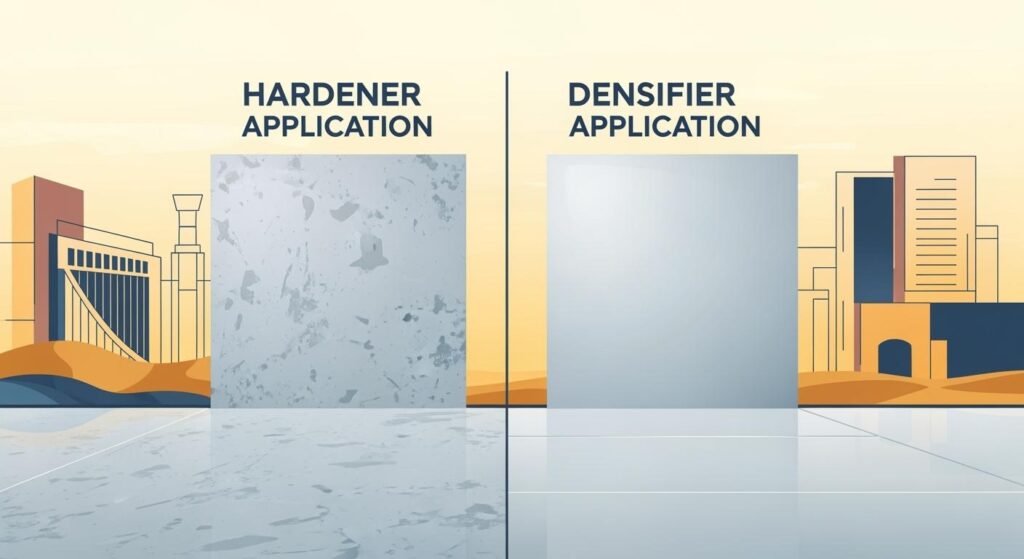
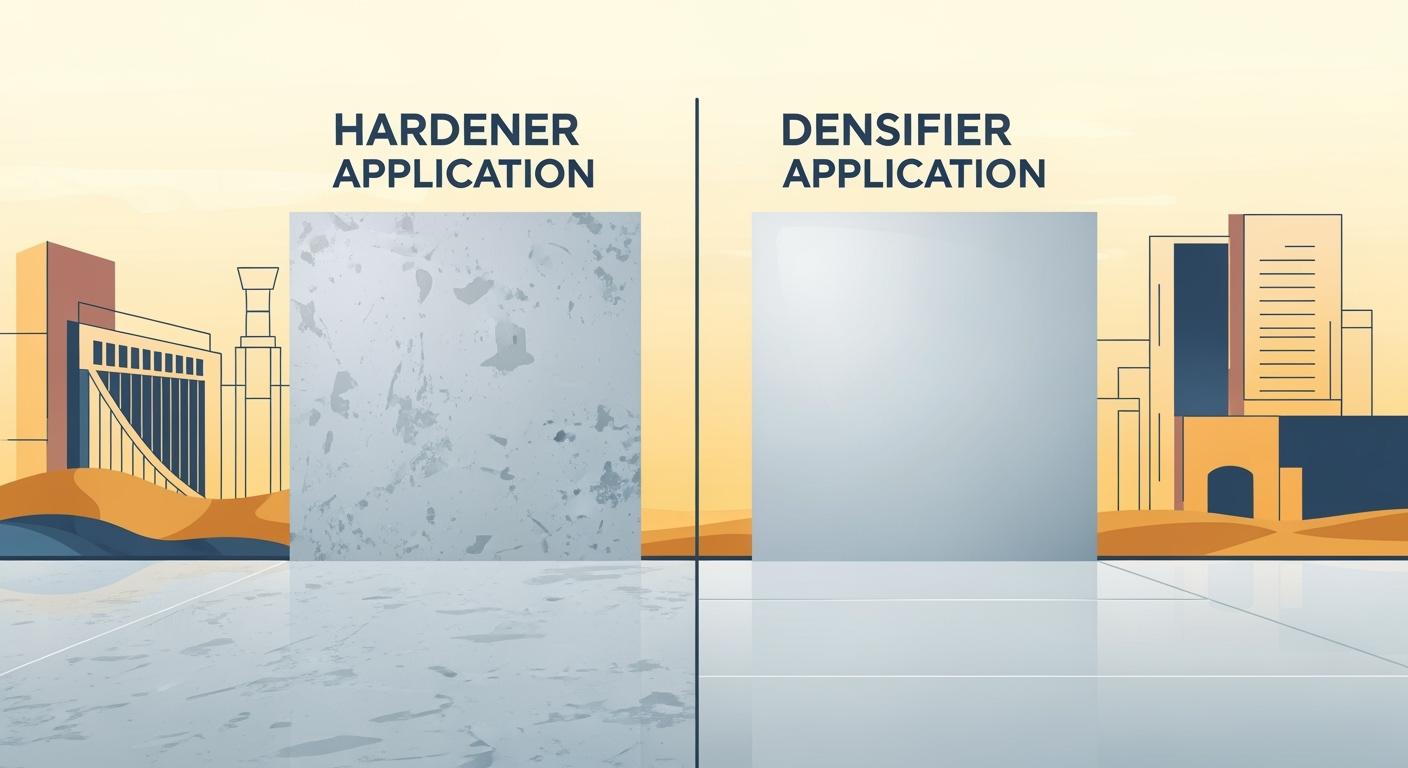
Are you a KSA project manager choosing for your concrete flooring? You face a common dilemma: concrete floor hardener or densifier? Both aim to boost concrete durability. However, their mechanisms and long-term performance vary greatly. This guide helps you decide the best flooring solution for your unique KSA project needs.
Key Takeaways
Concrete floor hardeners protect the surface of your concrete. They are good for quick fixes and high-traffic areas. They offer immediate protection.
Concrete densifiers make your concrete stronger from the inside. They penetrate deep into the concrete. This gives your concrete lasting strength and better resistance to moisture.
For KSA projects, densifiers often work better. They handle the tough environment well. They provide long-term durability for your concrete flooring.
Concrete Floor Hardeners: Surface Protection
What are Concrete Floor Hardeners
Concrete floor hardeners are surface treatments you apply to your concrete to make it tougher. Think of them as a protective shield. They come as topical coatings or dry shakes. These products create a harder, more abrasion-resistant layer on your concrete surface. They stop your concrete from dusting and boost its resistance to wear. Many are formulated with hard silica oxides and specialized polymers. For example, you might use a dry shake hardener. You apply this powder while the concrete is still wet. This gives you an economical and durable finish for your flooring. Products like Setseal A90, an acrylic resin compound, act as a curing agent, hardener, and sealer. Nitoflor HD, a lithium silicate hardener, is another option for new interior concrete floors, like those in warehouses. These hardeners create a strong, monolithic bond with the concrete. They also help smooth out the surface by suppressing any fibers near the top.
Benefits for KSA Projects
Choosing a concrete floor hardener offers immediate benefits for your KSA project. You get instant surface protection. This is great for high-traffic areas where surface abrasion is your main concern. Some types even offer color options, letting you customize your concrete flooring’s look. If you are dealing with surface-level issues, these hardeners are often a cost-effective solution. They quickly improve the durability of your concrete where it matters most – on the top layer.
Limitations and KSA Considerations
While useful, concrete floor hardeners do have limitations. You might face potential delamination, where the surface layer peels away. They also offer limited penetration into the concrete. This means they only protect the very top. You will likely need to reapply them over time. KSA’s climate presents unique challenges. High temperatures, strong winds, and low humidity can affect how you apply these products and how long they last. Curing compounds, often part of the hardener system, are crucial here. They prevent rapid water loss from your concrete, which is common in Saudi Arabia. Proper curing leads to denser, harder surfaces. This helps your flooring resist dusting, scratching, and chemical attacks. These compounds are specifically designed for KSA’s conditions, ensuring your industrial floors achieve maximum strength and a longer lifespan.
Concrete Densifiers: Deep-Penetrating Strength
What is a Concrete Densifier
A concrete densifier is a liquid you apply to your concrete. It’s not just a surface coating. Instead, it penetrates deep into the concrete. These liquids, often silicates like sodium or potassium, react chemically with the concrete. They fill the tiny pores inside, making the concrete much denser and stronger from within. This process creates a permanent, integral part of your concrete slab.
You might find different types of densifiers. For example, Sodium Silicate Densifiers are water-based solutions. They react with calcium hydroxide in the concrete to form a harder surface. Potassium Silicate Densifiers are similar but often penetrate deeper. Lithium Silicate Densifiers also go deep and create a very hard, dense surface. You also have Colloidal Silica Densifiers, which use tiny silica particles to react and form a highly dense surface. Sometimes, you might even see Magnesium Fluorosilicate Densifiers used for better chemical resistance. These densifiers solidify your concrete, stopping dusting and pitting, especially important for heavy foot or forklift traffic on your flooring.
Benefits for KSA Projects
Choosing a concrete densifier offers many benefits for your KSA project. You get enhanced internal strength for your concrete. This means your flooring becomes less porous, resisting moisture and chemicals much better. It’s a permanent solution, not something you need to reapply often. Densifiers are also perfect if you plan for a polished concrete floor. They make the concrete strong enough to achieve that beautiful, long-lasting shine. This deep-seated strength provides superior durability, which is crucial for KSA’s demanding environment.
BANDě Crystal Floor Hardener: An Advanced Densifier
Consider BANDě Crystal Floor Hardener for your project. This advanced densifier uses nano-grade active silicates. It penetrates 5-8mm into your concrete, significantly increasing its hardness by over 300%. It gives your flooring a lasting shine and is eco-friendly because it’s water-based with no VOCs. This product also offers excellent stain resistance and boasts a 6-7 Mohs hardness. It increases compressive strength by 40% and can last for 15+ years. You can use it on both new and old concrete, making it ideal for industrial polished concrete flooring.
Limitations and KSA Applications
Densifiers do have some limitations. They usually have a higher initial cost than a simple concrete floor hardener. They also don’t change the surface color of your concrete. You need proper surface preparation for them to work best. In KSA, ensuring the concrete is clean and dry before application is key. Proper application is vital for optimal results, ensuring the densifier penetrates correctly and provides the strength and durability you expect.
Choosing the Right Concrete Flooring Solution for KSA
Hardener vs. Densifier: Mechanism and Durability
You need to understand how hardeners and densifiers work. This helps you pick the right solution. A concrete floor hardener acts on the surface. It creates a tougher skin. Think of it as a shield for your concrete. This shield protects against abrasion. However, this protection is often temporary. You might need to reapply it. A densifier, on the other hand, works differently. It penetrates deep into your concrete. It reacts chemically, making the entire slab stronger. This means you get internal density and strength. This solution is permanent. It becomes an integral part of your concrete. You gain long-term durability. For your concrete flooring, this means lasting strength.
Aesthetic and Cost Implications for KSA Projects
Consider the look and cost for your KSA project. Hardeners can offer color options. They give you an immediate surface change. Their initial cost is often lower. But think about lifecycle costs. You might need reapplication. This adds to long-term expenses. Densifiers don’t change the concrete’s color. They offer a natural, enhanced look. They are perfect for polished concrete. Their initial investment might be higher. However, their permanence means lower maintenance costs over time. This leads to better longevity. You save money in the long run. The installation process for both affects the final cost.
KSA Environmental Suitability and Project Type
KSA’s environment is tough. You face heat, dust, and sometimes moisture. Which product performs better? Densifiers excel here. Their deep penetration makes your concrete less porous. This improves resistance to moisture and chemicals. It also helps with dust control. Hardeners offer surface protection. But KSA’s harsh conditions can challenge their longevity. They might wear down faster. Consider your project type. For industrial warehouses with heavy traffic, densifiers offer superior strength and durability for your concrete flooring. Retail spaces might benefit from the polished look densifiers provide. Residential or outdoor areas also gain from the enhanced strength. Proper installation is key for any choice.
Considering Other Concrete Flooring Options: Epoxy and More
Sometimes, you need more than hardeners or densifiers. You might consider other concrete flooring options. Epoxy flooring is a popular choice. It offers a different kind of protection. Epoxy flooring systems involve applying multiple layers of epoxy resin. This creates a thick, durable coating. This epoxy floor coating acts as a protective flooring solution. It’s great for areas needing extreme durability. Think about industrial settings or commercial kitchens.
Epoxy flooring provides excellent chemical resistance. It also offers a seamless, non-porous surface. This makes it easy to clean and provides low maintenance. You get a long-lasting finish. The installation of epoxy flooring requires careful preparation. Professional epoxy flooring services ensure proper application. This guarantees the longevity of your epoxy floor.
There are different types of epoxy. You can choose a high-strength epoxy for heavy-duty use. Or you might pick a decorative epoxy for aesthetic appeal. The resin in epoxy flooring bonds strongly to the concrete. This creates a very tough surface. This type of flooring is a fantastic option for many KSA projects. It offers superior protection and a long lifespan. You’ll find epoxy flooring systems are a smart investment. They provide a durable and low maintenance surface. When you need a robust solution, consider professional epoxy flooring services. They deliver quality installation and lasting results.
The “better” choice for your concrete flooring depends on your specific concrete project. Use a concrete floor hardener for surface fixes. Densifiers give your concrete deep, lasting strength. For KSA’s tough conditions, densifiers offer superior performance and value for your concrete flooring. Consult specialists to pick the best concrete flooring solution for lasting flooring results.
FAQ
What is epoxy flooring?
Epoxy flooring is a robust, multi-layered system. You apply this epoxy over your concrete flooring. It creates a tough, seamless surface. This epoxy flooring protects against chemicals and wear. It is a popular choice for many types of flooring.
What are the main benefits of epoxy flooring?
Epoxy flooring offers excellent chemical resistance and durability. This epoxy surface is easy to clean and maintain. You get a long-lasting, protective epoxy flooring solution. It is a smart investment for your flooring needs.
Is epoxy flooring suitable for KSA’s climate?
Yes, epoxy flooring performs well in KSA. Its durable nature resists high temperatures and heavy use. This epoxy surface provides a long-lasting, low-maintenance epoxy flooring. It is a reliable flooring solution.
How does epoxy flooring protect concrete?
Epoxy flooring forms a strong, protective barrier. This epoxy layer prevents moisture and chemicals from reaching your concrete flooring. It enhances durability and extends the life of your concrete. This epoxy flooring is a great choice.
See Also
Unveiling the True Distinction: Concrete Densifiers Versus Hardeners Explained
Liquid Solutions: Hardener, Sealer, and Densifier for Concrete Floors
Selecting the Optimal Concrete Densifier for Your Warehouse Flooring Needs
Understanding Concrete Densifiers: Their Functionality and Practical Application
Essential Concrete Enhancement: The Immediate Benefits of This Densifier
