

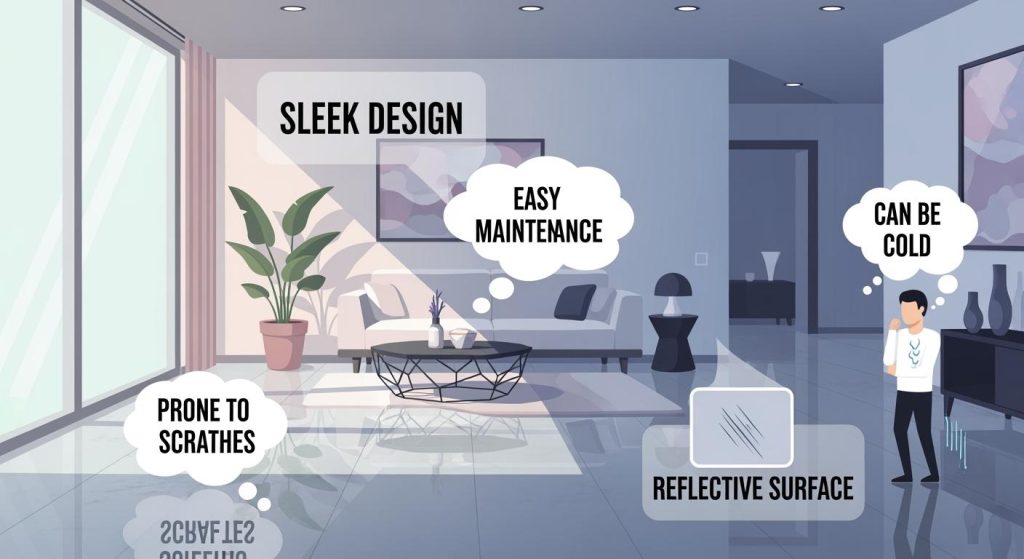
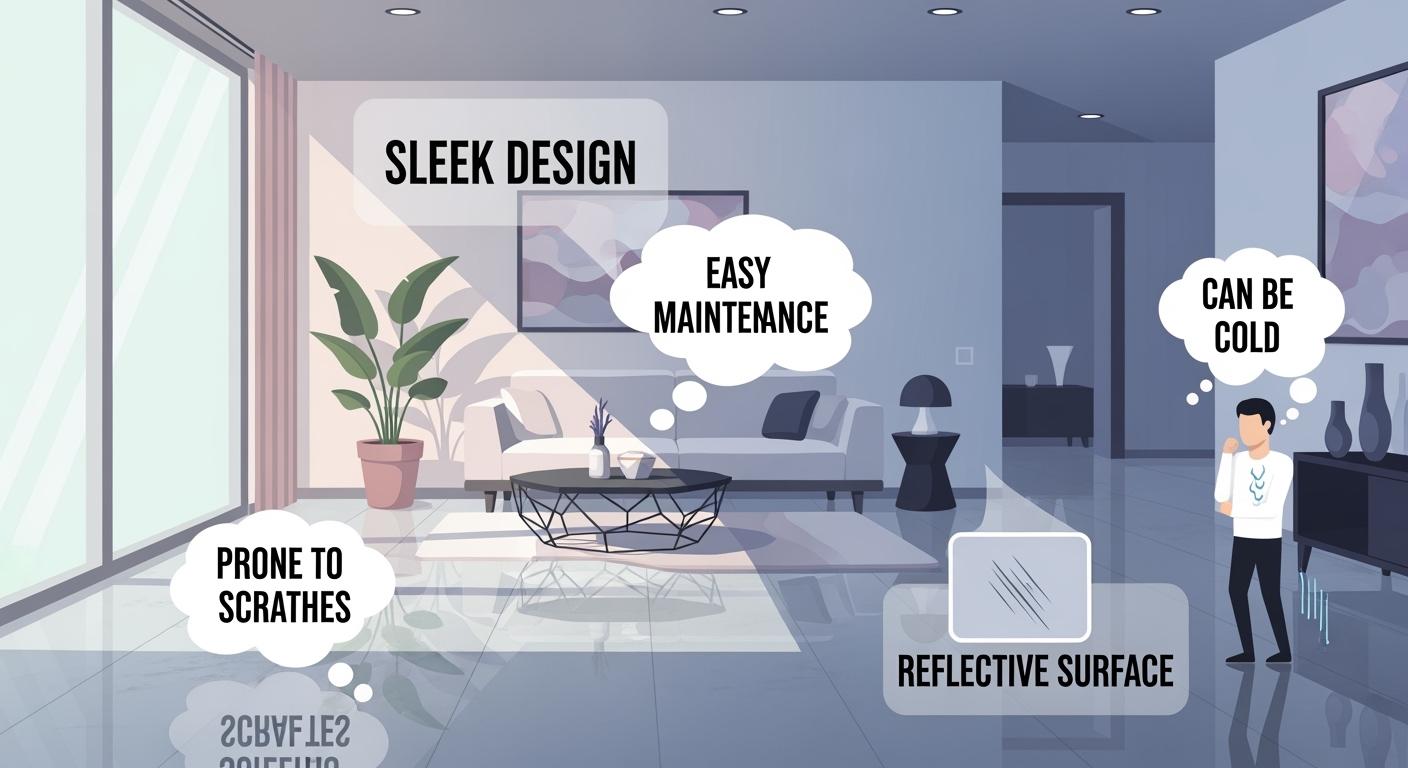
Polished concrete floors have become a popular choice in recent years. More homeowners and businesses are drawn to their unique designs and sustainability. This trend stems from a growing desire for durable flooring that requires low maintenance. However, it’s crucial to weigh both the upsides and downsides before making a decision.
Key Takeaways
Polished concrete floors are durable and require low maintenance, making them ideal for high-traffic areas.
They offer aesthetic appeal with various finishes, enhancing the look of any space while reflecting light to create a brighter atmosphere.
Consider the downsides, such as their hardness and temperature sensitivity, which may affect comfort in certain environments.
Benefits of Polished Concrete Floors
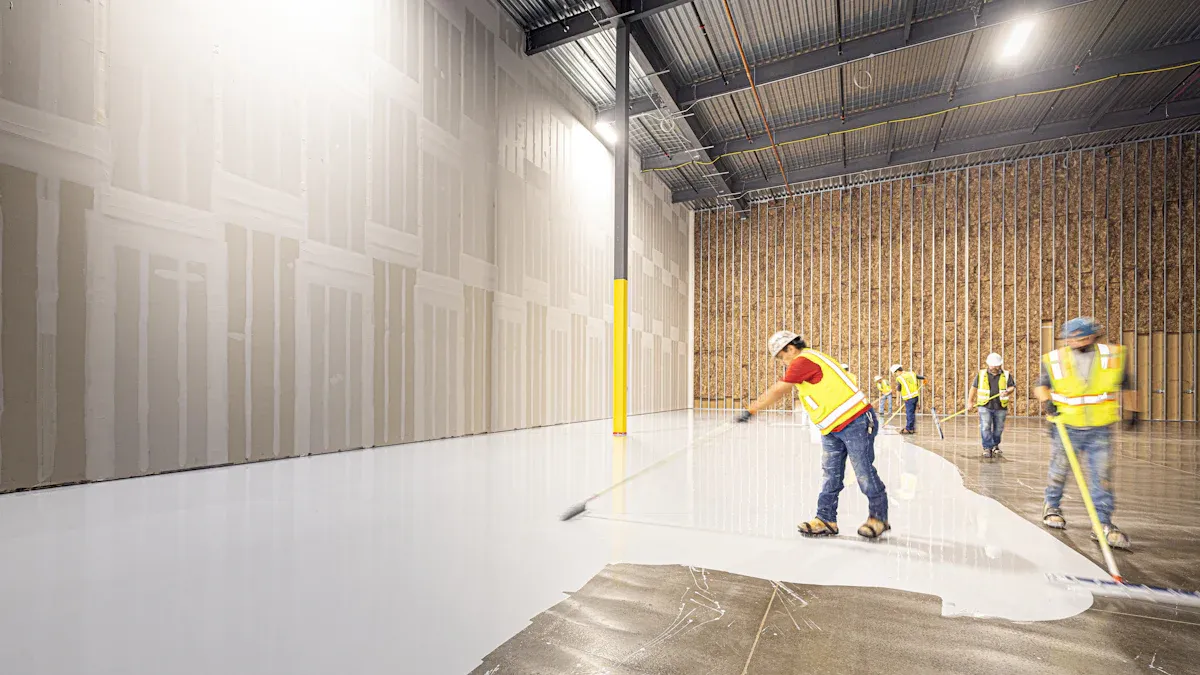
Polished concrete floors offer a range of benefits that make them an attractive option for both residential and commercial spaces. Let’s dive into some of the key advantages.
Durability and Maintenance
One of the standout features of polished concrete floors is their durability. These floors can withstand heavy foot traffic, making them ideal for high-traffic areas like retail stores and warehouses. In fact, polished concrete often outlasts traditional flooring options like hardwood and tile. Maintenance is straightforward, requiring only regular mopping to keep them looking fresh. Unlike hardwood, which needs periodic sanding and sealing, polished concrete is much easier to maintain.
Flooring Type | Maintenance Requirements |
|---|---|
Polished Concrete | Frequent mopping, similar to hardwood and LVT/VCT |
Hardwood | Periodic sanding and sealing to remove scratches |
Tile | Generally easier to clean, no special maintenance |
Aesthetic Appeal
Polished concrete floors are not just functional; they also bring a unique aesthetic appeal to any space. Available in various finishes, from matte to high-gloss, they can complement a wide range of design styles. Whether you prefer a minimalist look or something more rustic, polished concrete can enhance your interior. The reflective properties of polished concrete can even make spaces feel larger and brighter, adding to its charm.
Reflective properties enhance natural light, making spaces feel brighter.
Versatile canvas that complements various design styles, from minimalist to eclectic.
Customization options allow for unique and personalized flooring designs.
Cost-Effectiveness
When it comes to cost, polished concrete floors are a smart investment. The average installation cost ranges from $3.50 to $5 per square foot, which is significantly lower than options like hardwood or natural stone. Over time, the long-term ownership costs also favor polished concrete. They require less maintenance and fewer repairs, leading to substantial savings over a decade.
Flooring Type | |
|---|---|
Polished Concrete | $3.50 – $5 |
Tile (ceramic) | $7 – $12 |
Hardwood | Up to $29 |
Natural Tile (slate/marble) | Exceeds $35 |
Eco-Friendly Choice
Polished concrete floors are an eco-friendly choice. Made from locally sourced materials, they have a lower carbon footprint compared to traditional flooring options like ceramic tile or carpet. The production process for polished concrete requires less energy, which is a win for the environment. Additionally, their long lifespan means less waste over time, making them a sustainable flooring option.
Easy to Clean
Cleaning polished concrete floors is a breeze. They require minimal effort to maintain their appearance. Just a damp mop with mild cleaning solutions is enough to keep them looking great. Avoiding harsh chemicals is recommended, as they can damage the surface. This ease of cleaning makes polished concrete a practical choice for busy households and commercial spaces alike.
Clean spills immediately to prevent damage.
Use a damp mop with mild cleaning substances.
Recommended cleaners include Xtreme Clean and Simix Multi-Surface Cleaner.
Safety Features
Safety is another important consideration, especially in commercial settings. Polished concrete floors can be treated to enhance their slip resistance, making them safer in wet or oily environments. Anti-slip treatments can create a textured surface that improves traction, which is essential for preventing accidents.
Anti-slip treatments create a textured surface that improves traction.
Sealants prevent liquids and chemicals from penetrating the concrete.
Moisture Resistance
Polished concrete floors excel in moisture resistance, making them suitable for basements and ground-level installations. They utilize a silicate densifier that reduces porosity, leading to minimal moisture absorption. This feature means less maintenance and fewer repairs after water exposure, setting them apart from other flooring materials.
Feature | Polished Concrete Floors | Other Flooring Materials |
|---|---|---|
Porosity | Low | High |
Moisture Absorption | Minimal | Significant |
Repair after Floods | Rarely Needed | Often Required |
Downsides of Polished Concrete Floors
While polished concrete floors have many advantages, they also come with some drawbacks that potential buyers should consider. Let’s explore these downsides in detail.
Quality of Installation
The quality of installation plays a crucial role in the performance of polished concrete floors. Poor installation can lead to a host of problems, including cracks and uneven surfaces. Here are some common installation errors that can negatively impact your floors:
Installation Error | Explanation |
|---|---|
Poor surface preparation | Failing to prepare the ground properly can lead to uneven settling and cracks. |
Inaccurate concrete mix | An incorrect mix can result in weak concrete that is prone to cracking and excessive porosity. |
Neglecting proper curing | Not maintaining moisture during curing can lead to reduced strength and increased porosity. |
Improper reinforcement placement | Incorrect placement of steel bars can result in weak points and compromised load-bearing capacity. |
Overworking the surface | Excessive finishing can weaken surface integrity and lead to an uneven appearance. |
Not accounting for expansion joints | Neglecting expansion joints can cause unsightly cracks due to temperature fluctuations. |
Ignoring weather conditions | Extreme weather can impact curing and lead to surface defects. |
Rushing the process | Rushing through installation stages can compromise quality and longevity. |
Neglecting sealing and maintenance | Failing to seal can lead to premature deterioration and costly repairs. |
Lack of professional experience | Attempting installation without expertise can result in significant mistakes. |
Choosing a qualified contractor is essential to avoid these pitfalls. A professional can ensure that the installation process is done correctly, leading to a polished concrete floor that lasts.
Hard Surface Concerns
Another downside of polished concrete floors is their hardness. While this durability is a plus, it can also lead to discomfort. Standing for long periods on a polished concrete floor can be tough on your back and feet. Many people find that using anti-fatigue mats helps alleviate some of this discomfort. Here are a few concerns related to the hard surface:
The inherent hardness of concrete can lead to fatigue for workers who stand for long periods.
Polished concrete floors can feel cold to the touch, especially in winter, which may not be ideal for everyone.
The lack of cushioning means that if you drop something, it’s likely to break.
These factors can make polished concrete less suitable for environments where people are on their feet all day, such as retail or hospitality settings.
Temperature Sensitivity
Polished concrete floors respond differently to temperature changes, which can be a concern in various climates. In moderate climates, they can remain comfortable year-round due to their thermal mass. However, in colder regions, the floors can feel quite chilly without proper insulation. Here’s what you need to know:
In colder climates, robust insulation strategies and radiant heating systems are recommended to maintain comfort.
Extreme cold climates necessitate maximum insulation to ensure energy efficiency and comfort.
Proper insulation, particularly under-slab insulation using rigid foam boards, is crucial to prevent cold floors during winter months.
If you live in an area with significant temperature fluctuations, consider these factors when choosing polished concrete floors. They can be a great option, but you may need to invest in additional insulation or heating solutions to keep your space comfortable.
Polished concrete floors offer a blend of durability, low maintenance, and aesthetic appeal. They shine in heavy-traffic commercial uses and are easy to clean. However, consider the potential downsides, like their hard surface and temperature sensitivity. Weighing these factors will help you make an informed choice for your space.
FAQ
What are the benefits of polished concrete floors?
Polished concrete floors are durable flooring options that require low maintenance. They are also easy to clean and can withstand heavy-traffic commercial uses.
Are polished concrete floors slip-resistant?
Yes, polished concrete floors can be treated to enhance their slip resistance, making them a safe choice for various environments.
How long do polished concrete floors last?
With proper installation and maintenance, polished concrete floors can last for decades, making them a cost-effective flooring solution.
See Also
Discover The Advantages Of BANDě Polished Concrete Floors
Transforming Your Polished Concrete Floors From Dull To Bright
Selecting The Top Polished Concrete Densifier For 2025
Enhance Your Floors With The Best Sealers Of 2025
Comprehensive Guide To Polishing Concrete With BANDě Solutions
