


Dusty concrete floors in UK homes and businesses frustrate you. They are hard to sweep clean, often peeling or flaking. A concrete dustproofer uk offers an effective, permanent solution. It creates a clean, healthy, and durable concrete surface, preventing damage like potholes. This guide helps you understand dust causes, choose the right product, apply it, and maintain your surface.
Key Takeaways
Concrete dustproofers permanently seal UK floors, preventing harmful health risks and structural damage like potholes.
Choose the correct water-based or solvent-based dustproofer for your floor, then apply thin coats evenly.
Daily dry mopping and prompt spill cleanup maintain your treated concrete floor and prolong its life.
Why UK Concrete Floors Get Dusty
Understanding Concrete’s Dust-Producing Nature
You might wonder why your concrete floors constantly produce dust. Newly poured or existing concrete can develop dust for several reasons. Factors like an insufficient grade of concrete, sand that is too fine, or an excessive water-cement ratio during mixing contribute to this problem. Poor maintenance also plays a significant role. This initial dusting makes your concrete feel impossible to sweep clean. Over time, you will see the surface begin to peel and flake. In more severe cases, small stones may appear, and large lumps of the concrete floor can even fall off, creating potholes.
UK Factors Contributing to Concrete Dust
Several specific factors contribute to concrete dust on UK floors. You often see excessive bleed water and laitance. This happens when water accumulates on the surface, creating a weak, porous layer. Adding too much water to the mix or overworking the concrete worsens this. Premature troweling also causes issues; finishing the surface too early traps moisture and weakens the top layer. Environmental factors in the UK also play a part. Cold temperatures combined with high humidity lead to condensation, which gets trowelled into the concrete. Strong winds cause rapid surface drying, disrupting the cement hydration process. Sometimes, chemical over-application, such as too much form release agent, also contributes to dusting on concrete surfaces.
Impact of Dust on Health and Aesthetics
The constant presence of concrete dust affects both the look of your property and your health. A dusty concrete floor looks unsightly and unprofessional. More importantly, inhaling concrete dust particles poses serious health risks.
Health Risk Category | Condition / Symptom | Description |
|---|---|---|
Long-Term Risks | Silicosis | Permanent and incurable scarring of lung tissue, causing breathing difficulty, chronic cough, and fatigue. |
Long-Term Risks | Lung Cancer | DNA damage in pulmonary cells from respirable crystalline silica (RCS) induced inflammation. |
Long-Term Risks | COPD | Irreversible airflow obstruction, including chronic bronchitis and emphysema. |
Long-Term Risks | Reduced Lung Capacity | Chronic shortness of breath, persistent coughing, and tight chest sensations. |
Short-Term Risks | Upper Respiratory Irritation | Acute irritation of the nasal passages and throat, with persistent coughing and chest discomfort. |
Short-Term Risks | Condition Aggravation | Immediate worsening of existing asthma or underlying respiratory ailments. |
Inhaling concrete and cement dust presents severe chemical hazards beyond just silica exposure. When these dust particles interact with your body’s natural moisture in the mouth, nasal passages, and respiratory tract, they react. This reaction forms a highly alkaline and corrosive solution. This solution damages internal tissues and significantly elevates your long-term risk of severe lung disease.
Understanding Concrete Dustproofers
How Dustproofers Bind Concrete Particles
You know unsealed concrete floors are naturally porous. They continuously produce dust when you walk on them or sweep them. Sealing the surface offers an essential and permanent solution. Products like BANDě Concrete Floor Dust Sealer work effectively. This highly permeable, water-based formulation contains nanomaterials and inorganic silicon materials. It also has a small amount of a crystallization catalyst. This product penetrates deeply into the concrete. It activates the cement hydration reaction. Under the action of silicates, free ions in the concrete form crystals. These crystals become as hard as granite. This process creates a dust-free, dense, and wear-resistant crystalline structure. This extends the service life of your concrete surface. It does not affect the original surface’s usability. This mechanism binds the tiny concrete particles together.
Types of Dustproofers for UK Floors
You have several options for concrete dustproofers in the UK. Each type offers specific benefits for your concrete floors.
Sealer/Dustproofer Category | Example Product | Key Characteristics & Applications |
|---|---|---|
Two-Part Epoxy Sealers | CPR 900 / CPR 904 | These are low-viscosity, solvent-free solutions. They deeply penetrate concrete to harden surfaces. They prevent dust and offer chemical and UV resistance. |
Water-Based PU Screed Sealers | CPR 902 | These are single-pack matt sealers. They provide protection against abrasion, chemicals, and moisture for resin floor screeds. |
All-Purpose / Stain-Resistant Sealers | CPR 903 | These are versatile single-pack formulations. They protect concrete and stone from oil, grease, and moisture. They do not alter the substrate appearance. |
Acrylic Resin Sealers | CPR 906 | These are single-pack synthetic acrylic formulations. You use them to seal, cure, and dustproof old and new concrete floors before applying a topcoat. |
You can also find silicate resin formulations. These employ high-grade silicate resins, such as Sika® Dustproofer & Concrete Hardener. They solidify and eliminate dust on both fresh and aged concrete surfaces. They react chemically with lime to boost wear resistance. Choosing the right concrete dustproofer uk depends on your specific needs.
Beyond Dust: Other Benefits of Dustproofing
Dustproofing your concrete offers more than just preventing dust. You gain several other significant advantages.
Reduced Surface Permeability: This inhibits liquid absorption. It eliminates surface dusting by strengthening overall wear resistance.
Enhanced Durability & Safety: It delivers long-term structural durability. You get an optimized price-to-performance ratio. It also improves traction safety for heavy commercial or warehouse environments.
Consider these additional benefits:
Benefit Category | Performance Feature | Industrial Advantage |
|---|---|---|
Abrasion & Wear Resistance | High impact and abrasion durability | This protects your concrete floors. They are subject to heavy machinery, traffic, and physical impacts. It also lowers ongoing maintenance costs. |
Chemical Defense | Shielding against corrosive substances | This guards concrete integrity against chemical spills, stains, and harsh exposures in industrial settings. |
Aesthetic Customization | Multiple color and finish selections | This offers architects and builders customizable appearance options for concrete surfaces. |
You will also find enhanced abrasion and wear resistance. Treatment hardens the concrete surface. This significantly mitigates damage caused by water, oils, and physical surface abrasion. You get chemical and fluid protection. Deep penetration into concrete pores creates a barrier. This barrier resists water, oil, grease, dilute acids, and atmospheric weathering. It does not yellow over time. Operational efficiency also improves. It produces a sealed, glossy, and low-maintenance finish. This simplifies cleaning routines. It also decreases mechanical polishing processing time.
Choosing Your Concrete Dustproofer UK
Assessing Your Floor’s Condition and Usage
You need to evaluate your concrete floor carefully. Consider its current condition. Is it new concrete or an older surface? Look for existing damage like cracks or severe dusting. Think about how you use the floor. Does it experience light foot traffic, or do heavy vehicles pass over it? The usage level directly impacts the type of concrete dustproofer uk you should choose. A busy workshop floor needs a more robust solution than a quiet storage area. This assessment helps you select the most effective product for your specific concrete.
Key UK Considerations: Regulations and Weather
When choosing a dustproofer, you must consider UK-specific factors. Always check local building regulations. Some environments, like food preparation areas, have strict requirements for floor treatments. The UK weather also plays a role. Our damp climate and fluctuating temperatures can affect product performance. Ensure the product you select is suitable for the environmental conditions of your concrete floor. Some products perform better in unheated spaces or areas prone to moisture.
Recommended Dustproofer Products
You have many excellent products available for your concrete floors. Choosing the right one is crucial for lasting results. Here are some top-rated concrete dustproofer products in the UK market:
Product Name | Rating | Number of Reviews | Key Features |
|---|---|---|---|
Smartseal Concrete Dustproofer Sealer (Solvent Based) | 5/5 | 9 | Solvent-based, suitable for garage and power floated concrete floors (External/Ventilated use) |
Watco Universal Sealer Dustproofer | Rated (23 reviews) | 23 | Single pack, water-based acrylic, suitable for heavy duty interior/exterior use |
These products offer different benefits. The Smartseal option is solvent-based, ideal for specific concrete applications. Watco provides a versatile water-based acrylic for heavy-duty concrete use. You should match the product’s features to your concrete floor’s needs.
Applying Your Concrete Dustproofer: A Guide
Essential Preparation and Cleaning
You must prepare your concrete floors thoroughly before applying a dustproofer or sealer. This ensures the surface absorbs the protective coating effectively. You need to clean, sweep, and vacuum the concrete. This removes loose debris. You can use a stiff-bristle brush with a mild cleaning solution for scrubbing. Avoid harsh chemicals. They may cause further degradation.
For effective cleaning, consider these agents and tools:
Category | Recommended Agent / Tool | Specific Purpose / Application |
|---|---|---|
Chemical Cleaners | pH-neutral cleaners | Removal of mild dirt and surface contaminants |
Chemical Cleaners | Acids (Muriatic, Phosphoric, Oxalic acid) | Acid etching, removing cement paste/laitance, efflorescence, and heavy grime |
Chemical Cleaners | Alkaline degreasers (Sodium or Potassium hydroxide) | Breaking down heavy oil and grease stains |
Chemical Cleaners | Biological / Enzymatic cleaners | Eliminating organic stains |
Chemical Caution | Solvents (Prohibited) | Do not use solvents for cleaning concrete surfaces |
Manual & Testing Tools | Brooms, power/pressure washers, pH paper | Scrubbing reaction products, power washing, and checking surface neutrality post-etching |
You also have specialised equipment for deep cleaning:
Shot Blasters: Mobile shot blasters, like CONTEC systems, use steel pellets. They clean and etch concrete dust-free.
Diamond Grinders: Self-propelled or high-speed handheld floor grinders smooth surfaces. They remove coatings before polishing.
Concrete Planers & Scabblers: Heavy machines, such as the CT320 concrete planer and CT200 floor groover/scabbler, clear away thick coatings.
Dust Control Systems: Industrial-grade dust extractors, vacuums, and air movers manage airborne particulates.
Floor Strippers: Specialised stripping tools with heavy-duty blades and chisels remove stubborn surface layers.
Proper cleaning ensures your concrete floors are ready for treatment. This step is vital for a successful application.
Best Application Methods for Even Coverage
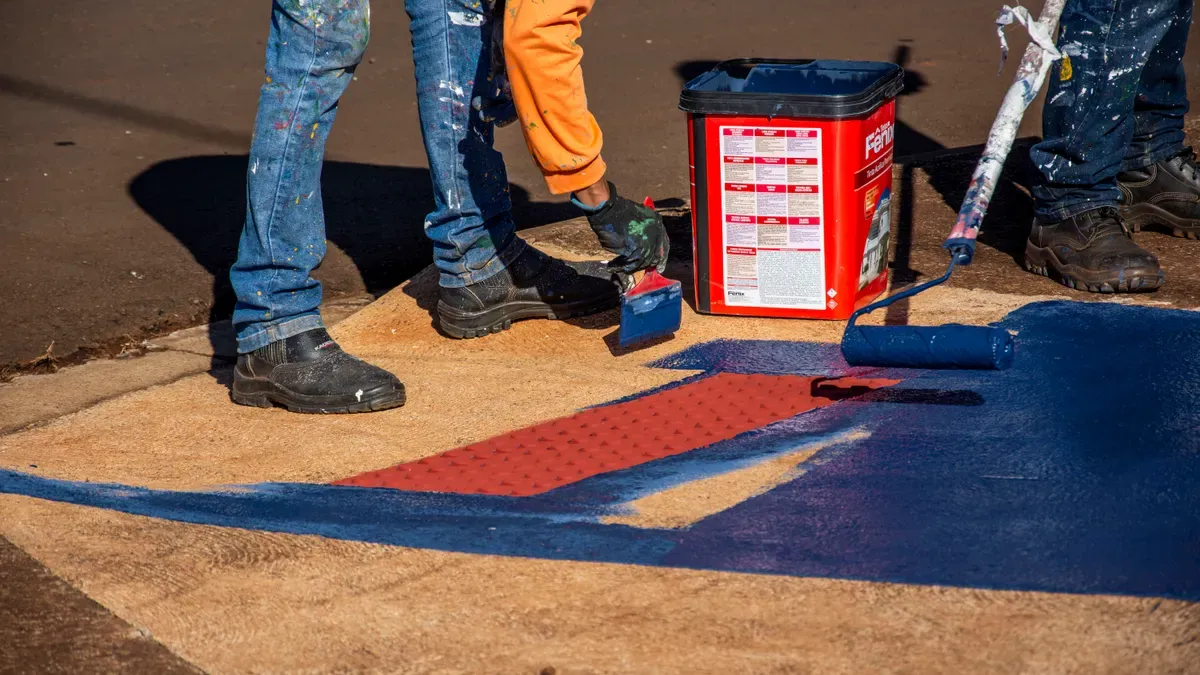
You need to apply your concrete dustproofer evenly. This ensures consistent protection across the entire surface. For uniform coverage on large areas, consider these tools and techniques:
Microfibre Flat Mop System / Cloth: This is highly recommended. It spreads ultra-thin, uniform layers. This significantly minimises application streaks or mistakes.
Paint Roller, Pad, or Brush: These are effective tools. They spread the liquid product smoothly across the surface.
Thin Coat Technique: Apply light, thin coats. This prevents liquid from pooling or puddling. It also ensures the second layer adheres seamlessly to the first.
Applying the product in thin, even layers is key. This prevents over-application. It also helps the concrete absorb the dustproofer properly.
Curing Times and Reapplication Advice
After applying the dustproofer, you must allow adequate curing time. This lets the product fully penetrate and react with the concrete. Always follow the manufacturer’s specific instructions for curing. This ensures optimal performance.
You will need to reapply the concrete dustproofer over time. This maintains its peak performance. Reapplication is necessary under these conditions:
As part of regular maintenance routines to sustain peak performance.
When the surface experiences heavy operational demands, wear and tear, or environmental exposure.
Several factors determine the reapplication schedule:
Determining Factor | Impact on Reapplication Schedule |
|---|---|
Traffic Volume | High foot or vehicle traffic increases surface abrasion, requiring more frequent recoating. |
Product Quality & Type | Superior formulations, such as densifiers, extend lifespan to several years. This reduces maintenance frequency. |
Wear & Tear Inspection | Visual assessments identifying surface degradation dictate exact recoating needs. |
Regular inspection of your concrete surface helps you decide when to reapply. This proactive approach keeps your floors protected and looking their best.
Concrete Floor Maintenance for Lasting Cleanliness
Regular Cleaning Routines for Dust-Free Floors
You need regular cleaning to keep your concrete floors spotless. A consistent routine prevents dust build-up.
Cleaning Technique | Recommended Tool | Core Purpose |
|---|---|---|
Dry Dusting | Flat microfibre mop or dust mop | Pick up fine surface dust daily and prevent dulling/scratches |
Damp Mopping | Microfibre mop with warm water / mild cleaner | Clean stained or polished concrete without leaving streaks or causing water damage |
A daily dust mopping routine is essential. This picks up fine surface dust and stops dulling or scratches. You should also vacuum regularly. Use a vacuum fitted with a high-grade internal filter. This effectively captures fine particles during ongoing cleaning. Daily sweeping or vacuuming removes loose grit. This stops abrasive debris from scratching your concrete floors. For polished concrete floors, ongoing dust control is crucial.
Effective Spill and Stain Management
Prompt action is key for effective spill and stain management on your concrete floors. You should clean spills immediately. This stops them from soaking into the concrete. Use a suitable cleaning solution for the type of spill. For oil or grease, use an alkaline degreaser. Always test any new cleaning products in an inconspicuous area first. This ensures they do not damage your concrete. Proper care prevents permanent marks.
Long-Term Care and Maintenance Strategies
Long-term care and maintenance ensure your concrete floors remain in top condition. For polished concrete floors, you can maintain ongoing dust control. Auto scrubbing with a diluted rejuvenating cleaner works well. Use diamond maintenance pads for this. Follow with high-speed burnishing once dry. This keeps your diamond polished concrete looking its best. Regular inspection helps you identify areas needing more attention. This proactive care extends the life of your concrete. You ensure lasting cleanliness for your floors.
Dustproofing transforms your concrete floors. You gain a cleaner, healthier, and more durable environment. It prevents peeling, flaking, and potholes. Understand concrete dust causes. Choose the right concrete dustproofer uk. Apply it correctly. Consistent care and maintenance are vital for your concrete. Invest in a dustproofer. Follow a good maintenance plan. Your concrete will remain spotless with regular cleaning.
FAQ
How often do you need to reapply a concrete dustproofer?
You typically reapply dustproofer every 3-5 years. This depends on traffic and wear. Regular cleaning and good maintenance help extend its life.
What is the best way to clean a dustproofed concrete floor?
You should use a microfibre mop for daily cleaning. For deeper cleaning, use a mild detergent. This keeps your concrete spotless. Regular cleaning prevents dust build-up. Effective cleaning is simple.
How do you maintain polished concrete floors?
You maintain polished concrete floors with daily dry cleaning. Use a microfibre mop. For deeper cleaning, use an auto scrubber with a neutral cleaner. This keeps your polished concrete floors looking great. You ensure proper cleaning.
See Also
Simple Steps For Applying Concrete Sealer To Eliminate Floor Dust
Top Recommended Concrete Dust-proof Sealers For Long Lasting Floor Protection
How To Select The Ultimate Protective Sealer For Your Concrete
The Complete Handbook For Protecting Heavy Duty Industrial Concrete Flooring
Expert Tips On Selecting Superior Densifiers For Polished Concrete Surfaces
