


A dust-free environment boosts your operational efficiency and ensures safety. Dust accumulation presents a common challenge. This guide offers practical strategies to reduce dust and manage it effectively. Investing in warehouse floor dustproofing provides long-term benefits for your floors and operations.
Key Takeaways
Warehouse dust harms safety and damages floor equipment.
Daily sweeping and industrial vacuuming quickly remove loose surface dust.
Concrete floor sealers permanently block dust and create strong surfaces.
Warehouse Dust Sources
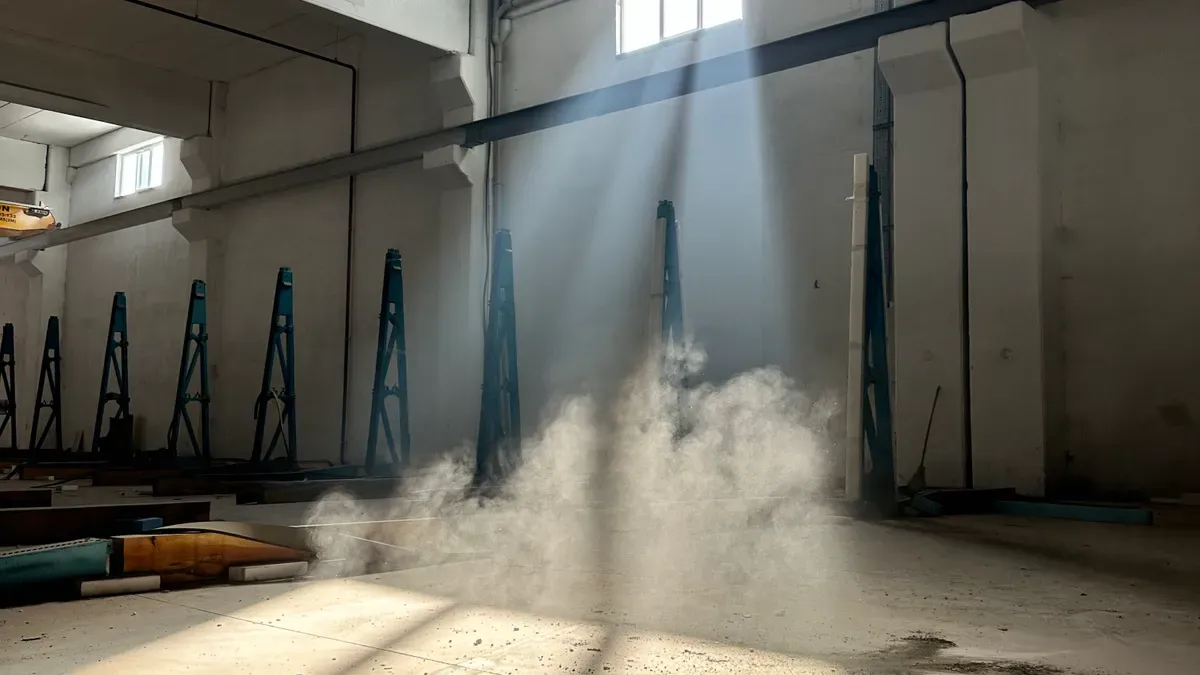
You need to understand where dust comes from to effectively manage it. Dust in your warehouse originates from several places. Identifying these sources helps you target your prevention efforts.
Internal Dust Generators
Many activities inside your warehouse create dust. Packaging materials, like cardboard and plastic, shed tiny particles. Product movement also generates dust. When you open boxes or move items, small fibres and debris become airborne. Even the wear and tear on your concrete floors contributes to dust. These internal sources constantly add to your dust problem.
External Dust Contributors
Outside elements significantly impact your warehouse’s dust levels. Outdoor dust finds its way inside easily.
Door Operations: Open loading bay doors create direct pathways for outdoor airborne debris to enter.
Environmental Particulates: External elements such as outdoor dirt, natural pollen, and general airborne particles are carried inside.
Location and Climate Conditions: Facilities situated in heavy industrial zones or experiencing high wind conditions face significantly higher rates of incoming particulate matter.
You must consider these external factors when you plan to reduce dust.
Material Handling Impact
Your material handling equipment also plays a big role in dust generation. Forklifts and pallet jacks stir up settled dust. Their tyres can track in dirt from outside areas. This equipment also creates friction, which can break down floor surfaces over time. This breakdown adds to the dust on your floors. Regular maintenance of your equipment helps minimise this impact.
Proactive Cleaning Strategies
Effective dust prevention starts with consistent cleaning procedures. You must establish foundational cleaning routines to keep your warehouse floor dust-free. These steps help manage dust before it becomes a major problem.
Daily Sweeping Protocols
Implement daily sweeping protocols for immediate dust removal. Use industrial brooms or sweepers to collect loose debris and dust particles. Focus on high-traffic areas and pathways where dust accumulates quickly. Regular sweeping prevents dust from settling and becoming embedded in the floor surface.
Regular Mopping Routines
After sweeping, regular mopping routines capture fine dust that brooms might miss. Use appropriate cleaning solutions for your floor type. Mopping also helps to lift light grime and keep the floor surface clean. This step is crucial for maintaining overall floor hygiene.
Industrial Vacuuming
Industrial vacuuming is essential for thorough dust removal. These powerful machines effectively collect fine dust and larger debris. When selecting an industrial vacuum, consider your specific warehouse environment and the type of waste you handle.
Warehouse Environment | Waste / Challenge Type | Ideal Vacuum Specification |
|---|---|---|
Food & Pharmaceuticals | Fine dust, hygiene standards | Industrial vacuum equipped with fine HEPA filtration |
Engineering & Metalworking | Swarf, grit, mixed industrial debris | Heavy-duty dry or wet/dry industrial models |
Packaging & Logistics | Dry waste, cardboard debris, general litter | High airflow systems with wide cleaning attachments |
Mixed Cleaning Areas | Liquid spills, washdowns, and dry dust | Dual-function Wet & Dry capacity with seamless transitions |
You should also look at key specifications for your vacuum.
Specification | Key Requirements & Considerations | Purpose / Benefit |
|---|---|---|
Noise Output | Operating sound level under 80dB | Enhances operator safety and comfort, complying with mandatory noise limits. |
Filtration System | High-Efficiency Particulate Air (HEPA) filters | Traps micro-particles to improve ambient air quality and prevent rapid filter clogging. |
Material & Durability | Stainless steel, aluminum, and high-density plastic | Ensures long-term reliability for heavy daily use compared to standard vacuums. |
Physical Dimensions | Compact design | Enables easy maneuvering through narrow aisles, carts, and pallet racks. |
Safety Features | Flammable or hazardous dust rating | Safely extracts and handles toxic substances like asbestos. |
Deep Cleaning Schedules
Beyond daily tasks, you need deep cleaning schedules. These routines lift embedded grime and degrease high-traffic loading zones. This is vital for effective warehouse cleaning.
Frequency | Target Area / Task | Purpose |
|---|---|---|
Daily | High foot-traffic zones, walkways, aisles, and forklift pathways | Address areas that accumulate dirt fastest |
Weekly | Under pallets, shelving, corners, baseboards, and beneath machinery | Clear dust and grime buildup from low-traffic/neglected spots |
Monthly | Machine floor scrubbing and deep cleaning around production lines | Clear embedded grime and maintain floor longevity |
For long-term preventative care, schedule heavy industrial deep cleaning on an annual or semi-annual (twice yearly) basis. This interval uses higher-powered machinery and stronger chemical treatments. These treatments strip away stubborn, deeply built-up dirt and staining that regular routines cannot eliminate.
You should also perform mechanical floor scrubbing regularly.
Weekly Interval: Perform mechanical floor scrubbing to lift surface grime and remove rubber tyre residue.
Periodic Interval (Bi-weekly or Monthly): Conduct intensive deep cleaning of warehouse floors alongside high-level cleaning to keep airborne dust from settling.
Optimising Cleaning Equipment
Choosing and maintaining the right equipment is vital for effective dust management. You need machinery that collects dust efficiently without scattering it.
Choosing Floor Sweepers
Select floor sweepers with advanced dust control features. These systems often include HEPA filtration. This traps fine particulate matter. Water-spray mechanisms also prevent dust from becoming airborne. Look for sweepers with rotating brushes. They effectively sweep up scattered dirt and debris. High-capacity bins minimise downtime. They hold larger volumes of collected waste. Integrated vacuum systems prevent fine particles from dispersing.
Key Feature | Functional Benefit | Primary Application |
|---|---|---|
HEPA Filtration | Captures hazardous debris and ultrafine dust particles | Facilities with strict dust control requirements |
Rotating Brushes | Effectively sweeps up scattered dirt, debris, and surface particles | High-traffic warehouse and manufacturing floors |
High-Capacity Bins | Minimises downtime by holding larger volumes of collected waste | Large-scale storage and distribution environments |
Effective Scrubber Dryers
Scrubber dryers clean warehouse floors thoroughly. They apply a water and detergent solution. High-speed spinning brushes then agitate the surface. This breaks apart tough dirt and dust. A rear rubber squeegee gathers residue. An integrated wet vacuum instantly pulls dirty water off the floor. This leaves it dry for immediate use.
Always sweep warehouse floors using industrial brooms or sweepers before using a floor scrubber. Dry particulates caught in scrubber pads can act like a sanding disc and damage the floor surface.
Dust Suppression Systems
Water dust suppression systems are highly effective for large warehouse spaces. These systems use water spraying or fine misting. This causes airborne particles to clump together. It prevents their dispersion. Automated misting setups can trigger periodically. They also activate automatically when sensing high dust concentrations. This significantly boosts indoor air quality. It also reduces overall maintenance and warehouse cleaning expenses.
Cleaning Equipment Maintenance
Regular maintenance extends the lifespan and efficiency of your cleaning equipment. You should follow manufacturer guidelines for cleaning and parts replacement. Remove dirt and grime from motors and brushes. Inspect and replace worn brushes, pads, or hoses. Apply recommended lubricants to moving parts. This reduces friction. Store machines indoors away from humidity. This protects sensitive electrical circuits. Schedule professional servicing for electrical and drive systems. This ensures peak operating efficiency.
Maintenance Routine | Specific Action Items | Operational Benefit |
|---|---|---|
Manufacturer Guidelines | Follow owner’s manual schedules for cleaning, parts replacement, and servicing. | Preserves product warranties and avoids invalidating service agreements. |
Equipment Cleaning | Remove dirt, grime, and debris from motors, brushes, and air intake filters. | Prevents performance reduction and keeps core components functioning smoothly. |
Wear & Tear Checks | Inspect and replace worn brushes, pads, frayed belts, cables, and damaged vacuum hoses. | Restores lost suction power and prevents catastrophic component failure. |
Battery Care | Adhere to charging limits, clean corrosion off terminals, and maintain 50%+ charge during storage. | Maximizes overall battery lifespan and maintains stable power output. |
Lubrication | Apply recommended lubricants to moving parts including wheels, motors, and brushes. | Reduces component friction, minimizes strain, and extends operational life. |
Environmental Storage | Store machines indoors away from humidity, extreme temperatures, and heavy dust. | Protects sensitive electrical circuits and motors from environmental degradation. |
Professional Servicing | Schedule periodic inspections by qualified technicians for electrical and drive systems. | Detects latent mechanical issues early and ensures peak operating efficiency. |
Advanced Warehouse Floor Dustproofing Solutions
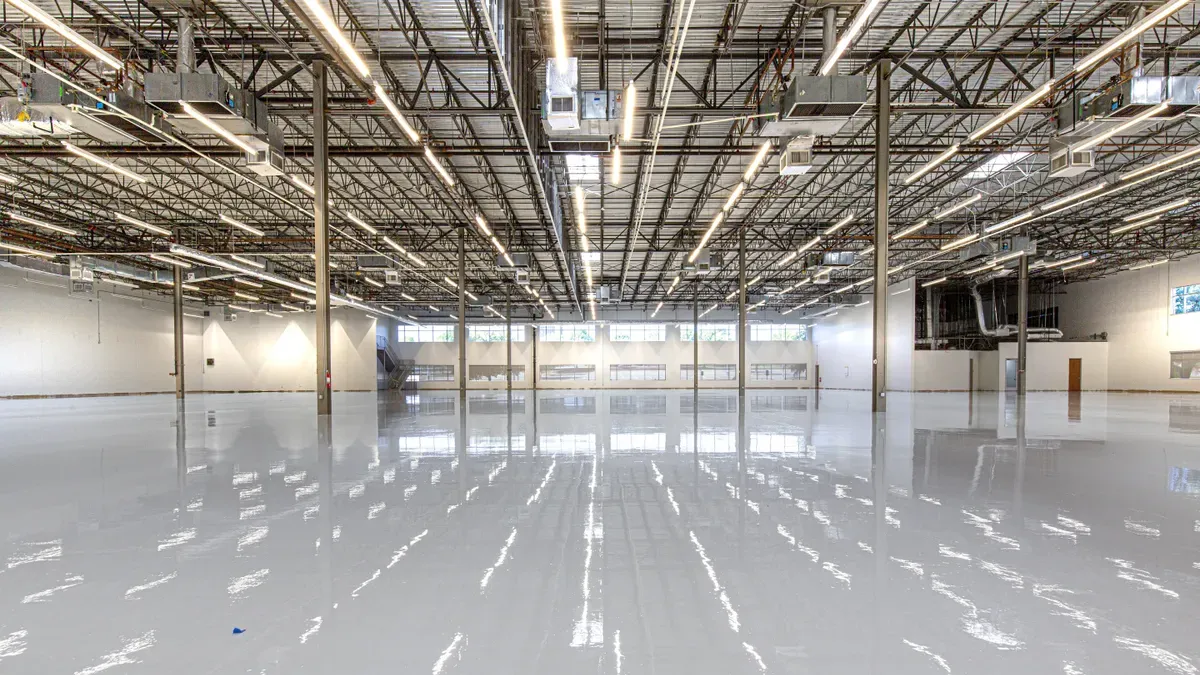
You need to consider specific treatments for the floor surface itself. These directly address warehouse floor dustproofing. They offer long-term solutions for dust control.
Concrete Floor Dustproofing Treatments
Concrete floors in your warehouse can develop dust. This happens for several reasons. You might see issues from deficiencies during the installation process. Inadequate curing procedures also contribute. Sometimes, the concrete mix is under-specified. It might lack the required strength. Poor surface strength can also result from unfavourable construction conditions. These factors lead to peeling, flaking, and potholes. Small stones may appear. Further damage can cause large lumps of the floor to fall off. This creates more dust.
You can treat your floor with BANDě Concrete Floor Dust Sealer. This significantly extends the concrete’s lifespan. It reduces operating costs. It also prevents dust and sand. BANDě Concrete Dust Sealer is a highly permeable water-based formulation. It primarily contains nanomaterials and inorganic silicon materials. It also has a small amount of a crystallisation catalyst. This product is for existing concrete floors. These floors often suffer from low strength, poor wear resistance, and dust due to poor materials and construction. The product soaks directly into the concrete surface. It penetrates deeply. It activates the cement hydration reaction. Silicates help free ions in the concrete form crystals. These crystals are as hard as granite. This creates a dust-free, dense, and wear-resistant crystalline structure. It extends the service life of the concrete surface. It does not affect the original surface’s usability.
For effective warehouse floor dustproofing, you have several treatment options. These include:
Sealers, such as acrylic-based solutions
Densifiers
Coatings, including epoxy and urethane systems, and eco-friendly water-based/low-VOC choices
Floor Surface Sealing and Repair
Sealing your floor surface prevents dust generation. It also improves durability. You can use sealing treatments to achieve this.
Treatment Mechanism | Anti-Dust Effect | Durability & Protection Improvement |
|---|---|---|
Pore Closure | Sealing open concrete pores stops abrasion-induced crumbling. This prevents fine dust accumulation. | It minimises fluid absorption. It shields sensitive substrates from dampness and moisture degradation. |
Barrier Layering | Acrylic topcoats form a durable protective film across the substrate surface. | This enhances overall surface hardness. It resists staining. It significantly extends floor longevity. |
These treatments make your floors stronger. They also make them easier to clean. Regular repair of cracks and imperfections is also crucial. This stops dust from forming in damaged areas. It maintains the integrity of your warehouse floor dustproofing efforts.
Air Filtration Systems
Air filtration systems play a key role in advanced dust control. They capture airborne dust particles. This improves overall air quality. These systems use filters to remove fine particulates from the air. You can install them in strategic locations. This helps to reduce dust that settles on surfaces. It also protects your employees’ health. Regular maintenance of these systems ensures their effectiveness. You should clean or replace filters as needed. This keeps them working efficiently. This is another important part of comprehensive warehouse floor dustproofing.
Operational Dust Mitigation
You need to implement operational strategies to effectively manage and reduce dust in your warehouse. These methods focus on daily activities and staff involvement.
Pallet and Packaging Dust Control
Pallets and packaging materials often bring dust into your warehouse. You should inspect incoming goods for excessive dust before storage. Consider using stretch wrap or covers for stored pallets to prevent dust accumulation. Regularly clean packaging areas to reduce dust generation. This helps to reduce dust from these common sources.
Forklift Tyre Debris Management
Forklifts are major contributors to dust. Their tyres track in dirt and create rubber debris. You should implement regular tyre cleaning for forklifts entering and exiting the warehouse. Consider using tyre wash stations or industrial mats at entry points. This minimises the amount of debris brought inside.
Comprehensive Dust Control Plans
A comprehensive dust control plan integrates all your efforts. You need to develop a detailed cleaning plan that outlines daily, weekly, and monthly tasks. This plan should include responsibilities for each task. Regularly review and update your cleaning procedures to ensure they remain effective.
Staff Training for Dust Prevention
Your staff plays a crucial role in dust prevention. You must provide thorough training on proper cleaning procedures and dust mitigation techniques. Essential training modules include:
UKATA Asbestos Awareness (Category A): This establishes a foundational understanding of asbestos-related hazards.
Dust Management & Silica Control Training: This addresses specific mitigation strategies for major airborne hazards on job sites.
RPE / PPE Training: This delivers hands-on instruction regarding the proper choice, fitting, and daily operation of respiratory protective equipment. Proper training empowers your team to maintain a dust-free environment.
Air Quality Monitoring
Monitoring air quality helps you understand dust levels in real-time. You should use recommended equipment and methods for accurate detection.
Recommended Equipment:
Particulate Sensors: Specifically PM2.5 and PM10 sensors detect fine dust, vehicle exhaust, and airborne material particles.
Integrated Platform: Wireless, industrial-grade sensors connect to an IoT platform for data processing.
Recommended Methods:
Continuous 24/7 Monitoring: This replaces periodic manual assessments with real-time tracking. It captures shifting dust levels during peak activity hours.
Strategic Sensor Placement: Mount wireless sensors in high-activity or occupied zones at breathing height (4 to 6 feet above the floor).
Automated Mitigation: Utilise API integrations with building automation/HVAC systems. This automatically triggers air filtration or increases fresh air exchange when particulate counts exceed safe limits. This proactive approach helps you maintain optimal air quality.
Regular Floor Inspections
You should conduct regular inspections of your warehouse floors. Look for signs of wear, cracks, or areas where dust accumulates quickly. Address any damage promptly to prevent further dust generation. These inspections ensure your cleaning procedures are effective and identify areas needing more attention.
Maintaining dust-free warehouse floors enhances safety, improves operational efficiency, extends equipment lifespan, and ensures better product quality. You need a multi-faceted approach, including advanced floor treatments, for effective dust control. Implement these tips as part of your continuous improvement process. Prioritise dust control for a healthier, more productive environment.
FAQ
What makes a dust-free warehouse floor so important?
You ensure operational efficiency, health and safety compliance, and product integrity. It also extends equipment lifespan and improves air quality for your staff.
How do concrete dustproofing treatments prevent dust?
They penetrate your concrete, activating a reaction. This forms hard, dense crystals. You get a wear-resistant, dust-free surface, extending your floor’s life.
Which features should you look for in a floor sweeper?
You should prioritise HEPA filtration, rotating brushes, and high-capacity bins. These features prevent dust dispersion and minimise downtime during cleaning operations.
See Also
Top Industrial Warehouse Floor Hardener Options In The UK
Comprehensive 2025 Guide To Concrete Dust Sealers For Businesses
Definitive Guide To Protecting Industrial Concrete Floors Using Sealers
Selecting The Perfect Concrete Densifier To Commercialise Warehouse Flooring
Leading Floor Hardener Solutions Available For Philippine Industrial Storage
