


Durable industrial flooring is crucial for your Malaysian facility. Heavy traffic, chemical spills, and abrasion challenge your floor daily. Concrete floor hardeners extend your floor’s lifespan and reduce maintenance costs. How do you choose the most suitable industrial concrete floor hardener Malaysia for your operational needs and local Malaysia conditions? This guide provides a comprehensive framework for informed decision-making for your industrial facility in Malaysia.
Key Takeaways
Concrete hardeners penetrate deep into floors to increase strength, boost abrasion resistance, and significantly lower long-term maintenance costs.
Dry shake hardeners work best for new construction projects, while liquid hardeners easily upgrade existing factory and warehouse floors.
Facility managers should choose hardener products based on daily traffic loads, chemical risks, local weather, and official safety rules.
What Are Industrial Floor Hardeners?
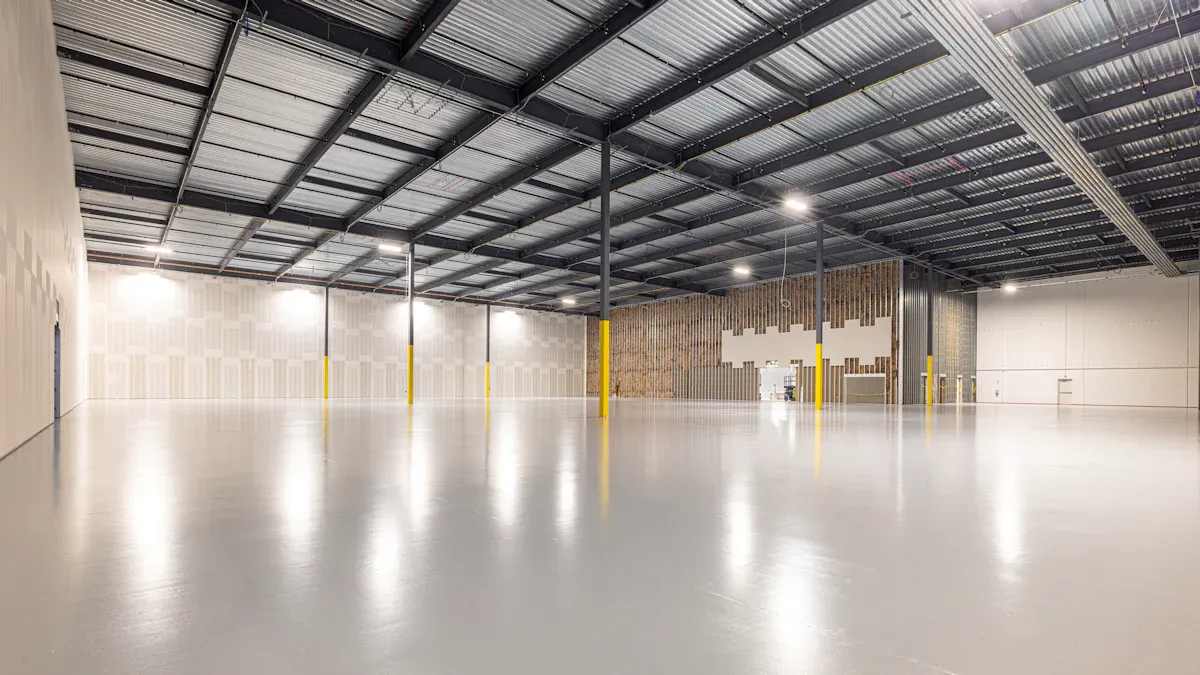
Defining Concrete Floor Hardeners
Concrete floor hardeners are specialized chemical treatments. You apply them to concrete surfaces. They penetrate the concrete, reacting with its components. This process creates a denser, harder, and more durable surface. Think of them as fortifying your existing concrete flooring. Unlike an epoxy floor coating or PU coating, which sit on top, hardeners become part of the concrete itself. This makes them a vital part of many industrial flooring strategies in Malaysia. A factory floor concrete hardener significantly improves the quality of your concrete.
Why Industrial Floors Need Hardening
Industrial facilities in Malaysia face constant challenges. Heavy machinery, constant foot traffic, and chemical spills stress your flooring. Without proper protection, your concrete floor will quickly degrade. This leads to costly repairs and operational downtime. You need flooring that is resistant to heavy traffic and provides long-term performance. Standard concrete alone often lacks the necessary durability for these demanding environments. For warehouse flooring solutions, you must consider these factors. Many industrial settings in Malaysia require robust flooring.
Benefits of Hardened Concrete Flooring
Hardened concrete flooring offers many benefits for your facility in Malaysia. First, it significantly increases the floor’s abrasion resistance. This means your floor can withstand more wear and tear. Second, hardeners enhance the durability of your concrete, extending its lifespan. You will see reduced maintenance costs over time. Third, hardened floors are easier to clean. They resist dust and dirt penetration better than untreated concrete. This improves hygiene in your warehouse and other high-traffic areas. These benefits make hardened concrete a smart investment for your industrial flooring. It offers superior protection compared to standard concrete, epoxy, or PU flooring in many applications.
Types of Concrete Hardeners in Malaysia
When you consider concrete hardeners in Malaysia, you typically encounter two main categories: dry shake hardeners and liquid hardener solutions. Each type offers distinct benefits and application methods for your industrial flooring. Understanding these differences helps you make the best choice for your facility’s needs.
Dry Shake Hardener Overview
Dry shake hardeners are a popular choice for industrial flooring, especially in high-traffic areas. You apply them to fresh concrete surfaces. This type of hardener consists of a blend of cement, special aggregates, pigments, and workability improvers. The aggregates are often mineral aggregates. These selected particle size distribution aggregates blend with Portland cement and specialized additives for dry-shake surface hardening. This composition creates an extremely dense and durable surface.
You can apply dry shake hardeners using different methods. One common approach is the dry-on-wet method. Here, you broadcast the hardener directly as a dry powder onto the moist concrete. Another option is the wet-on-wet method. You prepare and apply the surface hardener as a liquid slurry over the fresh concrete layer. For application, you wait until the concrete surface has been properly screeded, bled, and floated. Then, you spread the material in two separate stages. You broadcast roughly two-thirds of the total mixture in the initial pass, followed by the final one-third in the second pass. You can perform hand application manually after the fresh concrete reaches its initial set and has undergone floating. Mechanical application usually happens right after you pour the concrete, before the initial set begins.
The benefits of dry shake hardeners include excellent abrasion resistance and impact strength. They also offer good resistance to stains and chemicals. However, the installation process requires careful timing and skilled labor to ensure proper integration with the fresh concrete. This makes the installation critical for the final quality of your industrial flooring.
Liquid Hardener Solutions
Liquid hardener solutions provide another effective way to enhance your concrete flooring. These hardeners penetrate existing concrete, reacting chemically to create a harder, denser surface. Our company offers a specialized Concrete Surface Hardener. This product is a milky white liquid. It is a water-soluble inorganic compound. It reacts rapidly with the ions within the concrete. This reaction promotes the re-hydration heat reaction of the concrete. It establishes a three-dimensional network structure in multi-dimensional space. This process builds the overall structural framework of the floor surface and increases the overall supporting strength. This product meets today’s demands for the environment, health, and safety.
You apply liquid hardeners by spraying or rolling them onto the cured concrete surface. The liquid then penetrates the pores of the concrete. It reacts to form a permanent, insoluble compound within the concrete matrix. This process significantly increases the concrete’s hardness and durability. Liquid hardeners are generally easier to apply than dry shakes. They also offer excellent dust-proofing benefits. They improve the abrasion resistance of your floor. This makes them a great choice for warehouse flooring solutions where dust control is important. Unlike an epoxy floor coating or a PU coating, liquid hardeners become an integral part of the concrete. This means they will not peel or delaminate.
Comparing Hardener Types
When you choose between dry shake and liquid concrete hardeners in Malaysia, you consider several factors. Dry shake hardeners are ideal for new construction projects. They offer superior impact and abrasion resistance. They integrate directly into the fresh concrete during the pouring process. This creates a monolithic, extremely tough surface. This makes them a strong factory floor concrete hardener option for heavy-duty industrial environments.
Liquid hardeners, on the other hand, are versatile. You can apply them to both new and existing concrete floors. They are excellent for improving the quality and performance of older concrete. They offer significant benefits in terms of dust reduction and ease of maintenance. While they enhance durability and abrasion resistance, they might not provide the same level of extreme impact resistance as a dry shake hardener. However, their ease of application and environmental benefits make them a compelling choice for many industrial facilities in Malaysia.
Consider your specific operational requirements. If you are building a new facility with extreme traffic and impact, a dry shake hardener might be your best bet. If you need to upgrade an existing concrete floor, or if dust control and ease of application are priorities, a liquid hardener solution offers excellent performance. Both options provide significant benefits over untreated concrete or even some epoxy and PU coating systems, enhancing the lifespan and functionality of your industrial flooring.
Key Selection Factors for Malaysian Facilities
Choosing the right concrete hardener for your Malaysian facility requires careful thought. You must consider several factors. These factors ensure your industrial flooring meets your operational needs and provides long-term durability and performance.
Assessing Traffic and Load Demands
You must first evaluate the type and volume of traffic your floor will endure. Different areas within your facility experience varying levels of stress. For example, a warehouse with heavy forklift traffic needs a much stronger floor than an office area. You should consider the weight of machinery, the frequency of vehicle movement, and the type of wheels on your equipment. High-traffic movement demands a robust solution. A factory floor concrete hardener must withstand constant impact and rolling loads. If your facility has high-traffic areas, you need a hardener that significantly enhances the durability of your concrete. This prevents premature wear and tear.
Chemical Resistance and Abrasion Needs
Your facility’s exposure to chemicals and abrasive forces is critical. Many industrial environments in Malaysia face chemical spills. You need flooring that can resist these substances.
Consider the specific chemical agents commonly found in Malaysian industrial facilities:
Hazard Type | Chemical / Exposure Agents | Facility / Process Context |
|---|---|---|
Cleaning & Sanitation Solutions | Caustic solutions, Chlorine solutions, Phosphoric acid, Nitric acid | Equipment and floor sanitation in processing facilities |
Organic Acids & Byproducts | Lactic acid, Citric acid, Acetic acid, Oils, Fats, Grease | Food and beverage manufacturing, processing lines |
You also encounter other corrosive substances:
Corrosive Acids: General industrial acid spills require non-porous resistance.
Solvents & Oils: Chemical solvents and industrial oils cause deep penetration and staining.
Sanitizing Agents: Concentrated commercial cleaning chemicals are used in facility maintenance.
More specific chemical categories include:
Chemical Category | Specific Chemical Agents | Application Context / Facility Type |
|---|---|---|
Acids | Phosphoric acid, Nitric acid, Sulfuric acid, Battery acid | Laboratories, battery storage areas, heavy industrial plants |
Solvents & Bases | Acetone, Ammonia | Chemical processing, laboratory environments |
Beyond chemical resistance, you must assess abrasion. Abrasion resistance is vital for any industrial flooring. It measures how well your floor resists wear from friction. Standard abrasion tests show significant improvements with hardeners.
Concrete Hardener Type | Test Method | Improvement at 15 Mins | Improvement at 30 Mins |
|---|---|---|---|
Duro-Nox | ASTM C779 (Procedure B) | ~500% increase | 145% increase |
Duro-Nox LS | ASTM C779 (Procedure B) | ~300% increase | 145% increase |
Duro-Nox LSC | ASTM C779 (Procedure B) | 200% increase | 90% increase |
This chart illustrates the enhanced durability you can achieve:
Untreated concrete typically shows a Boehm test wear result of 9 cm³/50 cm². Hardeners drastically reduce this wear. You need a factory floor concrete hardener that offers superior abrasion resistance. This ensures your floor remains resistant to heavy traffic and maintains its quality. Unlike an epoxy floor coating or a PU coating, a hardener becomes part of the concrete. This prevents peeling or delamination, which can happen with surface coatings like epoxy or PU.
Environmental Impact and Local Climate
Malaysia’s climate can affect your flooring. High humidity and temperature fluctuations are common. You need a hardener that performs well under these conditions. Consider the environmental impact of the product. Our liquid hardener is a water-soluble inorganic compound. It meets today’s demands for the environment, health, and safety. This is important for your facility’s sustainability goals. You should choose products that minimize environmental harm during application and throughout their lifespan.
Cost-Effectiveness and Budgeting
Your budget plays a significant role in your decision. While the initial cost of a hardener might seem higher than some alternatives, consider the long-term benefits. A durable floor reduces maintenance and repair costs. It also extends the lifespan of your industrial flooring. This makes it a cost-effective investment over time. You should compare the total cost of ownership, not just the upfront price. This includes application costs, expected lifespan, and future maintenance. An industrial concrete floor hardener Malaysia offers excellent value.
Compliance with Malaysian Standards
You must ensure your chosen hardener complies with all relevant Malaysian building codes and safety standards. These standards ensure the safety and quality of your industrial facility. Always check product certifications and manufacturer specifications. This guarantees your flooring meets local regulations. Compliance is crucial for operational safety and avoiding potential penalties.
Choosing the Best Hardener for Your Facility
Defining Operational Requirements
You must clearly define your facility’s operational needs. For food processing plants in Malaysia, you face strict regulatory compliance. The Food Safety and Quality Division (FSQD) and National Pharmaceutical Regulatory Division (NPRA) set these rules. You must implement Hazard Analysis Critical Control Points (HACCP). This requires seamless, anti-skid, low-VOC, and microbial-resistant flooring systems. Different flooring systems suit various conditions. For example, Basic Epoxy Coating (2mm–3mm) works for dry packaging areas up to 60°C. Standard Polyurethane (PU) Cement (4mm–6mm) handles light cooking zones up to 90°C. Heavy-Duty PU Cement (9mm) withstands steam cleaning and blast freezers (-40°C to 120°C). Slip resistance is also crucial. R9 ratings suit dry storage. R11 ratings work for commercial kitchens. R12 ratings are for continuous wet production. R13 ratings are for high-fat zones. Your choice impacts the durability and performance of your industrial flooring.
Optimizing Warehouse Flooring Solutions
Optimizing your warehouse flooring solutions requires specific considerations. Cold storage facilities in Malaysia need special flooring. It must handle continuously low temperatures. You need superior hygiene and cleanliness. The floor must withstand thermal stress, including high-heat sterilization. You must integrate specialized vapor barriers. This adds to installation costs, making reinstatement two to three times higher than standard warehouse flooring. Anti-slip features are also essential for safety. To minimize dust in high-traffic areas, you can seal porous concrete and repair cracks. Regular industrial cleaning helps. You can apply protective bio-oils. Controlling traffic volume and vehicle speed also reduces dust generation. A good industrial concrete floor hardener malaysia or factory floor concrete hardener makes your floor resistant to heavy traffic and reduces dust.
Expert Consultation and Support
Selecting a reputable supplier in Malaysia is vital. You need products meeting national health and safety standards like NPRA and FSQD. Look for international quality frameworks such as ISO 9001 and ISO 14001. Products must withstand Malaysia’s high humidity and temperature variations. They need resistance to moisture and thermal expansion. Balance upfront expenses with long-term maintenance savings. Choose established brands. They offer better quality and benefits. Suppliers should provide experienced technical teams and diverse product lines. This ensures you get the right epoxy or PU flooring solution.
Application and Maintenance Planning
Proper application of concrete hardeners ensures long-term floor durability. First, pour and lay fresh concrete. It needs a minimum grade of G25. This means a compressive strength of 25 N/mm². Next, perform screeding, consolidation, and bull floating. This levels the concrete surface. Allow any surface bleed water to fully evaporate. You can also remove it manually. Then, you can proceed with the hardener application. This careful installation prevents issues. Regular maintenance extends the life of your concrete floor. This is true whether you choose an epoxy floor coating or a PU coating.
You make a strategic investment for your Malaysian industrial facility with the right concrete floor hardener. You balance performance, cost, and operational demands for your industrial flooring in Malaysia. Assess your warehouse floor needs thoroughly. Seek expert advice for optimal concrete floor durability and functionality in Malaysia. This hardener boosts operational efficiency and safety.
FAQ
How do concrete hardeners differ from epoxy and PU flooring in Malaysia?
Concrete hardeners penetrate your concrete. They become part of your floor. Epoxy and PU flooring are surface coatings. You apply them on top of your industrial flooring in Malaysia.
Can you apply liquid concrete hardeners to existing floors in Malaysia?
Yes, you can apply liquid concrete hardeners to existing concrete. This improves your floor’s durability. It also reduces dust on your flooring in Malaysia.
Why choose concrete hardeners over epoxy or PU for your facility in Malaysia?
Concrete hardeners offer superior abrasion resistance. They integrate into your concrete, unlike epoxy or PU. This provides long-term durability for your industrial flooring in Malaysia.
See Also
The Ultimate 2025 Buyer Guide For Concrete Floor Hardeners
Top Five High Performance Concrete Floor Hardeners For Industrial Facilities
Selecting Premium Warehouse Floor Hardener Solutions In The Philippines
