

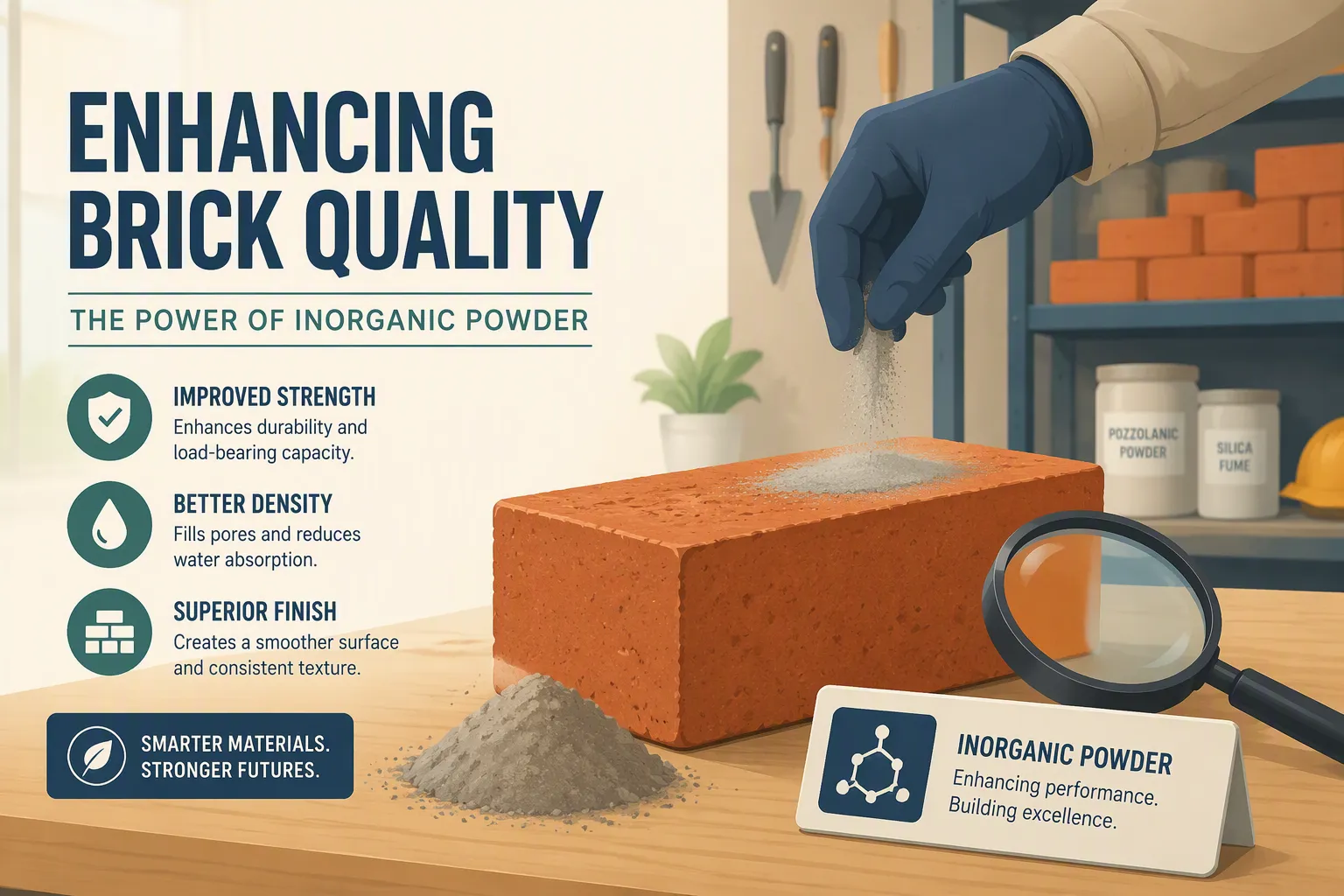
Inorganic powder for brick is a mineral-based additive, like stone powder or glass powder, mixed into clay during manufacturing. How does this powder improve brick quality? It boosts strength, cuts water absorption, and lowers production costs. For example, adding byproducts reduces water absorption by up to 9% compared to traditional bricks. This article looks at its properties, benefits, and practical uses for construction pros and DIY fans.
Key Takeaways
When you add inorganic powder to brick clay, the bricks become stronger and last longer.
This powder cuts down on water absorption, helping bricks stand up to moisture damage.
Using waste powders cuts production costs and helps the environment.
What Is Inorganic Powder for Brick and Its Core Benefits
Inorganic powder for brick means mineral-based additives you mix into clay when making bricks. Common types are stone powder, glass powder, and clay brick powder. Stone powder is a key additive in non-fired brick production. It makes bricks stronger and lowers water absorption. Glass powder works as a pozzolanic material. It reacts with other compounds in the clay mix. Clay brick powder, made from recycled bricks, also serves as a helpful extra material. These fine powders change your final brick’s properties in several important ways. Using this inorganic powder for brick in your production line gives you clear, measurable improvements.
Boosting Strength and Durability
When you add inorganic powder to your clay mix, you get a much stronger final product. The key is particle packing. You combine coarse aggregates with finer and finer powders down to sub-micron sizes. The smallest particles fill the micro-pores between larger ones. This creates a dense matrix that holds the aggregates together. The result is a brick that resists cracking and weathering far better than traditional ones. The packing process reduces empty spaces inside the brick. Fewer voids mean the brick can handle more compressive force before it fails.
Specific data backs this improvement. Adding brick powder to your clay gives a strong final product. Glass powder can also cut your production costs. This makes the benefits of additives clear for any manufacturer. The dense matrix from particle packing gives your brick superior mechanical durability. Your brick lasts longer and performs better under stress. This matters for construction projects where strength is a top priority. A stronger brick means safer buildings and longer-lasting structures. You lower the risk of failure in load-bearing walls and other critical areas. The improved durability also means your brick resists freeze-thaw damage better. This is especially important in cold climates where water expands inside cracks. The construction industry values these durability gains for long-term performance. You also see fewer bricks breaking during transport and handling. This reduces waste and saves money.
Reducing Water Absorption and Enhancing Waterproofing
Inorganic powder also greatly reduces water absorption in your brick. Research shows that treating fibers with 15% sodium silicate, an inorganic powder, plus aluminum sulphate reduces the water retention value by about 46%. For rice straw fibers, the water retention value dropped from 140% to 75%. For sawdust fibers, it dropped from 80% to 43%. Since water retention directly relates to water absorption in the final brick, you get a 46% reduction in water absorption.
This lower water absorption means your brick stays dry and resists moisture damage. You get better waterproofing without adding expensive coatings or treatments. The fine particles fill the tiny gaps in the clay structure. This blocks water from entering the brick. Your construction projects benefit from brick that does not swell, crack, or degrade when exposed to rain or ground moisture. The enhanced waterproofing also protects the brick’s internal structure over time. Lower water absorption also reduces the risk of efflorescence. This is the white salt deposit that sometimes appears on brick surfaces. You get a cleaner, more attractive final product. The construction sector continues to adopt these materials for their proven benefits.
The combination of boosted strength and reduced water absorption makes this additive valuable for anyone working with this material. You get a more durable, longer-lasting product that performs better in real-world conditions. Modern construction demands high-quality materials, and these powders deliver. The resulting bricks stand up to harsh weather and heavy loads for decades.
Manufacturing Advantages of Inorganic Powder Additives in Construction
Cost Savings and Production Efficiency
You can lower your raw material costs a lot by using waste glass powder or fly ash instead of some fresh clay. These additives are cheaper than new clay, and they also cut the energy needed during firing. Glass powder lowers the firing temperature, so your kilns use less fuel for each batch. That means smaller utility bills and quicker production cycles. You make more bricks in the same time, which boosts your overall output.
The savings become obvious when you add up your yearly costs. Even a small drop in firing temperature across thousands of bricks adds up fast. You also pay less for raw materials, since waste powders often come cheap from recycling centers. The construction industry likes this because it raises profit margins without hurting quality. You keep the same production level while spending less on inputs. This efficiency gives you an edge in a market where price matters.
Environmental Benefits and Waste Reduction
Using inorganic powder additives in brick making creates a truly eco-friendly production process. You keep waste glass and fly ash out of landfills, giving these materials a new purpose. This eases the strain of waste disposal while giving you a valuable raw material. The pozzolanic activity of these powders also makes your bricks last longer. They react with calcium hydroxide in the clay mix to form stronger cement-like compounds over time.
Your bricks resist chemical damage and weathering better, which extends their life in construction projects. Longer-lasting bricks mean fewer replacements and less waste over the building’s lifetime. The double benefit of lower production costs and a smaller carbon footprint makes this approach appealing for modern makers. You use less energy during firing, which reduces greenhouse gas emissions. You also cut the need for newly mined clay, saving natural resources. This mix of economic and environmental gains puts your operation ahead in sustainable construction. You meet growing rules for greener manufacturing while improving your profits.
Inorganic powder for brick transforms your production. You gain stronger bricks, lower water absorption, and reduced costs. These additives cut waste and energy use. Your clay mix becomes more efficient. Modern construction demands durable materials. Construction projects benefit from longer-lasting products. Construction budgets improve with fewer replacements. You reduce your environmental footprint. Explore these powders for your clay production. You will see lasting gains in quality and profitability.
FAQ
How much inorganic powder should I add to my clay mix?
Adding brick powder to your clay can improve strength. You can adjust the amount based on your specific production needs and material availability.
Will these additives change the color of my bricks?
Yes, some additives can alter brick color slightly. Glass powder may lighten the shade. Stone powder often keeps the natural clay tone. Test small batches first to confirm the visual result.
Can I use inorganic powder for brick in all types of clay?
Most clay types accept these additives well. You should test your specific clay source first. Different clays have varying particle sizes and chemical compositions that affect how the powder interacts.
See Also
The Ultimate 2025 Handbook For BANDě Inorganic Mineral Plaster
Inorganic Versus Organic Wall Coatings: A Thorough 2025 Analysis
Understanding Concrete Densifiers: Their Function And Working Mechanism
Achieving Healthy Homes: A 2025 Look At Inorganic Anion Wall Paint
Lithium Densifiers Explained: Their Role In Concrete Transformation
