

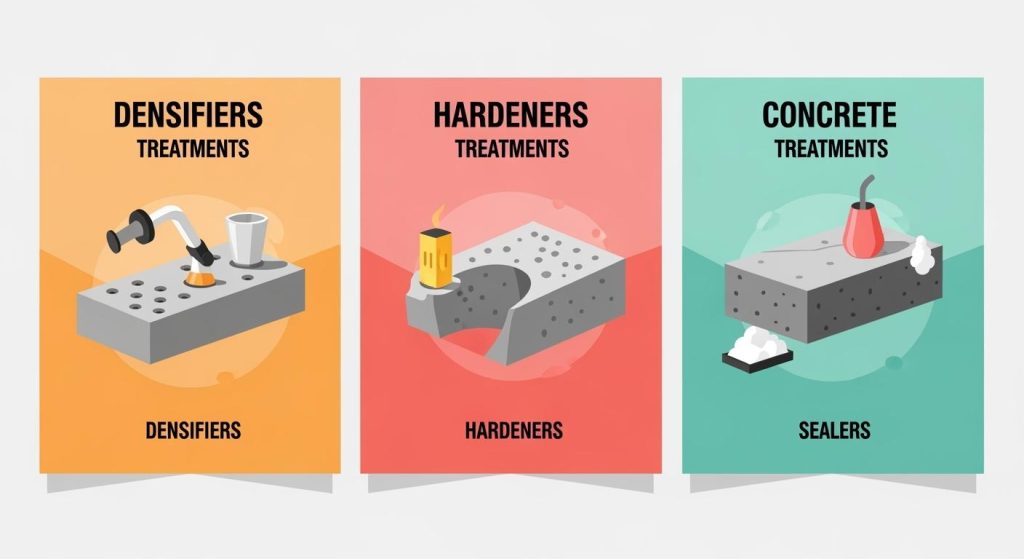
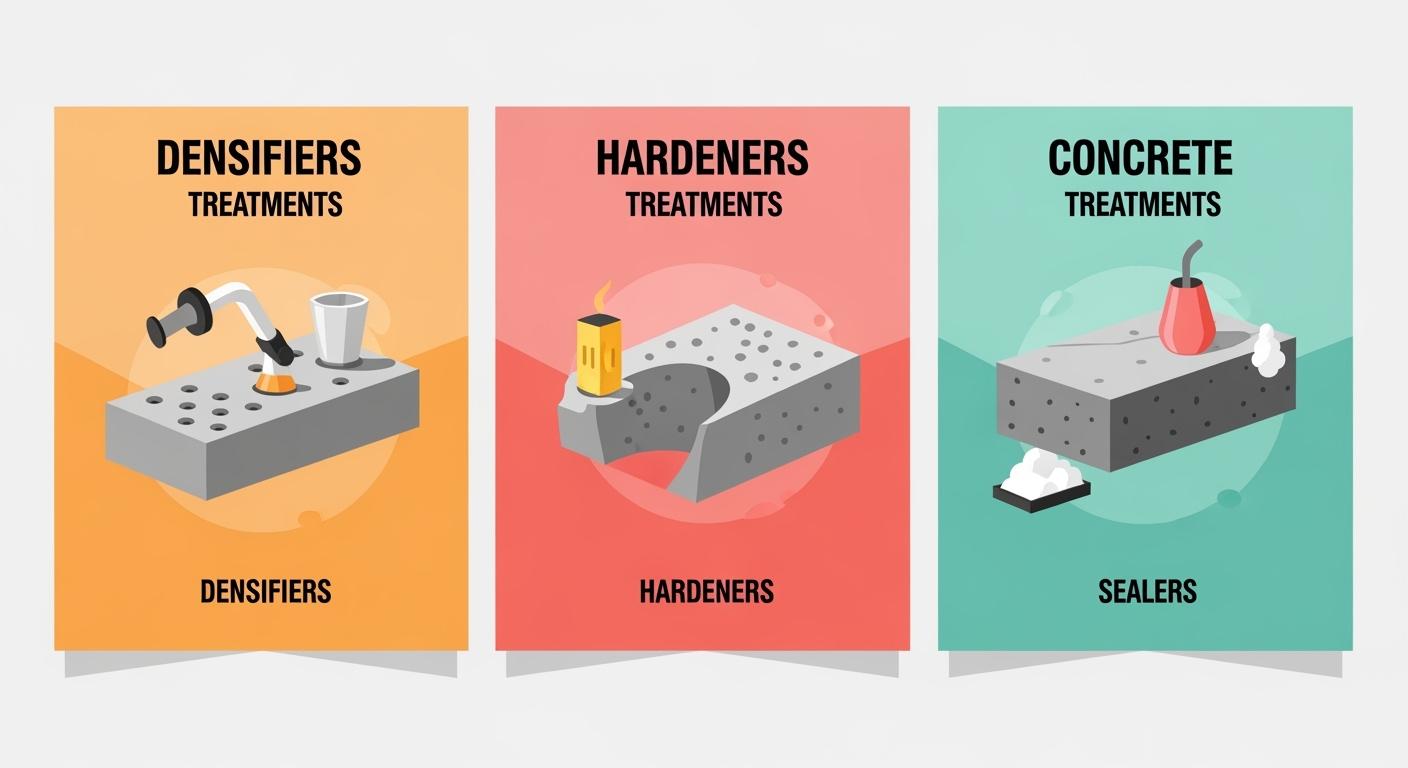
Concrete treatment plays a vital role in maintaining durability and appearance. You must understand the differences between Densifier Hardener Sealer products to choose the right solution. Each of these products addresses specific issues, such as cracking and spalling, which can arise in untreated concrete surfaces. This knowledge helps you make informed decisions for effective concrete maintenance.
Key Takeaways
Concrete densifiers enhance strength and durability by filling voids and increasing surface hardness. They can last 15 to 20 years, making them a long-term solution.
Concrete hardeners improve surface hardness and abrasion resistance, making them ideal for high-traffic areas. Proper application can extend the lifespan of concrete surfaces to 20-30 years.
Concrete sealers protect against moisture and stains, enhancing durability and appearance. Reapply every two to three years for optimal performance.
Concrete Densifiers
Concrete densifiers are specialized products designed to enhance the strength and durability of concrete surfaces. They work by penetrating the concrete and chemically reacting with its components, particularly calcium hydroxide. This reaction forms calcium silicate hydrate (C-S-H), which significantly increases the density and hardness of the concrete.
Densifier Benefits
Using a concrete densifier offers several advantages:
Increased Strength: Densifiers fill voids within the concrete, leading to improved compressive strength. This enhancement makes your concrete surfaces more resilient against wear and tear.
Permanence: Unlike sealers, which may require frequent reapplication, densifiers provide a long-lasting solution. Treated surfaces can last between 15 to 20 years, compared to just 5 to 10 years for untreated concrete.
Improved Durability: The densifier creates a harder surface that is less permeable. This characteristic helps protect against stains and environmental damage, such as freeze-thaw cycles.
Enhanced Surface Hardness: The reaction between the densifier and calcium hydroxide increases surface hardness, making your concrete less susceptible to abrasions.
The chemical composition of typical concrete densifiers plays a crucial role in their effectiveness. For instance, they often contain reactive silica, which delivers silica into the pore system of the cement paste. Here’s a breakdown of the components and their roles:
Component | Role in Concrete Strength |
|---|---|
Reactive Silica | Delivers silica into the pore system of cement paste |
Free Lime | Reacts with silica to form calcium silicate hydrate (CSH) |
Calcium Silicate Hydrate (CSH) | Increases density and durability of concrete |
Application Process
To achieve maximum effectiveness, follow these steps when applying a concrete densifier:
Ensure the surface is clean and free from any sealers or curing compounds.
Use an auto-scrubber to thoroughly clean the surface.
Vacuum and auto-scrub the honed area before applying the densifier.
Apply the densifier using a low-pressure sprayer to saturate the surface.
Keep the surface wet for about 20 minutes to ensure full penetration.
Avoid puddling to prevent a white film from forming.
Environmental conditions can impact the effectiveness of densifiers. For example, colloidal silica has larger particles, which limits deep penetration into concrete. This shallow penetration can lead to quicker wear of the surface layers. In contrast, silicate-based densifiers penetrate deeper, providing better protection against abrasion and degradation from environmental stressors.
By understanding the benefits and proper application of concrete densifiers, you can significantly enhance the longevity and performance of your concrete surfaces.
Concrete Hardeners
Concrete hardeners serve a distinct purpose compared to densifiers. While densifiers enhance the internal structure of concrete, hardeners focus on increasing surface hardness and abrasion resistance. They create a protective layer on the surface, which helps to shield the concrete from wear and tear.
Hardener Benefits
Using concrete hardeners offers several key advantages:
Increased Surface Hardness: Hardening agents significantly improve the surface hardness of concrete. This enhancement makes the surface more resistant to scratches and impacts.
Abrasion Resistance: Hardeners create a dense surface that withstands heavy traffic and reduces wear. This feature is particularly beneficial in industrial settings where equipment and foot traffic are common.
Dust Reduction: By forming a protective film, hardeners help minimize dust generation from the concrete surface. This reduction is crucial for maintaining a clean environment, especially in warehouses and manufacturing facilities.
Longevity: Properly applied hardeners can extend the lifespan of concrete surfaces. They can help untreated concrete last only 5-10 years, while treated surfaces can endure for 20-30 years under similar conditions.
Here’s a comparison of concrete hardeners and densifiers to illustrate their differences:
Feature | Concrete Hardener | Concrete Densifier |
|---|---|---|
Primary Function | Increases surface hardness and abrasion resistance. | Increases density, hardness, and reduces porosity. |
Mechanism | Forms a hard, protective layer on the surface. | Penetrates the concrete and reacts with calcium hydroxide to form calcium silicate hydrate (CSH), filling pores. |
Penetration | Surface application, minimal penetration. | Deep penetration into the concrete substrate. |
Dust Proofing | Helps reduce dusting by creating a surface film. | Significantly reduces dusting by hardening the concrete matrix. |
Breathability | Can create a non-breathable film. | Remains breathable, allowing moisture vapor to escape. |
Application Process
To maximize the effectiveness of concrete hardeners, follow these steps during application:
Surface Preparation: Ensure the concrete surface is clean and free from contaminants. This step is crucial for proper adhesion.
Mixing: If using liquid hardeners, mix according to the manufacturer’s instructions. Proper mixing ensures uniform application.
Application: Apply the hardener using a roller, brush, or sprayer. Ensure even coverage across the surface.
Curing: Allow the hardener to cure as per the guidelines. Curing time can vary based on environmental conditions and product specifications.
Avoid Common Mistakes:
Inadequate surface preparation can lead to peeling.
Ignoring moisture content can cause blistering.
Applying coatings in extreme temperatures can affect bonding.
By following these steps, you can enhance the durability and performance of your concrete surfaces.
Sealers for Concrete
Concrete sealers play a crucial role in protecting your concrete surfaces from various environmental factors. They create a barrier that prevents moisture, chemicals, and stains from penetrating the concrete. This protective coating enhances the durability and longevity of your surfaces.
Sealer Benefits
Using a concrete sealer offers several benefits:
Water resistance: Prevents moisture from penetrating the concrete, reducing risks of damage from freeze-thaw cycles.
Stain protection: Increases resistance to stains from oils and chemicals, simplifying maintenance.
UV protection: Some sealers protect against sun damage, preventing fading and discoloration.
Dust reduction: Minimizes dust from untreated surfaces, contributing to a cleaner environment.
Increased durability: Enhances the lifespan and wear resistance of concrete.
Enhancing appearance: Some sealers improve the visual appeal of concrete surfaces.
Concrete sealers can be categorized into two main types: penetrating and topical. Penetrating sealers absorb into the concrete, providing moisture and chemical resistance. Topical sealers form a film on the surface, enhancing aesthetics while protecting against wear and staining.
Type of Sealer | Characteristics | Protective Properties |
|---|---|---|
Penetrating | Absorbs into the concrete, protects from moisture and chemicals. | Reduces absorption, maintains surface appearance. |
Topical | Forms a protective film on the surface, enhances appearance. | Protects against wear and staining, adds gloss. |
Application Process
To apply a concrete sealer effectively, follow these steps:
Clean the concrete surface thoroughly.
Repair any cracks or damage.
Apply the sealer evenly using a roller or sprayer.
Allow the sealer to cure according to the manufacturer’s instructions.
Manufacturers generally recommend reapplying concrete sealers every two to three years for optimal protection. Environmental factors, such as temperature and humidity, can affect the curing process. Always follow the manufacturer’s guidelines to ensure proper adhesion and performance.
By understanding the benefits and application process of concrete sealers, you can maintain the integrity and appearance of your concrete surfaces effectively.
Understanding the differences between densifiers, hardeners, and sealers is essential for effective concrete maintenance. Densifiers enhance strength and durability, while hardeners focus on surface hardness. Sealers protect against moisture and stains. Consider your specific needs, such as traffic levels and desired aesthetics, when choosing a product. For tailored solutions, seek professional advice.
FAQ
What is the best product for protecting concrete surfaces?
You should choose a product based on your needs. Densifiers strengthen concrete, hardeners enhance surface hardness, and sealers protect against stains and moisture.
How often should I apply concrete sealers?
You should reapply concrete sealers every two to three years for optimal protection and performance.
Can I use densifiers and sealers together?
Yes, you can use densifiers and sealers together. Densifiers enhance strength, while sealers provide surface protection.
See Also
Understanding Concrete Densifiers, Hardeners, And Sealers Explained
Key Differences Between Concrete Densifiers And Hardeners Revealed
The Ultimate Buying Guide For Concrete Densifiers And Hardeners
Exploring Concrete Floor Hardeners: Their Purpose And Functionality
Selecting The Ideal Concrete Densifier, Hardener, And Sealer In 2025
