

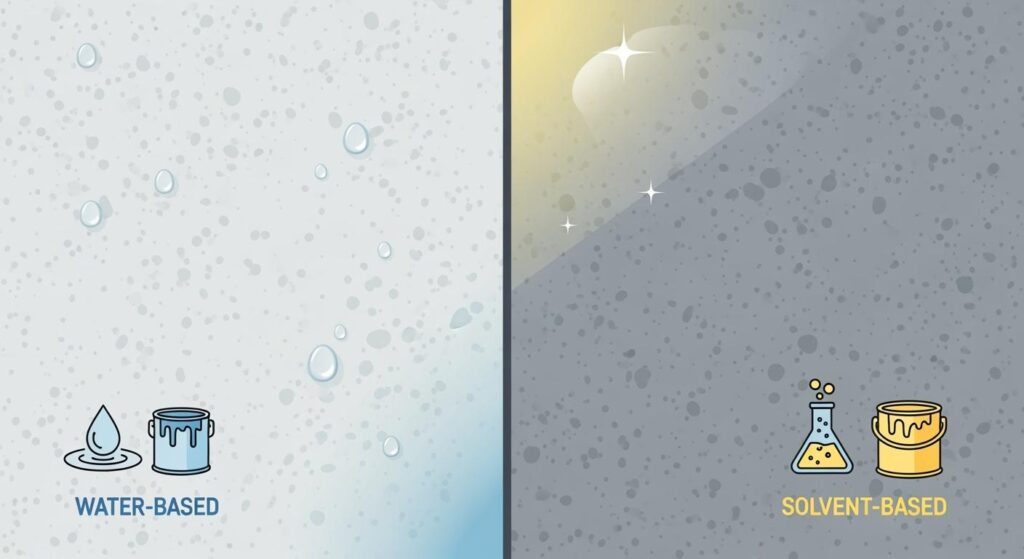
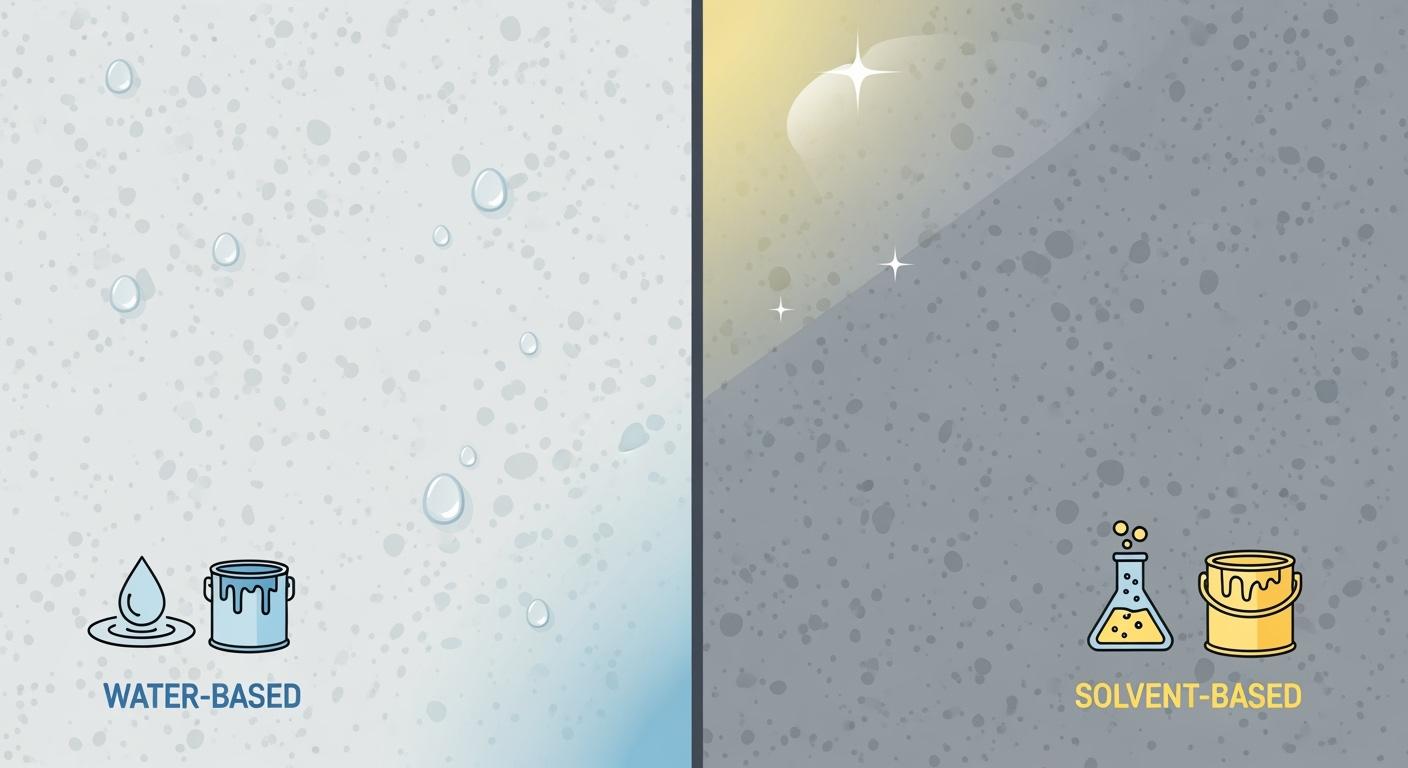
A concrete dust sealer forms a protective coating on your concrete surface. It stops dusting and damage. BANDě provides excellent water based concrete sealer and solvent based sealer options. This guide compares BANDě’s water-based concrete sealers and solvent-based concrete sealers. You will learn their differences and best uses. This knowledge helps you pick the right product for a durable surface.
Key Takeaways
Water-based sealers are safer for indoor use. They have low smell and fewer harmful chemicals. They are good for homes.
Solvent-based sealers make concrete look wet and shiny. They are strong for outdoor areas. Use them with good air flow.
Choose a sealer based on your project. Think about where it is, the look you want, and how long it needs to last.
Core Differences: BANDě Sealer Formulations
Sealer Composition
BANDě offers concrete dust sealers in two primary formulations, and their composition marks a fundamental distinction. Water-based sealers use water as the main carrier for their active ingredients. For instance, BANDě’s HIDROTECMA-SP is formulated with modified sodium silicates and other additives, all efficiently carried by water. Similarly, MAXCLEAR HARDENER is a monocomponent, water-based liquid sealer that chemically reacts to form dense, insoluble crystals deep within your concrete. In contrast, solvent-based sealers rely on chemical solvents to carry their active components. These solvents typically evaporate more rapidly, leaving the protective solids to bond with the concrete.
Penetration Mechanisms
The carrier liquid significantly influences how the sealer interacts with your concrete. Water-based sealers can either form a protective layer on the surface or penetrate deeper into the material. You will encounter film-forming water-based sealers that create a visible, often glossy, layer. You also have impregnating water-based sealers that soak into the concrete’s pores, offering protection without altering the surface appearance. Solvent-based sealers, often having smaller molecular structures, typically achieve deeper penetration into the concrete’s surface. This deeper reach can provide enhanced protective qualities against wear and moisture.
Performance Distinctions
These fundamental differences in composition and penetration mechanisms lead to the key differences in how each BANDě sealer performs. Film-forming sealers provide a robust protective barrier on the surface, guarding against spills and abrasion. Impregnating sealers, however, work from within the concrete, strengthening it and resisting moisture intrusion without changing its look. You will find that each type offers unique benefits, making your choice dependent on your project’s specific requirements for aesthetics, durability, and protection.
Comparing BANDě Water-Based vs. Solvent-Based Sealers
Appearance and Finish Options
You will find distinct differences in the appearance and finish options when you compare BANDě’s water-based and solvent-based sealers. Water-based sealers offer a wide range of aesthetic choices. For example, BANDě’s Concrete Finish WT gives you options like matte, satin, gloss, super matte, and even anti-slip finishes. If you prefer a more decorative look, Concrete Finish WT Max provides gloss, satin, and matte decorative finishes. Concrete Finish One offers matte or satin finishes. These water-based sealers can enhance your concrete’s surface without drastically changing its natural look, or they can provide a noticeable sheen. Solvent-based sealers often create a deeper, richer color enhancement on the concrete surface. They can give a “wet look” that many people find appealing. The choice here really depends on the aesthetic you want for your project.
Durability and Lifespan
When you think about lasting protection, both types of BANDě sealers offer excellent qualities, but they achieve it differently. Solvent-based sealers generally provide superior protection. Their polymers are often packed more closely together. This creates a denser, tougher barrier on the concrete surface. This tight bond helps resist abrasion, chemicals, and staining more effectively. Water-based sealers also offer great protection, especially the film-forming types. They create a strong protective layer. Impregnating sealers, while not forming a surface film, enhance the concrete’s internal strength, contributing to its overall durability. You will find that the lifespan of both types depends on traffic, exposure, and proper application.
VOCs and Odor
This is where you will notice a significant difference, especially regarding safety and comfort. Water-based sealers are known for their low VOCs (Volatile Organic Compounds) and low odour. This makes them a user-safe option for many projects. For instance, BANDě’s ‘aplica Level Primer’, a water-based primer, has a maximum VOC content of less than 130 g/l when ready for use. This product complies with EU-Directive 2004/42. You can often apply these sealers indoors without strong ventilation. Solvent-based sealers, however, contain higher levels of VOCs. They release stronger fumes during application and curing. You will need good ventilation when using solvent-based sealers. You should also wear appropriate respiratory protection.
Drying and Curing Times
Understanding drying and curing times is crucial for planning your project. Water-based sealers typically dry to the touch faster than solvent-based sealers. However, their full cure time can be longer. This is because the water needs to evaporate completely for the polymers to fully crosslink. Look at these typical drying times for water-based sealers:
Application Stage | Drying Time |
|---|---|
First Primer Application | At least 30 minutes before another application |
Second Primer Application | At least 30 minutes before another application |
Before Finish Applications | At least 2 hours |
Each Finish Coat | 30 minutes |
Concrete after total saturation (before sealer) | Minimum 12 hours (24 hours if below 21°C or in doubt) |
You should know that cooler temperatures (below 21°C) and higher humidity will slow down the evaporation and cure time of the sealer. The sealer will not fully crosslink (cure) until the water within it has evaporated. Moisture in the concrete and in previous coats of sealer will also slow down curing. Solvent-based sealers often have a faster full cure time once the solvents have evaporated. This can be an advantage if you need to return the surface to service quickly.
Environmental Impact & Safety
If you prioritize environmental concerns, water-based sealers are generally the more environmentally friendly choice. Their low VOC content means they release fewer harmful chemicals into the atmosphere. This makes them better for air quality. They are also easier to clean up with water. This reduces the need for harsh chemical cleaners. Water-based sealers can also offer better application coverage, meaning you might use less product for the same area. Solvent-based sealers, due to their higher VOC content and flammability, pose more environmental and safety risks. You must handle them with greater care. You need proper ventilation, protective gear, and safe disposal methods. When you weigh the pros and cons, water-based options often stand out as a safer and more sustainable choice for your concrete surface.
Optimal Applications for BANDě Concrete Dust Sealers
Choosing the right BANDě concrete dust sealer depends on your project’s specific needs. You want to match the sealer to the environment and desired outcome.
Ideal Uses for BANDě Water-Based Concrete Sealers
You will find BANDě water based concrete sealer options perfect for many situations. They are ideal for interior concrete sealing in living rooms, bedrooms, or basements. This is because they have low odor and low VOCs. If you have interior concrete near windows or skylights, a water based concrete sealer is great. It offers superior UV resistance, preventing yellowing. For moisture-prone areas like bathrooms or laundry rooms, water-based options are a better choice due to their breathability. You can also find impregnating water-based sealers that protect without changing the surface look.
Best Scenarios for BANDě Solvent-Based Concrete Sealers
You should consider BANDě solvent-based concrete sealers for specific effects and durability. These are excellent for decorative concrete, like pattern imprinted driveways or block paving, when you want a gloss finish. They give a “gloss and color pop” to domestic driveways. Solvent-based sealers achieve a glossy “wet-look” finish and enhance the color of your surface. They offer deep penetration, excellent abrasion, and stain resistance. Remember, you need warm, dry, and well-ventilated conditions for application. The concrete moisture content should typically be below 15% to avoid issues. This ensures the best performance from your solvent based sealer.
Indoor vs. Outdoor Project Suitability
When working indoors, you will find water-based concrete sealers are generally safer and more comfortable. They are less slippery and not flammable. You won’t deal with strong fumes or headaches. Water-based options are also typically compliant with VOC regulations. Solvent-based concrete sealers are more slippery and flammable. They release very aromatic fumes that require good ventilation. For interior concrete sealing, especially in occupied spaces, water-based is often your best bet.
High-Traffic vs. Low-Traffic Areas
For areas with heavy use, you need a robust solution. While specialized epoxy or polyurethane resin flooring is highly recommended for industrial high-traffic areas, BANDě’s film-forming acrylic sealers can also perform well. For instance, a clear acrylic sealer may need multiple coats for high-traffic areas or severe exterior conditions. This builds up a durable surface. For low-traffic areas, you have more flexibility with either water-based or solvent-based options, depending on the finish you desire.
Longevity, Maintenance, and Cost
Expected Lifespan and Reapplication
You want your concrete surfaces to last, and BANDě sealers help achieve that. Water-based sealers often offer a longer lifespan, potentially making them more cost-effective in the long run. Their advanced formulations provide excellent protection that endures. For instance, Envel Nano sealed products come with an impressive 10-year pro-rated sealer warranty. Other BANDě options, like Envel SG, Matte, and Gloss sealers, provide a solid 5-year pro-rated warranty. Reapplication depends on wear and tear, but these warranties give you a good idea of expected durability.
Maintenance Requirements
Maintaining your sealed concrete is straightforward. You should use mild detergents and soft bristle brushes for cleaning, always rinsing thoroughly afterward. Power washing is acceptable if you keep the wand at least 4 feet away to prevent damage. If you encounter graffiti, specialized products like Cathedral Stone Products S307 can help, but always test an inconspicuous area first. Reapplication of sealer may become necessary after harsh cleaning or simply over the product’s lifespan. If you need assistance with sealer reapplication, you can contact an Envel representative.
Initial vs. Long-Term Cost-Effectiveness
When you look at the initial purchase, solvent-based sealers tend to be more affordable. Here’s a quick look at some example prices:
Product Type | Product Name | Price (EUR) | Volume |
|---|---|---|---|
Water-based | PENETRATING FIXATIVE PRIMER EMULSION… | €71.20 | 4 L |
Water-based | WATER-BASED FIXATIVE SEALER FOR INDOOR AND… | €20.16 | 750 ml |
Solvent-based | Waterproof coating (Acrylic solvent) | €11.57 | 0.75 L |
Solvent-based | EPOXI solvent | €7.86 | 1 L |
While solvent-based sealers might save you money upfront, consider the long-term value. Water-based sealers often boast superior durability and a longer lifespan, reducing the frequency of reapplication. This can lead to lower overall costs over many years. You also save on potential health and safety measures needed for solvent-based products.
BANDě Sealer Application Best Practices
Achieving the best results from your BANDě concrete dust sealer starts with proper application. These application tips help ensure your concrete surface gets the protection it deserves.
Essential Surface Preparation
Proper surface preparation is crucial before you apply any sealer. First, use a high-pressure water gun or pressure washer to remove dirt from the surface. If dirt is deep, apply a cement remover (about 10 ml per liter of water) to clean impurities. For tough stains like hydrochloric acid, strong water, or oil/grease, thoroughly clean the area with a degreaser or cleaning solvent. This removes silicones that can repel paint. You must remove oxides, scale, and all visible and invisible contaminants like dust, grease, and soluble salts. Also, create the right surface roughness profile for maximum adhesion. The concrete substrate must be firm (at least 1 N/mm2 tensile strength) and clean, free of cement slurry, oil, grease, release agents, and old paint.
Recommended Application Methods
You will find water-based sealers are often easier to apply and clean up. For water-based sealers like PRENOTOT, you can use a brush, roller, or spatula. When working with solvent-based sealers, remember they are flammable. Always turn off gas and pilot lights in the area before you start applying them.
Environmental Conditions for Application
For the best results, pay attention to the environment. The ambient and substrate temperature should be between 5 to 35°C. Relative humidity needs to be below 80%. Avoid applying sealers during bad weather like snow, ice, rain, or strong wind. These conditions can affect how the sealer cures and performs on your surface.
Post-Application Care
After applying your BANDě sealer, give it enough time to cure fully. Avoid heavy traffic or placing objects on the newly sealed surface until it is completely dry and cured. This ensures the sealer forms a strong, protective layer.
Choosing the Right BANDě Concrete Dust Sealer
Selecting the perfect BANDě concrete dust sealer for your project might seem daunting. However, by considering a few key factors, you can confidently pick the best option. You want to ensure your concrete surface gets the ideal protection and look.
Assessing Project Needs
Before you make a decision, you should clearly define what your project requires. Think about these important questions:
Surface Location: Is your concrete surface indoors or outdoors? This greatly influences the type of sealer you need.
Desired Finish: What kind of look do you want? Do you prefer a natural matte appearance, a subtle satin sheen, or a high-gloss “wet look”?
Reapplication Frequency: How often are you willing to reapply the sealer? Some sealers last longer than others.
Priorities: Is eco-friendliness your top concern, or is maximum durability more important for you?
Cost: Consider both the initial purchase price and the long-term upkeep and reapplication expenses.
Application Complexity: How easy is the sealer to apply and clean up? Some options require more specialized handling.
Understanding these points helps you narrow down your choices significantly.
Prioritizing Safety and Environment
Your health and the environment are important considerations. If you are working indoors or in poorly ventilated areas, a water based concrete sealer is often your best choice. These sealers have low VOCs and minimal odor, making them much safer to apply. You won’t need as much personal protective equipment, and cleanup is usually just soap and water. On the other hand, solvent based sealer products contain higher VOCs and produce stronger fumes. You must ensure excellent ventilation and wear proper respiratory protection when using them. If environmental impact is a major concern, water-based options generally offer a more eco-friendly solution.
Balancing Aesthetics with Performance
You don’t have to sacrifice looks for protection. BANDě offers sealers that deliver both. If you want to enhance the natural look of your concrete without adding a film, an impregnating sealer might be perfect. These soak into the concrete, strengthening it from within. If you prefer a visible protective layer with a specific sheen, a film-forming sealer is what you need. For decorative concrete, especially if you desire a rich, enhanced color or a high-gloss finish, solvent-based concrete sealers often provide that sought-after “wet look.” You can achieve various aesthetic goals while ensuring your concrete is well-protected.
Expert Recommendations
Ultimately, the “best” BANDě concrete dust sealer depends on your unique situation. If you have a high-traffic outdoor area and want maximum color enhancement and a glossy finish, solvent-based concrete sealers could be ideal. For indoor projects, especially in living spaces, or if you prioritize ease of application and environmental safety, water-based options are usually superior. Weigh the pros and cons of each type against your project’s specific demands. Don’t hesitate to consult BANDě’s product data sheets or reach out to their customer support. They can offer personalized guidance to help you make the most informed decision for lasting durability and a beautiful finish.
You now understand the differences between BANDě’s water based concrete sealer and solvent-based concrete sealers. Both offer excellent protection for your concrete dust sealer needs. Your choice depends on the application environment, desired finish, and environmental impact. Both BANDě options, including our solvent-based concrete sealers, provide superior protection. Consult BANDě for personalized guidance. We commit to high-quality concrete dust sealer solutions.
FAQ
🤔 Can I use solvent-based sealers inside my home?
You should avoid solvent-based sealers indoors. They contain high VOCs and strong fumes. Water-based options are much safer and more comfortable for your indoor projects.
✨ Which type of sealer gives my concrete a “wet look”?
Solvent-based sealers often give your concrete a deep, rich “wet look” finish. This enhances the color. Water-based sealers offer various finishes, including matte or satin.
🌍 Are water-based sealers better for the environment?
Yes, water-based sealers are generally more eco-friendly. They have lower VOCs and fewer harmful chemicals. This makes them better for air quality and easier to clean up.
See Also
BANDě’s Essential Guide: Top Concrete Dustproofer Sealers for Your Project
BANDě Concrete Sealers: Your Ultimate 2025 Selection Guide for Optimal Protection
BANDě Concrete Sealers: Film-Forming Versus Penetrating for Australian Climates
BANDě’s 2025 Guide: Selecting the Best Concrete Masonry Primer
BANDě’s Guide: Choosing the Best Flexible Waterproof Sealant for Durability
