

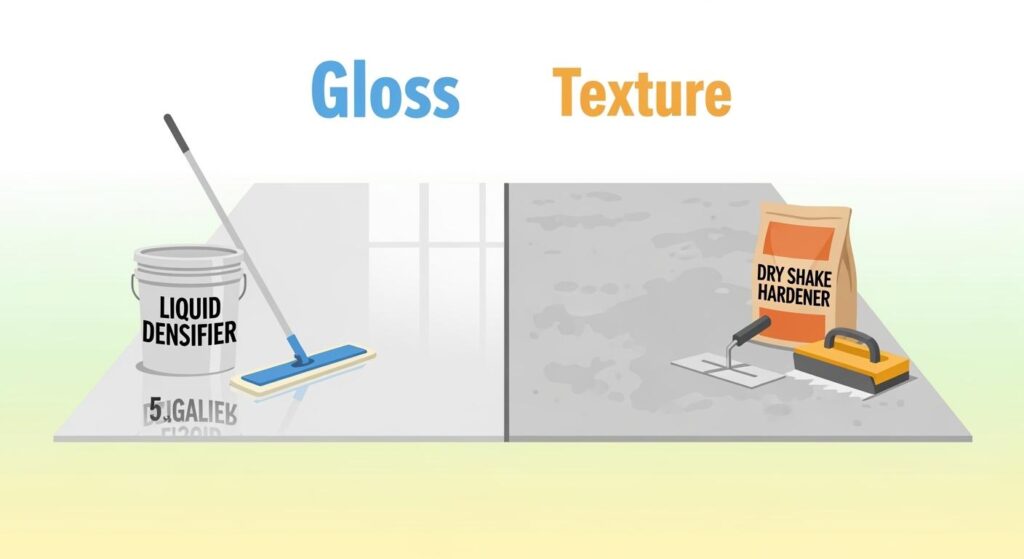
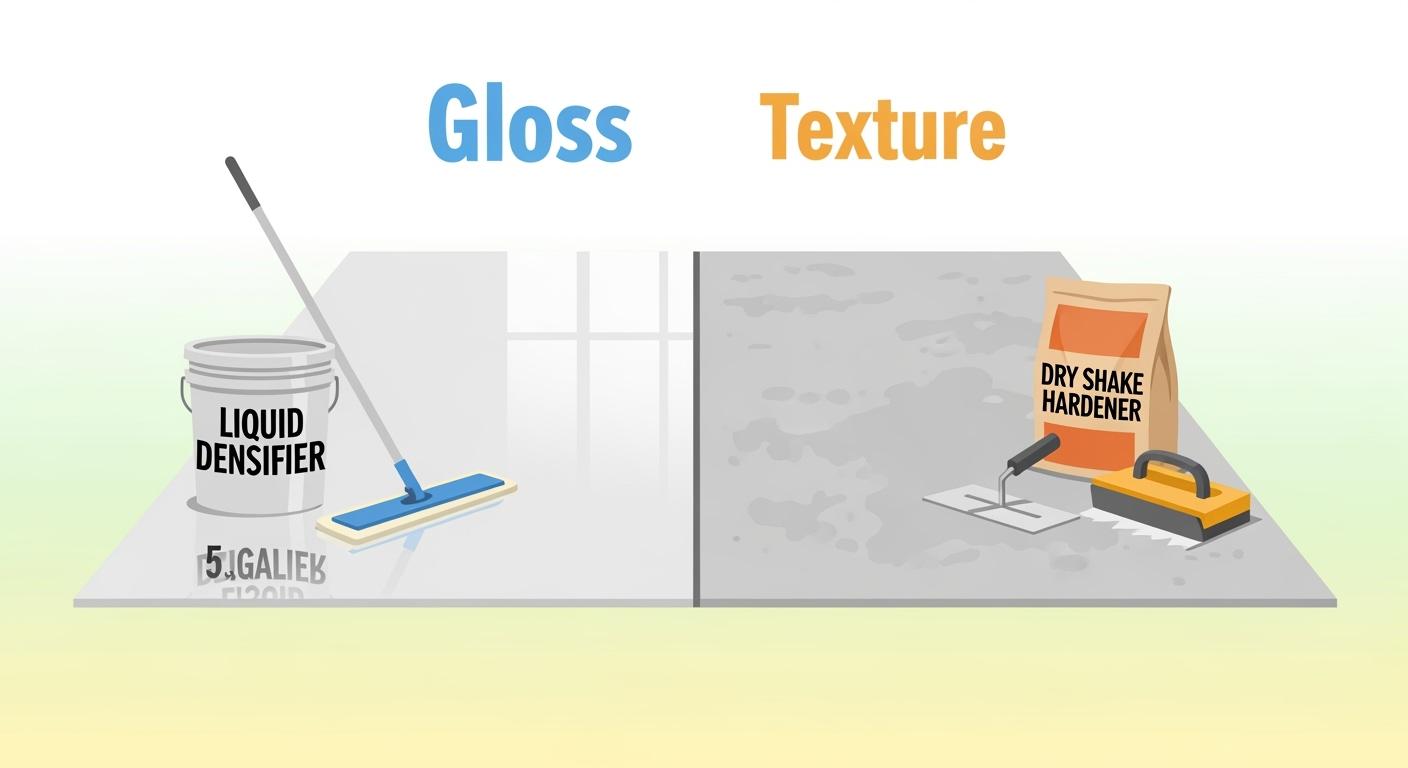
Choosing the right concrete floor treatment for your floor’s durability and longevity presents a common challenge. The best choice between liquid densifiers and dry shake hardeners depends entirely on your project’s specific needs, traffic, and desired outcome for the floor. BANDě offers both a concrete densifier and a dry shake hardener, including liquid floor hardener options. They provide superior concrete hardener solutions to ensure your floor’s durability.
Key Takeaways
Liquid concrete densifiers soak into concrete. They make the floor stronger and last longer. They are good for existing floors.
Dry shake hardeners are powders. Workers put them on wet concrete. They make a very hard surface. They are good for new floors with heavy use.
BANDě’s Liquid Concrete Densifiers
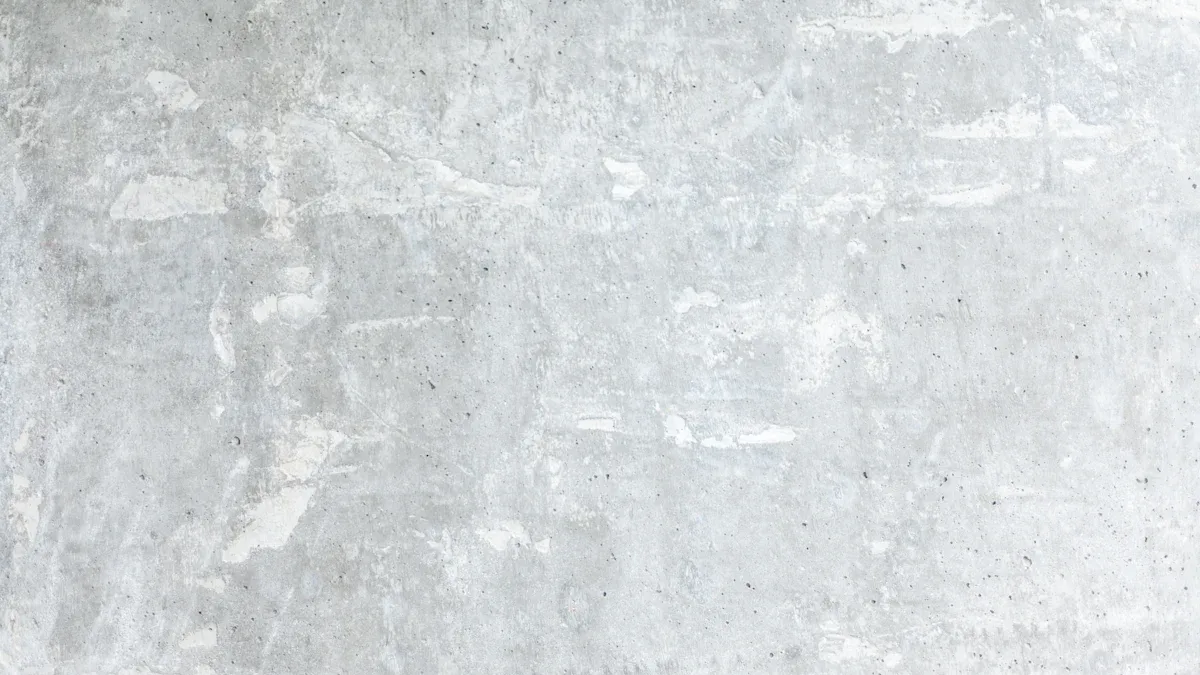
What is a Liquid Concrete Densifier
BANDě’s liquid concrete densifiers are clear, water-based silicate liquids. They soak deeply into the concrete floor. All concrete densifiers are silicates. Common types include sodium, lithium, and potassium silicates. These solutions act as a concrete surface hardener, enhancing the floor’s properties from within.
How BANDě’s Liquid Densifiers Function
BANDě’s liquid densifiers react with calcium hydroxide present in the concrete. This chemical reaction forms a new material called calcium-silicate-hydrate (C-S-H) gel. The C-S-H gel fills the pores within the concrete, making it denser and less permeable. This process hardens, seals, and dustproofs the surface. It also improves porosity, durability, and overall strength of the concrete.
Benefits of Liquid Floor Hardener
A liquid floor hardener from BANDě offers many measurable benefits. It significantly reduces porosity by filling tiny holes, preventing liquids from soaking in. This enhances durability, improving resistance to wear and abrasion by 90% to 500% in a short time. Densifiers also increase the concrete’s internal strength, making the floor more robust. This concrete hardener provides good durability for medium-duty areas. It is also more cost-effective and quicker to apply. This liquid floor hardener penetrates deeper into the concrete, creating more CSH, which is crucial for the concrete’s strength. The densified surface resists scrapes and wear from foot or vehicle traffic.
Ideal Applications for Liquid Densifiers
BANDě’s liquid concrete densifiers are perfect for various settings. They are ideal for warehouses, retail spaces, and industrial facilities. They also work well for residential garages or basements. The quick drying time means minimal disruption to operations. This liquid floor hardener usage ensures a long-lasting, low-maintenance floor. It provides excellent surface strength without extensive curing time.
BANDě’s Dry Shake Hardener Solutions
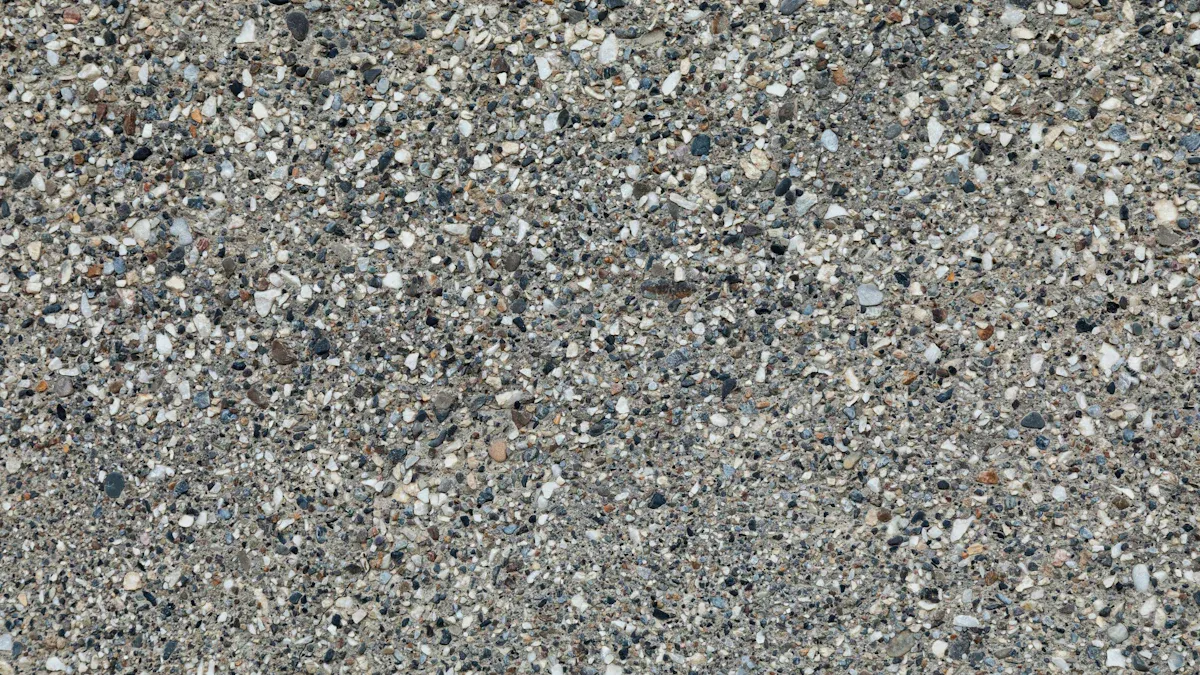
What is a Dry Shake Hardener
A dry shake hardener is a specially formulated powder. Workers apply this powder to the surface of freshly placed, wet concrete. It contains cement, hard aggregates, and sometimes pigments. This combination creates a very tough and dense concrete surface hardener.
Applying Dry Shake Hardener
Applying a dry shake hardener happens during the concrete finishing process. Crews broadcast the powder evenly over the wet concrete. The powder absorbs moisture from the concrete. Then, they power-trowel it into the surface. This process ensures the hardener bonds integrally with the slab. Proper dry shake hardener usage is crucial for optimal results.
Benefits of Dry Shake Hardener
BANDě’s dry shake hardener significantly boosts the floor’s performance. It creates an extremely hard surface, enhancing its surface strength. This surface often achieves a Mohs Hardness above 8. This means increased wear resistance and high resistance to abrasion. It also offers improved resistance to impact. This concrete hardener decreases common negative properties of plain concrete, like dusting and liquid absorption. It achieves this by improving abrasion resistance and reducing surface permeability. This solution provides excellent durability for heavy-duty areas. It acts as a superior concrete floor hardener.
Ideal Applications for Dry Shake Hardeners
Dry shake hardeners are perfect for demanding environments. They meet the highest requirements for industrial floor systems. In warehouses and logistics buildings, the concrete slab and floor are critical. These large area floors need problem-free service year after year. Dry shake hardeners provide the necessary durability. They are commonly applied to improve wear resistance and can also color a concrete surface. This makes them ideal for manufacturing plants, loading docks, and high-traffic commercial floors. This type of concrete floor hardener is a robust choice.
Comparing BANDě’s Concrete Floor Hardeners
Choosing the right BANDě concrete floor hardener involves understanding their unique strengths. Both liquid densifiers and dry shake hardeners improve your floor. However, they do it in different ways. Dry shakes typically create a harder surface. Liquid densifiers, on the other hand, produce a harder floor by improving the slab’s overall porosity, durability, and strength.
Durability and Hardness
BANDě’s dry shake hardeners deliver exceptional durability. They create a very hard surface, often achieving a Mohs Hardness above 8. This means they offer maximum surface strength and high resistance to abrasion and impact. This makes them perfect for the toughest environments. A concrete densifier also significantly boosts durability. Densified concrete floors resist wear, dusting, and chemical damage. They create a dense, hard, dustproof, and easy-to-clean surface. This surface can last a lifetime. For instance, a densified concrete floor can last 15 to 20 years in a business before needing major repairs.
Application and Curing
Applying a liquid floor hardener is generally quicker and less disruptive. Workers simply apply the clear, water-based liquid to the concrete. It soaks in and reacts, hardening the floor from within. This process has quick drying times and does not require extensive curing. Dry shake hardeners need a different approach. Workers broadcast the powder onto freshly placed, wet concrete. They then power-trowel it into the surface. This method ensures the hardener bonds completely with the slab. This process requires careful timing during the concrete pour.
Cost and Value
When considering cost, the material price for a concrete floor hardener varies. For example, a Concrete Color Hardener (Dry Shake) can cost between 15 to 40 cents per square foot. This depends on the color and coverage needed. Integral Color, another option, ranges from 10 cents to $1.00 for a 4-inch slab with a 6-sack mix. Unfortunately, specific average material costs for liquid densifiers are not available for a direct comparison.
However, both options offer excellent long-term value through reduced maintenance. Densified concrete floors lower upkeep costs. They prevent dusting and avoid costly re-applications. This leads to less downtime. These surfaces resist stains better from oils and chemicals. This makes them easier to clean and less prone to discoloration or mildew. Treated concrete resists scrapes, traffic wear, and stains. It requires little upkeep and lowers long-term costs. Dry polished, hardened, and densified concrete floors can save up to 65% on upkeep. Dry shake-treated floors also offer low maintenance once applied and are long-lasting.
Maintenance Characteristics | |
|---|---|
Dry Shake-Treated | Low maintenance once applied, long-lasting |
Liquid Densifier-Treated | Easy maintenance, often improves with age |
Aesthetics and Color Options
Aesthetics play a role in choosing a concrete hardener. Liquid densifiers are typically clear. They do not change the concrete’s color. This allows the natural look of the concrete to show through. In contrast, dry shake hardeners offer more aesthetic flexibility. Some dry shake hardeners can incorporate color. This enables decorative finishes and more customization.
Feature | Dry Shake Hardeners | Liquid Densifiers |
|---|---|---|
Color Options | Can add pigments for color variations; offer more customization | Limited customization in terms of color; usually clear and do not change concrete color |
Traffic Suitability
The type of traffic your floor will experience is a major factor. Dry shake hardeners provide maximum surface strength. They are ideal for heavy-duty areas. These include environments with heavy machinery, forklifts, or high foot traffic. For instance, they are suitable for heavy forklift traffic or high abrasion conditions, often requiring 5 to 7 kg/m² of material.
Liquid densifiers offer good durability. They are suitable for medium-duty areas. A concrete densifier treatment lasts 5 to 10 years, depending on traffic and environment. For retail stores, a densified floor can last 15-20 years. Warehouses might see 10-15 years, and offices over 20 years.
Aspect | Dry Shake Hardener | Liquid Hardener |
|---|---|---|
Durability | High durability, excellent for heavy traffic areas | Good durability, suitable for medium-duty areas |
Surface Strength | Superior surface hardness, ideal for industrial use | Increases surface hardness, but not as strong as dry shake |
Best Use Case | Environments with heavy machinery, forklifts, or high foot traffic | N/A |
Selecting Your BANDě Concrete Floor Hardener
For New Concrete Installations
For new concrete installations, the choice often leans towards a dry shake hardener. Workers apply this product to fresh, wet concrete. It integrates directly into the slab. This creates a monolithic, extremely hard surface. This method ensures maximum surface strength from day one. It is an excellent concrete floor hardener for new construction projects.
For Existing Concrete Floors
Existing concrete floors benefit greatly from a concrete densifier. This liquid solution penetrates the hardened surface. It reacts with the concrete to increase its density and hardness from within. This process revitalizes older floors. It improves their resistance to wear and dusting. Liquid floor hardener usage is straightforward. It does not require removing the existing slab. This makes it a cost-effective upgrade.
Indoor vs. Outdoor Applications
Both BANDě’s solutions work for indoor and outdoor applications. However, specific conditions might favor one over the other. Inside, a concrete densifier offers a clean, dust-free, and low-maintenance floor. Outside, where weather exposure is a factor, a dry shake hardener provides superior abrasion resistance. It also offers impact protection. This makes it suitable for exterior slabs.
High-Traffic vs. Low-Traffic Areas
The expected traffic level significantly influences the decision. For low-to-medium traffic areas, a concrete densifier provides ample durability. It protects the floor from everyday wear. For high traffic areas, especially those with heavy machinery, a dry shake hardener offers superior protection. It withstands constant abuse.
Consider environments with extremely high forklift traffic. Here, specialized solutions might be necessary. Mortar Epoxy Flooring is strong. It suits heavy industrial areas. It also repairs cracks in other epoxy floors. Another option is 100% Solids Epoxy Flooring. Professionals consider it the most durable epoxy material. It can last up to 20 years. This material is ideal for areas with heavy human traffic. It protects against abrasions, chemical reactions, and hot tire marks. PU Concrete (Polyurethane Concrete) is an innovative material. It offers superior durability and high flexibility. It withstands extreme conditions. Its high mechanical strength handles heavy pressure from industrial machinery or heavy traffic. It distributes loads evenly. This reduces damage risk. It also has excellent abrasion and impact resistance. It resists wear from continuous friction or frequent heavy vehicle passage. Its elastic properties withstand impacts without cracking or chipping.
Specific Industry Requirements
Different industries have unique demands for their floors. For example, automotive repair shops need floors that resist oil and chemical spills. ‘Ressi EPO Chem Plus‘ offers excellent chemical resistance. It provides robust protection against a wide range of chemicals. It is more durable than conventional epoxy coatings. It resists wear, tear, and mechanical impacts. This product is ideal for automotive workshops and garages. It resists oils, fuels, and chemicals typically found there. For such specific needs, a specialized concrete hardener or coating might be the best choice. BANDě’s experts help match the right concrete floor hardener to these precise requirements.
BANDě’s liquid densifiers and dry shake hardeners both protect your floor, but they meet different needs. Choose a liquid floor hardener for existing floors needing good durability. For new installations, a dry shake concrete hardener offers maximum surface strength. BANDě provides quality solutions for every floor challenge. Consult their experts for the optimal concrete floor hardener for your floor.
FAQ
Can you use both a densifier and a dry shake on the same floor?
Generally, you do not use both. Dry shakes are for new concrete. Densifiers work on existing or new concrete. They serve different purposes for floor hardening.
How long does a densified concrete floor last?
A densified floor can last 15-20 years in retail. Warehouses see 10-15 years. Offices often exceed 20 years. Durability depends on traffic and environment.
Do densifiers make the concrete floor shiny?
Liquid densifiers are clear. They do not add shine to the concrete. Polishing the concrete after densifying creates a glossy finish. ✨
See Also
Essential BANDě Guide: Top Concrete Dustproofer Sealers for Your Project
Unveiling BANDě Concrete Densifier: A Detailed Look at Its Functionality
Selecting the Ideal Concrete Densifier for Optimal Warehouse Floor Performance
Your Complete Buying Guide: Concrete Densifiers, Hardeners, and Sealers
The 2025 BANDě Handbook: Mastering Concrete Densifiers and Hardeners
