

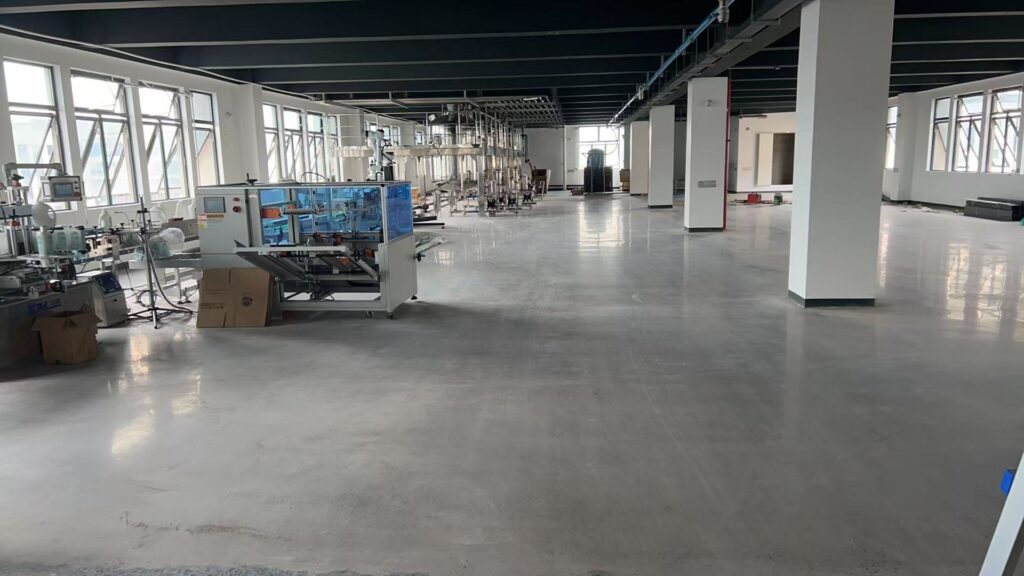
A concrete floor hardener strengthens and densifies concrete surfaces, significantly boosting their durability. These hardeners are essential in Saudi Arabia, where high temperatures, dust, heavy traffic, and chemical exposure challenge ordinary floors. The market for concrete floor hardeners in Saudi Arabia is booming, projected to reach US$ 2.1 Billion by 2032 from US$ 1.2 Billion in 2022, with a Compound Annual Growth Rate (CAGR) of 5.7%. This blog examines the types of hardeners available in 2025 and their specific benefits for the region.
Key Takeaways
Concrete floor hardeners make floors stronger. They help floors last longer in tough places like Saudi Arabia. These hardeners protect against heat, dust, and heavy use.
There are different types of hardeners. Some go on top of the floor, and some mix into the concrete. Liquid hardeners make the concrete harder from the inside. Dry shake hardeners add color and strength to new floors.
Hardeners stop floors from dusting. They also make floors easier to clean. This saves money on repairs and keeps floors looking good for a long time.
Concrete Floor Hardeners: Definition and Saudi Arabia’s Need
What Are Concrete Floor Hardeners
Concrete floor hardeners are specialized materials. They strengthen and densify concrete surfaces. These products improve both the durability and appearance of concrete floors. They create a dense, hard surface. This surface resists wear, abrasion, and impact. Hardeners also protect against staining. Some even add vibrant color. They work by chemically reacting with the concrete. This reaction seals pores and makes the surface much tougher.
Why Hardeners are Crucial in Saudi Arabia
In Saudi Arabia, concrete floors face extreme conditions. High temperatures, constant dust, heavy traffic, and chemical exposure challenge ordinary concrete. These harsh elements demand extra protection. Concrete floor hardeners become essential here. They ensure floors can withstand these daily challenges. Hardeners provide the necessary resilience for industrial and commercial spaces. They make floors last longer and perform better.
Common Concrete Floor Challenges in the Region
Concrete floors in Saudi Arabia often encounter several issues. High temperatures cause accelerated shrinkage and cracking. This leads to frequent joint repairs. Joints themselves can be weak points in the floor structure. Over time, these floors require higher maintenance. They may also not suit high-speed automated logistics systems. These challenges highlight the need for enhanced floor solutions.
Types of Concrete Floor Hardeners for 2025
Choosing the right concrete floor hardener depends on specific project needs and environmental conditions. The market offers various types, each with unique benefits. Experts predict a growing demand for non-metallic hardeners in the coming years, driven by performance and sustainability goals.
Surface vs. Integral Hardeners
Concrete floor hardeners generally fall into two main application categories. Surface hardeners are applied directly to the concrete surface after it is poured and has begun to set. They penetrate the top layer, reacting to create a denser, more durable finish. This method is popular for existing floors or when specific surface properties are desired. In contrast, integral hardeners mix directly into the concrete batch before pouring. These hardeners strengthen the entire concrete slab, providing uniform hardness throughout its depth. Each type offers distinct advantages depending on the project’s scope and requirements.
Liquid Chemical Hardeners
Liquid chemical hardeners are a popular choice for enhancing concrete floors. These solutions soak into the concrete and react with its natural lime. This reaction creates a hard, solid material within the concrete’s tiny pores. The process significantly enhances the concrete’s strength and durability.
Several types of silicate densifiers exist, each with specific characteristics:
Sodium Silicate Densifiers: These work well for general use. They provide good surface hardening and effective dustproofing.
Lithium Silicate Densifiers: These offer better penetration. They are also less likely to leave white residue, making them ideal for polished concrete.
Potassium Silicate Densifiers: These react quickly. Industrial settings often use them when fast application is necessary.
These densifiers penetrate concrete surfaces and react with calcium hydroxide, a byproduct of cement hydration. This reaction forms calcium silicate hydrate (CSH). CSH fills pores and voids, which increases the concrete’s density and hardness. Advanced options like Hiperdensifil use lithium-based, nano-particle technology. This allows for deep concrete penetration and offers superior abrasion resistance. Other examples include Superdensifil, a high-performance liquid hardener for strengthening and dust-proofing old interior concrete surfaces. Ultradensifil is another nano chemical-based hardener and dust proofer. It provides deep penetration and lasting protection in commercial and light industrial areas.
Dry Shake Hardeners
Dry shake hardeners are powder products. Workers float these powders into fresh concrete surfaces. They provide color, strength, and durable finishes. These hardeners are economical and allow for a customizable finish, making them a great choice for industrial floors. They create a tough, abrasion-resistant surface right from the start. This method is effective for achieving high-performance floors with specific aesthetic requirements.
Other Durable Floor Solutions
While not traditional concrete floor hardeners, other durable flooring options exist. Epoxy coatings are a prime example. They offer exceptional adhesion and compressive strength. This makes them suitable for high-traffic areas like warehouses and manufacturing plants. Epoxy coatings create a seamless, non-porous surface. This surface resists chemicals, stains, and heavy impacts. They differ from hardeners because they form a protective layer on top of the concrete. Hardeners, on the other hand, work within the concrete itself to densify and strengthen it.
Benefits of Concrete Floor Hardeners
Enhanced Durability and Wear Resistance
Concrete floor hardeners significantly boost a floor’s ability to withstand daily abuse. They increase surface hardness by as much as 300%, often reaching a Mohs hardness of 6-7. This also improves compressive strength by about 40%. Such enhancements make floors perfect for high-traffic areas. Think of busy factories and bustling logistics centers. These floors last longer under constant forklift traffic, pallet drag, and heavy industrial loads. Manufacturing plants rely on them to endure continuous movement and environmental stress. Cold storage facilities also benefit, as hardeners minimize dusting from surface wear. Automotive workshops and service centers find them essential for durable, crack-resistant surfaces. Retail and commercial developments also gain enhanced durability and wear resistance. They ensure seamless movement for automated guided vehicles (AGVs) and forklifts in warehouses. This supports high-speed material handling and robotic systems.
Dust Proofing and Surface Integrity
Hardeners do more than just strengthen floors; they also prevent dusting. They create a dense, non-porous surface. This significantly reduces concrete dusting. Less dust means better air quality in industrial environments. It reduces airborne particulate matter. This also lowers maintenance needs.
Improved Chemical and Stain Resistance
The dense crystalline structure formed by hardeners makes floors highly resistant. They repel water, oil, and chemical penetration. This makes cleaning much easier. It also reduces overall maintenance costs. Densifiers improve resistance to staining and surface wear. This keeps floors looking good and simplifies upkeep. This enhanced durability also extends the lifespan of concrete floors. It reduces the need for frequent maintenance and repairs.
Aesthetic Appeal and Low Maintenance
Polished hardened floors can achieve a beautiful, marble-like shine. This shine often improves with use. They eliminate the need for waxing. This simplifies daily cleaning routines. The enhanced durability and stain protection also contribute to lower long-term maintenance. Densifiers are a cost-effective solution. They reduce the need for repairs and maintenance, leading to significant long-term savings.
Eco-Friendly and Versatile Application
Many modern concrete floor hardener products use water-based, VOC-free formulations. These meet green building standards. They are suitable for sensitive environments. These products also offer great versatility. You can apply them to both new and old concrete surfaces. This makes them a flexible choice for various projects.
Concrete floor hardeners are vital for protecting and enhancing infrastructure in Saudi Arabia’s challenging climate. They deliver increased durability, reduced maintenance, and improved aesthetics. These solutions represent a smart, long-term investment for sustainable, high-performing floors in the region.
FAQ
What is the main difference between surface and integral hardeners?
Surface hardeners apply to the top layer of concrete after pouring. Integral hardeners mix into the concrete batch before pouring. They strengthen the entire slab.
How do liquid chemical hardeners make concrete stronger?
Liquid chemical hardeners react with the concrete’s lime. This reaction forms a dense, hard material inside the pores. It significantly increases the concrete’s strength and durability.
Can hardeners make old concrete floors look new?
Yes, many hardeners can revitalize old concrete. Polishing hardened floors creates a marble-like shine. This improves with use and reduces maintenance needs.
See Also
Liquid Concrete Solutions: Hardening, Sealing, and Densifying Floors Effectively
Understanding Concrete Floor Hardeners: Their Purpose and Operational Mechanics
The Essential 2025 Handbook for Choosing Optimal Concrete Floor Hardeners
Philippines Floor Hardeners: Top Solutions for Warehouse Concrete Surfaces
Selecting Excellence: The Five Leading Industrial Concrete Floor Hardeners
