

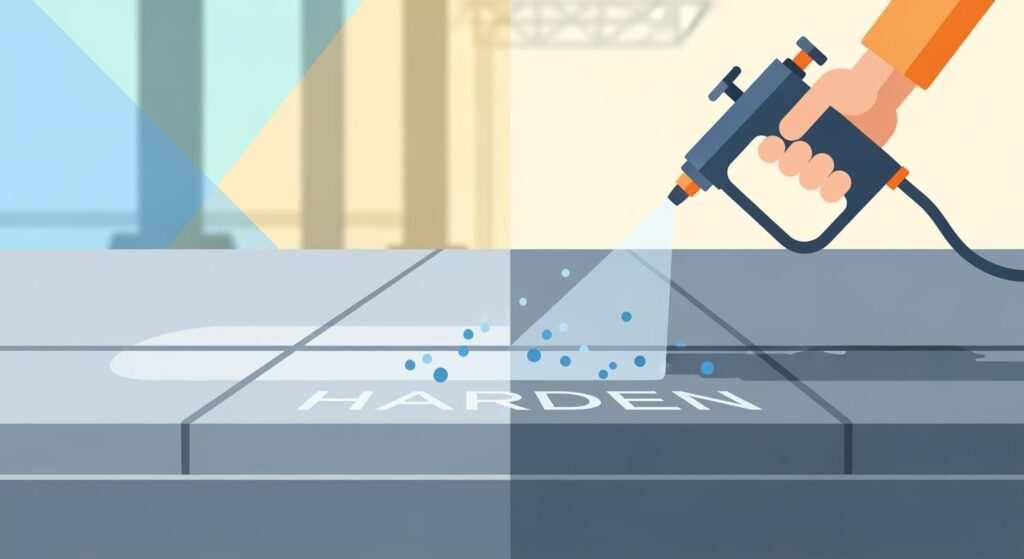
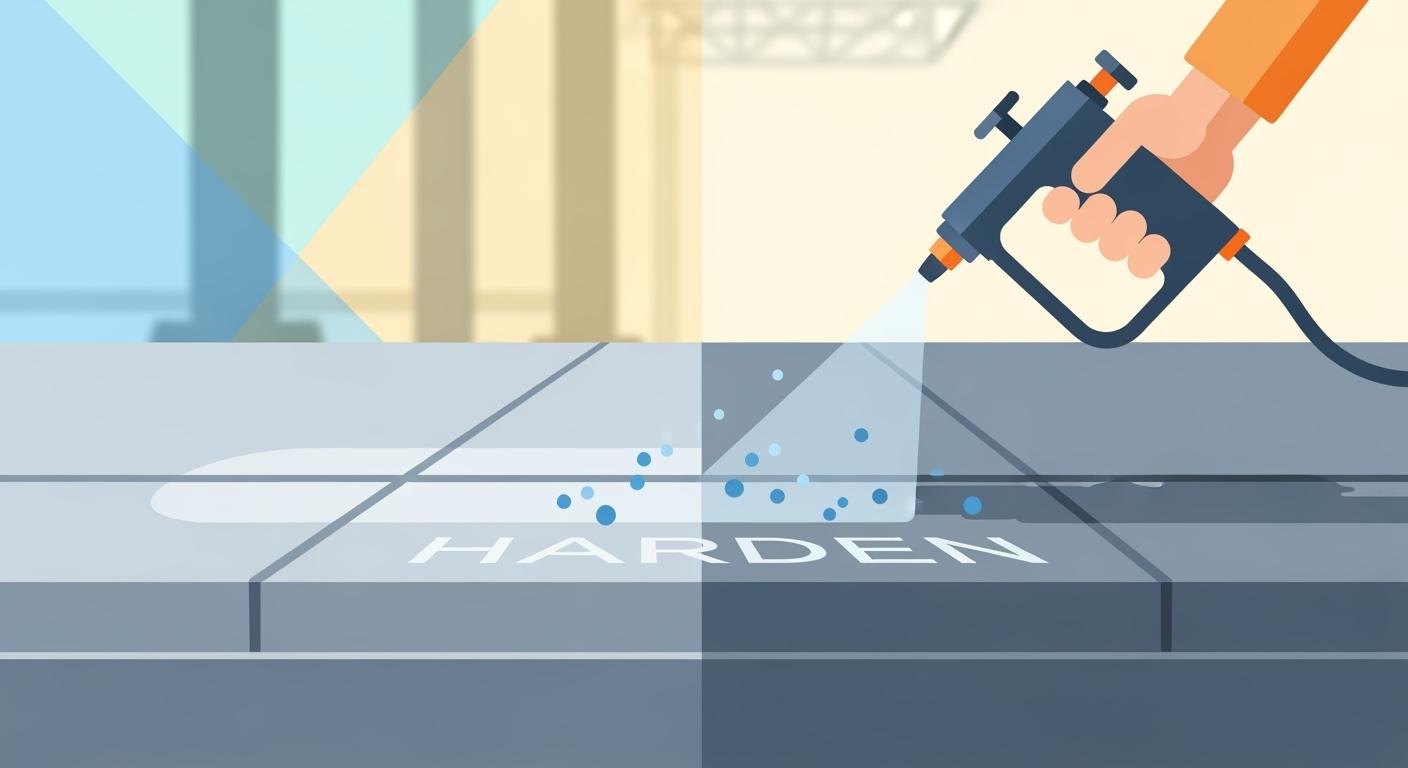
A liquid concrete floor hardener sealer and densifier strengthens your concrete. This advanced hardener and sealer offers vital protection. You need durable, low-maintenance concrete surfaces in many environments. This guide explores the benefits and various applications of these products. It helps you make an informed choice for your concrete.
Key Takeaways
Liquid concrete hardener sealers make your concrete stronger. They go deep into the concrete. They fill small holes. This makes the floor hard and dense.
These sealers protect your floor. They stop dust. They resist stains and chemicals. This makes your floor last longer and easier to clean.
Choose the right sealer for your needs. Think about how much traffic your floor gets. Consider the look you want. This helps you pick the best product.
Understanding Liquid Concrete Hardener Sealers
Composition and Working Mechanism
Liquid concrete surface hardeners are powerful solutions for your floors. These products primarily consist of silicates. You will find lithium silicate, sodium silicate, and potassium silicate as common ingredients. These silicates react with components in your concrete. Lithium silicate has a small molecular structure. This allows it to penetrate more evenly into various concrete finishes. Sodium silicate, with its larger molecules, can sometimes lead to inconsistent reactions. For example, Sikafloor® CureHard-24, a popular concrete floor hardener sealer, uses a sodium silicate water dilution. This hardener works by chemically interacting with your concrete.
Hardening, Sealing, and Densifying Explained
These concrete surface hardeners do more than just sit on the surface. They chemically react with the portland cement and calcium hydroxide in your concrete. This reaction creates crystals. These crystals fill the empty pores within the concrete’s cream. This process results in a hardened and densified surface. Lithium silicates offer deep penetration. They react consistently to fill all empty pores. This prevents weak spots. The reaction forms stable, insoluble structures. These structures enhance density and resistance to abrasion. They also reduce dusting. In contrast, some sodium and potassium-based concrete sealers react inconsistently. This can leave weak spots. These spots may lead to deterioration. You get a stronger, more durable concrete surface. This sealer provides lasting protection.
Benefits of Concrete Coatings: Features and Advantages
You gain many advantages when you apply liquid concrete floor hardener sealers. These concrete floor coatings offer significant benefits for your surfaces.
Enhanced Durability and Abrasion Resistance
You will see improved durability in your concrete. These coatings make your concrete much stronger. They resist wear from heavy traffic. This increased durability means your floor lasts longer. It stands up to daily use better.
Dust-Proofing and Surface Protection
These coatings stop your concrete from dusting. They create a solid, non-porous surface. This provides excellent surface protection. You keep your environment cleaner. Your concrete maintains its integrity.
Improved Chemical and Stain Resistance
You get superior chemical resistance. The treated concrete resists many harsh chemicals. It also stands up to acids and bases. This makes your floor easier to clean. It offers moisture resistance. The surface becomes water repellent. This prevents stains from penetrating your concrete. You benefit from this strong chemical resistance.
Aesthetic Appeal and Light Reflectivity
Your floor will look better. These coatings provide enhanced aesthetics. They give your concrete a cleaner, brighter appearance. The surface reflects light more effectively. This can brighten your space. You enjoy a more professional look.
Longevity and Reduced Maintenance
You extend the lifespan of your concrete. This leads to greater longevity. You spend less time and money on repairs. The reduced maintenance is a major benefit. These benefits save you resources over time. Your concrete remains in top condition for years.
Comparing Top Concrete Floor Hardener Sealers
You find many options when you look for the best concrete floor hardener sealer. Each type offers unique benefits. Understanding these differences helps you choose the right product for your concrete. You need to consider the specific demands of your project.
Silicate-Based Densifiers: Types and Performance
Silicate-based densifiers are a primary category of concrete surface hardeners. They penetrate your concrete and react chemically. This reaction creates a denser, harder surface. You commonly encounter lithium, sodium, and potassium silicates.
Sodium silicate densifiers offer general benefits. They provide surface hardening, dust-proofing, and some sealing. However, they have limitations.
Feature | Sodium Silicate Densifiers |
|---|---|
Disadvantages | Leaves opportunities for deterioration, dusting, and attack due to single structure and inconsistent reaction. Reacts irregularly, leaving weak spots and contributing to Alkali Silica Reaction (ASR). Larger molecules make even penetration difficult, especially in tighter finishes. Less water-resistant as they absorb water. Directly contributes to ASR due to the presence of sodium. |
Advantages | Provides general benefits of concrete hardeners: surface hardening, dust-proofing, and sealing (though less effectively than lithium). |
Lithium silicate densifiers generally outperform sodium and potassium options. They offer superior penetration and a more consistent reaction.
Feature | Lithium Silicate | Sodium/Potassium Silicate |
|---|---|---|
Penetration | Deeper and more complete | Inconsistent and irregular |
Molecular Structure | Smaller, more even and consistent reaction | Larger, inconsistent reaction, leaving clusters of un-reacted calcium hydroxide |
Hardness & Abrasion Resistance | Increased, denser bond | Weaker, irregular bond |
Durability | Long-term | Potential for deterioration, dusting, and attack |
Dust-proofing | Effective, easier to clean and maintain | Prone to dusting |
Moisture Resistance | Keeps moisture out, blocks micro-pores, less water-soluble | Can absorb water, less water-resistant |
Alkali Silica Reaction (ASR) | Prevents/reduces by keeping moisture out, free of potassium and sodium | Directly contributes to ASR due to added potassium and sodium |
Cracking/Crazing | Will not contribute to map cracking or crazing | Can form silica gel, potentially leading to cracking |
Reactivity | Reacts with calcium hydroxide to form stable tri-calcium silicate structures, maximizing and extending reactivity | Single structure, leaving opportunity for deterioration |
Environmental | Planet Safe | Not specified, but contributes to ASR |
You see that lithium silicates create a denser, more durable concrete. They also reduce the risk of issues like ASR and cracking. These concrete surface hardeners provide excellent long-term protection.
Acrylic and Polyurethane Hardener Sealers
Beyond silicates, you also find acrylic and polyurethane options among concrete sealers. These are different types of concrete coatings.
Acrylic coatings are often more affordable. They offer good UV resistance. You can apply them easily. However, they typically form a film on the surface. This film can wear down over time. They do not densify the concrete like silicates. You might choose them for lighter traffic areas or for a specific aesthetic.
Polyurethane hardener sealers provide a different set of advantages. They create a tough, flexible film. This film protects your concrete.
Low Hardness and Flexibility: These compounds offer low hardness and flexibility. This prevents stress on delicate surface-mounted devices (SMDs) during thermal cycling. This is crucial for electronic marine modules (EMMs) and electronic control modules (ECMs).
Chemical Resistance: Polybutadiene-based polyurethane formulas provide excellent chemical resistance.
High-Temperature Properties: These products exhibit excellent high-temperature performance. Some maintain properties up to 125°C. Others show extremely low weight loss at 130°C.
Low Viscosity: Many polyurethane potting compounds have low mixed viscosity. They flow into intricate spaces and tight tolerance areas. This benefits potting electronic devices and microelectronics.
Flame Retardancy: Some polyurethanes are flame retardant.
Electrical Insulation: Polyurethane potting compounds provide excellent insulating abilities. They suit applications requiring electrical properties. They protect sensitive electrical components like circuit boards and cable joint assemblies.
Vibration and Shock Resistance: These compounds protect against shock and vibration damage. They are ideal for automotive sensors, switches, and other electrical devices exposed to harsh environments.
Operating Temperature Range: Some formulations operate within a wide temperature range, such as -55°C to 125°C.
Removability: Certain compounds allow easy removal. This provides access to circuitry and components for repair in expensive control modules.
You find polyurethane hardener sealers offer robust protection. They excel in areas needing chemical resistance and flexibility.
Advanced Hybrid Formulations
Manufacturers now develop advanced hybrid formulations. These products combine the best features of different chemistries. For example, you might find a product that blends silicate densifiers with acrylic or polyurethane elements. This creates a hardener that densifies your concrete from within. It also provides a protective surface sealer. These hybrids aim for superior performance. They balance deep penetration with surface protection. You get enhanced durability and aesthetics. These formulations represent the cutting edge in concrete protection.
Key Performance Metrics: Hardness and Cure
When evaluating a hardener, you need to understand its performance metrics. Hardness and cure time are crucial. You want a product that makes your concrete significantly harder. You also need to know how long it takes to achieve full strength. This impacts your project timeline.
Standard industry tests measure these properties.
Test Type | Metric/Standard |
|---|---|
Abrasion Resistance | DIN 52108, ASTM C779, ASTM C944, ASTM C1314 |
Impact Resistance | ASTM D2794 |
Tensile Adhesion | ASTM D7234 |
Penetration Depth | N/A (mentioned as a test, but no specific metric/standard provided in the analysis) |
Water Absorption | ASTM C1585 |
Curing Time | N/A (mentioned as a metric, but no specific standard provided in the analysis) |
You should look for products with high abrasion and impact resistance. These indicate a truly durable hardener. A quick curing time also benefits you. It allows you to return your floor to service faster. This minimizes downtime.
Applications of Concrete Coatings
You can use liquid concrete floor hardener sealers in many different settings. These applications of concrete coatings protect and enhance various types of concrete. You will find these coatings beneficial for both functional and aesthetic reasons.
Industrial and Warehouse Environments
In industrial and warehouse settings, your concrete floors face extreme conditions. You need coatings that can withstand constant traffic and mechanical wear. These concrete floor coatings must resist abuse from corrosive liquids, high temperatures, and heavy impact. They offer high wear and chemical resistance to handle large equipment and harsh chemicals. You also need protection against electrostatic discharge. These coatings provide a slip-resistant texture for reduced injury risk. They are seamless and easy to clean. You can find them in various colors and textures. They also meet low VOC requirements for better air quality.
Commercial and Retail Spaces
Commercial and retail spaces require concrete that looks good and performs well. You need floors that handle high traffic areas while maintaining their appearance. For example, Sikafloor®-3 QuartzTop is a mineral dry-shake topping. It works well for monolithic floors in public buildings. It offers medium wear resistance and good impact resistance. This product is dust-proof and easy to clean. It provides a cost-effective surface hardener with fast application. Another option, Sikafloor® Level-30 (TH) suits commercial and residential areas. It handles industrial medium to heavy loads, including forklift impact. This concrete is fully trafficable when sealed. These applications ensure your floors remain durable in high traffic areas.
Residential Garages and Basements
You can also protect your home’s concrete. Residential garages and basements benefit greatly from these coatings. They shield your concrete from oil spills, chemicals, and moisture. This prevents stains and makes cleaning much easier. You get increased durability and a more attractive space.
Outdoor Concrete Surfaces
Outdoor concrete surfaces also need protection. You can apply these coatings to patios, driveways, and walkways. They guard your concrete against harsh weather, UV rays, and freeze-thaw cycles. This prevents cracking and spalling. These applications extend the life of your outdoor concrete.
Choosing the Right Concrete Floor Hardener Sealer
You need to make an informed decision when selecting a concrete floor hardener sealer. Many factors influence your choice. You must consider your specific project needs. This section guides you through the essential considerations.
Concrete Type and Condition Assessment
First, you must assess your existing concrete. You need to understand its current condition. Is your concrete new or old? Does it have cracks or existing damage? Has it been previously treated with other products? The porosity of your concrete also matters. Older, more porous concrete may absorb products differently. These factors directly impact which concrete surface hardeners will work best. You might need to repair your concrete before applying any product. A thorough assessment ensures the hardener sealer performs optimally.
Traffic Levels and Usage Demands
Consider how people or machines will use your floor. Different traffic levels require different solutions. High traffic areas demand robust protection. For example, warehouses and industrial factories experience heavy loads. Forklifts, trucks, and trailers frequently move across these floors. Regular concrete often struggles in these environments. It can suffer from high permeability, low abrasion resistance, and impact damage.
You can use dry-shake hardeners on fresh concrete. This method significantly increases compressive and abrasion resistance. It also reduces permeability. This process enhances the floor’s properties. It makes the concrete suitable for areas with heavy loads and stresses.
Here is a guide for application rates of dry-shake hardeners:
END USE | APPLICATION RATE |
|---|---|
Foot Traffic | 3 kg/m2 or low water cement ratio concrete |
Light Forklift Traffic / Abrasion | 3 kg/m2 |
Medium Forklift Traffic / Abrasion | 5 kg/m2 |
Heavy Forklift Traffic / Abrasion | 5 – 7 kg/m2 |
Note: Pigmented hardeners are recommended at a minimum rate of 6 kg/m2. |
You apply dry-shake hardeners as a dry compound onto fresh concrete surfaces. You can do this by hand or mechanically. The final thickness should be 2 to 3 mm. The application rate depends on the dry shake’s bulk density and the floor’s intended use. You can specify different rates within a building. This suits varying uses in different areas. These hardeners offer excellent resistance to temperature fluctuations and freeze-thaw cycles. A sealer can also provide additional surface dust-proofing protection for dry-shake surfaces. This enhances the overall durability.
Desired Finish and Appearance
You also need to think about how you want your floor to look. Do you prefer a matte, satin, or high-gloss finish? Some products enhance the natural look of your concrete. Others provide a wet look. You can also choose products that increase light reflectivity. This brightens your space. Consider if you want a clear finish or a tinted one. The aesthetic appeal of your floor is important for many applications.
Environmental Compliance and VOCs
Environmental concerns are increasingly important. You should look for products with low Volatile Organic Compound (VOC) content. Low VOC products improve indoor air quality. They also comply with environmental regulations. Many dry-shake hardeners are safe and environmentally friendly to install due to their low VOC content. This makes them a responsible choice for your project. You ensure a safer environment for workers and occupants.
Cost-Effectiveness and Long-Term Value
Finally, evaluate the cost-effectiveness of your choice. The initial price of a concrete floor hardener sealer is one factor. However, you must also consider the long-term value. A higher-quality hardener might cost more upfront. It often provides superior durability and reduced maintenance over time. This saves you money in the long run. You get better chemical resistance and a longer lifespan for your concrete. This makes the investment worthwhile. You achieve significant savings on repairs and upkeep.
Hardener Sealers vs. Other Concrete Floor Coatings
You compare liquid concrete floor hardener sealers with other popular concrete floor coatings. You want to find the best concrete floor coating for your needs. This section highlights distinct strengths and weaknesses.
Traditional Sealers and Their Limitations
You might consider traditional topical concrete sealers. These concrete sealers form a protective layer. They do not change the concrete’s inherent strength. You can see their limitations.
Feature | Traditional Topical Concrete Sealers |
|---|---|
Application | Forms a protective layer over the concrete surface |
Strength Alteration | Does not alter the concrete’s inherent strength or chemical makeup |
Durability | Can be worn down over time, especially with heavy foot and vehicle traffic, requiring reapplication |
Protection | Creates a shield that takes damage in place of the concrete, protecting its surface |
Lifespan | A quality seal lasts around five years before reapplication is necessary, but heavy traffic can shorten this |
Suitability | Good for boosting and highlighting natural features, suitable for aggregate concrete to prevent chipping |
Epoxy and Polyurea Coatings: Pros and Cons
You often hear about epoxy coatings and polyurea coatings as contenders for the best concrete floor coating. Polyurea floor coatings are exceptionally strong. They boast 98% more solids than epoxy. They are four times more durable. Polyurea coatings withstand heavy impacts and harsh chemicals. This makes them suitable for garages and industrial settings. Polyurea is elastic. It stretches and contracts with temperature changes. This prevents cracking. Polyurea coatings resist UV light. This prevents fading. They dry quickly. You can apply multiple coats in one day. This allows use of the space the next day. Polyurea coatings resist hot tire pickup. This is a common issue with epoxy coatings. Polyaspartic coatings offer similar benefits. They are often considered a type of polyurea. Some polyurea coatings have a strong odor. Their application can be difficult. You need to consider these factors when choosing the best concrete floor coating.
Polished Concrete: Process and Maintenance
You can also choose polished concrete. This process involves several steps.
Check the surface condition. Inspect for repairs. Remove bolts.
Rough Grinding and Leveling. Grind with metal bond segments. Clean the concrete.
Repair Cracks and Holes. Fill cracks. Grind with metal bond pads. Clean after repair.
Harden the Concrete. Apply hardening densifier. Keep it moist for 30 minutes.
Fine Grinding. After 4 hours, polish with resin pads. Clean dust after each step.
Fine Polishing. Apply sealer. Polish with a high-speed polisher.
Polished concrete floors are low-maintenance. They offer enhanced durability. They are easy to clean. This makes them a good option for many.
Unique Advantages of Hardener Sealers
Concrete surface hardeners offer unique benefits. They achieve surface hardening, dust proofing, and sealing. This happens through a chemical reaction. Silicates react with portland cement and calcium hydroxide in the concrete. This reaction forms crystals. These crystals fill empty pores. This creates a hardened and densified surface. Lithium silicate penetrates evenly. It forms stable tri-calcium silica structures. This provides greater density and abrasion resistance. It ensures long-term durability. This consistent penetration leads to increased hardness. It makes the concrete dust-proof. It creates an easy-to-maintain surface.
Concrete surface hardeners penetrate the concrete’s open pores. They fill them. They harden the entire concrete surface. This makes the concrete much harder. It resists damage. It prevents absorption of liquids. This makes cleaning easier. Unlike other concrete floor coatings, a hardener changes the concrete’s inherent strength. It does this without adding bulk.
Deep Penetration: It goes deep into the concrete. This provides strong protection.
Water Repellent: It prevents moisture-related issues.
Invisible Finish: It leaves no film. It maintains the natural look of concrete.
Installation, Maintenance, and Longevity
You ensure the best performance from your concrete floor hardener sealer with proper installation and care. These steps maximize your floor’s durability and appearance.
Essential Surface Preparation
You must prepare your surface thoroughly. This step is crucial for the hardener sealer to bond correctly. For new surfaces, you remove all dirt. Follow ISO 8504 standards for this cleaning. If you have painted surfaces, clean them using water jetting at WJ3 level. Alternatively, scrub them with a grinding or polishing machine. For existing concrete, resurface it by shot blasting. This removes all dirt. You can also clean it with a 10% concentrated HCl solution. Mix acid 3 parts to water 1 part. Apply this mixture. Let it dry for 5-10 minutes. Then, wash it off one or two times with water. A high-pressure washer (150 Bar) also removes all dirt effectively. Proper surface preparation guarantees optimal results.
Application Techniques for Optimal Results
You apply the hardener sealer evenly across the prepared concrete. Follow the manufacturer’s instructions precisely. Many products require specific application rates and drying times. You often use a sprayer or roller for even coverage. A quick curing time allows you to use your floor sooner. This minimizes downtime for your space. Ensure you achieve full saturation for deep penetration.
Routine Care for Hardened Sealed Floors
You will find hardened and sealed floors easy to maintain. Regular sweeping and occasional damp mopping keep them clean. Avoid harsh chemicals that could degrade the sealer. The water repellent properties of the sealer make spills easy to wipe up. This prevents stains from setting into your concrete.
Expected Lifespan and Reapplication
Your hardened and sealed concrete offers impressive longevity. Many concrete sealers provide years of protection. The exact lifespan depends on traffic levels and maintenance. You might need reapplication after several years. This renews the protective layer. It maintains the floor’s water repellent quality and overall longevity.
Liquid concrete floor hardener sealers play a critical role in modern concrete protection. You gain many benefits: enhanced durability, reduced maintenance, and improved aesthetics. These benefits are clear. Always select the right product based on your specific concrete needs. Consider the long-term value and performance. Explore product options or consult professionals for personalized advice to maximize these benefits.
FAQ
What makes hardener sealers different from other concrete floor coatings?
Hardener sealers penetrate your concrete, chemically strengthening it from within. Other concrete floor coatings often form a surface film. This makes hardener sealers uniquely durable.
Where are hardener sealers typically used?
You use hardener sealers in many applications, from industrial warehouses to residential garages. They protect floors facing heavy traffic, chemicals, or moisture.
How long can I expect a hardener sealer to last?
You can expect a hardener sealer to last many years, often 10 or more. Its lifespan depends on traffic and maintenance. Reapplication renews protection.
See Also
Understanding Concrete Floor Hardeners: Their Purpose and Application
Your Ultimate Buying Guide: Concrete Densifiers, Hardeners, and Sealers
Ditch Epoxy: Upgrade Your Garage Floor with a Simple Densifier
Selecting Ideal Concrete Densifiers, Hardeners, and Sealers: A 2025 Guide
Stop Peeling Paint: Choose a Durable Liquid Hardener and Sealer
