


India’s expanding industrial sector critically relies on durable industrial flooring. A quality industrial concrete floor hardener India significantly extends floor life. This reduces maintenance and improves operational efficiency for your industrial facility. Choosing the best concrete solution from many options presents a challenge. This guide helps you make informed decisions.
Key Takeaways
Industrial concrete floor hardeners extend floor lifespan past twenty years. They boost surface strength and cut maintenance costs significantly.
Buyers select from liquid chemicals, dry shake powders, epoxy coatings, and polyurethane options. Each type fits specific facility needs.
Facility managers evaluate daily heavy traffic, chemical exposures, and overall project budgets. They choose strong hardeners to maximize savings.
Understanding Concrete Floor Hardeners
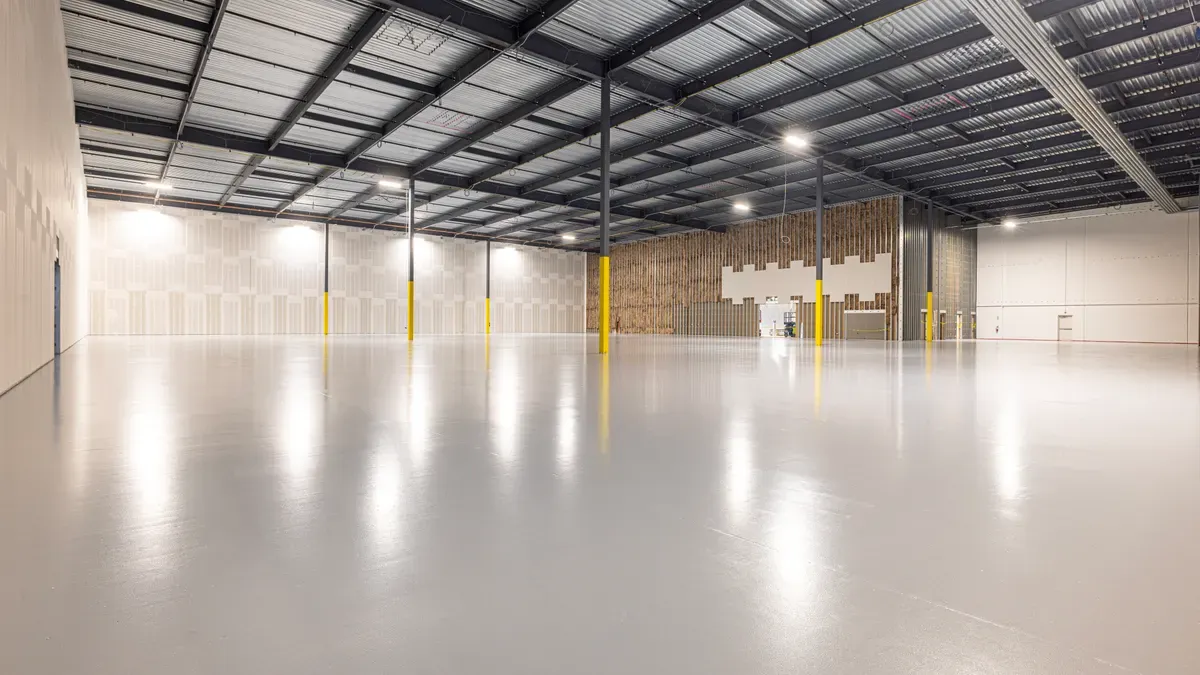
What Are Floor Hardeners
Concrete floor hardeners are typically milky white liquids. They penetrate cement-based floors. These hardeners react rapidly with ions within the concrete. This process promotes a re-hydration heat reaction. It establishes a three-dimensional network structure. This increases the overall supporting strength of your floor.
Here is how the chemical reaction works:
Chemical Activation: Water-dissolved hardener chemicals interact with the calcium carbonate (lime) inside the concrete. This produces a C-S-H gel rich in silicate ions.
Deep Hardening & Pore Sealing: This gel acts as a catalytic agent. It drives deeper hardening reactions. It thoroughly fills micro-pores near the surface. This creates a solid, wear-resistant outer shell.
These hardeners are water-soluble inorganic compounds. They meet today’s demands for environment, health, and safety. They provide a monolithic finish. This finish increases surface wear resistance and extends the lifespan of your concrete floor.
Typical concrete floor hardeners consist of these primary chemical and material constituents:
Cementitious base: Formulated using selected grade cement.
Polymers: Included to improve bonding, placing, and finishing performance.
Aggregates: Utilizes graded aggregates, including natural quartz, synthetic non-metallic minerals, or metallic alloys.
Performance Additives: Chemical additives designed to optimize strength and prevent organic contamination.
Reactive Compounds: Liquid variants chemically interact with free lime (calcium hydroxide) present in the concrete matrix to yield silica-based hardening compounds.
Benefits for Indian Industries
Using concrete hardeners offers significant advantages for your industrial facility in India. You gain substantial benefits in surface hardness, cost savings, and operational efficiency.
Metric / Area of Impact | Quantifiable Benefit / Savings |
|---|---|
Surface Hardness & Strength | Increases by 40% to 50% |
Overall Flooring Expenses | Decreases by 30% to 40% over a 10–15 year duration |
Maintenance & Repair Costs | Reduces expenditures by 60% to 70% |
Operational Downtime | Decreases by 80% |
Floor Longevity | Increases from 8–10 years to over 20 years |
Case Study (25,000 sq. ft. facility over 15 years) | Initial application costs ₹12/sq.ft (₹3 lakh total) versus conventional resurfacing at ₹30/sq.ft (₹22.5 lakh total), yielding net savings exceeding ₹15 lakh |
These hardeners significantly boost the durability of your floors. They reduce long-term expenses.
Common Misconceptions
Many buyers have misunderstandings about concrete hardeners. You should know the technical realities.
Misconception | Technical Reality |
|---|---|
1. Hardeners directly strengthen the tobermorite matrix | Chemical hardeners react with unbonded free calcium hydroxide rather than modifying the internal tobermorite gel structure. |
2. Application speeds up the concrete curing timeframe | Curing depends strictly on cement hydration over time; hardeners are applied post-curing to boost surface density and wear resistance. |
3. Hardening products can double as sealers or wall putty | Wall putties provide surface leveling for aesthetic finishes, whereas hardeners specifically densify horizontal concrete surfaces like floors. |
Understanding these points helps you make informed decisions about your flooring investment.
Types of Industrial Concrete Floor Hardeners in India
You encounter various types of industrial concrete floor hardeners in India. Each type offers distinct advantages for specific industrial environments. You must choose the right one for your facility.
Liquid Chemical Hardeners
Liquid chemical hardeners penetrate your concrete surface. They react with the free lime in the concrete. This reaction creates a denser, more durable surface. You apply these hardeners as a liquid, making their application straightforward. They enhance the abrasion resistance and overall strength of your floor.
Dry Shake Hardeners
Dry shake hardeners are cementitious powders you broadcast onto fresh concrete. These dry shake hardeners often offer a superior price-to-performance ratio for many industrial applications. They integrate into the top layer of the concrete, forming a dense, wear-resistant surface. You can apply dry shake hardeners using different methods:
Application Method | Timing of Application | Execution Details |
|---|---|---|
Hand Application | Executed after the concrete reaches its initial set and undergoing initial floating. | You spread it manually over the wet concrete surface, often in multiple passes. |
Mechanical Application | Executed right after concrete placement, prior to the initial set. | You apply it evenly using specialized mechanical spreading equipment. |
These dry shake hardeners significantly improve the surface durability of your industrial concrete floor.
Epoxy and Polyurethane Options
Epoxy and polyurethane coatings also serve as floor hardeners. They create a protective layer over your concrete. You find significant performance differences between these two options:
Performance Characteristic | Epoxy Coatings | Polyurethane (PU) Coatings |
|---|---|---|
Curing Time | Slower (24 to 72 hours) | Faster (12 to 24 hours) |
Flexibility & Hardness | Rigid, hard, high compressive strength, but can be brittle | Elastic, highly flexible, resilient to high impact |
UV Stability | Poor (prone to yellowing under sunlight) | High (UV resistant and weather-stable) |
Chemical Resistance | Strong resistance to general chemicals and oxidation | Excellent resistance to natural organic acids (e.g., lactic acid) |
Cost Efficiency | Lower price point; ideal for large-scale industrial spaces | Higher initial cost due to specialized performance traits |
Polyurethane’s higher elasticity makes it more resilient against physical abrasion and heavy traffic compared to rigid epoxy. PU coatings effectively endure natural organic chemicals like lactic acid. This makes them preferable for food and dairy processing facilities. The elastic nature of polyurethane also provides better walking comfort.
Metallic vs. Non-Metallic Formulations
You can choose between metallic and non-metallic formulations for your industrial concrete floor hardener india. Both provide high abrasion resistance and long-term durability. Metallic hardeners contain iron aggregates, offering extreme impact resistance. Non-metallic options use mineral aggregates like quartz or corundum. They provide excellent wear resistance without the risk of rust. You select based on your specific operational demands and environment.
Key Selection Criteria in India
You must carefully evaluate several factors when you select an industrial concrete floor hardener India. These factors ensure you choose the best solution for your facility. You need to consider traffic, chemicals, temperature, cost, and local support.
Traffic Intensity and Machinery Use
Consider the amount and type of traffic your floor will endure. Heavy forklift traffic in warehouses demands specific hardener types. You need a floor that resists constant wear and tear.
For areas with heavy forklift traffic, you have several options:
Dry Shake Surface Hardeners: These offer a cost-effective method. They boost surface abrasion resistance.
Chemical Hardeners: These liquid treatments enhance overall concrete floor density and durability.
High-Performance Coatings: You apply these to fulfill specific industrial application criteria. They mitigate heavy traffic wear.
You should also understand the hardness ratings of different floor treatments. This helps you make an informed decision:
Floor Treatment Type | Mohs Hardness Rating | Suitability for Forklift Use |
|---|---|---|
Standard Epoxy Coating | 1.5 – 2.5 | Low surface hardness; not ideal for heavy loads |
Polyurethane (PU) | 2.0 – 3.5 | Moderate protection; insufficient for intense traffic |
Base Concrete (M20/M25) + Standard Hardener | 3.0 – 4.5 | Basic resistance; prone to long-term wear |
M25/M30 Concrete + Specialized Odus Treatment | 5.0 – 7.5 | Recommended; achieves superior durability for heavy forklift operations |
You must ensure your base concrete meets specific strength requirements. Substrates must be at least M25 grade concrete. Lower grades fail under forklift loads. You should apply dry shake hardeners directly over the concrete layer. This prevents surface undulation and structural damage.
Chemical Exposure and Hygiene
Assess any chemical exposure your floor will face. Some industrial environments handle corrosive substances. You need hardeners that resist these chemicals. Consider hygiene requirements as well. Food processing plants or pharmaceutical facilities need floors that are easy to clean and sanitize. Your chosen hardener must support these strict hygiene standards.
Temperature Variations and Slab Specs
Temperature fluctuations affect your floor’s performance. Extreme heat or cold can impact the durability of some hardeners. You must choose a product that withstands your facility’s temperature range. Also, examine your existing concrete slab specifications. The condition and grade of your concrete influence the effectiveness of any hardener application. A strong base ensures the hardener performs optimally.
Cost-Effectiveness and Budget
Your budget plays a crucial role in your selection. You need to balance initial costs with long-term benefits. Consider the total cost of ownership, not just the purchase price.
Here are estimated costs for different flooring and hardener types in India:
Flooring / Hardener Type | Estimated Material/Installation Cost (per sq ft) |
|---|---|
Dry-Shake Floor Hardener (Smartop, Non-Metallic) | ₹8 – ₹18 |
Epoxy Coating | ₹60 – ₹120 (Material) / ₹100 – ₹200 (Installed) |
Polyurethane (PU) Resin Screed | ₹120 – ₹200 (Material) |
Dry shake hardeners often present a cost-effective solution. They provide excellent durability without a high price tag. You must evaluate the long-term savings from reduced maintenance and extended floor life.
Local Regulations and Support
You must comply with all local building codes and environmental regulations. These rules dictate the types of materials you can use. Choose a supplier who understands the Indian market. They can provide local support and technical assistance. This ensures proper application and compliance.
Evaluating Hardener Performance
You must thoroughly evaluate hardener performance. This ensures your industrial concrete floor hardener India meets your operational demands. Heavy-duty industrial floor hardeners with high abrasion resistance are crucial for high-traffic areas. These include warehouses, factories, and commercial spaces.
Abrasion and Impact Resistance
Your floor must withstand constant wear. Abrasion resistance measures how well your concrete surface resists rubbing, scraping, and erosion. Impact resistance shows how well it handles sudden blows or dropped objects. You need hardeners that significantly boost both.
Consider the Mohs hardness scale. This scale helps you compare material hardness. A higher Mohs rating means greater resistance to scratching and abrasion. Many hardeners increase the surface hardness of your concrete. This makes your floor more durable. For example, dry shake hardeners integrate into the top layer. They create a very dense, wear-resistant surface. This enhances the overall durability of your industrial floor.
Chemical Resistance
Industrial environments often expose floors to various chemicals. You need a hardener that protects your concrete from spills and corrosive substances. Evaluate the specific chemicals present in your facility. Then, choose a hardener designed to resist those chemicals. Some hardeners create a barrier. This barrier prevents chemicals from penetrating the concrete. This protects the underlying structure and maintains a high quality work surface.
For instance, certain liquid hardeners chemically react with the concrete. They form a denser, less porous surface. This reduces the concrete’s susceptibility to chemical attack. Always check the hardener’s chemical resistance chart. This chart shows its performance against acids, alkalis, and solvents.
Slip Resistance Standards
Safety is paramount in any industrial setting. A slippery floor poses a significant hazard. You must ensure your hardener contributes to a slip resistant floor. Evaluate the coefficient of friction (COF) for the treated surface. A higher COF indicates better slip resistance.
Many hardeners can be formulated or applied to achieve improved traction safety. You can add aggregates to dry shake hardeners. These aggregates create a textured surface. This texture increases grip, even when wet. Always verify that the chosen hardener meets relevant safety standards for slip resistance. This protects your workers and prevents accidents.
Aesthetic Finish Options
While performance is key, the appearance of your floor also matters. Hardeners offer various aesthetic finish options. You can achieve different looks depending on your preference.
Some hardeners provide a natural, polished concrete look. Others allow for integral coloring. This means you can add color directly to the hardener mix. This creates a vibrant, uniform floor. You can also choose between matte, satin, or high-gloss finishes. A high-gloss finish reflects light. This brightens your space and improves visibility. Consider how the finish will complement your facility’s overall design. The right aesthetic can enhance your industrial environment.
Application Best Practices
Surface Preparation
You must start with a meticulously clean concrete surface. Remove all dirt, oil, grease, and loose debris. This ensures proper adhesion and deep penetration of the hardener. A clean surface is absolutely crucial for achieving a quality finish. Any contaminants can hinder the hardener’s effectiveness.
Proper Application Techniques
For liquid chemical hardeners, ensure the concrete surface is completely clean and clear of debris prior to treatment. Spread the liquid chemical hardener uniformly across the entire floor surface. Permit adequate time for the solution to deeply penetrate and complete its chemical reaction with the concrete. Put down extra layers of hardener on areas designated for heavy or high-volume traffic if necessary. Seek professional advice from local material suppliers regarding tailored application methods for specific site conditions. For dry shake hardeners, you broadcast them evenly onto fresh concrete. This ensures uniform coverage and integration. You must time this application correctly, usually when the concrete can bear foot traffic. Applying dry shake hardeners requires skill for an even finish.
Curing and Post-Care
After application, allow the hardeners to cure properly. Follow the manufacturer’s specific guidelines for curing times. Protect the treated concrete from heavy traffic or chemical spills during this critical period. Proper post-care ensures maximum durability and performance from your hardeners.
Common Installation Challenges
You might face challenges like uneven application or improper surface preparation. These issues can lead to inconsistent results, such as patchy hardening or reduced wear resistance. Inadequate mixing of dry shake hardeners can also cause problems. Always address these challenges promptly. Consult experts if you encounter difficulties during the application process to maintain the integrity of your concrete floor.
Maintenance and Lifecycle Costs
Routine Cleaning and Upkeep
You must maintain your hardened industrial concrete floor. Regular cleaning extends its life. Sweep or vacuum the floor daily to remove loose dirt and debris. Use a neutral cleaner with water for mopping. This prevents buildup and preserves the hardener’s effectiveness. Proper upkeep ensures your floor retains its enhanced durability.
Repair and Restoration
You can address damage to your hardened concrete floor using various repair techniques. The method depends on the damage depth.
Shallow Repairs: For damage 1/4 to 2 inches deep, use polymer-modified mortars or specialized cementitious repair mortars.
Deep Repairs: For damage 3 inches or deeper, replacement concrete or shotcrete works best. You often integrate these with anchored reinforcement.
Crack Remediation: Resin injection or crack stitching with steel bars bonded by epoxy can fix cracks. These methods restore the floor’s integrity. They ensure continued performance after the initial hardener application.
Warranty and Service Agreements
Always check the warranty offered by the hardener manufacturer. A good warranty protects your investment. Understand what the warranty covers and its duration. Inquire about service agreements. These agreements can provide ongoing maintenance support. They ensure your floor maintains its quality over time.
Total Cost of Ownership
Consider the total cost of ownership, not just the initial purchase price. A high-performance hardener reduces long-term expenses. You save money on repairs and frequent replacements. This makes the initial investment in a concrete hardener a smart financial decision. It provides lasting durability for your facility.
A well-chosen industrial concrete floor hardener India is a strategic investment. You balance performance, cost, and application specifics. Use this guide to confidently select a solution. This meets your unique industrial demands and ensures long-term operational success.
FAQ
What is the main difference between liquid and dry shake hardeners?
Liquid hardeners penetrate existing concrete. Dry shake hardeners are broadcast onto fresh concrete. Both increase surface durability and wear resistance.
How often do I need to reapply a concrete floor hardener?
You typically apply concrete floor hardeners once. They create a permanent bond with your concrete. Proper maintenance ensures long-lasting performance.
Can I use floor hardeners on old concrete?
Yes, you can use liquid chemical hardeners on old concrete. Ensure the surface is clean and structurally sound for optimal results.
See Also
How To Choose The Ideal Concrete Floor Hardener In 2025
Top Concrete Floor Hardening Solutions For Modern Industrial Warehouses Today
Discover The Top Five Concrete Floor Hardeners For Industrial Facilities
The Ultimate Buyer Guide For Concrete Densifiers Hardeners And Sealers
Essential Guide To Protecting Industrial Floors With Quality Concrete Sealers
