


Ingredient transparency plays a crucial role in your decision-making process regarding low VOC interior wall paint in the UK. Understanding the components of these products helps you avoid potential health risks, such as headaches, respiratory irritation, and even long-term damage to organs. Additionally, low VOC interior wall paint in the UK significantly reduces environmental harm, contributing to cleaner air quality.
Key Takeaways
Ingredient transparency in paints helps you make informed choices, reducing exposure to harmful substances.
Choosing low-VOC paints improves indoor air quality, leading to fewer health issues like headaches and respiratory problems.
Look for eco-friendly certifications like Greenguard Gold to ensure the safety and environmental impact of your paint choices.
What are VOCs?
Volatile organic compounds, commonly known as VOCs, are organic chemicals that easily evaporate at room temperature. They play a significant role in indoor air quality, especially in commercial spaces where paints and coatings are frequently used.
Health Effects of VOCs
Exposure to VOCs can lead to various health issues. Short-term effects include irritation of the eyes, nose, and throat, headaches, and dizziness. Long-term exposure poses more serious risks, such as asthma, liver damage, and even certain cancers. The table below summarises these effects:
Short-term side effects | Long-term side effects |
|---|---|
Headaches | Asthma |
Dizziness | Kidney damage |
ENT irritation | Liver damage |
Nausea | Cancer |
Fatigue | Chronic headaches |
High concentrations of VOCs often occur during activities like painting, where indoor levels can be 2 to 5 times higher than outdoor levels. This increase contributes to poor air quality, making it essential to choose environmentally friendly paint options.
Environmental Impact of VOCs
VOCs not only affect human health but also contribute to air pollution. When released from products like paints, they can react with other pollutants to form ground-level ozone, a key component of smog. This reaction can harm both indoor and outdoor environments. The EPA’s studies indicate that indoor VOC levels can reach alarming heights, sometimes up to 1,000 times higher during painting activities.
Understanding the implications of VOCs helps you make informed choices about the products you use in your commercial spaces. Opting for low-VOC or VOC-free paints can significantly improve air quality and promote a healthier environment.
Benefits of Low-VOC Paints

Low-VOC paints offer numerous advantages that make them an excellent choice for commercial spaces. By opting for these eco-friendly options, you contribute to a healthier environment for everyone.
Eco-Friendly Options
Choosing low-VOC paints aligns with sustainability goals. These paints significantly reduce harmful emissions, which is crucial for improving air quality in commercial properties. Here are some key benefits of using eco-friendly paints:
They support healthier living and working environments.
Compliance with environmental regulations like BREEAM and the EU Ecolabel enhances the sustainability profile of property owners.
Low-VOC paints contribute to a reduction in greenhouse gas emissions, helping combat climate change.
In commercial spaces, measurable improvements in indoor air quality have been observed after using low-VOC paints. For instance, studies show a 25% reduction in student respiratory complaints and a 60% decrease in patient complaints. VOC levels can return to baseline within 48-72 hours after application, while formaldehyde levels drop by 70-80%. These statistics highlight the effectiveness of low-VOC paints in creating healthier indoor environments.
Non-Toxic Characteristics
Low-VOC paints are not only eco-friendly but also non-toxic. This characteristic makes them safe for use in various settings, including schools, hospitals, and offices. You can rest assured that these paints do not emit harmful fumes that can affect your health.
Recognised eco-friendly certifications for low-VOC paints in the UK include:
EU Ecolabel
These certifications ensure that the products meet strict safety and environmental standards. By choosing non-toxic paints, you protect not only your health but also the well-being of those who occupy the space.
Ingredient Transparency in Paints
Ingredient transparency in paints means that manufacturers openly share the components of their products. This practice includes detailing potential effects on health and the environment. You can think of it like food labels that display nutritional information. Knowing what goes into your paint helps you make informed choices, especially when selecting eco-friendly options.
Importance for Health and Safety
Understanding the ingredients in paints is crucial for your health and safety. Many traditional paints contain harmful VOCs that can lead to serious health issues. By choosing paints with transparent ingredient lists, you reduce your exposure to these harmful substances. This awareness empowers you to select minimal VOC options that promote better indoor air quality.
Regulatory Standards in the UK
In the UK, paint manufacturers must comply with VOC content standards set by the EU Paints Directive. This regulation mandates that VOC levels remain below specific thresholds based on the type of paint. Such standards reflect the UK’s commitment to environmental health. They align closely with EU regulations, ensuring that you can trust the safety of the products you choose. While the UK standards do not directly compare to those in the US, they still prioritise consumer safety and environmental protection.
By prioritising ingredient transparency, you contribute to a healthier environment in your commercial spaces.
Choosing Low VOC Interior Wall Paint in the UK

Selecting the right low VOC interior wall paint in the UK requires careful consideration. You want to ensure that your choice aligns with health, safety, and aesthetic needs. Here are some practical tips to guide you through the selection process.
Identifying Low-VOC Labels
When shopping for low-VOC paints, look for specific labels that indicate reduced emissions. Here are key factors to consider:
VOC Content: Choose paints with emissions below 50 grams per litre to minimise pollution.
Certifications: Seek out environmental certifications that validate the product’s green claims. Labels like Greenguard Gold or EU Ecolabel can provide assurance.
Colour Options: Ensure the brand offers a variety of colours to meet your design needs. A wide selection allows you to maintain your aesthetic vision.
Finish: Decide on the desired finish (matte, satin, gloss) for your project. The finish can significantly affect the overall look and feel of the space.
Application: Be aware that some low-VOC paints may require specific application techniques for optimal results. Always read the manufacturer’s instructions.
Researching Ingredients
Understanding the ingredients in your chosen paint is essential for making informed decisions. Here are some reliable methods for verifying the VOC content of interior wall paints in the UK market:
Parameter | Unit | Test Method | Date of Publication |
|---|---|---|---|
VOC content | g/l | ISO 11890-2 | 2006 |
VOC content | g/l | ISO 11890-1 | 2007 |
VOC content | g/l | ASTMD 2369 | 2003 |
These test methods provide a standardised way to measure VOC levels, ensuring that you choose paints that meet safety regulations. Always check the product specifications and safety data sheets for detailed information on the ingredients used.
By following these guidelines, you can confidently select low VOC interior wall paint in the UK that meets your health and environmental standards. Making informed choices not only benefits your immediate surroundings but also contributes to a healthier planet.
Case Studies of Low-VOC Implementation
Successful Projects
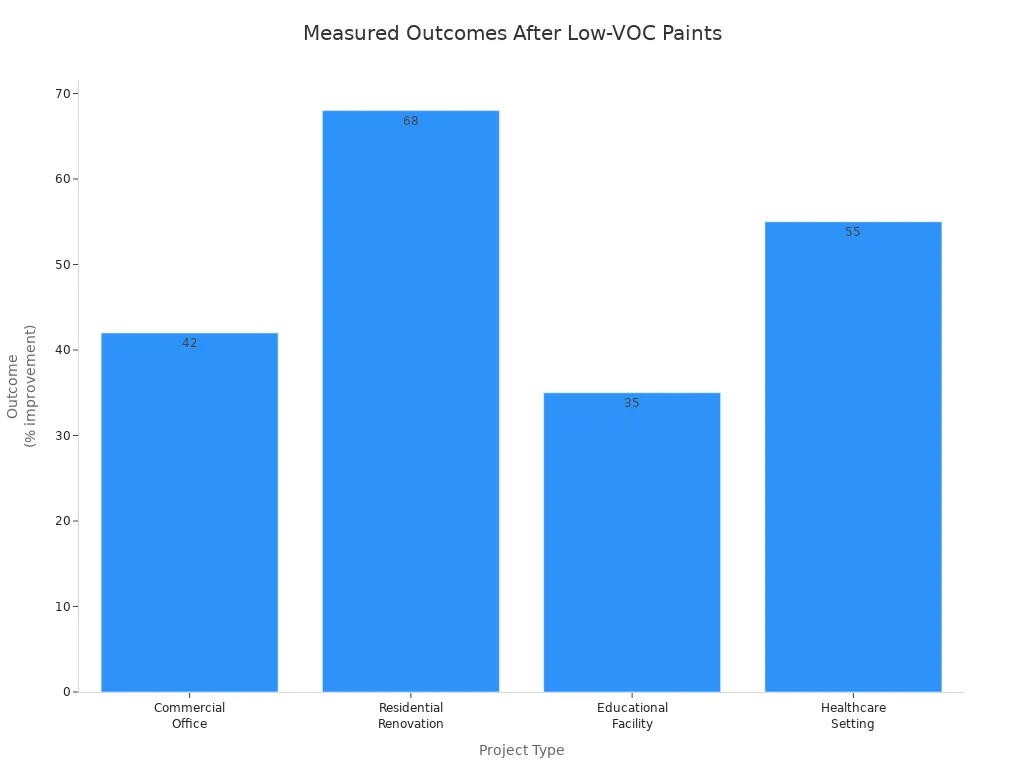
Several UK commercial spaces have successfully implemented low-VOC paints, yielding impressive results. The table below highlights some notable projects and their outcomes:
Project Type | Implementation Approach | Measured Outcomes | Occupant Feedback |
|---|---|---|---|
Commercial Office | Full interior low VOC paint specification | 42% reduction in VOC levels | 87% satisfaction rating |
Residential Renovation | Zero VOC paints in bedrooms and living areas | 68% fewer odour complaints | 93% would recommend |
Educational Facility | Low VOC paints with third-party certification | 35% reduction in sick days | Improved concentration reported |
Healthcare Setting | Hospital-grade low VOC specifications | 55% faster patient recovery perception | 94% staff approval |
Lessons Learned
From these case studies, several best practices have emerged for adopting low-VOC paints in commercial spaces:
Efficient Application Techniques: Prepare surfaces thoroughly, use high-efficiency tools, apply in thin layers, and allow proper drying time.
Responsible Waste Management: Recycle materials, dispose of hazardous waste properly, implement waste reduction strategies, and educate workers on waste management.
Improved Worker Safety: Using low-VOC coatings enhances indoor air quality and reduces health risks for workers, leading to fewer respiratory issues.
These insights can guide you in making informed decisions when specifying low-VOC paints for your own projects. By learning from successful implementations, you can create healthier environments in your commercial spaces.
Ingredient transparency plays a vital role in your choice of low-VOC paints. By understanding what goes into these products, you can significantly improve indoor air quality and promote a healthier environment.
Health and Environmental Benefits:
Health Benefits
Environmental Advantages
Improved Indoor Air Quality
Reduced Carbon Footprint
Reduced Allergy and Asthma Triggers
Lower Resource Consumption
Safer for Vulnerable Populations
Decreased Water Pollution
Fewer Headaches and Irritation
Sustainable Harvesting
Minimal Waste
As trends shift towards low-VOC paints, prioritising ingredient transparency becomes essential. This shift aligns with sustainability standards like WELL and LEED, ensuring you contribute to a healthier future.
FAQ
What are low-VOC paints?
Low-VOC paints contain fewer volatile organic compounds, making them safer for indoor air quality and better for the environment.
How can I identify low-VOC paints?
Look for labels indicating low-VOC content, such as certifications from Greenguard Gold or EU Ecolabel.
Why is ingredient transparency important?
Ingredient transparency helps you understand what’s in your paint, ensuring you make informed choices for health and safety.
See Also
Discovering Inorganic Anion Wall Paints For Healthier Homes
Comparing Inorganic And Organic Wall Coatings For 2025
The Rise Of Inorganic Seven-Colour Wall Coating In America
Exploring The Chemistry Behind Inorganic Anion Wall Paints
Utilising Inorganic Seven-Colour Wall Coating For Eco-Friendly Living
