


Inorganic pigments are colors that come from rocks or man-made materials that do not contain carbon. They are very important in paint mixes, doing more than just adding color. These pigments make paint strong and protect it. They are very different from organic pigments. Why are these simple inorganic materials so important for how paint works, how long it lasts, and even for things like “Inorganic negative ion dreaming paint”?
Key Takeaways
Inorganic pigments come from minerals and metals to make paint strong and long-lasting.
These strong colors keep surfaces safe. They stop bad UV light, heat, and rust.
Paint can hide things better than organic colors. This is because it can scatter light well.
What Are Inorganic Pigments?
Defining Inorganic Pigments
Inorganic pigments are colorants that come mainly from mineral compounds, metal oxides, or other inorganic chemical structures. They do not dissolve in the paint. Instead, they remain as solid particles spread throughout the paint. Paint industry standards define inorganic pigments as colorants made of mineral-based compounds. They often consist of metal oxides or sulfides. Examples include titanium dioxide (TiO2), iron oxides (Fe2O3), and chromium compounds (Cr2O3). These examples show their non-carbon-based chemical formulas.
These pigments offer several key properties important in paint chemistry. They provide high opacity, strong weather resistance, excellent heat stability, and chemical resistance. They also give long-term color durability. These properties make them useful in demanding outdoor and industrial settings where paint needs to last a long time. Inorganic pigments differ from organic pigments. Organic pigments are carbon-based. Inorganic pigments typically contain metals. They are either mined from the earth or created in a lab using metallic compounds. They are usually opaque, dense, heavy, and very permanent.
Types of Inorganic Pigments
Inorganic pigments come from two main sources: natural minerals or synthetic processes. Natural inorganic pigments, often called earth colors, come directly from the earth. These include various minerals. For example, hematite provides red, limonite gives yellow to brown, and magnetite offers black. Calcite and gypsum are white minerals. Azurite is blue, and malachite is green. Cinnabar is a red mineral, while realgar is red-orange, and orpiment is yellow. Lazurite is another blue mineral. Rutile and baryte are white.
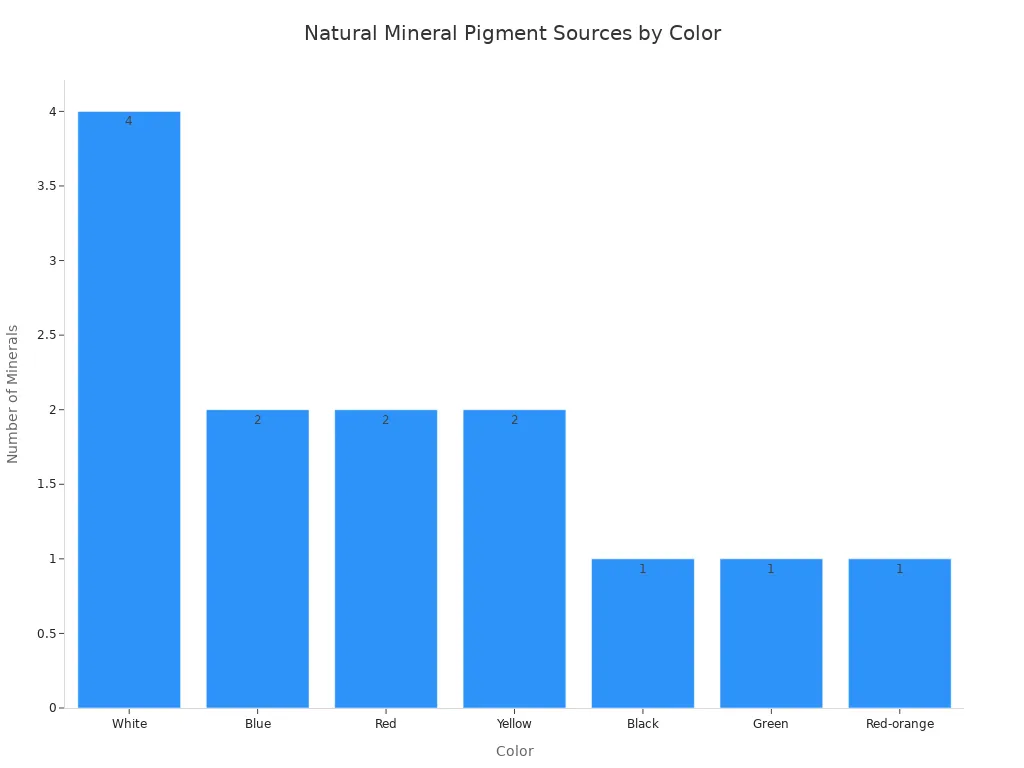
Oxides and oxide hydroxides like hematite (red) and limonite (yellow-brown) are common earth colors. Carbonates such as calcite (white), azurite (blue), and malachite (green) also serve as natural pigments. Sulfides like cinnabar (red) and silicates like lazurite (blue) are other examples.
Synthetic inorganic pigments are made through chemical manufacturing. This process does not involve grinding and washing clays or minerals directly from the earth. For example, making cobalt blue pigment involves several steps. First, cobalt oxide and high-purity aluminum oxide are weighed and mixed. Then, the mixed materials are milled to improve particle contact. Next, the mixture is heated to about 1,000–1,400°C. During this calcination, solid-state reactions happen between the metal oxides. This forms the stable cobalt aluminate spinel crystal structure (CoAl₂O₄). After heating, the product is crushed, milled, and sorted to get the right particle size. This process creates pigments with specific properties and high durability.
Common inorganic pigments include titanium dioxide, lithopone, iron oxide, and carbon black. Titanium dioxide is the most important white pigment. It has excellent optical properties like gloss, whiteness, and hiding power. It is a stable compound. Lithopone, a mix of barium sulfate and zinc sulfide, offers good whiteness and strong hiding power. Iron oxides are known for their low cost, non-toxicity, and weather resistance. They come in red, yellow, and black. Carbon black, mainly carbon, has strong tinting strength and absorbs UV light. These pigments are crucial for the durability and performance of paint.
Crucial Functions of Inorganic Pigments in Paint
Durability and Protection Benefits
Inorganic pigments offer essential functional properties beyond just color. They provide excellent opacity, durability, and strong resistance to weathering. These pigments act as insoluble colorant particles embedded within a binder substrate. They color, protect, and form the protective layer of paints and coatings. For instance, anticorrosive pigments like Nubirox specifically inhibit corrosion in protective coatings for metals. Other functional pigments, such as Cool Colors®, reflect solar heat and near-infrared (NIR) light. This functionality reduces energy consumption for cooling and extends the service life of roof coatings. These roles go far beyond simple coloration.
The durability of inorganic mineral oxide pigments comes from their stable crystal lattice structure. UV energy finds it difficult to break this structure, preventing photodegradation. These pigments absorb and scatter UV light instead of being damaged by it. Their larger particle sizes also reduce surface area exposure. This chemical inertness means they do not react with acids, alkalis, or pollutants. They are also hydrophobic, preventing leaching from moisture. The Jupiter Inlet Lighthouse, painted with red oxide in 1905, needed only three repaints in over a century. This proves these pigments provide exceptional weather resistance and color retention for exterior paints. They offer high heat fastness, light and weather resistance, and chemical resistance. For color stability, experts recommend coatings formulated with UV-stable inorganic pigments. Organic pigments are generally less UV-stable and fade faster when exposed to ultraviolet (UV) light. This makes inorganic pigments vital for long-lasting color and performance.
Inorganic pigments also play a key role in preventing corrosion on metal surfaces. Zinc oxide acts as a sacrificial anode, corroding first to protect the metal. It forms a protective barrier, making it effective in marine and harsh environments. Other anticorrosive pigments, like zinc phosphate, form a passivating layer on the metal surface. This layer blocks corrosive agents from reaching the substrate. Silicates, phosphates, borates, and vanadates are increasingly used as nonchromate inhibitors. They often combine with organic corrosion inhibitors to achieve optimal coating performance. This contributes to what might be considered “inorganic negative ion dreaming paint” properties of superior longevity and performance.
Opacity and Stability of Pigments
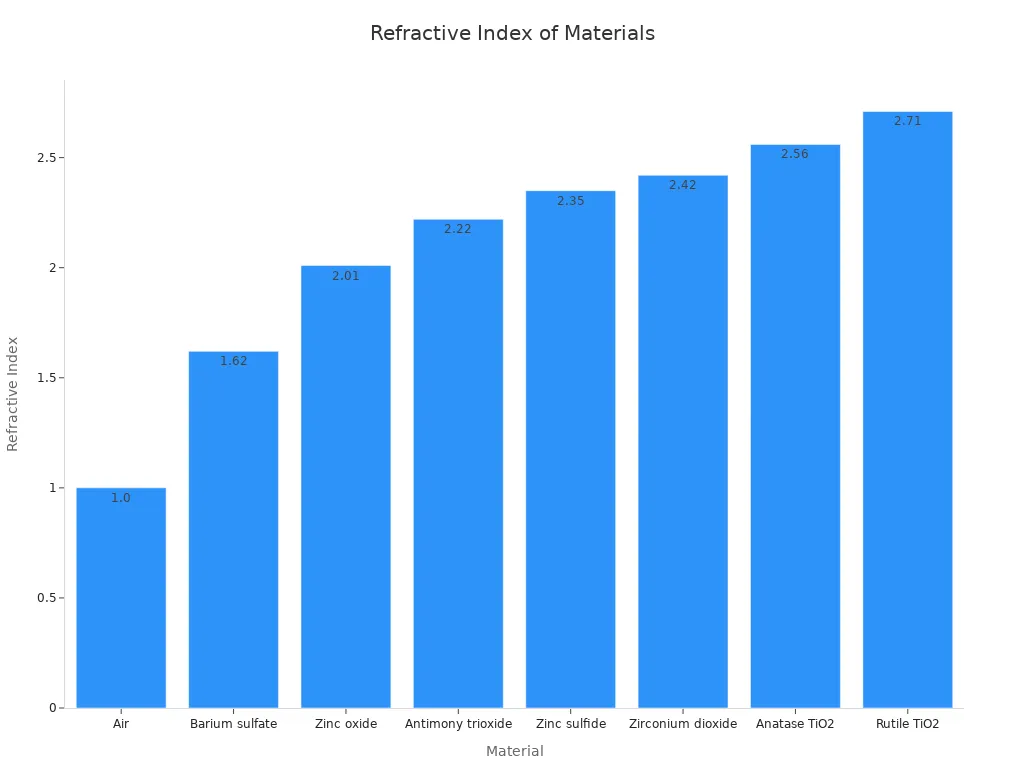
The choice and performance of the inorganic pigment component directly influence whether a protective colored coating is enhanced or degraded. Inorganic pigments provide excellent hiding power and opacity. The opacity of paint depends mainly on the difference in refractive indices between the pigment and the binding medium. All inorganic pigments have high refractive indices, giving paint high opacity. For white pigments, hiding power relies entirely on light scattering. A higher pigment refractive index relative to the medium means greater scattering and higher opacity. Rutile titanium dioxide (TiO2) has a refractive index of 2.71, while resins are typically 1.5–1.6. This large difference causes strong light scattering, leading to high opacity.
The stability of inorganic pigments is also crucial. Factors affecting stability include light exposure, moisture, temperature fluctuations, and chemical pollutants. Pigments lacking lightfastness fade over time. Sensitive pigments may swell or react with moisture. Temperature changes can cause cracking or peeling. Environmental chemicals can degrade pigments. Iron oxide and chromium oxide green show excellent lightfastness and chemical resistance. Titanium dioxide offers excellent UV resistance and good thermal stability. Optimal opacity for titanium dioxide occurs when particle size is between 0.2–0.3 microns. Oversized particles lead to poor hiding and reduced gloss. Undersized particles increase transparency. Proper dispersion control is essential. Insufficient grinding leaves large particles, while excessive grinding creates overly fine particles, both reducing hiding power. This careful balance ensures the paint’s durability and aesthetic quality.
Inorganic vs. Organic Pigments
Key Differences in Paint Performance
Inorganic and organic pigments act differently in paint. Organic pigments give many bright, glowing colors. They also have strong tinting power. But they do not hold up as well to light, heat, and weather. Organic pigments have carbon in their makeup. They usually make brighter and richer colors. Still, they fade or break down more easily when hit by sunlight and strong chemicals.
On the other hand, inorganic pigments have fewer colors, often earth tones and shiny metal colors. They cover well and are not see-through. These pigments are very strong and stand up well to high heat, light, weather, and chemicals. Inorganic pigments have metals in them. They are solid, heavy, and last forever. Their strength and lasting power make them great for jobs needing colors that last a long time and can handle bad weather.
Best Applications for Each Pigment Type
Each pigment type works best for certain jobs because of its special traits. Inorganic pigments are best for jobs that need to be strong and stand up to nature. They can handle heat, so they are good for whole buildings and places that get a lot of sun. Their great resistance to UV light and chemicals makes a finish that lasts a long time. So, things like factory machines, outside walls, roads, building stuff, and business signs often use inorganic pigments.
Organic pigments are known for not fading in light, being clear, and having pure colors. They are good for different jobs. Their bright colors make them good for art and outdoor uses where bright color is important. Companies use organic pigments in car paints for their bright, pure colors. They are also in paints for inside furniture and design, plastics, color mixes, printing inks, and powder coatings. These jobs get a lot from the bright and lively colors that organic pigments offer.
Inorganic pigments are mineral-based colorants crucial for paint. They offer diverse functions, enhancing aesthetic appeal, protective qualities, and longevity. Their unique durability, UV resistance, thermal stability, and opacity make them foundational to modern paint technology. These pigments, unlike organic pigments, remain vital for paint innovation and formulation.
FAQ
What makes inorganic pigments durable?
Their strong crystal shape stops UV light and chemicals from harming them. They take in and spread out UV light. This keeps them from breaking down. This makes sure colors last and protect surfaces for a long time.
How do pigments provide opacity?
They have high refractive indexes. This makes light bounce around a lot inside the paint. This gives paint great hiding power and coverage.
Are these pigments safe to use?
Many pigments are not harmful and are safe. Iron oxides are a good example. Always look at the safety information for each product.
See Also
Discovering How Science Powers Inorganic Anion Wall Paints In 2025
Comparing Inorganic And Organic Wall Coatings For A Modern Home
Creating Healthier Living Spaces With Inorganic Anion Paints This Year
Why American Homeowners Are Choosing Seven-Color Inorganic Wall Coatings Today
Applying Seven-Color Inorganic Wall Coatings For Sustainable Healthy Interiors
