


Concrete hardeners critically enhance the durability and long-term durability of your projects in South Africa. Choosing the right hardener is essential for optimal performance and cost-effectiveness. This guide helps you navigate diverse concrete hardener options, enabling informed decisions for your specific private label concrete hardener south africa needs. You will find the best solution for your concrete.
Key Takeaways
Concrete hardeners boost floor strength, block chemical damage, and protect your long-term investment.
Dry shake hardeners provide heavy-duty strength, while liquid hardeners penetrate deep to stop surface dust.
Matching your hardener choice to your traffic load and budget ensures the best long-term results.
Understanding Concrete Hardeners
What Are Concrete Hardeners
Concrete hardeners are materials you apply to concrete to improve its strength and durability. Chemical concrete hardeners seep into the pore structure. They interact with existing hydration byproducts. This generates insoluble crystalline structures. These structures seal voids and increase surface density. Concrete hardens and builds structural strength through continuous hydration. This process involves water chemically reacting with cement components. It forms durable chemical bonds. Mixing cement with water triggers hydration. This is the core chemical reaction for hardening and long-term strength. Calcium Silicate Hydrate (C-S-H) acts as the primary strength-bearing compound. It develops a compact structural matrix. This matrix adheres aggregates together. Calcium Hydroxide (CH) is a byproduct during the cement-water reaction.
Why Harden Concrete Floors in SA
Hardeners are crucial for concrete floors in South Africa. They significantly enhance the durability and longevity of your concrete floors. Hardened floors resist abrasion, impact, and chemical attack better. This is vital for high-traffic areas in industrial or commercial settings. You protect your investment by hardening your floors. This ensures better performance and reduces maintenance costs over time.
Hardener vs. Densifier: Key Differences
You might confuse hardeners with densifiers, but they serve different primary functions. Liquid concrete densifiers primarily densify the existing concrete surface. They penetrate the concrete and react chemically to fill pores. Densifiers do not increase the baseline design strength of the concrete. Dry-shake floor hardeners, however, create a heavy-duty wearing surface layer. They significantly boost surface strength. For example, they can form a 60MPa wearing layer on 30MPa concrete. You choose a hardener when you need a substantial increase in surface strength and wear resistance. You choose a densifier for surface hardening and dust-proofing without a major strength upgrade.
Types of Concrete Hardeners
You have several excellent options when selecting concrete hardeners for your project. Each type offers distinct advantages. Understanding these categories helps you make an informed choice for your specific needs.
Dry Shake Hardener Options
You can apply dry shake hardeners to fresh concrete surfaces. Workers broadcast these powdered materials onto the wet slab. They then trowel them into the surface. Dry shake hardeners create a dense, abrasion-resistant layer. These hardeners often contain specialized aggregates and pigments. They enhance both the durability and aesthetic appearance of your concrete floor. You will find dry shake hardeners ideal for high-traffic areas needing extra wear protection and a colored finish.
Liquid Chemical Hardeners
Liquid chemical hardeners penetrate the concrete surface. These hardeners react chemically with the concrete’s components. For example, a milky white liquid hardener penetrates the cement base. It reacts rapidly with ions within the concrete, promoting re-hydration. This establishes a three-dimensional network structure. This process increases the overall supporting strength of the floor. These water-soluble inorganic compound hardeners meet today’s environmental demands. You apply liquid hardeners to existing or new concrete, improving its surface integrity.
Specialized Hardener Solutions
Sometimes, your project requires more than standard hardeners. Specialized hardener solutions address unique challenges. These solutions are most effective for:
Industrial and commercial spaces, such as factories and warehouses, demand durable, non-dusting flooring.
High-requirement areas prioritize hard, abrasion-resistant, and dust-free concrete surfaces.
Diverse climates and locations, including both indoor and outdoor concrete floor surfaces. These specialized options ensure the highest quality and performance for your specific concrete needs.
Dry Shake Hardeners: Benefits & Use
Dry Shake Composition & Application
Dry shake hardeners are pre-blended factory mixtures. They contain a cement-based binder, mineral or metallic aggregates, concrete admixtures, specialized additives, and optional mineral pigments. You cast these dry powders onto newly poured concrete surfaces. This happens right after initial screeding and floating. You apply them manually or mechanically. Typically, you split the application into two stages for dry shake hardeners. You broadcast 67% initially, then the final 33%. Then, you float and trowel them into the surface. You do not introduce extra water during this application. This method ensures the dry shake hardeners integrate properly with the fresh concrete.
Advantages for SA Concrete Floors
Dry shake hardeners offer significant advantages for your concrete projects in South Africa. They create a dense, highly durable surface. This greatly improves wear resistance. Your concrete will withstand heavy traffic and impact better. This enhances the overall performance of your concrete. Pigmented dry shake hardeners also provide aesthetic benefits. They give you a colored, attractive finish. This makes them ideal for industrial and commercial concrete surfaces needing both strength and visual appeal. You get a long-lasting, robust surface. You can also achieve a slip resistant floor with certain formulations.
Limitations & Considerations
While beneficial, dry shake hardeners have some considerations. For pigmented dry-shake hardeners, you typically need a minimum application rate of 6 kg/m². Higher application rates may require water adjustments in your concrete mix. This ensures proper integration and curing. The application process demands skill and precise timing. Improper application can lead to an uneven finish or reduced performance. You must ensure consistent broadcasting and troweling for optimal results. Consider these factors when planning your project.
Liquid Chemical Hardeners Explained
You have many options for concrete liquid hardeners. These products penetrate the concrete surface. They react chemically with the concrete’s components. A milky white liquid hardener, for example, penetrates the cement base. It reacts rapidly with ions within the concrete. This promotes re-hydration. It establishes a three-dimensional network structure. This process increases the overall supporting strength of the floor. These water-soluble inorganic compound liquid hardeners meet today’s environmental demands for health and safety.
Silicate-Based Hardeners
Silicate-siliconate formulations seep into the concrete matrix. They directly improve its overall surface density, long-term durability, and resistance to physical abrasion. Lithium silicate compounds soak into the concrete matrix. They trigger a chemical reaction that generates highly durable crystals. This crystalline formation creates a micropore-filling effect directly within the concrete’s surface layer. The active silicate constituent penetrates deep into the concrete’s texture. It starts a chemical process. This results in reaction products that crystallize and effectively block the surface pores. Application of liquid silicate treatments allows deep penetration into the concrete texture. It instigates chemical reactions and subsequent product crystallization. This seals internal void spaces.
Colloidal Silica Hardeners
Colloidal silica hardeners use amorphous silicon dioxide particles. These particles are under 100 nanometers. They are suspended in water. Their ultra-small nano-size provides higher reactivity. They react in pore spaces to produce extra Calcium-Silicate-Hydrate (C-S-H). This densifies the internal structure. You will see decreased 28-day drying shrinkage by 40%–60%. These liquid hardeners increase surface abrasion resistance. They permanently waterproof against hydrostatic pressure. They also block contaminants.
Acrylic & Epoxy Hardeners
Acrylic and epoxy hardeners form a protective layer on the concrete. Acrylic liquid hardeners offer good dust-proofing and a slight sheen. Epoxy hardeners create a very tough, chemical-resistant finish. You use these for specific performance needs.
Liquid Hardener Pros & Cons
Liquid hardeners offer many benefits. They are easy to apply. They improve concrete strength and durability. They also provide environmental advantages. However, you must ensure proper surface preparation for optimal performance.
Choosing the Right Hardener for Your SA Project
Selecting the correct concrete hardener for your South African project requires careful consideration. You must evaluate several factors. These factors ensure you achieve the best results for your investment.
Project Type & Traffic Load
Your project’s purpose and expected traffic significantly influence your hardener choice. Consider the type of traffic your concrete will endure.
Light Traffic: Residential garages or light commercial spaces might benefit from basic liquid hardeners. These improve dust-proofing and abrasion resistance.
Medium Traffic: Retail stores or showrooms need more robust protection. You might consider silicate-based liquid hardeners. They offer enhanced wear resistance and a good aesthetic.
Heavy Traffic: Industrial warehouses, factories, or loading docks demand maximum protection. Here, dry shake hardeners provide superior impact and abrasion resistance. They create a high-performance concrete surface. You ensure long-term performance by matching the hardener to the traffic load.
Aesthetic Goals & Finish
The desired look of your concrete also plays a crucial role. Do you want a natural gray finish or a colored surface?
Natural Finish: Liquid hardeners typically maintain the natural appearance of the concrete. They can enhance its sheen, especially with polishing.
Colored Finish: Dry shake hardeners offer a wide range of colors. You can achieve a decorative and highly durable surface. This option allows you to integrate branding or design elements directly into the floor.
Polished Look: Both dry shake hardeners and liquid hardeners can be part of a polished concrete system. They contribute to a smooth, reflective surface. You achieve both beauty and strength.
Budget & Cost-Effectiveness
Your budget is always a key factor. However, consider long-term cost-effectiveness, not just initial outlay.
Initial Cost: Dry shake hardeners often have a higher upfront material cost. Liquid hardeners might seem more economical initially.
Long-Term Savings: Hardeners reduce maintenance and repair costs over the lifespan of your concrete floors. They prevent dusting, chipping, and wear. A higher quality hardener can extend the life of your floor by decades. This provides significant savings in the long run. You invest in quality now to avoid costly repairs later.
Sourcing Private Label Concrete Hardener
Sourcing a private label concrete hardener in South Africa offers unique advantages. You can customize products to meet specific project requirements. This allows for tailored solutions. You also build your brand identity. Look for suppliers who offer a private label concrete hardener South Africa program. They should provide consistent quality and technical support. A reliable partner ensures you receive a high quality work surface product. This product meets local standards and your specific needs. Choosing a private label concrete hardener South Africa supplier helps you maintain control over your product line. You also ensure consistent quality for your clients.
Environmental Factors & Regulations
Consider the environmental impact and local regulations when choosing hardeners.
Eco-Friendly Options: Many liquid hardeners are water-soluble inorganic compounds. They meet modern environmental, health, and safety standards. These options minimize volatile organic compounds (VOCs).
Local Regulations: South Africa has specific building codes and environmental guidelines. Ensure your chosen hardener complies with all relevant regulations. This includes proper disposal and application safety protocols. You prioritize both environmental responsibility and worker safety.
Application & Restoration of Concrete Floors
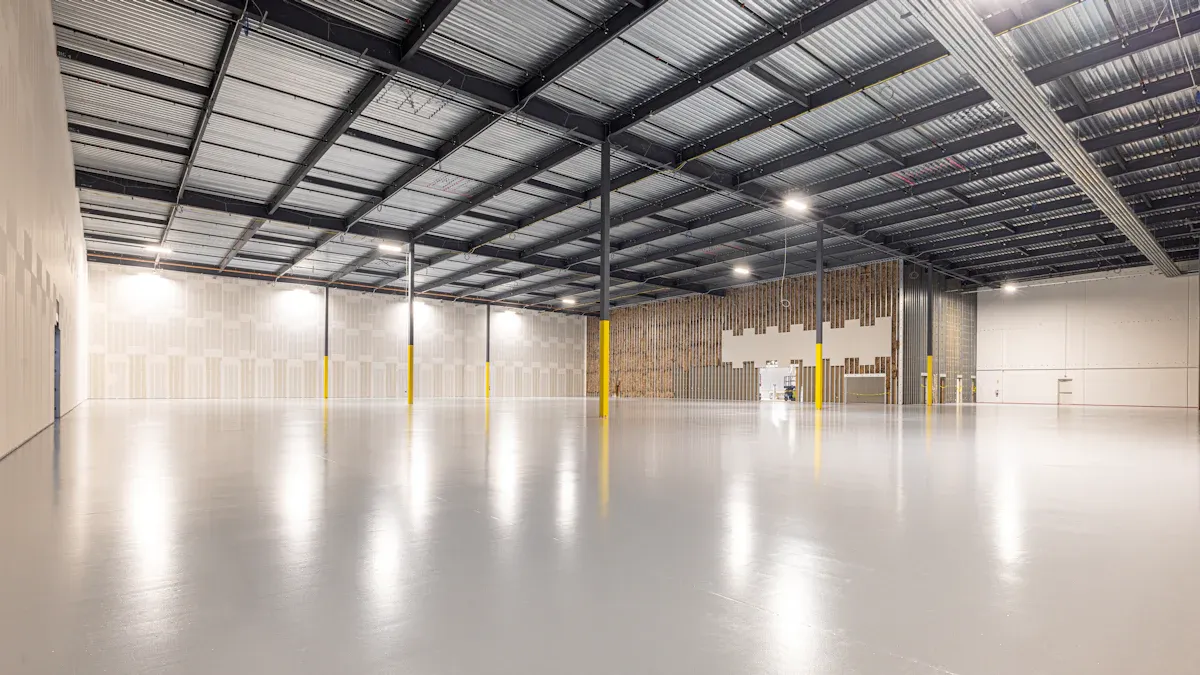
Surface Preparation Essentials
You must prepare your concrete surface properly before applying hardeners. This step ensures optimal adhesion and performance. First, remove any existing curing compounds, membrane sealers, or asphalt. This allows deep product penetration. For fresh concrete, finish the surface using tamping or power/manual floating. Then, wet-cure the substrate for at least 7 days with plastic sheets, water sprays, or blankets. For hardened or old concrete, thoroughly wash the surface using high-pressure washers or automatic scrubbers. Allow the washed substrate to dry completely. Vacuum or brush away all remaining dust, dirt, and loose particles before application. Before introducing a surface hardener during polishing, the concrete undergoes mechanical grinding. This involves an initial rough grinding process, typically three stages, using coarse metal-bond diamond segments. This eliminates surface blemishes, minor pits, and stains.
Proper Application Techniques
Correct application of hardeners is crucial for desired results. Always follow the manufacturer’s instructions for your specific product. Ensure even distribution across the entire concrete surface. For liquid hardeners, you typically spray or pour the product, then spread it with a broom or squeegee. Dry shake hardeners require broadcasting onto fresh concrete, followed by troweling. Proper application ensures the hardeners penetrate and react effectively with the concrete. This maximizes the durability and longevity of your concrete floors.
Curing & Maintenance
After hardener application, proper curing and maintenance are essential. Follow the manufacturer’s guidelines for curing times. This allows the hardener to fully react and strengthen the concrete. Regular cleaning helps maintain the integrity of the treated surface. Avoid harsh chemicals that could degrade the hardener’s performance. Consistent maintenance extends the life of your hardened concrete floors.
Restoring Damaged Concrete Floors
You can restore old or damaged concrete surfaces in South Africa with specialized hardeners. These solutions address brittle concrete affected by dampness, water ingress, or physical abrasion. Concrete Laser Flooring (CLF) offers lithium-based densifiers/hardeners. These provide an economical in-surface hardener, densifier, and sealer for industrial concrete floor applications. Renocrete resurfacing and repair systems provide colour hardener concrete finishes. These restore and enhance damaged concrete. Cretesol also supplies specialized concrete hardeners as part of their comprehensive concrete care, protection, and restoration product line. These products improve the surface integrity and extend the life of your existing concrete.
You must select the right concrete hardener for your South African projects. Your best choice depends on project specifics, desired outcomes, and local conditions. Consult reputable suppliers for private label concrete hardener south africa or concrete specialists. They ensure optimal results and longevity for your investment. This guarantees quality for your concrete with the right hardeners.
FAQ
What is the main benefit of using a concrete hardener?
You significantly increase your floor’s durability. Hardeners improve resistance to abrasion, impact, and chemicals. This extends your concrete surface’s lifespan.
Can I apply hardeners to old concrete?
Yes, you can. Many liquid chemical hardeners and specialized solutions work well on existing or damaged concrete. They restore and enhance its surface integrity.
How do I choose between dry shake and liquid hardeners?
Consider your project’s traffic load and aesthetic goals. Dry shakes offer superior wear resistance and color options for heavy traffic. Liquid hardeners provide good dust-proofing and maintain a natural look.
See Also
How To Pick The Best Concrete Floor Hardener In 2025
Ultimate 2025 Manual For Selecting Concrete Densifiers Hardeners And Sealers
The Complete 2025 BANDe Guide To Top Concrete Bonding Agents
An Essential Shopper Guide For Concrete Hardeners Densifiers And Sealers
Five Superior Industrial Concrete Floor Hardeners You Should Consider Buying
