

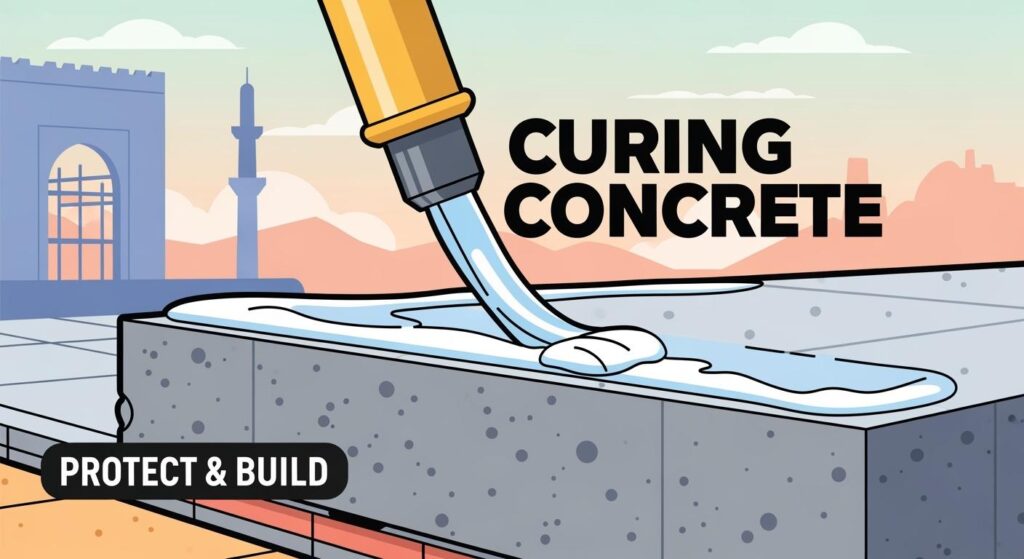
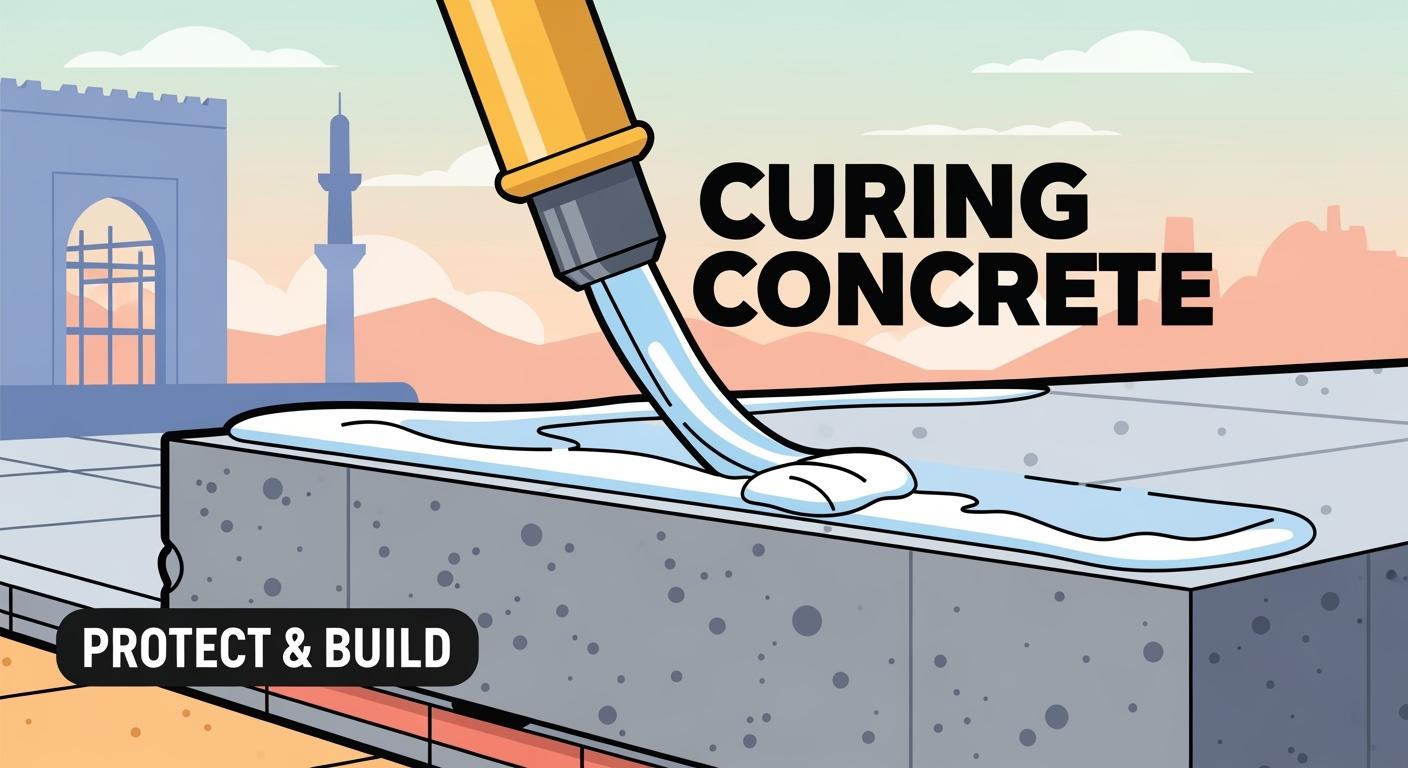
Concrete durability is crucial for successful, long-lasting construction projects in Saudi Arabia. Curing agents are fundamental to achieving this durability. They prevent premature water loss, ensuring optimal hydration and strength development. Investing in a quality Saudi Arabia curing agent directly impacts project longevity and structural integrity.
Key Takeaways
Curing agents stop water from leaving concrete too fast. This helps concrete become strong and last a long time.
Saudi Arabia’s hot and dry weather makes concrete dry quickly. Curing agents are very important there to prevent cracks and make concrete durable.
Different curing agents exist, like surface films or internal mixes. Choosing the right one helps concrete perform best for each project.
Curing Agents’ Critical Role in Saudi Climate
Understanding Concrete Curing for Durability
Concrete curing is a vital process. It ensures concrete reaches its full potential strength and durability. During curing, concrete maintains adequate moisture and temperature. This allows the cement to fully hydrate. Proper hydration forms a strong, dense matrix. Without good curing, concrete can become weak and prone to early damage. It might not achieve its designed strength. Think of it like baking a cake; you need the right conditions for it to set properly and become firm. This step is non-negotiable for long-lasting structures.
Saudi Arabia’s Arid Environment Challenges
Saudi Arabia presents unique challenges for concrete construction. The climate is extremely arid. High temperatures, low humidity, and strong winds are common throughout the year. These harsh conditions cause water to evaporate very quickly from fresh concrete. This rapid water loss leads to several problems. Concrete can dry out too fast, even before it gains sufficient strength. This often results in surface cracking, known as plastic shrinkage cracking, and significantly reduced overall strength. It makes achieving durable concrete much harder for engineers and contractors.
How Curing Agents Combat Evaporation and Shrinkage
Curing agents play a critical role in this challenging environment. They create a protective barrier on the concrete surface. This barrier effectively traps moisture inside the concrete. It prevents water from evaporating too quickly into the dry air. By retaining this essential moisture, curing agents ensure proper hydration continues for a longer period. This process significantly reduces plastic shrinkage cracks, which are common in arid climates. It also helps concrete develop its intended strength and density. A high-quality Saudi Arabia curing agent directly improves the concrete’s long-term performance and resilience. They are essential for building robust and lasting structures in such harsh conditions.
Types of Curing Agents for Saudi Projects
Choosing the right curing agent is vital for concrete durability in Saudi Arabia. Various types exist, each with unique mechanisms and suitability for different project needs. Understanding these options helps ensure optimal concrete performance.
Membrane-Forming Curing Compounds
Membrane-forming curing compounds create a protective film on the concrete surface. This film acts as a physical barrier, preventing moisture from escaping. Workers typically spray these compounds onto fresh concrete shortly after finishing. They are popular because of their ease of application and effectiveness in harsh climates. For instance, products like Setseal A90 are single-component, high-solids acrylic resin-based compounds. They function as a curing agent, hardener, and sealer. This type of compound boasts a curing efficiency of over 90%, complying with standards like BS 7542:1992. A recommended coverage rate is 5 to 7.5 m² per liter. These compounds also meet ASTM C309 (Type I and II, Class A and B) standards, making them a reliable choice for many projects.
Wet Curing Methods and Limitations
Wet curing methods involve continuously keeping the concrete surface moist. This can include ponding (flooding the surface with water), fogging (spraying a fine mist), or covering the concrete with wet burlap or plastic sheets. These methods are highly effective at maintaining moisture for hydration. However, they come with significant practical challenges, especially in large-scale construction.
Wet curing methods often demand extended curing times, disrupting production schedules. Materials like mastic and compound solutions lack clear indicators of dryness, making it hard to know when they are fully cured. Environmental factors heavily influence curing, and no reliable measurement method exists. Full hardening can take several days, requiring support for cables and pipes and preventing movement to avoid damage. Critical applications might even need continuous fire watch until curing finishes.
Achieving the correct fill ratio with wet-applied solutions is difficult without clear indicators. Overfilling can compromise certifications and protection levels, potentially requiring rework. Space constraints also pose a problem. Wet solutions need strict minimum distances between cables and pipes, and from the opening’s edge, to ensure complete coverage. Failure to maintain these distances compromises protective performance.
Furthermore, the chemical composition of some wet compounds necessitates well-ventilated workspaces during application and curing. If mechanical ventilation is unavailable, respirators are often recommended. These solutions can also have short shelf lives, sometimes as brief as six months. This creates ongoing difficulties in planning procurement, stock, logistics, and costs, especially for large, multi-year projects.
Inspecting and maintaining wet-applied solutions after installation is challenging. It is hard to confirm proper coverage or adequate sealant depth. Drilling into cured compounds for new cable additions risks invisible damage to existing infrastructure. Finally, wet curing methods can lead to material waste and inflexibility when design changes or future upgrades are necessary. Adding new cables often requires drilling through existing material or completely removing and refilling the penetration, risking damage to existing infrastructure.
These limitations often make wet curing less practical or cost-effective for extensive projects in Saudi Arabia’s arid climate.
Internal Curing Agents for Performance
Internal curing agents work differently. Instead of applying them to the surface, they are mixed directly into the concrete. These agents, often superabsorbent polymers or lightweight aggregates, release moisture gradually from within the concrete matrix. This continuous internal moisture supply promotes more complete cement hydration. It significantly reduces autogenous shrinkage, which is shrinkage caused by the chemical reactions of cement hydration itself. Internal curing is particularly beneficial for high-performance concrete and in environments where external curing is difficult to maintain.
Advanced Densifiers for Concrete Hardening
Advanced densifiers are specialized liquids that penetrate the concrete surface. They react chemically with components within the concrete to increase its density and hardness. Densifiers enhance concrete hardening and surface durability by chemically reacting with calcium hydroxide present in the concrete. This reaction forms calcium silicate hydrate (CSH), a compound that effectively fills the microscopic pores within the concrete structure. The filling of these pores leads to increased density, resulting in a harder and more durable surface capable of better resisting wear from heavy traffic, abrasion, and chemical exposure.
One such advanced solution is BANDě Concrete Densifier. It features a high-activity lithium silicate formula that penetrates deep, typically 5-8mm, into the concrete. It undergoes a permanent chemical reaction with free calcium ions, forming a dense C-S-H gel. This process hardens the concrete “from the root,” ensuring no peeling or flaking over time. BANDě offers numerous benefits:
Enhanced Shine: It provides a natural mirror gloss that improves with use, eliminating the need for waxing.
Anti-Seepage/Stain Resistance: It achieves a P12 rating for anti-seepage and stain resistance, making oil cleanup easy.
Wear/Pressure Resistance: Concrete treated with BANDě reaches a Mohs hardness of 6-7. It shows a 40%+ increase in compressive strength and offers a lifespan of 15+ years.
Eco-Friendly: It is water-based, non-toxic, and has zero VOCs, making it green building certified.
Versatility: It suits both new and old concrete, offering renovation solutions that can save up to 60% in costs with a 7-day transformation.
This type of advanced densifier provides superior, long-term protection and aesthetic appeal.
Selecting the Right Curing Agent
Choosing the appropriate curing agent depends on several factors. Project type, environmental conditions, budget, and desired performance all play a role. For large-scale infrastructure projects in Saudi Arabia’s harsh climate, a reliable membrane-forming compound or an advanced densifier might be more practical than labor-intensive wet curing. Consider the specific requirements for strength, abrasion resistance, and aesthetic finish. Consulting with a reputable Saudi Arabia curing agent supplier can help you make the best decision for your project. They can guide you through the options and ensure you select a product that meets all specifications and performance expectations.
Top Saudi Arabia Curing Agent Suppliers for 2025
Choosing the right supplier for curing agents is as important as selecting the right product. Saudi Arabia’s construction sector relies on a robust network of chemical manufacturers and distributors. These companies provide essential materials that ensure concrete durability. Here, we explore some leading players in the Saudi Arabian market for 2025.
SABIC: Industry Leader
SABIC, the Saudi Basic Industries Corporation, stands as a global leader in diversified chemicals. While not exclusively a curing agent manufacturer, SABIC produces many raw materials vital for construction chemicals. Their extensive portfolio includes polymers, chemicals, and fertilizers. These materials often form the base for various construction additives, including components used in curing compounds. SABIC’s vast production capabilities and strong research and development contribute significantly to the availability of high-quality chemical ingredients in the region. They play a foundational role in the broader chemical supply chain for construction.
Saudi Aramco (Aramco Chemicals): Key Player
Saudi Aramco, primarily known for its energy production, also has a significant presence in the chemicals sector through Aramco Chemicals. This division focuses on developing and producing a wide range of petrochemical products. These products serve various industries, including construction. Aramco Chemicals contributes to the supply chain for specialized construction chemicals, which can include components for advanced curing agents. Their strategic investments in downstream operations strengthen the local chemical industry, providing reliable access to essential materials for large-scale projects across the Kingdom.
NATPET: Notable Entity
The National Petrochemical Industrial Company (NATPET) is another important player in Saudi Arabia’s chemical landscape. NATPET specializes in polypropylene production. While polypropylene itself is not a curing agent, its derivatives and related chemical processes can contribute to the formulation of various construction materials. This includes certain types of polymer-modified curing compounds or protective coatings. NATPET’s commitment to quality and local production helps ensure a steady supply of materials for the Saudi Arabian construction market.
Globex Venture: Superior Chemicals
Globex Venture has established itself as a reliable supplier of construction chemicals in Saudi Arabia. They offer a diverse range of products tailored for the local market’s demanding conditions. Their offerings often include high-performance curing compounds designed to combat the harsh arid climate. Globex Venture focuses on providing solutions that enhance concrete durability and extend the lifespan of structures. Their market presence is growing due to their commitment to quality and customer service, making them a go-to for many contractors seeking effective curing solutions.
Colonial Chemical M.E. Arabia: Specialty Solutions
Colonial Chemical M.E. Arabia specializes in providing a variety of chemical solutions, including those for the construction industry. They focus on specialty chemicals that address specific project requirements. This often includes advanced formulations for concrete admixtures and curing agents. Their expertise lies in understanding the unique challenges of the Middle East environment and offering tailored products. Colonial Chemical M.E. Arabia’s presence ensures that contractors have access to specialized and high-performance curing solutions for complex projects.
S-Chem Petrochemicals Company: Diverse Offerings
S-Chem Petrochemicals Company, a joint venture, produces a broad array of petrochemical products. These products serve as building blocks for numerous industrial applications, including construction. S-Chem’s output contributes to the availability of raw materials for various construction chemicals, such as solvents and resins used in curing compounds. Their diverse offerings support the local manufacturing of construction materials, ensuring a robust supply chain for projects throughout Saudi Arabia.
CMCI: Essential Curing Compounds
CMCI (Concrete & Mortar Chemical Industries) is a dedicated provider of construction chemicals, including essential curing compounds. They offer a range of solutions specifically designed to meet the needs of the Saudi Arabian construction market. CMCI provides both resin-based and water-based curing compounds. Their resin-based compounds create a durable film, effectively sealing moisture within the concrete. This helps prevent rapid water loss. Their water-based compounds offer an eco-friendlier alternative, still ensuring excellent moisture retention for proper concrete hydration. These products are crucial for achieving optimal strength and durability in concrete structures.
Factors for Choosing a Supplier
Selecting the right supplier for a Saudi Arabia curing agent involves several key considerations. Project managers and contractors should evaluate a supplier’s product range, ensuring they offer solutions suitable for specific project needs and environmental conditions. Quality and compliance with international and local standards (like ASTM C309) are paramount. A supplier’s reputation for reliability, technical support, and timely delivery also plays a crucial role. Finally, considering their experience in the Saudi Arabian market and their ability to provide cost-effective solutions will help ensure project success and long-term concrete performance.
Case Studies: Curing Agents in Saudi Projects
Proper curing agent application has significantly improved concrete durability and performance in many successful projects across Saudi Arabia. These examples show the real-world benefits of investing in quality curing practices.
Infrastructure Project Durability
Curing agents play a vital role in Saudi Arabia’s large infrastructure projects. These include roads, bridges, and tunnels. When engineers use the right curing agents, they see measurable improvements in concrete performance. Projects show increased compressive and flexural strength. They also have improved durability and cracking resistance. Concrete becomes less permeable, which means less chloride can get in. This protects the steel inside. It also offers better resistance to carbonation and sulfate attack. These factors are crucial for long-lasting structures in harsh environments. For example, using Steel Fiber Reinforced Concrete (SFRC) helps roads and bridges last longer. It reduces maintenance costs because it makes the concrete more durable and resistant to cracks. A high-quality Saudi Arabia curing agent ensures these vital structures stand strong for decades.
Building Project Performance
Curing agents also boost the performance of buildings, industrial floors, warehouses, and parking garages. Concrete with fibers is specifically designed to reduce cracking. This includes cracks from thermal shrinkage and drying. It minimizes crack width and improves the surface’s durability. This extends the service life of concrete in these busy areas. It also increases impact and flexural strength. Furthermore, waterproof and corrosion-resistant concrete helps structures last longer. This type of concrete has low permeability and uses special chemical additives. It protects against water, chemicals, and corrosion. This reduces future repair and maintenance costs for building owners.
Effective curing agents are vital for durable concrete in Saudi Arabia’s tough climate. Advanced solutions like BANDě Concrete Densifier are key. Partnering with top suppliers and choosing the right technologies ensures long-lasting structures. This reduces maintenance costs. Investing in proper curing provides great long-term value and sustainability.
FAQ
What is the main purpose of a concrete curing agent?
Curing agents prevent water from leaving fresh concrete too quickly. This helps the concrete get strong and durable. They ensure proper hydration for the cement.
Why are curing agents so important in Saudi Arabia?
Saudi Arabia’s hot, dry climate makes water evaporate fast from concrete. Curing agents stop this rapid drying. They prevent cracks and help concrete reach its full strength.
What is BANDě Concrete Densifier?
BANDě Concrete Densifier is an advanced liquid that penetrates concrete. It reacts chemically to make the concrete harder and denser. This improves shine, stain resistance, and durability.
See Also
Unveiling the Mechanics: How Concrete Surface Hardeners Achieve Durability
Essential Buying Guide: Concrete Densifiers, Hardeners, and Sealers Explained
Clarifying the Distinction: Concrete Densifiers Versus Hardeners Explained
2025’s Ultimate Guide: Choosing the Ideal Concrete Floor Hardener
BANDě’s 2025 Insight: Mastering Concrete Densifiers and Hardeners
