

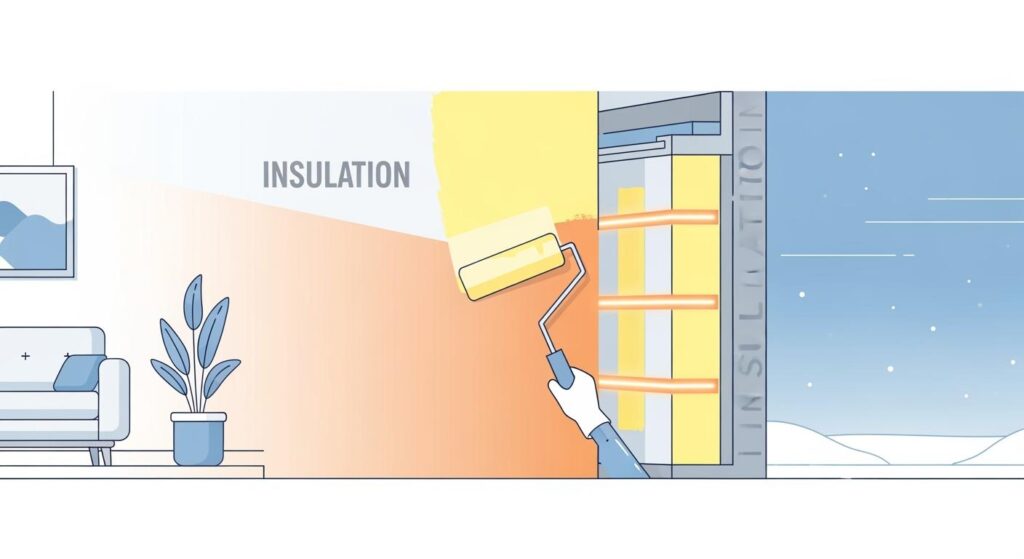
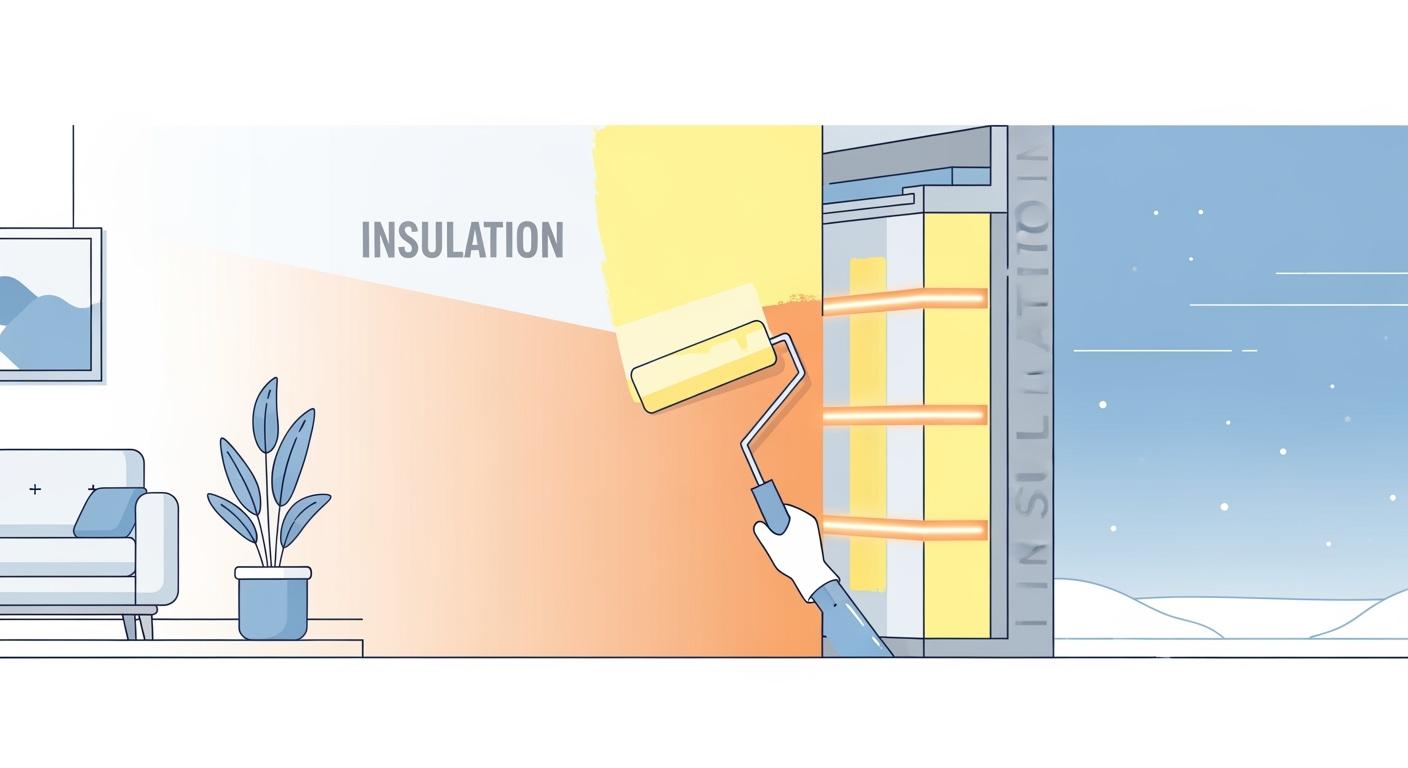
Can your wall paint genuinely help keep heat in or out? Yes! Thermal insulation paint boosts your home’s energy efficiency. It’s a supplementary tool for energy upgrades. Sustainable solutions are popular; the residential green building materials market expects 7.4% growth. This insulation paint, an insulating paint, provides thermal insulation, improving thermal comfort and comfort, cutting energy bills.
Key Takeaways
Thermal insulation paint helps your home save energy. It uses special materials to reduce heat transfer.
This paint works by reflecting heat and trapping air. It keeps your home warmer in winter and cooler in summer.
You can use insulation paint on many surfaces. It works with your current insulation to boost energy savings.
What is Thermal Insulation Paint and How It Works
Defining Insulation Paint
Thermal insulation paint is a specialized coating. You apply it to surfaces to reduce heat transfer. It also enhances thermal insulating properties. Think of it as a broad-spectrum thermally reflective coating. It uses microspheres to block heat radiation. This paint dissipates heat rapidly. It significantly reduces heat transfer. It reflects 90% of solar infrared radiation and 85% of ultraviolet radiation. A thermal insulating coating (TIC) is a liquid or semi-liquid substance. You apply it in a thin layer, usually 0.75 mm or less. When it dries, it forms a protective finish. It also resists heat flow. This makes thermal insulation paint a dual-purpose product. This specialized insulative paint offers more than just color.
Science of Reflectivity and Emissivity
You might wonder how this paint works its magic. It’s all about reflectivity and emissivity. Reflectivity means how much heat a surface bounces away. Emissivity is how much heat a surface releases.
Materials reflect solar radiation. Lighter, smoother, and shinier surfaces reflect more energy. Darker ones absorb more. Infrared-Reflecting Pigments (IR-color) help darker shades reflect infrared radiation. Total Solar Reflectance (TSR) measures solar reflectivity. It covers the entire solar spectrum. This includes near-infrared, ultraviolet, and visible radiation.
The emissivity of a surface is crucial. In cold weather, you want low-emissivity, high-reflectivity interior surfaces. These surfaces reflect your body heat back to you. This lets you lower your thermostat. You save on heating energy. For example, simulations showed low-emissivity surfaces could save up to 36.8% heating energy in Minneapolis.
In warm conditions, you prefer high-emissivity surfaces. These absorb heat radiated by you. This helps keep you comfortable at higher air temperatures. You save on cooling energy. This means you need tunable emissivity surfaces. They help maximize energy efficiency all year.
When radiant energy hits a reflective surface, like aluminum foil, it bounces away. This reduces heat gain. An air space next to it also acts as a thermal break. This combination reduces heat transfer.
Key Ingredients of Insulating Paint: Ceramic Microspheres
What makes insulation paint different from regular paint? Traditional paint focuses on looks. Insulation paint has special ingredients. It contains tiny hollow glass or ceramic microspheres. These act like small air pockets. They create a barrier that stops heat transfer. Some paints also add special elements like metal alloys. These create a reflective effect. This boosts heat insulation.
Ceramic microspheres are small, spherical particles. They have a very low thermal conductivity. They also have a partial vacuum inside. This enhances their thermal insulating capabilities. You can find them in various sizes. They range from a few microns to several hundred microns. For example, 3M™ Ceramic Microspheres White Grade W-610 have an effective particle size of 32 μm.
These microspheres reduce the thermal conductivity of paint coatings. They enhance insulating features. For instance, certain microspheres reduced surface temperature by about 3.5 °C. The voids they create within the coating improve insulation. You need to disperse these insulating fillers evenly for best results. This increases the heat transfer path. These insulating fillers also reduce heat loss. They promote fire protection. They eliminate cold bridging, preventing condensation. This makes insulative paint a smart choice.
How It Reduces Heat Transfer
Thermal insulation coatings prevent heat transfer. They have inherently low thermal conductivity. This paint creates a protective layer. It slows down heat transfer between the surface and its surroundings. This is a thermal barrier.
The paint uses reflective and insulating technology. Reflective pigments repel solar radiation. Insulating micro-particles trap air. This reduces conduction. This action helps insulate your building. It keeps it cooler in warm weather. It keeps it warmer in cold weather. This means you get better thermal comfort. This insulating paint truly works.
Practical Uses and Benefits of Insulating Paint
You now understand how thermal insulation paint works. Let’s explore where you can use it and the advantages it brings. This specialized paint offers real-world solutions for your home. It helps regulate indoor temperatures, improves your thermal comfort, and even provides moisture protection.
Best Places to Apply Insulation Paint
You can apply thermal insulation paint to many surfaces. It is highly versatile. Think about the areas in your home where you want to control temperature.
Inside your home, you can apply insulation paint to:
Walls
Ceilings
HVAC ducts
Pipes
Metal surfaces
Concrete
This adaptability allows you to create customized insulation solutions. For example, you can paint your basement walls or your attic ceiling. This helps keep heat in during winter.
Outside, you can use exterior insulation paint to reflect sunlight. This keeps your home cooler in summer. Consider these outdoor applications:
Rooftops
Walls
Electrical cabinets
Accommodation units
Water storage tanks
Shipping containers
Offices
Gasoline storage tanks
Cargo containers for cold-chain transportation
Storage rooms
Light-colored exterior insulation paint is especially helpful. It keeps your home’s interior cooler. This is true for upper floors and attic spaces. It reflects more sunlight and absorbs less heat. This is an effective means of insulating your home from the sun’s rays.
Enhancing Existing Insulation
You might wonder if thermal insulation paint replaces your current insulation. It does not. The R-value system measures bulk insulation materials like fiberglass or foam. It does not apply well to thin coatings like paint. Manufacturers often provide other metrics. They show reduced heat transfer or energy savings instead of R-values.
Insulation paint will not replace a thick layer of traditional insulation. Think of R-19 fiberglass. It is not a significant standalone improvement for your existing wall insulation’s R-value. However, you can use it with traditional insulation. This can potentially increase overall R-values. It acts as a supplementary layer. It boosts your home’s thermal efficiency.
Measuring Effectiveness
How do you know if your insulative paint works? Several metrics and tests help you understand its thermal performance.
Thermal conductivity: This measures a material’s ability to conduct heat. Lower values mean better insulation.
U-value: This measures the rate of heat transfer through a material. A lower U-value means better insulation.
Infrared (IR) thermography: Infrared cameras show temperature variations. You can see heat loss patterns on painted surfaces.
Manufacturers also provide energy-saving claims. For example, Hy-Tech Insulating Ceramic Paint Products claim “Documented Savings of 30% and MORE!” on energy bills. Insuladd products are “Scientifically Proven to Save Up to 20% on Your Energy Costs.” They can also reduce heat gain by “as much as 40 percent.” An in-house method, using European standard tests, quantifies the increase in thermal resistance. It compares a surface before and after applying the coating. This helps you see the real benefits.
Choosing the Right Thermal Paint
You want the recommended paint for heat insulation. How do you pick the best one? Look for key performance indicators.
Performance & Testing Efficiency: How quickly does the product come to market? What percentage of tests pass on the first try? How does it compare to competitors?
Sustainability & Compliance: Does it have low-VOC or zero-VOC formulations? Does it comply with global standards like ASTM, ISO, and EN? What percentage of eco-friendly raw materials does it use?
Product Quality & Differentiation: How durable is it? Does it offer smart coating features like nano-tech or self-cleaning? What is its shade range and color accuracy?
Also, check for solar absorptance and thermal emittance. Look at the use temperature range. How well does it adhere? How durable is it under thermal cycling and environmental exposure?
For example, BANDě Inorganic Wall Coating Powder is a high-quality, advanced inorganic coating. It offers excellent thermal properties. You should also look for certifications. These ensure quality and safety.
California insulation quality standards: Check for Title 24 and products listed in the annual Directory of Certified Insulation Material.
ASTM C1057-17: This guideline helps determine skin contact temperature from heated surfaces. It is important for burn protection.
VOC emissions: Look for compliance with California Department of Public Health (CDPH) Standard Method v1.2–2017. LEED projects often require this.
ECOLOGO® Certification Program: This program certifies various products, including thermal insulation.
Advanced developments, like Australian roof coatings, use passive cooling. They reflect sunlight and reduce heat gain. This helps keep homes cool without air conditioning.
How to Apply Insulation Paint for Best Results
You want optimal performance from your insulative paint. Proper application is crucial.
Remove Surface Contaminants and Coatings: Dirt, dust, rust, grease, and oil create barriers. Use laser cleaning, abrasive blasting, or chemical cleaning.
Increase the Surface Roughness: Roughening surfaces helps coatings adhere better. You can sand, laser texture, or chemically etch.
Modify the Chemical Composition: Altering the surface’s chemistry can improve bonding.
Remove Abrasive Dust: If you use abrasives, remove all dust and loose particles. Use air blowing, brushing, or solvent cleaning.
Rinse Off Chemicals: Chemical residues are contaminants. Rinse them off properly.
Next, focus on the application itself. For significant thermal benefits, aim for a thickness of one-eighth to one-quarter of an inch. This is especially true for surfaces up to 250°F. This thickness can also reduce heat loss on surfaces up to 500°F. Achieving this thickness requires multiple coats. You might need approximately 20 ml per coat. This multi-coat application can reduce heat loss by at least 50% compared to a bare surface. For thermal barrier coatings (TBCs), the optimal thickness typically ranges from 100-500 micrometers. This balances effective thermal insulation with mechanical stability. You apply insulation paint carefully to ensure you get the best thermal comfort and energy efficiency.
Thermal insulation paint is a valuable, supplementary tool for your home’s energy efficiency, not a traditional insulation replacement. This insulation paint creates a thermal barrier through reflectivity and reduced heat transfer. It offers practical cost savings and improves your comfort. For optimal thermal efficiency, use insulating paint strategically. By 2025, expect advancements like graphene-infused and solar-reflective paints for energy efficient buildings, helping you reduce cooling costs and enhance comfort. Consider insulation paint a smart investment.
FAQ
Can thermal paint replace my existing insulation?
No, thermal paint works as a supplement. It enhances your home’s energy efficiency. It does not replace bulk insulation like fiberglass or foam.
How much energy can I save with thermal insulation paint?
You can expect significant savings. Many products claim 20-30% or more on energy bills. Your actual savings depend on your climate and current insulation.
Is thermal paint safe for indoor use?
Yes, many thermal paints are safe for interiors. Look for low-VOC or zero-VOC formulations. Always check product certifications for your peace of mind.
See Also
Allergy-Fighting Walls: Paint That Actively Enhances Indoor Air Quality.
Achieve a Healthy, Eco-Friendly Home with Inorganic Seven-Color Wall Coatings.
Air-Purifying Paint: Healthy Inorganic Coatings for Your Children’s Rooms.
Healthy Homes Begin: Exploring Inorganic Anion Wall Paint Innovations for 2025.
Peeling Paint? Don’t Skip This Crucial Alkali-Resistant Primer Step.
