

Under the crushing weight of heavy machinery in industrial plants, concrete floors crack like spiderwebs. In logistics warehouses, the constant of forklifts causes dusting and sanding, leading to severe equipment wear. In the damp environments of underground parking garages, moisture and hollow spots breed safety hazards. As the “foundation” of a building, concrete floors bear the core functions of production and daily traffic. However, they are highly susceptible to strength degradation and structural damage during use. At this point, scientific floor reinforcement is not an “optional add-on,” but a “mandatory requirement” to maintain building safety and reduce operational costs.
The BANDě Floor Reinforcement Agent utilizes core technology combining “penetrating crystallization + structural reshaping” to break the traditional trap of “treating symptoms, not the root cause.” It has become the ideal choice for floor repair, delivering a legendary quality of “one reinforcement, lifelong durability” across thousands of projects.
I. Alarming Reality: The Cost of Ignoring Floor Reinforcement Exceeds Imagination
Many property owners misunderstand floor damage, thinking “small cracks don’t affect use” or “dusting can just be swept away.” Unbeknownst to them, these seemingly minor issues erode structural safety like “ants destroying a dam,” eventually triggering a chain reaction of economic losses and safety risks far exceeding repair costs. The necessity of concrete floor reinforcement is fundamentally determined by the harm, transmissibility, and irreversibility of these defects.
Many property owners misunderstand floor damage, thinking “small cracks don’t affect use” or “dusting can just be swept away.” Unbeknownst to them, these seemingly minor issues erode structural safety like “ants destroying a dam,” eventually triggering a chain reaction of economic losses and safety risks far exceeding repair costs. The necessity of concrete floor reinforcement is fundamentally determined by the harm, transmissibility, and irreversibility of these defects.
(1) Safety Red Line: Cascading Risks from Escalating Damage
The primary danger of floor damage is the breach of safety baselines. When insufficient concrete strength leads to cracks, external moisture and corrosive media seep into the base layer, causing rebar rust and expansion. This further widens the cracks, creating a vicious cycle of “cracks-corrosion-wider cracks.”
The primary danger of floor damage is the breach of safety baselines. When insufficient concrete strength leads to cracks, external moisture and corrosive media seep into the base layer, causing rebar rust and expansion. This further widens the cracks, creating a vicious cycle of “cracks-corrosion-wider cracks.”
(2) Economic Black Hole: Hidden Costs Are 10x Higher Than Repair Fees
Economic losses from floor damage go far beyond visible repair bills; they include equipment wear, production halts, and efficiency drops. A logistics park in Shanghai once faced severe dusting, accelerating forklift tire wear by 3 times and costing an extra ¥150,000 annually in tire replacements. Dust settling on goods also increased cleaning costs and defect rates, resulting in over ¥500,000 in indirect losses.
Abandoning reinforcement inevitably leads to the passive outcome of “complete renovation.” For a 1,000㎡ industrial floor, localized reinforcement costs about ¥30,000–¥50,000, whereas complete demolition and renovation can cost ¥150,000–¥200,000 (4-5 times more). Worse, renovation requires shutting down operations. For manufacturing enterprises, daily downtime losses can exceed ¥100,000, a devastating blow to SMEs.
Economic losses from floor damage go far beyond visible repair bills; they include equipment wear, production halts, and efficiency drops. A logistics park in Shanghai once faced severe dusting, accelerating forklift tire wear by 3 times and costing an extra ¥150,000 annually in tire replacements. Dust settling on goods also increased cleaning costs and defect rates, resulting in over ¥500,000 in indirect losses.
Abandoning reinforcement inevitably leads to the passive outcome of “complete renovation.” For a 1,000㎡ industrial floor, localized reinforcement costs about ¥30,000–¥50,000, whereas complete demolition and renovation can cost ¥150,000–¥200,000 (4-5 times more). Worse, renovation requires shutting down operations. For manufacturing enterprises, daily downtime losses can exceed ¥100,000, a devastating blow to SMEs.
(3) Premature Structural Aging: Damage Halves Floor Lifespan
Concrete floors are designed to last 15-20 years, but untreated damage can slash this to under 5 years. Concrete strength degradation is irreversible; surface sanding means cement hydration products have been lost and the internal structure is loose. Without reinforcement to penetrate and solidify, loose particles will continue to shed, thinning the floor. A printing plant in Northwest China neglected reinforcement after early sanding; within 3 years, the floor exposed its aggregate, failing printing needs and forcing premature renovation. Extensive data shows that timely BANDě reinforcement extends floor life by 20 years.
Concrete floors are designed to last 15-20 years, but untreated damage can slash this to under 5 years. Concrete strength degradation is irreversible; surface sanding means cement hydration products have been lost and the internal structure is loose. Without reinforcement to penetrate and solidify, loose particles will continue to shed, thinning the floor. A printing plant in Northwest China neglected reinforcement after early sanding; within 3 years, the floor exposed its aggregate, failing printing needs and forcing premature renovation. Extensive data shows that timely BANDě reinforcement extends floor life by 20 years.
(4) Compliance Crisis: Damaged Floors Fail New Standards
With updated standards like the Code for Design of Building Floors and Standard for Design of Industrial Building Floors, requirements for strength, wear resistance, and eco-friendliness are stricter. In chemicals, pharma, and food industries, floor impermeability and corrosion resistance are tied to production licenses. In schools and hospitals, anti-slip and eco-friendly properties are mandatory for acceptance. During a children’s hospital expansion in Fujian, the existing concrete (with a rebound value of only 25MPa) failed medical standards. Instead of recasting, BANDě reinforcement boosted the rebound value to 40MPa while meeting eco-friendly and anti-slip requirements, passing inspection smoothly. Scientific reinforcement is now a highly efficient path to meet new regulations.
With updated standards like the Code for Design of Building Floors and Standard for Design of Industrial Building Floors, requirements for strength, wear resistance, and eco-friendliness are stricter. In chemicals, pharma, and food industries, floor impermeability and corrosion resistance are tied to production licenses. In schools and hospitals, anti-slip and eco-friendly properties are mandatory for acceptance. During a children’s hospital expansion in Fujian, the existing concrete (with a rebound value of only 25MPa) failed medical standards. Instead of recasting, BANDě reinforcement boosted the rebound value to 40MPa while meeting eco-friendly and anti-slip requirements, passing inspection smoothly. Scientific reinforcement is now a highly efficient path to meet new regulations.
II. Tracing the Damage: What “Culprits” Are Eroding Your Floor?
Effective reinforcement requires identifying the root cause. Concrete degradation is rarely due to a single factor; it is the combined result of materials, construction, environment, and usage.
Effective reinforcement requires identifying the root cause. Concrete degradation is rarely due to a single factor; it is the combined result of materials, construction, environment, and usage.
(1) Inherent Material Defects: “Congenital Weakness”
Poor concrete mix is a foundational flaw. An excessively high water-cement ratio causes surface bleeding and plastic shrinkage cracks. Poor aggregate grading or high mud content hinders cement hydration. Expired cement or incompatible admixtures also cause abnormal curing. One site used damp cement, resulting in only 60% of the designed 28-day strength; the surface crumbled on touch, forcing total demolition.
Poor concrete mix is a foundational flaw. An excessively high water-cement ratio causes surface bleeding and plastic shrinkage cracks. Poor aggregate grading or high mud content hinders cement hydration. Expired cement or incompatible admixtures also cause abnormal curing. One site used damp cement, resulting in only 60% of the designed 28-day strength; the surface crumbled on touch, forcing total demolition.
(2) Construction Flaws: Inadequate “Aftercare”
Construction oversights cause over 40% of floor damage. Insufficient vibration creates honeycombs and voids, weakening local strength. Poor timing during troweling causes thin surfaces or unclosed cracks. Inadequate curing is rampant. Without continuous moisture, hot or windy weather causes rapid evaporation and drying shrinkage cracks. Curing for less than 7 days prevents full hydration, leading to future sanding. Rushing a schedule led one site to open a floor after just 3 days of curing; massive sanding occurred a month later—a classic case of “construction-induced damage.”
Construction oversights cause over 40% of floor damage. Insufficient vibration creates honeycombs and voids, weakening local strength. Poor timing during troweling causes thin surfaces or unclosed cracks. Inadequate curing is rampant. Without continuous moisture, hot or windy weather causes rapid evaporation and drying shrinkage cracks. Curing for less than 7 days prevents full hydration, leading to future sanding. Rushing a schedule led one site to open a floor after just 3 days of curing; massive sanding occurred a month later—a classic case of “construction-induced damage.”
(3) Continuous Environmental Erosion: “Chronic Consumption”
Environmental factors accumulate over time. Freeze-thaw cycles in the north, moisture penetration in the south, and salt spray on coasts accelerate aging. Freezing water expands, cracking concrete. Chlorides in coastal salt spray corrode rebar and cause spalling. Industrial environments are even harsher: acids, alkalis, oils, and chemical reagents react with concrete, destroying its aluminosilicate skeleton. A chemical warehouse in Guangzhou suffered massive corrosive pits from an uncleaned sulfuric acid spill, requiring emergency reinforcement.
Environmental factors accumulate over time. Freeze-thaw cycles in the north, moisture penetration in the south, and salt spray on coasts accelerate aging. Freezing water expands, cracking concrete. Chlorides in coastal salt spray corrode rebar and cause spalling. Industrial environments are even harsher: acids, alkalis, oils, and chemical reagents react with concrete, destroying its aluminosilicate skeleton. A chemical warehouse in Guangzhou suffered massive corrosive pits from an uncleaned sulfuric acid spill, requiring emergency reinforcement.
(4) Overloaded Usage: “Over-Exploitation” Beyond Design Limits
Actual loads exceeding design standards accelerate structural failure. Frequent forklift turning and sudden stops in warehouses create impact loads far beyond static limits. Heavy equipment in auto plants causes localized settlement and depressions. Sharp objects and heavy impacts also destroy surface structures. In a Shenzhen electronics plant, metal brackets gouged 2mm-deep grooves during equipment moving. Rainwater seepage caused surrounding hollow spots, rendering 10㎡ unusable.
Actual loads exceeding design standards accelerate structural failure. Frequent forklift turning and sudden stops in warehouses create impact loads far beyond static limits. Heavy equipment in auto plants causes localized settlement and depressions. Sharp objects and heavy impacts also destroy surface structures. In a Shenzhen electronics plant, metal brackets gouged 2mm-deep grooves during equipment moving. Rainwater seepage caused surrounding hollow spots, rendering 10㎡ unusable.
III. The Ideal Choice: Why BANDě Reinforcement Agent Ends Floor Damage?
Traditional methods fall short: epoxy only covers the surface; thin-layer overlays are costly and slow; standard sealers lack penetration depth. BANDě uses a 3D system of “Penetration + Crystallization + Reinforcement” for comprehensive repair.
Traditional methods fall short: epoxy only covers the surface; thin-layer overlays are costly and slow; standard sealers lack penetration depth. BANDě uses a 3D system of “Penetration + Crystallization + Reinforcement” for comprehensive repair.
(1) Technological Innovation: From “Surface Patching” to “Root Reshaping”
BANDě abandons the “external patch” approach. Using high-activity silicon, nano-silane coupling agents, and hydration promoters, it rapidly penetrates the concrete, reacting with ions to form water-insoluble crystals. These crystals grow in pores and micro-cracks, forming a 3D network like a “steel skeleton,” binding loose particles into a solid whole. This “coexistence with concrete” means strength comes from internal structural reinforcement, not external coatings. Third-party tests show a 30%-80% increase in rebound strength and bond strength up to 4.5MPa.
BANDě abandons the “external patch” approach. Using high-activity silicon, nano-silane coupling agents, and hydration promoters, it rapidly penetrates the concrete, reacting with ions to form water-insoluble crystals. These crystals grow in pores and micro-cracks, forming a 3D network like a “steel skeleton,” binding loose particles into a solid whole. This “coexistence with concrete” means strength comes from internal structural reinforcement, not external coatings. Third-party tests show a 30%-80% increase in rebound strength and bond strength up to 4.5MPa.
(2) Performance Decoded: Six Core Advantages
- Multiplied Strength: A Mohs 7 “Pressure Shield.” Weak floors (Mohs 2-3) are upgraded to Mohs 7 (granite-level). A Shenzhen print factory boosted its concrete rebound value from 28MPa to 42MPa with double-coat BANDě and precision grinding, solving load issues.
- Self-Healing Cracks: “Invisible Repair” for cracks <0.3mm. Active ingredients penetrate and crystallize inside cracks, sealing them completely. For 0.3-1mm cracks, combining BANDě repair powder achieves dual filling and reinforcement. A Shanghai logistics park fixed shrinkage cracks in 10 days for ¥300,000 (saving ¥500,000 vs. traditional methods), with zero recurrence in 2 years and 150% higher wear resistance.
- Anti-Seepage & Anti-Corrosion: A “Sealing Barrier.” Crystals seal capillary channels, boosting impermeability 3x. Tested at 0.3MPa water pressure for 30 minutes with zero leakage.
- Eco-Friendly & Non-Toxic: Zero formaldehyde, benzene, or VOCs. Certified non-toxic by SGS and EU SVHC, meeting green building and food-grade safety standards.
- Weather Stability: Matches concrete’s thermal expansion coefficient, preventing cracking or peeling from -20°C to 40°C.
- Gets Shinier with Use: Zero-maintenance. Friction exposes surface crystals, increasing gloss over time. Dense surfaces repel dust; simple water mopping keeps it clean, cutting maintenance costs by 80%.
(3) Construction Revolution: Efficient & Adaptable
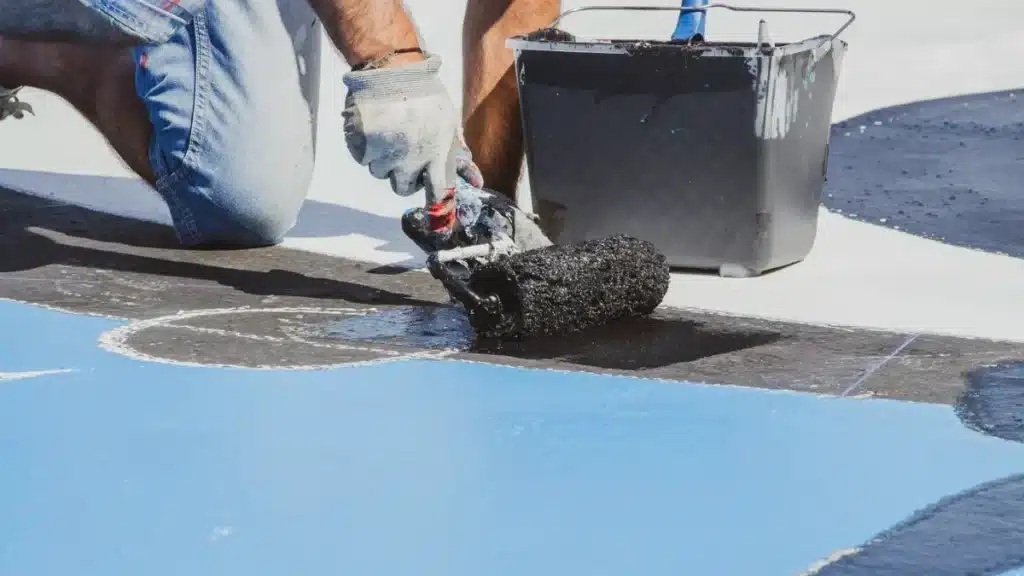
BANDě requires no complex base prep. A simple 5-step process (cleaning, crack repair, spraying, grinding, curing) suits brushing, rolling, spraying, and AI-controlled robotic systems. New floors can be reinforced right after curing; old floors can be repaired without demolition, avoiding dust and delays.
BANDě requires no complex base prep. A simple 5-step process (cleaning, crack repair, spraying, grinding, curing) suits brushing, rolling, spraying, and AI-controlled robotic systems. New floors can be reinforced right after curing; old floors can be repaired without demolition, avoiding dust and delays.
IV. Value Verified: Thousands of Cases Witness BANDě’s Strength
(1) Industrial Plants: A Jiangsu auto parts factory fixed a 10,000㎡ floor with a 26MPa rebound value. In 7 days, BANDě boosted it to 45MPa (Mohs 7). After 3 years of heavy use, zero damage occurred, saving over ¥10 million in potential downtime losses.
(2) Logistics Warehouses: A Guangzhou e-commerce park (50,000㎡) saved ¥4 million in 5 years after BANDě treatment. Forklift tire wear dropped 60%, and floor damage was eliminated.
(3) Public Buildings: A Shenzhen maternity hospital upgraded its floor from 30MPa to 42MPa with eco-friendly BANDě. Wards operated normally during construction, and the floor passed German DIN51131 anti-slip standards.
(4) Underground Garages: A Hangzhou residential garage (7,000㎡) solved severe dampness and sanding with BANDě + waterproof sealing. Anti-seepage increased 3x, and owner satisfaction rose from 30% to 95%. The manager noted: “We used to spend ¥100,000 yearly on waterproofing. With BANDě, we’ve spent nothing in 3 years.”
(1) Industrial Plants: A Jiangsu auto parts factory fixed a 10,000㎡ floor with a 26MPa rebound value. In 7 days, BANDě boosted it to 45MPa (Mohs 7). After 3 years of heavy use, zero damage occurred, saving over ¥10 million in potential downtime losses.
(2) Logistics Warehouses: A Guangzhou e-commerce park (50,000㎡) saved ¥4 million in 5 years after BANDě treatment. Forklift tire wear dropped 60%, and floor damage was eliminated.
(3) Public Buildings: A Shenzhen maternity hospital upgraded its floor from 30MPa to 42MPa with eco-friendly BANDě. Wards operated normally during construction, and the floor passed German DIN51131 anti-slip standards.
(4) Underground Garages: A Hangzhou residential garage (7,000㎡) solved severe dampness and sanding with BANDě + waterproof sealing. Anti-seepage increased 3x, and owner satisfaction rose from 30% to 95%. The manager noted: “We used to spend ¥100,000 yearly on waterproofing. With BANDě, we’ve spent nothing in 3 years.”
V. Brand Escort: BANDě, A Trusted National Benchmark
As a core brand under Yuchuan Technology Group, BANDě has spent 20+ years in inorganic healthy building materials. Partnering with a US Green Building Council member in 1998 and transferring patents in 2005, BANDě localized technology to end foreign monopolies.
As a core brand under Yuchuan Technology Group, BANDě has spent 20+ years in inorganic healthy building materials. Partnering with a US Green Building Council member in 1998 and transferring patents in 2005, BANDě localized technology to end foreign monopolies.
- Strict Quality Control: Every batch uses high-purity active ingredients and food-grade additives. Dozens of tests ensure compliance with Q/BSF08-2016 and national standards, with verifiable CMA reports.
- Precise Adaptation: A complete product matrix includes the “High-Strength Series” (80% rebound boost), “Anti-Seepage Series” (P12 grade), and “Eco-Friendly Series,” covering 95% of reinforcement scenarios.
- Comprehensive Service: “Online consultation + offline guidance” includes pre-construction site surveys with professional tools, on-site engineering supervision, and regular post-construction follow-ups. This dual guarantee has earned recognition from government inspection teams and major projects.
VI. Conclusion: Choose BANDě for One-Stop Floor Reinforcement
Concrete floor reinforcement is proactive protection, not passive remediation. When small cracks become major hazards, the cost far exceeds early reinforcement. BANDě uses penetrating crystallization to repair from the source, injecting Mohs 7 hardness, impermeable sealing, and zero-pollution eco-friendliness into your floors.
Concrete floor reinforcement is proactive protection, not passive remediation. When small cracks become major hazards, the cost far exceeds early reinforcement. BANDě uses penetrating crystallization to repair from the source, injecting Mohs 7 hardness, impermeable sealing, and zero-pollution eco-friendliness into your floors.
Backed by 20+ years of market validation, BANDě proves the promise of “one reinforcement, 20 years of peace of mind.” Choosing BANDě means choosing a safe, efficient, and economical solution—a lasting guardian of building safety, precise cost control, and green health. BANDě repairs floors with the power of technology and builds legends with national quality, ensuring every floor retains its original strength and brilliance through the passage of time.
