

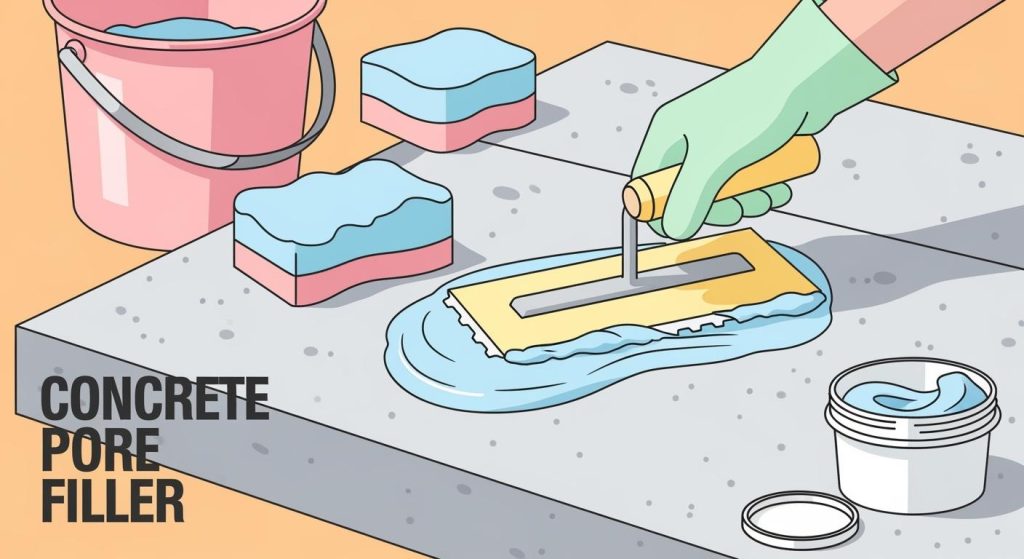
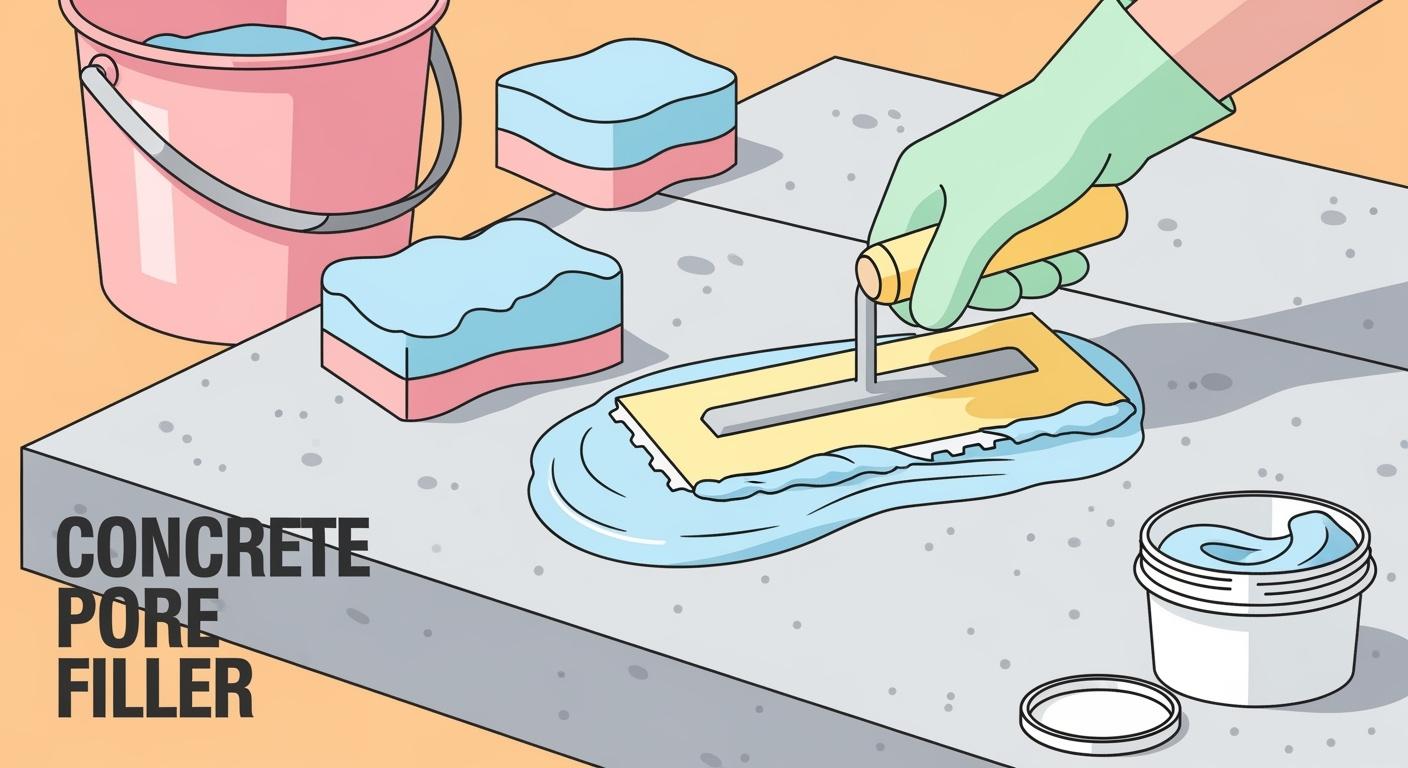
Concrete pore fillers play a vital role in achieving smooth surfaces. They help prevent cracks caused by moisture loss in unfilled pores. When selecting a filler, consider factors like durability, ease of application, and cost-effectiveness. A good choice can enhance your concrete surface restoration efforts and prolong the life of your project.
Key Takeaways
Choosing the right concrete pore filler enhances surface durability and prevents cracks caused by moisture.
Consider factors like ease of application and drying time when selecting a filler for your project.
Products like Pentra® and GCF Polyurethane offer unique benefits, such as flexibility and moisture resistance, making them ideal for various applications.
Best Concrete Pore Fillers
When it comes to choosing the right concrete pore filler, several options stand out in the market. Each product has unique features that cater to different needs. Let’s dive into some of the best concrete pore fillers available today.
Pentra® (PCF)
Pentra® is a top-rated concrete pore filler known for its effectiveness in densifying and sealing concrete surfaces. This product penetrates deeply into the concrete, providing a robust solution for filling pores and enhancing durability.
How Pentra® Works
Pentra® works by utilizing a unique formula that reacts chemically with the concrete. This reaction forms a dense, hard surface that resists moisture and wear. The filler not only fills the pores but also strengthens the concrete, making it less susceptible to damage.
Advantages of Pentra®
Durability: Pentra® significantly increases the lifespan of your concrete surfaces.
Ease of Application: You can apply it easily with a sprayer or roller.
Low VOC Content: With a VOC level of less than 50g/L, it’s an environmentally friendly choice.
Concretal Fine Filler
Another excellent option is Concretal Fine Filler. This product is designed specifically for filling small voids and pores in concrete surfaces.
How Concretal Works
Concretal Fine Filler uses a fine particle size to penetrate small pores effectively. It creates a smooth surface that prepares the concrete for further treatments or coatings.
Advantages of Concretal
Smooth Finish: It provides a flawless surface that enhances the appearance of your concrete.
Quick Drying: You can expect a fast curing time, allowing for quicker project completion.
Versatile Use: Suitable for both indoor and outdoor applications.
GCF Polyurethane Crack Filler
GCF Polyurethane Crack Filler is another strong contender. This filler is particularly effective for repairing cracks and filling pores in concrete.
How GCF Works
GCF works by expanding slightly upon application, allowing it to fill gaps and cracks effectively. Once cured, it forms a tough, flexible bond that withstands movement and stress.
Advantages of GCF
Flexibility: It accommodates slight movements in the concrete without cracking.
Strong Adhesion: GCF bonds well to various concrete surfaces, ensuring long-lasting repairs.
Weather Resistant: It performs well in different environmental conditions.
Zinsser Block Filler Primer
Zinsser Block Filler Primer is a heavy-duty acrylic product designed to fill pores and small voids in concrete masonry units (CMU). Its 100% acrylic composition ensures that it does not shrink or crack, providing excellent filling capabilities and a solid foundation for various topcoats, including epoxy coatings.
How Zinsser Works
Zinsser works by creating a thick, protective layer over the concrete surface. This layer fills in pores and imperfections, preparing the surface for painting or sealing.
Advantages of Zinsser
Excellent Coverage: It covers a large area, making it cost-effective.
Prevents Moisture Damage: The primer helps protect against moisture infiltration.
Easy to Apply: You can use a brush, roller, or sprayer for application.
Comparison of Concrete Pore Fillers
To help you make an informed decision, here’s a comparison of the key features of these concrete pore fillers:
Product Name | Best For | Key Features |
|---|---|---|
Pentra® (PCF) | Densifying Concrete | Low VOC, durable, easy application |
Concretal Fine Filler | Smooth Finishing | Quick drying, versatile use |
GCF Polyurethane Crack Filler | Crack Repair | Flexible, strong adhesion |
Zinsser Block Filler Primer | Priming and Sealing | Excellent coverage, moisture resistant |
Key Features Comparison Table
Product Name | VOC Content | Durability | Application Method | Drying Time |
|---|---|---|---|---|
Pentra® (PCF) | <50g/L | High | Sprayer/Roller | Fast |
Concretal Fine Filler | <50g/L | Medium | Brush/Roller | Quick |
GCF Polyurethane Crack Filler | <50g/L | High | Caulking Gun | Moderate |
Zinsser Block Filler Primer | <50g/L | High | Brush/Roller/Sprayer | Fast |
With this information, you can choose the best concrete pore filler that suits your project needs. Whether you need a filler for densifying, crack repair, or priming, there’s a product here for you.
Choosing the right concrete pore filler can make a big difference in your project. Consider your budget, surface type, and durability needs. For example, sodium silicate offers an economical option for older concrete, while lithium silicate provides deep penetration for polished surfaces. Check out the table below for a quick comparison:
Type of Densifier | Cost Comparison | Surface Penetration | Residue Issues | Best Use Cases |
|---|---|---|---|---|
Sodium Silicate | Most economical | Moderate | Possible white residue | Older, porous concrete, industrial applications |
Lithium Silicate | Premium pricing | Deep penetration | Minimal residue | High-quality polished concrete, retail, commercial |
Potassium Silicate | Mid-range | Better than sodium | Less than lithium | Versatile for various concrete types, budget-friendly |
By selecting the right filler, you can enhance your concrete surface restoration efforts and achieve flawless results.
FAQ
How do I know which concrete pore filler to use?
Look at your project needs. Choose based on surface type, crack size, and drying time. Consider durability and ease of application too.
Can I apply pore fillers myself?
Yes! Most fillers are easy to apply with a brush, roller, or sprayer. Follow the instructions carefully for best results.
How long does it take for pore fillers to dry?
Drying times vary. Some fillers dry fast in a few hours, while others take longer. Check the product label for exact times.
See Also
Your 2025 Handbook for Selecting Ideal Polished Concrete Densifiers
The 2025 Resource for Finding the Right Concrete Densifier and Sealer
A 2025 Manual for Picking the Best Concrete Floor Hardener
Steps to Effectively Use Concrete Dust Sealers for Clean Floors
A Complete Buying Guide for Concrete Densifiers and Hardeners
