

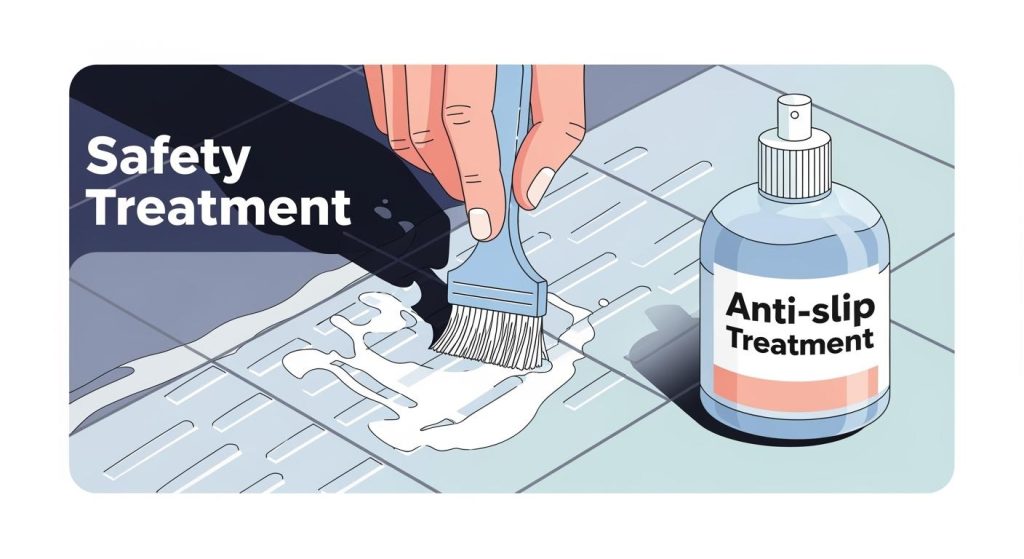
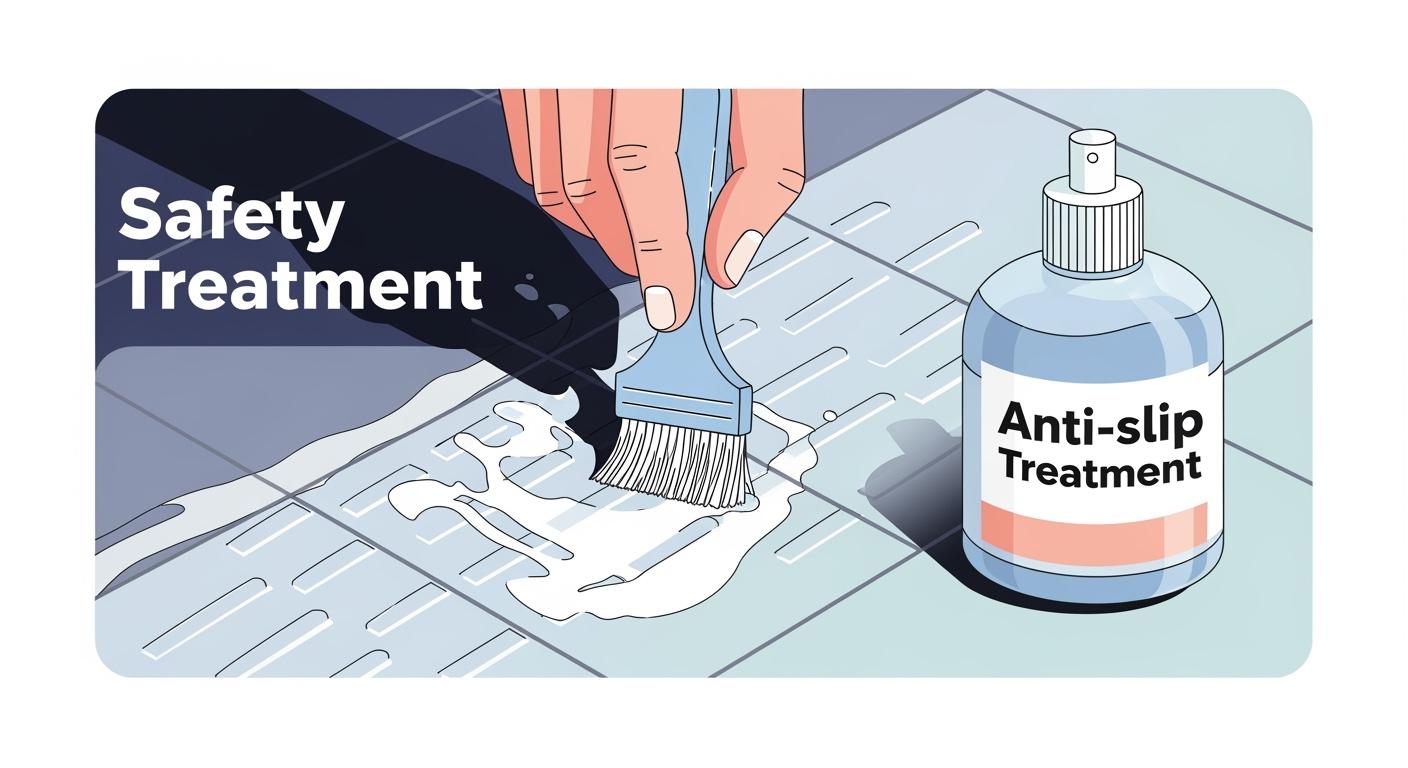
Slippery tiles can be a real hazard in your home or business. Did you know that over 1 million Americans suffer slip, trip, or fall injuries each year? Wet floors are often the main culprit, especially when tiles are smooth. This post aims to help you tackle this issue with practical non-slip tile treatment solutions.
Key Takeaways
Choose tiles with a high slip resistance rating to reduce the risk of falls. Look for materials with a wet DCOF value of 0.42 or higher.
Regularly clean your tiles with appropriate products to prevent slippery residues. Avoid waxy or oily cleaners that can create slick surfaces.
Consider applying anti-slip coatings or treatments every 1-2 years to maintain traction, especially in high-traffic areas.
Causes of Slippery Floor Tiles
Tile Material
The type of tile you choose plays a significant role in how slippery your floors can become. Some materials are inherently more slippery than others. For instance:
Marble: This beautiful stone is often polished to a high sheen, making it very slippery when wet. It’s a common choice for bathrooms and kitchens, but it can pose a serious risk for falls.
Ceramic Tile: While durable, ceramic tiles can also become slick, especially when wet or treated with certain cleaning solutions.
According to the 2012 International Building Code, ceramic tiles for wet areas should have a minimum wet DCOF (Dynamic Coefficient of Friction) value of 0.42. This means that if your tiles fall below this threshold, they may not provide adequate grip, increasing the risk of slips. Additionally, UL410 rates materials as ‘slip resistant’ if they achieve an index of 0.50 or higher on a James Machine. Choosing tiles with these ratings can help ensure safety in your home.
Environmental Factors
Environmental conditions can greatly affect the slipperiness of your tiles. Here are some key factors to consider:
Humidity: High humidity levels can lead to condensation on tile surfaces, creating slick patches. This is especially true in areas with poor ventilation.
Water Exposure: Whether from rain, cleaning, or cooking, moisture can create a thin film on tiles, making them slippery.
Temperature Changes: Fluctuations in temperature can cause tiles to expand and contract, leading to cracks that can accumulate water.
In outdoor settings, it’s crucial to select tiles designed for higher slip resistance. For indoor applications, maintaining dry conditions can significantly reduce the risk of slips.
Maintenance Issues
Regular maintenance is essential for keeping your tiles safe. Neglecting this can lead to increased slipperiness. Here are some common maintenance pitfalls:
The reason why your tile floor is slippery is probably because of the texture or the current condition of the surface. That is, it’s either very smooth and/or there are surface contaminants on it which makes it slippery. If the floor is slippery specifically after mopping, that is probably because there’s a residue left on the floor. Most likely, you’re using a de-greaser, and the solvents present in them are just thinning out the contaminants. Essentially, you’re just spreading contaminants like grease and oil around the floor, instead of removing them or eliminating them.
Regular cleaning with appropriate products is vital. Using the wrong cleaners can leave residues that increase slipperiness. For example, oil-based or soap-heavy solutions can create a slick surface.
Neglecting regular maintenance can lead to serious consequences, including legal and financial issues from slip-and-fall accidents. It’s essential to establish a cleaning schedule and address slippery conditions promptly to ensure safety.
Non-Slip Tile Treatment Solutions
When it comes to making your slippery tiles safe again, there are several effective non-slip tile treatment solutions available. Let’s explore some of the most popular options.
Anti-Slip Coatings
Anti-slip coatings are a fantastic way to enhance the grip of your tiles. These coatings create a textured surface that increases traction, especially when wet. One highly recommended product is SparkleTuff Anti-Slip Floor Coating. This coating is known for its durability and slip resistance. It meets and exceeds all ADA and OSHA slip resistance requirements, making it a reliable choice for both residential and commercial spaces.
Durability: High-quality anti-slip coatings can last between 10 to 20 years with proper maintenance.
Application: They can be applied to various surfaces, including tiles, polished marble, and granite, ensuring safety in both wet and dry conditions.
Chemical Treatments
Chemical treatments can also effectively reduce slipperiness on tile surfaces. One popular option is Stone Grip, an acid-based treatment that etches the tile surface to create a non-slip texture. Here’s how it works:
Mop the treatment onto the tile.
Allow it to sit for 10-15 minutes.
Rinse it off.
This process dissolves microscopic silica in the tile glaze, creating tiny pits that enhance traction when wet.
Safety: Modern anti-slip treatments use water-based formulas that emit minimal volatile organic compounds (VOCs), making them safer for indoor air quality and pets.
DIY Methods
If you’re looking for a more hands-on approach, there are several DIY methods to make your tiles less slippery. Here are a few popular options:
Method | Description | Effectiveness |
|---|---|---|
Surface GripTreat | A chemical treatment that modifies the surface to enhance traction. | User reviews indicate improved slip-resistance and safety when applied. |
GlazeGuard Plus | A slip-resistant coating that also offers waterproofing and chemical resistance. | Studies show it provides long-lasting results and maintains surface appearance. |
Nano coatings | Increases coefficient of friction without altering the appearance of tiles. | Users report enhanced safety without compromising aesthetics. |
While DIY solutions can be cost-effective, remember that professional treatments often provide superior performance and longevity. For instance, while DIY epoxy kits might seem cheaper upfront, professional applications use higher-quality materials. This leads to better long-term performance and avoids costly reinstallation if a DIY job fails.
Maintenance for Safe Tiles
Regular Cleaning
Keeping your tiles clean is essential for maintaining their slip-resistance. Regular cleaning helps remove dirt and residues that can make surfaces slippery. According to cleaning industry guidelines, improper cleaning can leave behind slick residues. Here are some common mistakes to avoid:
Using waxy or oily products that leave a film.
Failing to rinse cleaning chemicals properly, leading to buildup.
Over-polishing floors, making them dangerously smooth.
To maintain traction, consider using effective cleaning agents like vinegar, which helps remove soap and grease residues. Mix one cup of vinegar with two cups of water for a simple cleaning solution.
Periodic Treatments
Periodic treatments are vital for ensuring your tiles remain safe. Manufacturers often recommend reapplying anti-slip treatments every few years, especially in high-traffic areas. Regular inspections can help identify when it’s time for a reapplication. Look for signs like worn areas or reduced traction.
Treatment Frequency | Recommended Action |
|---|---|
Every 1-2 years | Reapply anti-slip treatments in high-traffic areas. |
Annually | Inspect for wear and tear on treated surfaces. |
Safety Precautions
When cleaning or treating your tiles, safety should always come first. Here are some precautions to keep in mind:
Maintain clean and dry floors to prevent slips.
Use proper signage to alert about wet areas.
Schedule deep cleaning services regularly to ensure safety.
By following these maintenance tips, you can enhance the traction of your tiles and protect against slips and falls, especially on slippery steps.
Making your tiles safe is crucial for preventing accidents in your home or business. Regular maintenance and vigilance can significantly reduce the risk of slips on slippery surfaces. Consider using anti-slip paint or coatings to enhance traction. Remember, a little effort goes a long way in keeping your environment safe!
FAQ
What is a slip-resistant coating?
A slip-resistant coating is a special treatment applied to tiles to enhance traction and reduce slipperiness, especially in wet conditions.
How often should I apply a coating?
Reapply your slip-resistant coating every 1-2 years, especially in high-traffic areas, to maintain safety and effectiveness.
Can I use a coating on any tile type?
Most tiles can benefit from a slip-resistant coating, but always check the manufacturer’s recommendations for best results.
See Also
Simple Tips for Safer Floors with Anti-Slip Treatments
Selecting the Ideal Anti-Slip Tile Treatment for 2025
Top Seven Tile Cleaners for All Surfaces in 2025
Comparing Acrylic and Epoxy Anti-Slip Coatings in 2025
Transforming Dull Concrete Floors into Dazzling Polished Surfaces
