


Your garage floor needs durability. A protective coating is essential. Liquid hardener for garage floors and other advanced coatings offer dust-proofing, abrasion resistance, and longevity. They improve appearance and are easy to clean. This guide helps you choose the best garage floor coatings for your garage in 2026. Your ideal garage floor coating depends on specific factors.
Key Takeaways
Clean and grind your concrete floor properly to ensure the new coating sticks well.
Choose fast-curing polyaspartic coatings to prevent yellowing and resist hot tire damage.
Invest in professional multi-layer systems to protect your garage floor for over twenty years.
Understanding 2026 Garage Floor Coatings Technology
How Liquid Hardeners and Coatings Work
Liquid hardeners densify your concrete floor. Silicate hardeners react with calcium hydroxide in the porous cementitious surface. This reaction forms a crystalline binder. These crystalline structures plug capillaries, densifying and hardening the surface. Colloidal silica hardeners contain nanoscale silica particles. These particles penetrate concrete more deeply. They react more readily than traditional silicates. The very small particles give deeper penetration and higher reactivity. This increases surface density and hardness for your garage. This liquid hardener for garage floors offers lasting protection.
Chemical coatings form protective layers on your garage floor. Epoxy remains a dominant binder, holding a significant revenue share. Its popularity comes from chemical resistance, strong adhesion, compressive strength, and durability. Epoxy floor coatings are a reliable choice. You apply these coatings to create a seamless, protective finish. Many applications use epoxy.
Key Advancements in Floor Protection
You will find new formulations in 2026. These include ultra-low-VOC and water-based formulations. These options are more eco-friendly. Faster curing times are also a major advancement for garage floor coatings. Polyaspartic coatings, for example, cure in less than an hour. This allows for quick return to service. You can walk on the floor in 4–6 hours. You can drive vehicles on it within 24 hours. A standard two-car garage installation can be complete in 6–8 hours. The garage is vehicle-ready in 24 hours.
Nanotechnology offers improved hardness and chemical durability. Polyaspartic-polyurea formulations show high bonding strength (4.5 MPa), tensile strength (16.4 MPa), and elongation at break (456%). These advancements provide enhanced penetration and improved flexibility. Smart flooring with IoT sensors for condition monitoring is also emerging. Digital specification tools, like BIM, support precise application of metallic floor hardeners. These advancements enhance the appearance of your floor.
Assessing Your Garage Floor for the Best Coating
Concrete Type and Condition
You must thoroughly assess your existing concrete before applying any garage floor coating. Evaluate the concrete’s age, porosity, and any existing damage. Coating manufacturers recommend you check for oil contamination, old sealers, or previous paints. You also need to determine if the surface is polished or porous. These factors directly affect adhesion and surface preparation requirements for your chosen floor coating.
Moisture is a critical factor for your concrete floor. Most high-quality epoxy coatings require a moisture vapor emission rate (MVER) of 3–5 lbs per 1,000 sq ft per 24 hours or less. In-situ relative humidity should remain below 75–80% for long-term adhesion. If your concrete exceeds these limits, you must address the moisture source or install a specialized moisture-mitigation system. Ignoring these moisture problems can lead to coating failure, including blistering or delamination.
Usage and Traffic Levels
Consider how you use your garage. This determines the required strength and system build for your garage floor coverings. You need to evaluate daily parking, the presence of heavy trucks, forklifts, workshop tools, or rolling loads. These uses dictate the durability your floor needs.
Manufacturers classify traffic levels to help you choose the best garage floor coatings. Light to medium duty floors handle foot traffic, carts, and occasional power-lift use. Heavy-duty industrial traffic conditions demand maximum durability, resisting impact, scraping, and gouging. For example, PumaCRETE 400 Series is an extra heavy-duty seamless system. It withstands heavy wheeled carts and fork trucks. You should choose a coating matched to your specific garage environment, especially for high traffic areas.
Key Factors for Choosing Your Garage Floor Coating
Durability, Application, and Curing
When you select a garage floor coating, durability is a primary concern. You want a floor that withstands daily use. Key durability metrics include film thickness; professional systems offer 20–30 mils, while DIY kits typically provide 3–5 mils. Lifespan also varies significantly; professional multilayer systems last 15–20+ years, but DIY kits might only last 2–5 years. UV stability is crucial; polyaspartic topcoats prevent yellowing, but epoxy-only systems need a UV-stable topcoat. Chemical resistance is another vital factor. Novolac epoxy, for example, withstands harsh chemicals like 70% sulfuric acid. Hybrid epoxy and polyaspartic systems match or exceed standard epoxy for automotive fluids.
Abrasion and impact resistance are also important. You need to balance chemical resistance with physical durability. Multi-layer systems combine both effectively. Polyaspartic coatings generally outperform epoxy in abrasion resistance. They also avoid hot-tire pickup failures. A polyaspartic coating can last up to 15 years with proper care, while standard epoxy typically lasts 5–10 years. For Taber abrasion resistance, polyaspartic topcoats show lower mass loss, often 5–25 mg, indicating superior wear compared to standard epoxy’s 20–45 mg.
Consider the application process. You can choose between DIY and professional installation. Professional application often involves multi-coat systems for enhanced performance. Curing time affects how quickly you can use your garage. Fast-curing polyaspartic coatings allow return to service within a few hours, sometimes even the same day. Epoxy systems, including water-based epoxy, typically require 4–12 hours between coats and about 24 hours before heavy traffic or vehicle use. Full chemical cure for epoxy can take 5–7 days. This impacts your garage downtime.
Cost, Environment, and Compatibility
You must weigh the initial cost against the long-term value of your garage floor coating. A cheaper upfront option might require more frequent repairs or replacement, costing you more over time. Investing in a high-quality, durable finish often proves more economical in the long run. For example, a 2-part epoxy or polycuramine system might have a higher initial cost but offers superior durability and a longer lifespan, enhancing the overall appearance of your garage.
Environmental impact is another consideration. You can find many eco-friendly options in 2026. Look for coatings with low VOC (Volatile Organic Compound) content. These options reduce harmful emissions and improve air quality in your garage. Many manufacturers now offer green alternatives that perform just as well as traditional coatings.
Finally, consider compatibility. If your floor has existing coatings or sealers, you must ensure your new coating adheres properly. Some products require complete removal of old finishes, while others can be applied over them after proper preparation. Always check product specifications for compatibility to ensure a successful application and a lasting finish for your floor. This careful selection ensures the best garage floor coatings for your needs.
Top 2026 Recommendations for Garage Floor Coatings
Best Overall Performance and Longevity
For superior durability and long-term performance in your garage, professional contractors frequently recommend specific systems for 2026 residential garages. A 100% solids epoxy serves as the most frequently recommended primary system. This thick, high-build coating offers strong adhesion, impact resistance, and chemical resistance. You can enhance this further with a polyurethane topcoat. This adds UV stability, scratch resistance, and protection against tire marks and chemicals. For fast-cure needs or as an epoxy topcoat, polyaspartic coatings are also recommended. They cure quickly and are UV stable, though they come at a higher cost.
A complete epoxy system, such as XPS Rockhard USA Epoxy Resin as the base coating, provides excellent protection. You then apply Rockhard Polyaspartic as the protective topcoat. For moisture control, Rockhard MVB acts as the moisture vapor barrier. Before application, mechanical grinding, crack/joint repair, and moisture testing are crucial steps. Professionally installed polyurea/polyaspartic systems offer an expected service life of 15–25+ years. This significantly surpasses traditional epoxy, which typically lasts 5–10 years. With proper care, a polyurea/polyaspartic floor can last over 20 years and protect for 25+ years. One installer states their hybrid polyaspartic/epoxy garage floor system comes with a lifetime warranty against delamination. This demonstrates confidence in the finish and its lasting appearance. These high-quality options ensure your garage floor coating provides exceptional durability.
Budget-Friendly and Eco-Conscious Options
You have excellent choices if you prioritize both your budget and environmental impact. While paint, sealers, or stains are not recommended as durable garage floor systems, they offer low-budget cosmetic options with a shorter service life. For a more robust yet eco-friendly solution, consider advanced options. Some bio-based compositions, made from sustainable gypsum and castor oil, serve as an epoxy alternative. These are non-toxic and low-emission, free of harsh chemicals, VOCs, and BPA. They are odorless and safe for children and pets. These options are explicitly offered for garage floors and often come with a residential limited lifetime warranty. They are naturally based, highly durable, flexible, and made in the USA, supporting low-embodied-carbon goals.
Another excellent eco-friendly choice is polyaspartic concrete floor coating. This is positioned as an eco-friendly alternative to epoxy. It boasts low or zero VOC formulations, leading to healthier indoor air quality in your garage. This durable residential garage floor solution emphasizes a decades-long lifespan, reducing replacement waste and resource consumption over time. It can even contribute to LEED certification points, strengthening its eco-friendly credentials. For basic protection, a liquid hardener for garage floors offers a cost-effective way to densify and dust-proof your concrete. While not a full coating system, it improves the floor’s integrity. You can also find 2-part epoxy or polycuramine systems that balance cost with good durability and an easy to clean finish. These best garage floor coatings provide a great appearance without breaking the bank.
Applying Your Chosen Liquid Hardener for Garage Floors
Essential Surface Preparation
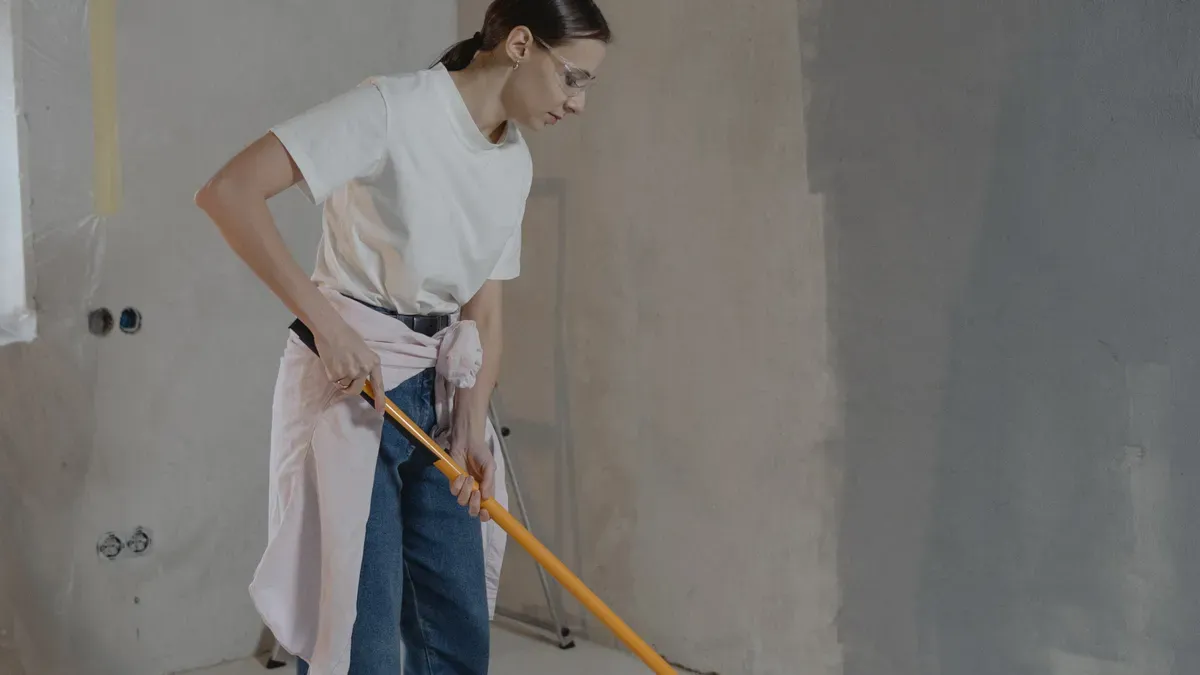
You must begin with essential surface preparation. This step ensures your chosen liquid hardener for garage floors adheres correctly. First, thoroughly clean the concrete. Remove all dirt, dust, oil, grease, and any existing sealers or paints from your garage floor. You can use a degreaser and a power washer for this. Proper preparation prevents adhesion issues later.
Next, address any damage to the concrete. Repair cracks, spalls, and holes using a suitable concrete repair product. Follow the manufacturer’s instructions for these repairs. Etching the concrete surface creates a profile for better adhesion. You can use an acid etch solution or mechanical grinding. This floor preparation is critical for a durable finish. Your garage will benefit from this careful work.
Proper Application and Maintenance
After thorough preparation, you can begin the product application. Follow the product’s specific instructions for your chosen liquid hardener. You typically apply these products using a sprayer, roller, or squeegee. Ensure even coverage across the entire garage floor. Avoid puddling, as this can lead to uneven hardening or a patchy finish.
Allow the product to cure fully. Curing times vary significantly by product. Refer to the manufacturer’s guidelines for specific return-to-service times. Some products allow foot traffic within hours, while others require a full day. Regular cleaning and prompt spill cleanup will maintain your garage floor’s appearance and extend its life. This careful process ensures a long-lasting, protective finish for your garage.
Common Mistakes to Avoid with Garage Floor Coatings
Incorrect Product Selection
You can make a significant mistake by choosing the wrong garage floor coating. Many failures stem from selecting a product that does not match your garage’s specific needs or environment. For instance, if you do not use a UV-stable topcoat, your floor will likely experience yellowing and UV damage, especially near doors and windows. This affects the appearance of your floor. Also, hot tire pickup often occurs on under-cured, too-soft, thin, or poorly bonded coatings. You must choose a coating designed to withstand these conditions.
Low-quality, filler-heavy DIY coatings often lead to poor bond strength. These products might seem budget-friendly initially, but they fail quickly. You need to consider the long-term durability. An epoxy garage floor requires specific properties to last. Always ensure the product you select is compatible with any existing coatings on the concrete. Incompatible coatings can lead to peeling and flaking, wasting your time and money.
Inadequate Preparation and Application
Improper surface preparation is a leading cause of garage floor coating failure. You must properly prepare the concrete. Simply cleaning or acid-etching is often insufficient. You need to grind the concrete to achieve an adequate surface profile. Without this, the coating cannot bond properly. Contaminated concrete, from oils, sealers, fatty acids, silicone, or other chemicals, also prevents good adhesion.
Many issues arise from poor application techniques. Peeling and flaking can result from weak concrete, moisture, dust, or missed recoat windows. Product mixing issues, such as wrong ratios, short mix times, or excessive air entrainment, cause soft, tacky, or uncured epoxy. You must follow the manufacturer’s instructions precisely. Excessive humidity during installation also affects adhesion and curing. Moisture migration through the slab creates pressure on the coating, leading to failure. Proper preparation and careful application are crucial for a durable garage floor.
Selecting the right garage floor coatings enhances your garage’s durability and appearance. You assess your floor, choose coating types, and consider selection factors. Proper application, whether a liquid hardener for garage floors or other best garage floor coatings, ensures optimal results. Prioritize preparation for long-term satisfaction. A well-protected garage floor significantly boosts your property’s value and appearance.
FAQ
What is the main benefit of a liquid hardener for your concrete floor?
Liquid hardeners densify your concrete floor. They increase its hardness and reduce dusting. This improves the durability of your floor.
How long do epoxy garage floor systems typically last?
Standard epoxy garage floor systems typically last 5–10 years. Professional multi-layer epoxy systems can last 15–20+ years.
Can I apply an epoxy coating myself?
You can apply DIY epoxy coatings. However, professional installation often provides superior durability and a longer-lasting finish for your garage.
See Also
How To Pick The Ultimate Concrete Floor Hardener In 2025
Selecting The Best Concrete Densifier Hardener And Sealer For 2025
The Complete 2025 Guide To Finding Top Cementitious Repair Mortars
BANDe Presents The 2025 Handbook For Polished Concrete Densifiers
An Essential Buyer Guide For Concrete Densifiers Hardeners And Sealers
