

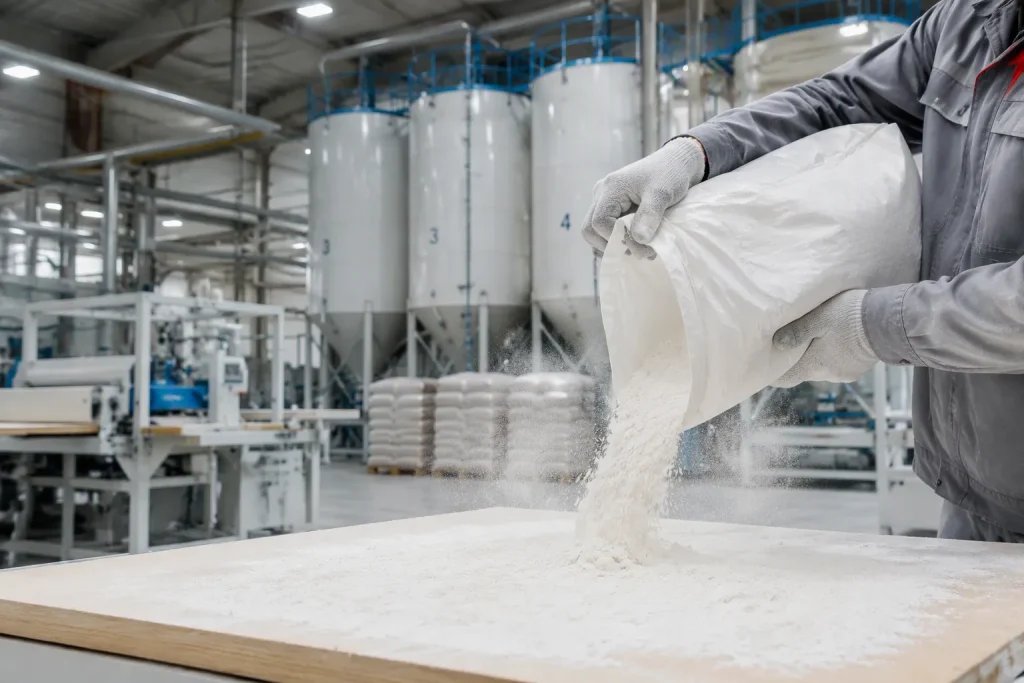
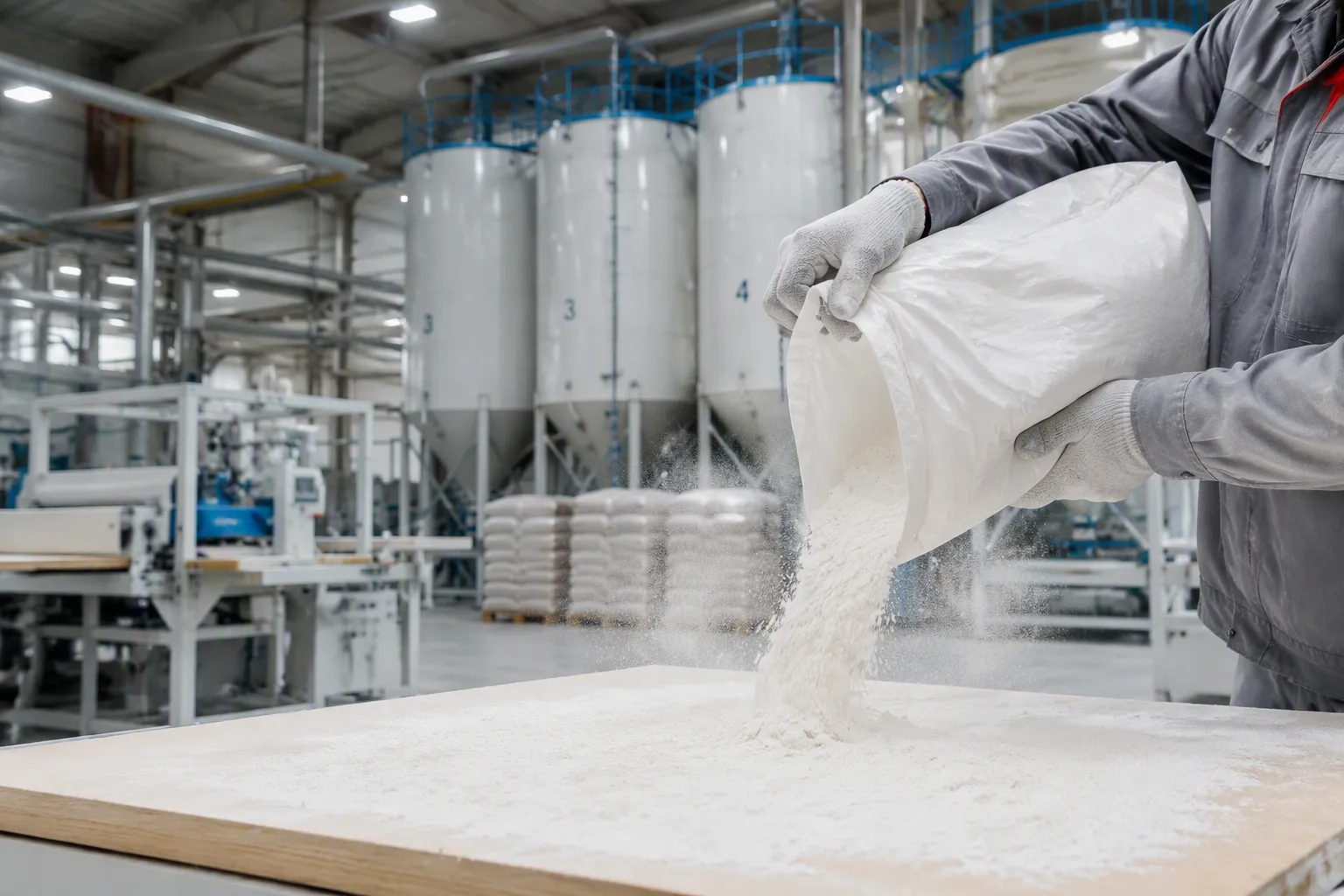
Rain can warp your wooden deck. Fire can threaten your building. Wood has weaknesses. Why choose factory-made inorganic powder for wood? Factory production ensures purity. This powder gives steady performance. Outside treatment delays ignition to 400-480 seconds. Inside treatment ignites in 5 seconds.
Metric | Internal Treatment | External Treatment |
|---|---|---|
Time to Ignition | 5 s | 400-480 s |
Fire Resistance Standard | Not met | Class II satisfied |
This powder coating meets Class II standards. This coating stops moisture damage. This powder fills wood’s structure. This coating prevents swelling. This powder coating lasts long. This coating saves money.
Key Takeaways
Factory-made inorganic powder gives wood products steady quality and purity, cutting down on weak spots.
This powder gives lasting fire safety and moisture protection, making things safer and stronger.
Buying straight from the factory cuts costs and keeps your supply steady, which helps your profits grow.
Factory Advantages for Wood Powder
When you buy inorganic powder for wood from a factory, you get more control than third-party blenders can offer. Factory production gives you the same particle size and chemical mix every time. This consistency removes the variation found in generic additives. Without it, your wood composites or coatings may have weak spots. One bad batch can ruin your whole production run.
Consistent Quality and Purity
Factory facilities follow written quality management systems. ISO 9001:2015 certification ensures traceability and set procedures for every step. This standard matters because it controls how factories check particle size, moisture, and chemical purity. ISO 14001:2015 certification verifies responsible sourcing and environmental compliance, which supports your ESG reporting needs.
Standard | Focus Area | Audit Cycle | Relevance to Inorganic Powder for Wood |
|---|---|---|---|
ISO 9001:2015 | Quality management system | Annual surveillance, 3-year recertification | Ensures consistent product quality, traceability, and documented production procedures |
ISO 14001:2015 | Environmental management | Annual surveillance, 3-year recertification | Verifies responsible sourcing and environmental compliance |
NSF/ANSI 61 | Drinking water safety | Rigorous contaminant testing | Confirms no harmful heavy metals or organic compounds leach above safe limits |
Factories also use advanced testing tools to check purity. WD-XRF measures elements down to 10 ppm. XRD finds crystalline impurities. TGA measures decomposition temperature and weight loss. SEM/EDS looks at surface shape and particle sizes. These methods confirm each batch of wood powder meets your exact needs.
Particle size distribution affects your final product’s strength. Finer particles below 45 μm improve tensile strength and bonding compared to larger ones. Larger particles create gaps that weaken the composite. Consistent PSD prevents these gaps. In one case, tighter PSD control cut film thickness variation from ±15 microns to ±5 microns. The reject rate dropped from 8% to under 1%. This improvement directly prevents weak spots in your wood grain powder coating.
Cost Savings and Reliable Supply
Direct factory sourcing removes the middleman markup. You pay bulk pricing without the broker’s fee. Factories keep guaranteed inventory levels, so you never face sudden shortages. This reliability matters for large-scale manufacturing where downtime costs thousands per hour.
A well-balanced particle size distribution also improves your material efficiency. Finer particles fill gaps between larger ones, creating a denser film. This density means you use less powder per square foot of coverage. Your wood powder for wpc manufacturing becomes more economical. Your wood powder for paper manufacturing achieves better uniformity with less waste.
Consistent quality reduces your reject rate across all product lines. Fewer rejects mean less rework and lower labor costs. Your finishing process runs smoother when every batch behaves the same. This predictability extends to your coating application, your curing cycle, and your final inspection. The factory’s edge translates directly into your bottom line.
When you choose factory-direct sourcing, you also gain technical support. Factory engineers understand how their powder works with different resin systems. They can adjust particle size distribution for your specific application. This partnership improves your products’ durability and performance. You stop guessing and start producing.
Product Benefits for Wood Composites
The factory’s edge gives you more than just a steady supply. The inorganic powder for wood turns normal wood mixes into strong, high-performance materials. You get two key protections: fire resistance and moisture resistance. Both work at the tiny level inside your wood products.
Fire Resistance for Wood
Fire is the biggest danger to wood buildings. The inorganic powder for wood works as a barrier and absorbs heat. When flames come near, the powder takes in heat before the wood gets hot enough to catch fire. This delay gives people time to escape. The powder also slows how fast fire spreads.
Organic flame retardants stop working well over time. Rain and wetness wash them out of the wood. Inorganic powder stays bonded inside the wood mix forever. Your wood grain powder coating keeps its fire rating for the whole life of the product. This lasting protection makes the coating perfect for stores, schools, and homes.
Moisture Resistance and Durability
Water damage ruins wood that is not treated. The powder fills the tiny cells in wood, blocking water from getting in. This filling stops swelling, bending, and cracking. Test results show the big improvement. For example, at a 10% fiber mix, untreated wood mixes soaked up 8% water. But treated mixes with 5% zinc oxide nanoparticles soaked up only 1.5% — that is 81.25% less. At a 20% fiber mix, water absorption went from 10.2% down to 2.2%, a 78.43% drop. Your wood-plastic mix stays the same size even in damp places.
Sunlight also damages wood surfaces over time. The powder gives better protection against sunlight. Fast weathering tests show clear results:
Treatment | ΔE after 3000 h weathering |
|---|---|
UV326 | 20.0 |
TiO₂ | 11.7 |
CB | 10.8 |
The mix of nano-CB and rutile nano-TiO₂ works together to block UV rays. This slows down damage from sunlight and keeps the plastic in your mix strong. Your wood effect powder coating keeps its color and strength for years.
Soaking Scots pine wood in a titania sol in paraffin (at 212 °C) improved UV resistance, with color change and lignin breakdown reduced by more than 50% compared to untreated wood after 1176 hours of fast weathering.
The protective coating also fights scratches and chemicals. Your products last through daily use in busy places.
Low-bake powder coatings open up more uses. These formulas harden at lower heat, keeping the strength and look of sensitive wood and MDF. The coating fully covers the base, so no edge banding is needed that can peel off and cause damage. This tech allows powder sublimation for detailed decoration without heat damage.
Ultraviolet (UV)-cured powder coatings have been sold since the 1990s and were first made to finish heat-sensitive medium density fiberboard (MDF) furniture parts.
The finished coating has no VOCs or HAPs. You get top-quality finishes while meeting strict environmental rules. These eco-friendly benefits put your products in markets that care about sustainability. Uses for wood grain powder coating include furniture, cabinets, floors, and building parts. You give realistic wood-like finishes with great performance. The environmental benefits go beyond just following rules — you cut waste, energy use, and harmful emissions. Your wood powder for wpc making and wood powder for paper making both benefit from these sustainable traits. The finishing process becomes cleaner, safer, and more efficient. Your investment in quality powder pays off with better durability, fire safety, and environmental care.
Wood grain powder coating provides business security. Wood grain powder coating delivers resistance, durability, and sustainability. Wood grain powder coating is environmentally friendly. Wood grain powder coating creates beautiful finishes. Wood grain powder coating simplifies finishing. Wood grain powder coating enhances finishing. Wood powder works with wood grain powder coating. Wood powder complements wood grain powder coating. Use wood powder for finishing. Wood grain powder coating finishing creates resistance. Wood grain powder coating is investment. Wood powder is key. Choose wood powder. Protect wood. The powder is fine. Evaluate supply chain. Request samples. Experience the difference.
FAQ
How does this powder compare to liquid wood treatments?
Liquid treatments wash out over time. Inorganic powder bonds permanently inside the wood structure. Your wood grain powder coating keeps working for the product’s entire life.
Can you apply this coating to MDF and other sensitive woods?
Yes. Low-bake powder formulas harden at lower temperatures. This process protects heat-sensitive materials. Your wood powder for wpc manufacturing works well with this coating method.
Does the powder change the wood’s natural appearance?
No. The powder fills gaps without hiding grain patterns. You get realistic wood grain powder coating finishes. Your finishing process produces beautiful, durable surfaces.
See Also
The Ultimate 2025 Industrial Floor Hardener Comparison Guide
Top Floor Hardener Solutions For UK Industrial Warehouses 2025
The Complete Guide To BANDě Inorganic Mineral Plaster 2025
Top 5 Concrete Floor Hardeners For Industrial Use 2025
Inorganic Versus Organic Wall Coatings Detailed 2025 Comparison
