

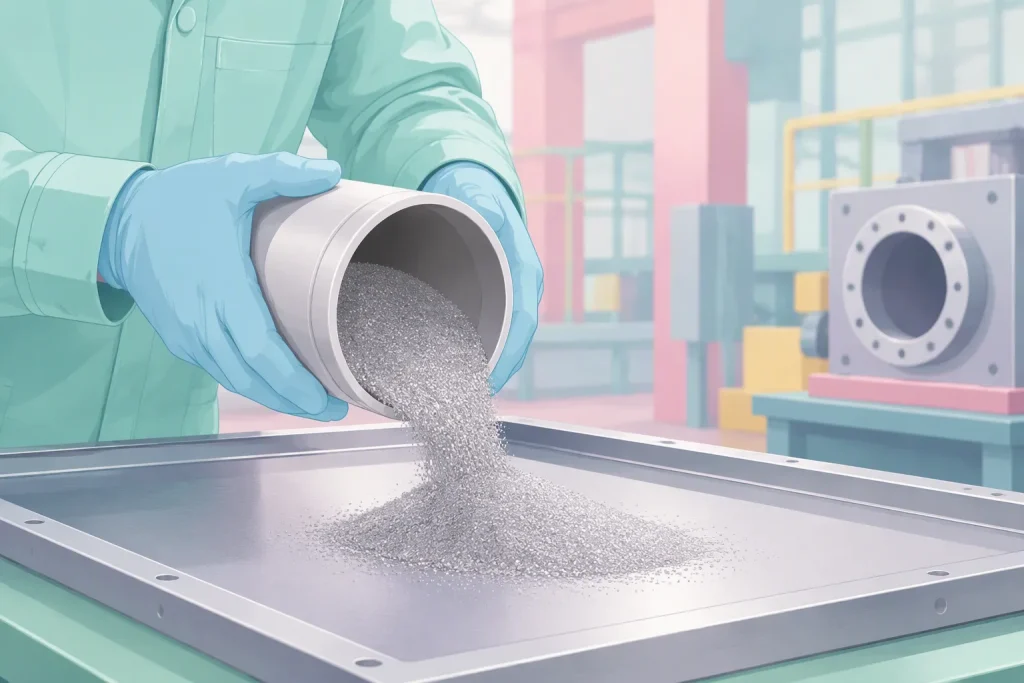
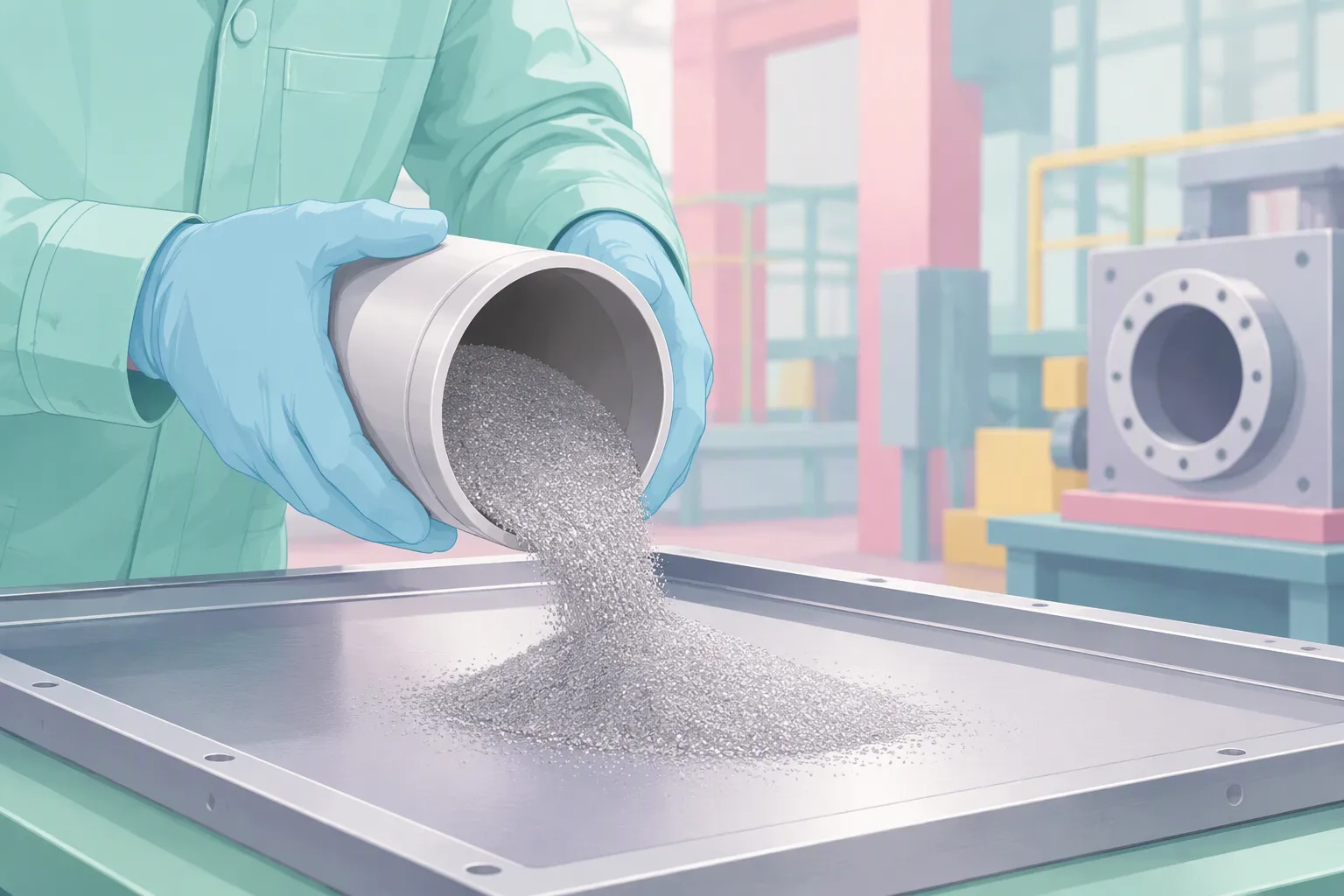
A metal component fails prematurely. Subpar materials cause this costly failure. The choice of inorganic powder for metal matters. High-quality powder determines product quality. Proper powder coating improves surface durability. Quality coatings resist corrosion. Advanced materials ensure reliable performance. Factory advantages and quality assurance guarantee consistent powder quality.
Key Takeaways
High-quality inorganic powder boosts metal product durability and corrosion resistance.
Factory quality control and certifications ensure consistent powder performance.
Recycling powder cuts waste and lowers costs, supporting sustainable manufacturing.
Why Inorganic Powder for Metal Matters
What Is Inorganic Powder?
Inorganic powder for metal refers to finely divided, non-carbon-based particles that manufacturers incorporate into metal products or apply onto their surfaces. These materials include metal oxides, carbides, and ceramic compounds. They serve as functional reinforcements or protective agents throughout the manufacturing process. The composition of these powders directly influences the final metal product’s structural integrity and surface behavior.
Quality stands as the single most critical factor in this equation. High-grade inorganic powder for metal delivers consistent particle size distribution, chemical purity, and thermal stability. Poor-quality powder introduces inconsistencies that propagate through production. When manufacturers recycle powder for reuse, these inconsistencies compound. Each recycling cycle can alter particle morphology or introduce contamination. A contaminated batch degrades the final product’s mechanical properties, leading to premature failure in service.
The powder metallurgy process demonstrates this principle clearly. During recycling for additive manufacturing, inorganic reinforcements integrate into the metal matrix through vacuum induction sintering. This process consolidates powders into dense electrodes, which manufacturers then atomize. The inorganic powder creates metal-matrix composite powders, producing a homogeneous feedstock. This homogeneity prevents phase segregation and enhances material properties for advanced manufacturing applications. Without precise control over powder quality, this entire process produces inconsistent results.
Powder Coating and Other Key Applications
Powder coating represents the most visible application of inorganic powder for metal. This dry finishing process applies electrostatically charged powder particles onto metal surfaces. Heat then cures the coating, forming a durable, protective layer. The coating improves surface durability and corrosion resistance significantly. For end users, this translates directly into longer-lasting products with reduced maintenance requirements.
The table below illustrates how powder quality affects key performance indicators of coated metal products:
KPI | Definition & Relevance to Inorganic Powder Quality |
|---|---|
Covering ability | Directly tied to the powder’s refractive index and particle size; high-quality inorganic powders (e.g., rutile TiO2) provide superior opacity. |
Weather resistance | Depends on the chemical stability of the powder; high-quality inorganic pigments resist UV, humidity, and temperature, preventing fading or chalking in metal coatings. |
Heat resistance | Determined by the powder’s thermal stability; quality powders withstand curing temperatures (180–200°C) without decomposition or discoloration. |
Dispersity | Reflects the powder’s surface treatment and particle size distribution; poor-quality powders flocculate, causing gloss loss, color mottling, and floating in metal finishes. |
Solvent resistance | Indicates the powder’s chemical inertness; high-quality powders resist dissolution, preventing color seepage and contamination in multi-layer metal coatings. |
Oil absorption | Indirectly measures specific surface area and particle size; high-quality powders with controlled surface area reduce resin demand, improving leveling and cost efficiency. |
Weather resistance (service life) | Directly correlates with powder purity and surface stability; superior powders extend the outdoor service life of coated metal products by resisting fading and powdering. |
A well-managed powder coating line maximizes efficiency and application consistency. Automated powder coating systems apply uniform layers across complex geometries. These systems reduce material waste through precise spray control and effective recycling mechanisms. The application and finish quality depend heavily on powder characteristics. Consistent particle size ensures even deposition. Proper surface treatment prevents clumping during storage and application.
Protective coatings extend product longevity across industries. Automotive components, architectural structures, and industrial equipment all benefit from quality powder coating. The coating resists chipping, scratching, and chemical attack. This durability reduces lifecycle costs for manufacturers and end users alike. Automated powder coating also improves workplace safety by eliminating solvent-based liquid paints. The efficiency gains from modern powder coating lines translate into faster production cycles and lower energy consumption. Ultimately, the choice of inorganic powder for metal determines whether these benefits materialize or fall short.
Factory Advantages and Quality Assurance
Advanced Manufacturing and Process Control
Powder metallurgy delivers distinct factory advantages for inorganic powder for metal production. This approach achieves 95-98% material utilization. CNC machining reaches only 60-70% utilization. Die casting achieves 85-95% utilization. Near-net-shape manufacturing reduces scrap generation. Process trim reenters production. These efficiency gains lower production costs. Sustainable manufacturing practices emerge from this material efficiency. The recyclable nature of metal powders supports resource conservation.
Production line control requires rigorous attention. Several risks threaten product consistency:
Dust release during dosing increases airborne particles and compromises product purity.
Agglomeration from moisture creates clumps that disrupt flow.
Cross-contamination from shared lines affects product consistency.
Equipment wear from alumina hardness increases maintenance needs.
Poorly hydrated powders create fish eyes leading to uneven thermal treatment.
Extended circulation of sterile water causes mineral deposits on internal surfaces.
Changes in powder quality parameters negatively impact heat transfer.
The automated powder coating line exemplifies proper process control. Automated powder coating systems apply uniform layers. These systems reduce material waste. The automated powder coating process ensures consistent thickness. Recycling mechanisms capture overspray. This closed-loop approach supports the circular economy. The automated powder coating line operates with minimal intervention. The powder coating line achieves high throughput. Metal powders reclaim and reprocess. This recycling reduces raw material demand. The circular economy minimizes pollution. Powder recycling lowers costs. The circular approach reduces waste. Efficient recycling programs support sustainable operations.
Testing and Certifications for Reliability
Reliability assurance relies on advanced measurement techniques. Particle size analysis using sieving determines powder consistency. Elemental analysis verifies chemical composition. Combustion analysis measures carbon, hydrogen, nitrogen, oxygen, and sulfur concentrations. These CHNOS determinations support purity verification. The analysis of carbon, sulfur, and oxygen is critical for classifying materials.
The company holds ISO 9001:2015 Certification, a recognized quality management standard. This certification demonstrates adherence to internationally accepted quality management principles.
Routine process monitoring involves standardized testing. These tests ensure product consistency and raw material purity. The combination of advanced manufacturing and rigorous testing ensures that inorganic powder for metal delivers consistent performance. Superior coatings result from careful process control. The durability of finished products depends on careful application.
The powder coating application benefits from these measures. Consistent powder characteristics ensure uniform coating application. Automated powder coating systems rely on precise particle specifications. The powder coating line maintains these specifications through continuous monitoring. Superior coatings resist chipping. The efficiency of modern powder coating lines translates into faster cycles. Sustainable practices reduce energy consumption. The circular economy framework ensures material efficiency. Protective coatings extend product longevity. Quality coatings depend on consistent powder characteristics. Efficient application methods reduce waste. The circular economy model supports long-term sustainability. Proper recycling programs ensure material reuse. Automated powder coating systems maximize efficiency. The powder coating line delivers consistent results. Coatings protect against environmental damage. Materials remain in use through effective recycling. The circular approach to materials management supports sustainable operations. Sustainable manufacturing depends on efficient recycling. Quality coatings begin with superior materials.
Quality inorganic powder determines metal product performance. Factory advantages ensure superior materials through advanced process control. Quality assurance builds trust through rigorous testing and certifications. High-quality powder coating delivers durable surfaces. These coatings resist corrosion and extend product life. Powder coating applications benefit from consistent particle characteristics. Quality coatings reduce failures and maintenance costs. Recycled powder achieves material use efficiency up to 95%. This efficiency lowers procurement expenses. Quality-focused partnerships prevent defects through collaborative problem-solving. Manufacturers should evaluate suppliers on purity, particle distribution, and certifications. Choosing a factory prioritizing quality yields better products, fewer failures, and long-term savings. Powder coating excellence starts with superior materials.
Recycled powder can lead to material use efficiency of up to 95%.
FAQ
What factors cause defects in powder coating applications?
Moisture in coating materials causes defects. Poor particle size affects coating quality. Contamination degrades coatings. Consistent coating materials prevent problems. Sustainable coatings need quality coating materials. Good coating depends on quality.
How does the circular economy model apply to metal powder manufacturing?
The circular economy model enables sustainable coating materials recovery. Coatings use recyclable inputs. This circular economy approach reduces waste. Coating materials come from reliable sources. The circular economy supports materials use.
Why do manufacturers require certification for powder materials?
ISO 9001:2015 certification verifies coating materials. Sustainable coatings require consistent quality. Proper certifications guarantee reliable coating performance. Certified materials support sustainable coating production. Good coatings depend on quality inputs.
See Also
The Complete 2025 Handbook For BANDě Mineral Plaster Powder
Achieve Healthy Living With Inorganic Anion Wall Paint In 2025
Inorganic Versus Organic Wall Coatings: A Thorough 2025 Analysis
The Rising U.S. Demand For Inorganic Seven-Color Wall Coatings
Exploring The Scientific Principles Behind Inorganic Anion Paints
