


Choosing eco-friendly concrete flooring materials can transform your business space. Not only do they enhance aesthetics, but they also promote sustainability. By opting for sustainable flooring, you contribute to a healthier environment. Many businesses are making this switch, enjoying benefits like cost savings, improved employee productivity, and an enhanced brand image.
Key Takeaways
Choosing eco-friendly flooring materials like bamboo and cork enhances your business space while promoting sustainability.
Opt for materials with certifications to ensure responsible sourcing and environmental safety, such as FSC and CARB compliance.
Incorporating sustainable flooring options can improve employee productivity and enhance your brand image as environmentally conscious.
Bamboo

Sustainability
Bamboo stands out as one of the most sustainable flooring options available today. This remarkable plant grows incredibly fast, reaching maturity in just 3 to 5 years. In contrast, traditional hardwoods can take decades to mature. Here’s a quick comparison:
Material | Growth Rate |
|---|---|
Bamboo | 3-5 years |
Traditional Hardwoods | Decades to mature |
Because of its rapid growth, bamboo can be harvested without causing significant environmental harm. It regenerates quickly, making it a renewable resource that helps reduce deforestation. When you choose bamboo flooring, you’re not just enhancing your space; you’re also making a positive impact on the planet.
To ensure you’re selecting truly sustainable bamboo flooring, look for products that carry certifications. Here are some key certifications to consider:
FSC: Guarantees responsible sourcing and adherence to environmental standards.
CARB Compliance: Ensures safety from formaldehyde emissions.
ISO: Ensures best practices in production and sustainability.
Aesthetic Appeal
Bamboo flooring offers a unique aesthetic that can elevate any business space. Its natural grain patterns and warm tones create a welcoming atmosphere. You can find bamboo in various styles, from traditional to modern, allowing you to match it perfectly with your design vision.
Imagine walking into your office with sleek bamboo floors that not only look stunning but also tell a story of sustainability. The versatility of bamboo means it can fit into any setting, whether you’re aiming for a contemporary look or a more rustic vibe. Plus, its durability ensures that it can withstand the hustle and bustle of daily business activities.
Incorporating bamboo flooring into your space is a smart choice. You’ll enjoy the beauty and comfort it brings while contributing to a more sustainable future.
Cork
Renewable Resource
Cork is a fantastic choice for eco-friendly flooring options, thanks to its renewable nature. You might be surprised to learn that cork comes from the bark of the cork oak tree (Quercus suber). The harvesting process, known as stripping, involves removing the outer bark without harming the inner layer. This allows the tree to regenerate, making cork a sustainable resource.
Here’s how cork harvesting works:
Cork trees can be harvested every 9 to 12 years.
The first harvest occurs when the tree is about 25 years old.
Skilled workers, called ‘strippers’, use hand-forged axes to carefully strip the bark.
After harvesting, the tree absorbs more carbon dioxide, enhancing its environmental benefits.
This method not only ensures sustainability but also supports the local economy and traditional craftsmanship. By choosing cork flooring, you’re making a choice that benefits both the planet and the people who harvest it.
Comfort and Insulation
Cork flooring offers a unique texture that adds warmth and comfort to your business space. Its natural cushioning makes it a pleasure to walk on, reducing fatigue for employees who spend long hours on their feet. Plus, cork has excellent insulation properties, helping to maintain a comfortable temperature in your space.
You’ll also appreciate that cork flooring contributes to better indoor air quality. It resists mold and mildew, thanks to its anti-microbial properties. This means you can create a healthier environment for your employees and clients. With cork, you get a flooring option that not only looks great but also promotes well-being.
Incorporating cork into your business space is a smart move. You’ll enjoy the aesthetic appeal, comfort, and sustainability that cork flooring brings. It’s a choice that reflects your commitment to eco-friendly practices while enhancing the overall atmosphere of your workplace.
Reclaimed Wood
Environmental Benefits
Reclaimed wood is a fantastic choice for eco-friendly flooring options. By using wood salvaged from old structures, you help reduce the demand for new lumber. This choice has significant environmental benefits:
It avoids greenhouse gas emissions associated with new material manufacturing.
It reduces landfill waste by repurposing existing materials.
It helps preserve historical materials, giving your space a unique story.
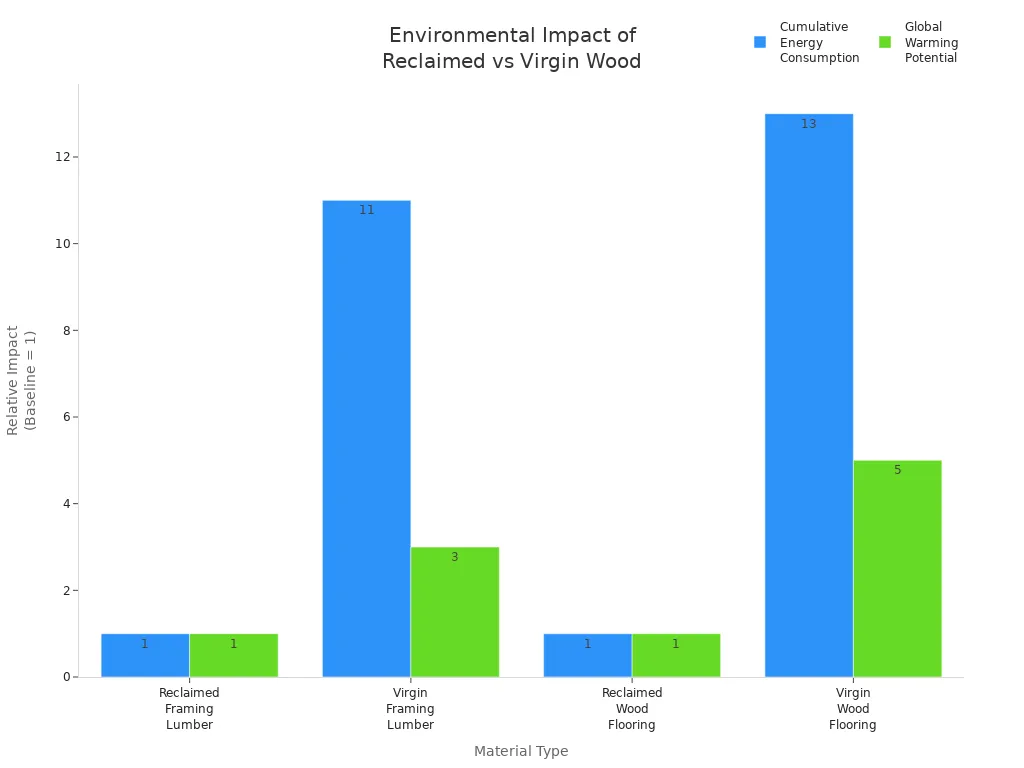
When you choose reclaimed wood flooring, you’re not just making a stylish choice; you’re also contributing to sustainability. Check out this table that compares the environmental impact of reclaimed wood versus virgin wood:
Material Type | Global Warming Potential | |
|---|---|---|
Reclaimed Wood Flooring | 1 (baseline) | 1 (baseline) |
Virgin Wood Flooring | 13 times greater | 5 times greater |
Character and History
Reclaimed wood brings character and history to your business space. Each piece has its own story, often originating from old barns, factories, or even historic buildings. This unique background adds a layer of charm that new wood simply can’t replicate.
Common sources of reclaimed wood include:
Previously used construction materials
Using reclaimed hardwood flooring not only enhances the aesthetic appeal of your space but also connects you to the past. Imagine the conversations sparked by the rich textures and colors of reclaimed wood. It’s a choice that reflects your commitment to sustainability while celebrating craftsmanship and history.
Linoleum
Biodegradable Materials
Linoleum flooring is a standout choice among eco-friendly flooring options. Made from natural materials like linseed oil, cork dust, and wood flour, it’s completely biodegradable. This means that when you decide to replace it, it won’t contribute to landfill waste. Instead, it breaks down naturally, making it a sustainable choice for your business space.
Here’s why linoleum is a great option for sustainability:
It’s made from renewable resources.
It doesn’t release harmful chemicals into the environment.
Design Versatility
When it comes to design, linoleum flooring offers a unique aesthetic that can complement various styles. While it may not have as many intricate design possibilities as vinyl, it still provides a range of solid colors and subtle patterns. You can easily cut linoleum into different shapes and sizes, allowing for creative layouts in your space.
Consider these points about linoleum’s design versatility:
It lasts between 25 to 40 years with proper care, making it a long-term investment.
Its softer, muted tones create a calming atmosphere, perfect for offices or retail spaces.
You can mix and match colors to create custom designs that reflect your brand’s identity.
By choosing linoleum flooring, you’re not just opting for a sustainable material; you’re also enhancing the visual appeal of your business space. It’s a flooring option that balances eco-friendliness with style, making it an excellent choice for any environmentally conscious business owner.
Rubber
Durability
Rubber flooring stands out for its impressive durability. In commercial settings, you can expect rubber flooring to last between 10 to 20 years. This longevity makes it a smart investment for your business. Rubber can withstand heavy foot traffic, making it ideal for busy environments like gyms, schools, and retail spaces. Plus, its slip-resistant surface enhances safety, reducing the risk of accidents.
Here are some key benefits of rubber flooring’s durability:
Resistant to wear and tear: Rubber can handle the daily grind without showing signs of damage.
Easy to maintain: A simple sweep and occasional mopping keep it looking fresh.
Comfortable underfoot: Its cushioning effect reduces fatigue, making it pleasant for employees who spend long hours standing.
Eco-Friendly Sourcing
When you choose rubber flooring, you also support sustainability. Eco-friendly rubber primarily comes from two sources: the latex sap harvested from the Pará rubber tree (Hevea brasiliensis) and recycled rubber, especially from reclaimed tires. This dual sourcing not only promotes sustainability but also helps reduce waste. By opting for rubber flooring, you contribute to a circular economy that values resourcefulness.
Rubber flooring is a fantastic choice if you want to combine durability with eco-friendly flooring options. You’ll enjoy a stylish, long-lasting surface while making a positive impact on the environment.
Eco-Friendly Concrete Flooring Materials
Hardening Products
When you think about eco-friendly concrete flooring materials, consider the benefits of hardening products. These innovative solutions enhance the strength and durability of your concrete floors. They work by penetrating the surface and reacting with the concrete, creating a robust three-dimensional network. This process not only increases the overall supporting strength but also helps your floors resist wear and tear.
Using hardening products means you can enjoy a surface that stands up to heavy foot traffic and daily use. Plus, they contribute to sustainability by reducing the need for frequent repairs or replacements. You’ll find that investing in these products pays off in the long run.
Longevity
Longevity is a significant advantage of eco-friendly concrete flooring materials. In commercial settings, you want flooring that lasts. Traditional concrete typically requires replacement every 10 to 20 years. In contrast, eco-friendly concrete can last between 30 to 100 years! This extended lifespan not only saves you money over time but also minimizes disruptions to your business operations.
Here’s a quick comparison of longevity between eco-friendly and traditional concrete:
Type of Concrete | Longevity (Years) | Durability Characteristics |
|---|---|---|
Eco-friendly Concrete | 30 to 100 | Enhanced strength and resistance to wear and tear |
Traditional Concrete | 10 to 20 | Standard durability, requiring more frequent repairs or replacements |
By choosing eco-friendly flooring options, you’re making a sustainable choice that benefits both your business and the environment. You’ll enjoy a beautiful, durable surface that stands the test of time.
Vinyl
Eco-Friendly Options
Vinyl flooring has come a long way in terms of sustainability. You can find several eco-friendly flooring options that make it a great choice for your business. Here are some popular types:
Recycled Vinyl Flooring: This option uses repurposed materials, reducing waste while providing durability for high-traffic areas.
Non-PVC Vinyl Flooring: Safer and more sustainable, this type avoids harmful chemicals, improving indoor air quality.
Bio-Based Vinyl Flooring: Made from renewable resources, it offers an eco-friendly alternative to traditional vinyl.
Waterproof Vinyl with Eco-Friendly Backing: This combines durability with environmentally responsible materials, perfect for areas prone to moisture.
By choosing these options, you not only enhance your space but also contribute to sustainability.
Cost-Effectiveness
When it comes to cost, eco-friendly vinyl flooring can be quite competitive. Here’s a quick comparison of different flooring types:
Flooring Type | Cost per Square Foot | Installation Cost per Square Foot |
|---|---|---|
Basic Sheet Vinyl | $2–$5 | |
Luxury Vinyl Planks | $3–$7 | $2–$5 |
Linoleum | $3–$6 | $3–$6 |
As you can see, eco-friendly options like recycled vinyl flooring can fit into various budgets. They offer a balance of affordability and sustainability, making them a smart choice for your business. You’ll enjoy the benefits of a stylish, durable floor without breaking the bank.
Choosing vinyl flooring means you’re investing in a sustainable future while keeping your costs manageable. It’s a win-win for your business and the environment!
Natural Stone
Timeless Elegance
Natural stone flooring brings a touch of timeless elegance to any business space. Its unique textures and colors create a sophisticated atmosphere that can impress clients and enhance employee morale. Whether you choose marble, granite, or slate, each type of stone offers a distinct look that adds character to your environment. Imagine walking into a lobby adorned with polished marble floors or a conference room featuring rich slate tiles. The beauty of natural stone is simply unmatched.
Longevity
One of the most significant advantages of natural stone flooring is its longevity. With proper installation and maintenance, you can expect it to last between 40 to 75+ years in commercial settings. Premium materials like granite can even endure for centuries! This durability not only saves you money in the long run but also reduces the need for frequent replacements, making it a sustainable choice.
However, it’s essential to consider the environmental impact of quarrying and processing natural stone. Research shows that these processes can lead to soil erosion, deforestation, and contamination of local waterways. To mitigate these effects, many companies are adopting better management practices, such as recycling water and reducing energy use during extraction. Choosing natural stone can still align with your commitment to sustainability, especially when you select products from responsible sources.
Carpet Tiles
Recycled Materials
Carpet tiles are a fantastic choice when you want to embrace sustainability in your business space. Many carpet tiles come from recycled materials, which helps reduce waste in landfills. For instance, Shaw Contract’s Re[Turn]® carpet tile reclamation program has diverted tons of carpet tiles from landfills. During one renovation project, they reclaimed about 34 tons of carpet tile and recycled it into new EcoWorx carpet tiles. This program not only supports sustainability goals but also promotes a circular economy, making it a win-win for your business and the environment.
Design Flexibility
One of the best things about carpet tiles is their design flexibility. You can easily mix and match colors and patterns to create a unique look that reflects your brand’s identity. Whether you want a bold statement or a subtle backdrop, carpet tiles can help you achieve your vision.
Here are some design ideas to consider:
Create Zones: Use different colors to define areas within your space, like workstations or relaxation zones.
Incorporate Patterns: Combine various patterns to add visual interest and depth to your flooring.
Easy Replacement: If a tile gets damaged, you can replace just that tile instead of the entire floor, saving time and money.
With carpet tiles, you get the best of both worlds: a sustainable flooring option that doesn’t compromise on style. They’re perfect for businesses looking to enhance their space while being eco-friendly.
Terrazzo
Customizable Patterns
Terrazzo flooring offers incredible design flexibility, allowing you to create stunning, unique patterns that reflect your brand’s identity. You can mix various materials, colors, and textures to achieve a look that’s entirely your own. Whether you prefer bold geometric designs or subtle, organic shapes, terrazzo can accommodate your vision.
Here are some ideas for customizing your terrazzo flooring:
Color Combinations: Choose colors that align with your brand or create a vibrant atmosphere.
Aggregate Choices: Incorporate different aggregates like glass, marble, or granite for added texture and visual interest.
Pattern Layouts: Experiment with layouts to define spaces or create focal points in your business area.
With terrazzo, the possibilities are endless, making it a fantastic choice for any eco-friendly flooring options.
Sustainable Ingredients
Sustainability is at the heart of terrazzo flooring. It often uses eco-friendly materials that minimize environmental impact. For instance, the epoxy resin in terrazzo incorporates high amounts of recycled and VOC-free materials. This not only enhances the sustainability of the flooring but also ensures a healthier indoor environment.
Here’s a quick look at some common materials used in sustainable terrazzo flooring:
Material Type | Description |
|---|---|
Epoxy Resin | Uses high amounts of recycled and VOC-free materials. |
Aggregate Chips | Commonly sourced from local quarries, includes marble, granite, and other stones. Glass and decorative aggregates can also be used. |
Additionally, sourcing aggregate material from local quarries helps reduce carbon emissions. You can reclaim materials that would otherwise go to waste, further enhancing the sustainability of your flooring choice.
Terrazzo flooring stands out for its durability, often preferred over other green flooring materials due to its long lifespan and low maintenance. This makes it a smart investment for your business space.
Choosing eco-friendly flooring options not only enhances your business’s aesthetic but also supports sustainability. By incorporating materials like bamboo, cork, and recycled products, you create a healthier environment for your employees and clients. This commitment to sustainability strengthens your brand image as innovative and caring. So, why not consider these options for your space?
Embrace the beauty and benefits of eco-friendly flooring today!
FAQ
What are eco-friendly flooring options?
Eco-friendly flooring options include materials like bamboo, cork, reclaimed wood, and recycled vinyl. These choices promote sustainability and reduce environmental impact.
How do I maintain sustainable flooring?
To maintain sustainable flooring, regularly clean with a damp mop and avoid harsh chemicals. Follow manufacturer guidelines for specific care instructions.
Are eco-friendly flooring options more expensive?
While some eco-friendly flooring options may have higher upfront costs, they often save you money in the long run through durability and lower maintenance needs.
See Also
Top 10 Sustainable Stone Cleaners for a Shining Home in 2025
Best Floor Hardening Options for UK Industrial Warehouses
Selecting the Top 5 Concrete Floor Hardeners for Industrial Use
Best 5 BANDě Indoor Epoxy Wall Coatings for 2025
Your Comprehensive Guide to Benefits of BANDě Polished Concrete Floors
