


Indoor air quality is very important for your health. Bad air can cause breathing problems and other health issues. Common allergens like dust, mold, and harmful chemicals often hide in your home. Luckily, you can easily learn how to improve indoor air quality with a few simple tips.
Key Takeaways
Find common indoor pollutants such as dust, mold, and VOCs. This helps make the air better.
Clean and organize often to lower dust and allergens in your home.
Open windows and use exhaust fans to get fresher air.
Identify Pollutants
Common Sources
Indoor air pollution can come from many places in your home. Here are some common indoor air pollutants to know about:
Combustion byproducts: These include carbon monoxide, smoke, and soot.
Natural substances: Radon, pet hair, and mold can hurt air quality.
Biological agents: Molds and dust mites grow in wet areas.
Household chemicals: Cleaning supplies, paints, and air fresheners release VOCs.
Outdoor pollutants: Radon and pesticides can come inside, harming your air.
Source of Indoor Air Pollution | Contribution to Indoor Air Pollution |
|---|---|
Smoking | Raises PM2.5 levels by 25 to 45 µg/m3 |
Cooking | Makes about 30% of indoor fine particles |
Consumer Products | Add 10% to 20% of VOCs |
Everyday Chores | Create airborne particles like city pollution |
Symptoms of Poor Air Quality
Noticing the signs of bad indoor air quality is important for your health. If you see any of these signs, it may be time to improve your home’s air quality:
These signs can mean you’re around harmful pollutants. If you feel these often, think about ways to improve your indoor air quality.
How to Improve Indoor Air Quality by Reducing Dust
Cleaning Routines
To make the air in your home better, you should have good cleaning habits. Cleaning often helps lower dust levels a lot. Here are some tips to help you start:
Use slightly damp cloths when wiping surfaces. This way, you catch dust instead of just moving it.
Vacuum rugs and upholstery often. This stops dust from settling and keeps your home fresh.
Wash bedding and soft fabrics regularly. This helps reduce dust and keeps allergens away.
Keep entryways clean. Ask everyone to take off their shoes inside to cut down on dirt.
Air from fans and daily activities can spread dust around your home. Messy areas hold dust, making it harder to clean well. By focusing on these spots, you can lower dust levels a lot.
Experts suggest some extra cleaning methods to keep dust away:
Professional carpet cleaning: Do this at least once a year to get rid of deep dust and dirt.
Regular care of hardwood floors: Use the right cleaning products to keep them dust-free.
Limit decorative items: Fewer knickknacks help cut down on dust.
Implement a no-shoes policy: This stops outdoor dust from coming into your home.
Wash window screens: Do this at least once a year to filter out dust and pollen.
Use air purifiers: They help remove both visible and invisible dust from the air.
Decluttering Tips
Decluttering is another key step to improve indoor air quality. Less clutter helps you control dust and allergens better.
Reducing clutter is very important. Clutter can hold dust and allergens, making cleaning harder and letting particles float in the air. By organizing your space, you make it easier to clean and lower allergens in your home.
Here are some tips to help you declutter:
Focus on high-dust areas like bookshelves and under the bed. These places often trap dust mites and mold.
Organize your things. This makes cleaning easier and cuts down on items that collect dust.
Simplify your space. Fewer items mean less dust, making cleaning easier.
By following these cleaning routines and decluttering tips, you can lower indoor air pollution and improve air quality in your home.
Improve Ventilation
Good ventilation is very important for fresh air in your home. It helps get rid of old air and brings in clean air. This can really make your indoor air quality better. You can easily improve ventilation by doing simple things like opening windows and using exhaust fans.
Open Windows
Opening your windows is one of the easiest ways to let fresh air in. When you do this, outdoor air can flow in. This helps mix with indoor pollutants. On a nice day, just a few minutes of open windows can help a lot. Plus, it’s a great way to feel the natural breeze! 🌬️
Use Exhaust Fans
Exhaust fans are very important for good air quality. They quickly take out air pollutants from your home, especially in kitchens and bathrooms. Here’s how they help:
Impact of Exhaust Fans on Indoor Pollutants | Description |
|---|---|
Exhaust fans help get rid of harmful pollutants from indoor spaces fast. | |
Building pressurization | They help keep the right pressure levels, which can affect air quality. |
Regulatory codes for specific areas | Some places like labs and cafeterias have rules for ventilation to keep people safe. |
Using exhaust fans while cooking or showering can really lower humidity and smells. This simple action can help you breathe better and feel more comfortable at home.
By focusing on these two strategies, you can easily improve ventilation and make a healthier living space for you and your family.
Control Humidity Levels
Keeping the right humidity in your home is very important for good air. Too much humidity can cause mold and dust mites. These can make allergies and other health problems worse. You should aim to keep indoor humidity between 30% and 50%. This level helps stop mold and makes your home healthier.
Use Dehumidifiers
Dehumidifiers are great for controlling humidity. They take out extra moisture from the air. This makes it harder for mold and dust mites to grow. If you live in a humid place, think about using a dehumidifier in areas like basements or bathrooms. This will help reduce dampness and improve your indoor air quality.
Air conditioners can also help with humidity. They cool your home and lower moisture levels. Just remember to keep windows and doors closed while the air conditioner is on. This helps it work better.
Monitor Humidity
It’s important to watch humidity levels. You can use an air quality monitor to check humidity and make sure it stays in the right range. If you see humidity going up, act fast. Open windows on dry days or turn on your dehumidifier to lower it.
By controlling humidity, you can cut down on allergens in your home. This simple step can make your living space healthier and more comfortable for you and your family.
Use Air Purifiers
Benefits of Air Purifiers
Air purifiers can really help your home’s air quality. They filter out bad pollutants, making the air healthier. Here are some important benefits of using air purifiers:
Reduce Allergens: Air purifiers can lower allergens like dust, pollen, and pet hair. This is great if you or someone in your home has allergies.
Eliminate Odors: They help get rid of bad smells from cooking, pets, and smoke, keeping your home smelling nice.
Combat Airborne Illnesses: Many air purifiers use UV light or other methods to kill germs and viruses, lowering the chance of getting sick.
Improve Sleep Quality: Cleaner air can help you sleep better. If you breathe easier at night, you might wake up feeling more rested.
Enhance Overall Comfort: With fewer pollutants in the air, you’ll likely feel more comfortable and less tired during the day.
When picking an air purifier, think about the type of filter it has. Here are some good options:
Mechanical Filters: These catch particles like dust and pollen. HEPA filters work well, cutting airborne particles by 12% to 80%.
Electronic Air Cleaners: They use static electricity to trap particles, pulling air through an ionization area.
Gas-phase Air Filters: These use activated carbon to soak up gases and odors.
Ultraviolet Light Cleaners: They use UV light to kill germs, which can help reduce viruses and bacteria.
Filter Maintenance
To keep your air purifier working well, regular filter care is very important. Here’s what you should do:
Change Filters Regularly: Try to replace your air purifier filters every 90 days. If you have pets or allergies, change them more often.
Inspect Filters: Check your filters for dust and dirt regularly. This helps keep the air quality good.
Neglecting Maintenance Can Be Harmful: If you wait too long to change filters, airflow and efficiency can drop. Dirty filters can spread harmful things like dust and mold, making asthma and allergies worse.
Remember, bad indoor air quality can cause short-term health problems like eye irritation, headaches, and tiredness. Long-term exposure can lead to serious issues like breathing problems and heart disease.
By getting a good air purifier and keeping up with filter care, you can greatly improve indoor air quality and make a healthier home for you and your family.
Negative Oxygen Ion Coating
Negative oxygen ion coatings are great for better air at home. This special product uses tiny materials to make negative ions. These ions clean the air by grabbing bad stuff like VOCs, formaldehyde, and PM2.5. Using this coating makes your home healthier for your family.
Product Benefits
Negative oxygen ion coatings have many good points:
Air Purification: Negative ions clean smoke and dust from the air. They stick to particles, making them heavy so they fall down instead of floating.
Health Promotion: These ions break down bacteria and stop their enzymes. This cuts down bad smells and makes your home feel fresher.
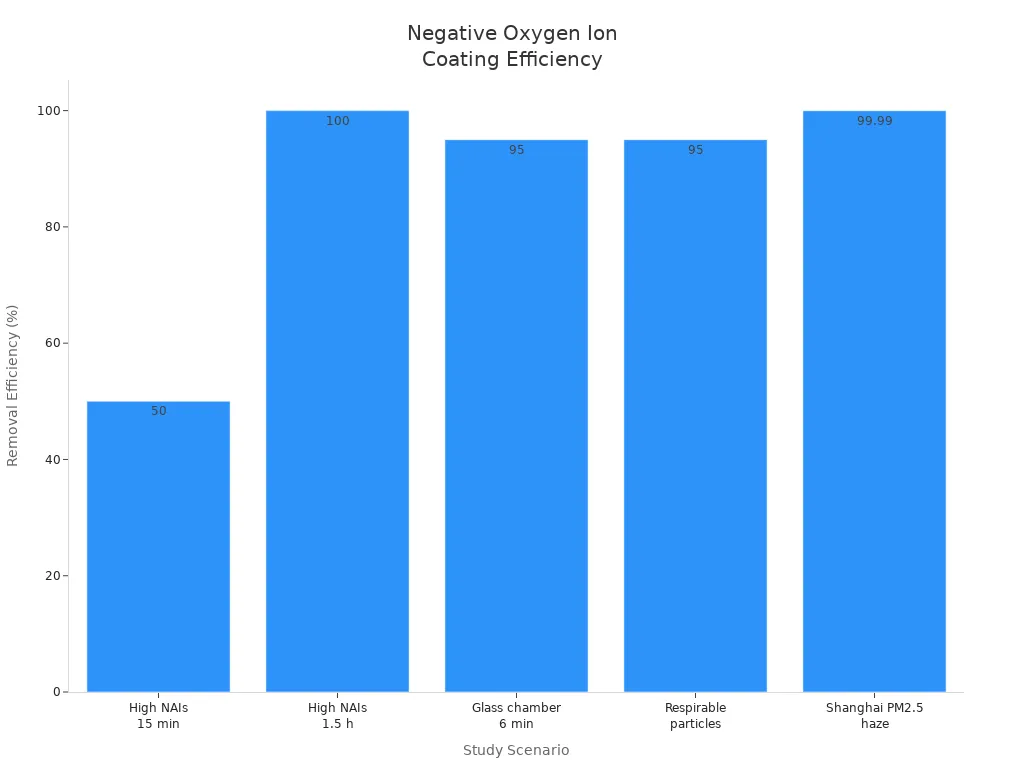
Studies show negative oxygen ion coatings work well. For example, they can remove up to 95% of tiny particles from indoor air. In tests, they nearly removed all particles in just 1.5 hours.
Study Description | Result |
|---|---|
Removal efficiency under high concentration of NAIs | 50% after 15 min, almost 100% after 1.5 h |
Particle removal in a glass chamber (60 cm × 30 cm × 40 cm) | 93% to 97% of particles removed within 6 min |
Removal of respirable particles from indoor air | Around 95% removed |
Effect of ion emission rate and duration on particle removal efficiency | Efficiency increases with enhanced ion emission rate and duration |
Elimination of cigarette smoke | NAIs can be used |
Field tests in Shanghai for PM2.5 purification | 99.99% efficiency at high releasing amounts of negative ions during haze |
Application Tips
To get the most from negative oxygen ion coatings, try these tips:
Integrate Air Ionization Modules: Put these modules in your central air units. They treat all the air in your home.
Use Existing Ductwork: If you have HVAC systems, place modules near the ducts. This helps air quality all over your home.
Freestanding Devices: For quick air help, put freestanding devices in rooms. They fix areas that need fast attention.
Vertical Installation: In places like hospitals, install the system vertically near air inlets and outlets. This helps fight airborne bacteria.
By using these tips, you can make negative oxygen ion coatings work well for better indoor air.
Avoid Indoor Smoking
Health Risks
Smoking inside your home is very dangerous. It makes harmful particles in the air much higher than outside. This bad air can cause health problems, especially for kids. They may get sick more often and have trouble breathing. Homes without smokers usually have cleaner air than outside. So, keeping your home free of smoke can really help your family’s health.
Creating a Smoke-Free Home
Making your home smoke-free is important to keep allergens away and protect your family. Here are some good ways to do this:
Don’t smoke inside or let others smoke indoors. This is the easiest way to keep the air healthy.
If you must smoke inside, open windows or use exhaust fans. This helps spread out the smoke.
Keep kids safe from secondhand smoke. Make sure caregivers don’t smoke inside and never smoke around them.
By doing these things, you can lower health risks from indoor smoking and make a safer, healthier home for everyone.
Regular HVAC Maintenance
Taking care of your HVAC system is very important for good air quality at home. Regular maintenance helps your air filters work well. This means they can remove bad stuff and control humidity better.
Clean Filters
One easy way to make air quality better is to keep your filters clean. Dirty filters can block airflow and make your HVAC system work harder. This can raise your energy bills and lead to expensive repairs. Here’s why clean filters are important:
They help air flow better, improving air quality.
They reduce stress on your HVAC system, saving you money on energy bills.
Clean filters can lower energy use by 5-15%, helping you save money.
Make it a habit to check your filters often. If they look dirty, change them. This small action can really help your indoor air quality.
Professional Inspections
Getting professional inspections is another important part of HVAC care. Experts say you should have your system checked at least once a year. Here’s what to remember:
Check your heating system in the fall and your air conditioning unit in the spring.
If your system is old or used a lot, think about getting more inspections.
Regular professional care helps keep indoor air quality good by making sure your system runs well. Well-kept systems filter out bad stuff and allergens, making your home healthier. Ignoring your HVAC system can cause health problems like allergies and breathing issues.
By focusing on clean filters and professional checks, you can greatly improve your home’s air quality.
Making your indoor air better is simpler than you might think! Begin by cutting down on dust, improving airflow, and using air purifiers. Little changes can make a big difference over time.
Keep in mind, having good air quality can help your health and comfort. Research shows that cleaner air can lower breathing problems and even help you live longer. So, take those small steps today for a healthier tomorrow! 🌱
FAQ
What are some common indoor air pollutants?
Common indoor air pollutants are dust, mold, pet hair, smoke, and VOCs from cleaning products.
How can I tell if my indoor air quality is poor?
Signs of bad air quality are coughing, sneezing, headaches, and tiredness. If you see these signs, think about improving your air quality.
How often should I change my air purifier filters?
Change your air purifier filters every 90 days. If you have pets or allergies, change them more often for better air quality.
See Also
Utilizing Seven-Color Inorganic Wall Coating For A Sustainable Home
Top 10 Green Stone Cleaners For A Shining Home In 2025
Discover Inorganic Anion Wall Paint For Healthier Homes In 2025
Seven Top Tile Cleaners For All Surfaces In 2025
A Comprehensive Guide To Moisture Barriers For Walls And Floors
