


Choosing the right warehouse flooring in Australia significantly impacts your operational efficiency. It affects safety, durability, and suitability for specific tasks. High-quality warehouse flooring in Australia supports heavy loads and enhances safety, while also reducing maintenance needs. Consider your unique warehouse operations and environmental conditions to make the best choice.
Key Takeaways
Prioritise safety and durability when selecting warehouse flooring. Choose materials that can withstand heavy loads and resist wear to prevent accidents.
Consider the long-term costs of flooring options. While some materials may have lower initial costs, they could lead to higher maintenance expenses over time.
Implement a regular cleaning schedule to maintain warehouse flooring. High-traffic areas need daily cleaning, while less busy zones may require weekly attention.
Key Considerations
Safety and Durability
When selecting warehouse flooring, prioritising safety and durability is essential. You must ensure that the flooring can withstand heavy loads and resist wear over time. Poorly designed floors can compromise structural integrity, increasing the risk of accidents. For instance, flooring that lacks proper impact resistance may not withstand machinery operations, leading to potential injuries.
In Australia, several safety standards govern warehouse flooring. These include:
Standard/Regulation | Description |
|---|---|
AS 1319 | Safety signs for the occupational environment, including floor markings. |
Work Health and Safety Act 2011 | Legislation requiring risk minimisation in workplaces. |
Forklifts Code of Practice | Guidelines for safe operation of forklifts, including floor marking requirements. |
Managing the Risks of Plant in the Workplace Code of Practice | Provides guidance on managing risks associated with plant operations. |
You should also consider the flooring material’s durability based on Australian climate conditions. For example, epoxy flooring performs well in moderate climates, while MMA flooring is suitable for sub-zero temperatures, making it ideal for refrigerated warehouses.
Load Capacity and Wear Resistance
Load capacity is another critical factor. Your flooring must support the weight of machinery and inventory without compromising safety. Choosing suitable flooring materials can significantly affect long-term maintenance costs. For example, polished concrete is popular due to its durability, but it requires regular maintenance to prevent dirt and chemical damage. On the other hand, polyurethane flooring systems may have higher initial costs but lead to reduced repair frequency and lower maintenance needs over time.
The following table illustrates the long-term cost implications of different flooring types in Australia:
Flooring type | Initial cost | Maintenance frequency | Re-coating cycles | Total 20-year cost |
|---|---|---|---|---|
Polished concrete | $150,000 | Monthly sweeping | None | $165,000 |
Epoxy coating | $95,000 | Weekly deep clean | 3 full re-coats | $245,000 |
Standard concrete | $75,000 | Daily dust control | Annual sealing | $195,000 |
Maintenance and Cleanliness
Maintaining cleanliness in your warehouse is vital for health and safety. Regular cleaning prevents the accumulation of dust and debris, which can pose health risks. You should implement a cleaning schedule based on traffic levels. For example, high-traffic areas require daily attention, while lower-traffic zones may need weekly or fortnightly cleaning.
Effective cleaning methods include:
Using industrial floor sweepers and scrubbers for thorough cleaning.
Employing pressure washers with vacuum recovery for deep cleaning.
Selecting appropriate chemical cleaning agents based on floor type and dirt nature.
Professional warehouse floor scrubbing typically involves a thorough inspection, debris removal, machine scrubbing with suitable cleaning solutions, and dirty water recovery to minimise drying time. This process ensures that your flooring remains in optimal condition while adhering to safety standards.
By considering these key factors, you can choose the perfect warehouse flooring that meets your operational needs while ensuring safety and durability.
Types of Warehouse Flooring
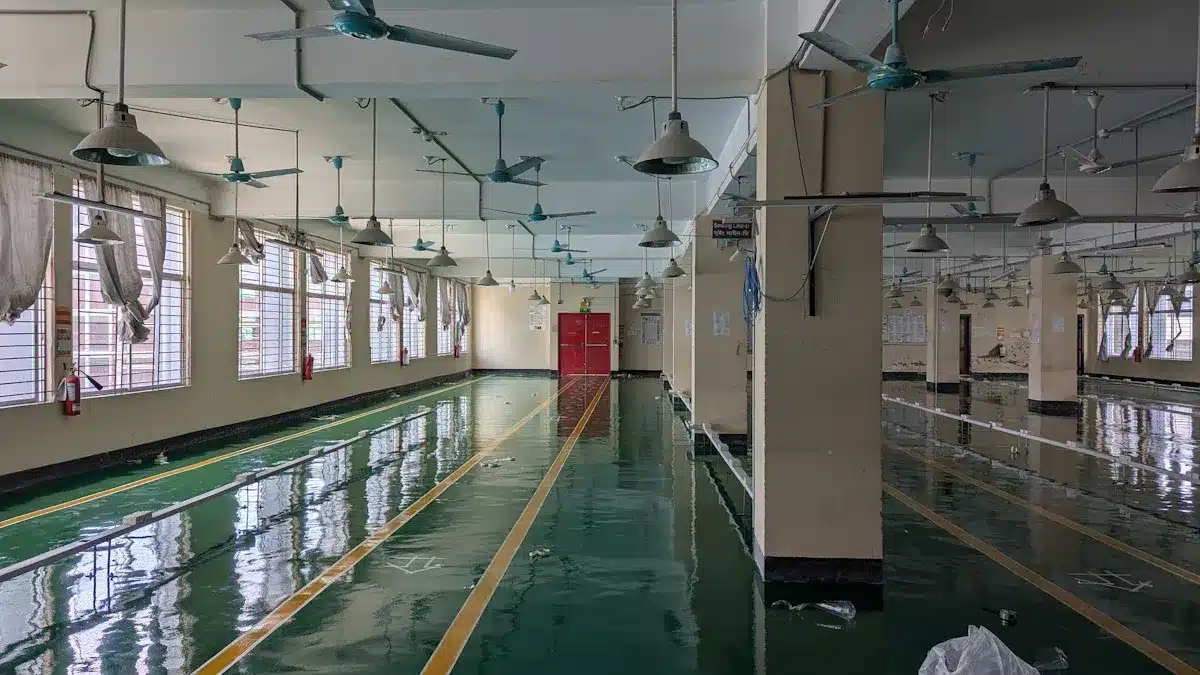
Choosing the right type of warehouse flooring in Australia is crucial for operational efficiency and safety. Different materials offer unique benefits, making them suitable for various environments.
Concrete and Epoxy
Concrete and epoxy flooring are popular choices due to their durability and cost-effectiveness. Epoxy flooring, in particular, offers high chemical and impact resistance, making it ideal for industrial settings. The following table highlights the main types of concrete and epoxy flooring used in Australian warehouses:
Type of Flooring | Features | Applications |
|---|---|---|
High-Build & Industrial Epoxy | Applied in thick layers (2–5mm), resistant to forklifts, impacts, and chemicals. | Common in warehouses, logistics hubs, and industrial kitchens. |
Self-Levelling Epoxy | Creates a smooth, seamless surface, highly durable and easy to clean. | Widely used in warehouses, factories, and manufacturing facilities. |
100% Solid Epoxy | Most durable form, maximum strength and chemical resistance. | Ideal for industrial environments with heavy machinery and constant traffic. |
In terms of cost, epoxy flooring ranges from $45 to $130 per square metre, while polished concrete costs between $60 and $120 per square metre. Both options provide excellent durability, but epoxy offers superior chemical resistance.
Timber Flooring
Timber flooring brings a unique aesthetic appeal to warehouses, enhancing both functionality and visual allure. It is essential to choose the right timber floor that balances aesthetics and safety. Timber is known for its natural beauty and warmth, making it a popular choice for spaces where corporate branding and customer comfort are priorities. However, timber requires regular maintenance to preserve its appearance and durability.
Timber flooring is scratch resistant and can withstand heavy loads, making it suitable for areas with moderate traffic. It also contributes to a healthier environment by reducing dust generation. When selecting timber, consider factors such as the type of timber, finish, and installation method to ensure it meets your specific needs.
Vinyl and Rubber
Vinyl and rubber flooring offer excellent hygiene performance and slip resistance, making them ideal for busy warehouse environments. These materials are easy to maintain and provide long-lasting safety in high-traffic areas. The table below outlines the key benefits of vinyl and rubber flooring:
Flooring Type | Key Benefits |
|---|---|
Vinyl | Excellent hygiene performance, slip resistance, ease of maintenance |
Rubber | Durability, impact resistance, slip resistance, acoustic performance, low maintenance |
Vinyl and rubber flooring options contribute to workplace safety by providing slip-resistant surfaces that reduce the risk of falls. They also have low VOC emissions, creating a healthier workplace environment. These materials enhance the aesthetic appeal of a warehouse, transforming the space while maintaining safety and compliance.
By understanding the different types of warehouse flooring available, you can make an informed decision that aligns with your operational needs and corporate branding goals.
Environmental Impact
When selecting warehouse flooring, you should consider its environmental impact. Many flooring materials now come with eco-credentials that demonstrate their sustainability. Here are some certifications available for warehouse flooring materials in Australia:
Certification Name | Description |
|---|---|
IBU EPD | Verified by IBU, providing product-specific environmental product declarations. |
ERFMI EPD | Offers generic environmental product declarations for transparency on impacts. |
INIES FDES | Provides environmental and health declarations for evaluating construction performance. |
GreenTag | Certifies products to meet specific environmental requirements. |
Singapore Green Building Product | Certification based on scientific principles for green building materials. |
Friendly Materials | Methodology for assessing and comparing the impact of building materials on indoor areas. |
Compliance with Australian building standards is crucial for ensuring safety and environmental responsibility. You must adhere to various regulations, including:
Compliance with AS 1657:2018 for safe design and construction of access solutions.
Adherence to the National Construction Code (NCC) for safety and accessibility, including provisions for wheelchair access.
Implementation of Workplace Health and Safety (WHS) regulations for hazard mitigation and risk assessment.
Additionally, using fire-rated materials and integrating sprinkler systems can inhibit fire spread, enhancing safety. Regular inspections ensure that your flooring meets these standards, reducing liability risks and improving efficiency.
By choosing flooring that meets these eco-credentials and standards, you contribute to a safer and more sustainable warehouse environment.
Choosing the right warehouse flooring is essential for your operational success. You must assess your specific needs, including safety, durability, and maintenance requirements. Consider factors like chemical resistance and slip resistance to ensure compliance with Australian standards. By making informed decisions, you can achieve true value and longevity in your flooring choice, ultimately enhancing safety and efficiency in your warehouse.
FAQ
What is the best flooring option for high-traffic areas?
For high-traffic areas, consider epoxy flooring. It offers excellent durability and wear resistance, ensuring long-lasting performance.
How often should I clean my warehouse flooring?
You should clean your warehouse flooring regularly. High-traffic zones require daily cleaning, while less busy areas may need weekly attention.
Can I install flooring myself?
While DIY installation is possible, hiring professionals ensures proper application and compliance with safety standards. This approach saves time and reduces potential issues.
See Also
Selecting The Ideal Concrete Densifier For Warehouse Flooring
Top Floor Hardening Solutions For UK Industrial Warehouses
Best Warehouse Floor Hardening Options In The Philippines
