


Floor hardeners are essential materials that strengthen concrete surfaces in industrial settings. They help reduce dusting, prevent wear, and increase load-bearing strength. By enhancing the floor’s lifespan and making cleaning easier, you can support your operations effectively. Using a concrete densifier can significantly improve your facility’s efficiency and appearance.
Key Takeaways
Floor hardeners increase the durability of concrete, making it resistant to wear from heavy machinery and foot traffic.
Using floor hardeners can significantly reduce maintenance costs, saving up to 80% compared to untreated floors.
Investing in floor hardeners enhances the visual appeal of your facility, offering various colors and finishes to match your brand.
Benefits of Floor Hardeners

Increased Durability
When it comes to industrial flooring, durability is non-negotiable. Floor hardeners significantly enhance the strength and lifespan of concrete surfaces, making them ideal for high-traffic areas like warehouses and manufacturing plants. By penetrating the concrete, these hardeners create a denser, more abrasion-resistant surface that can withstand heavy machinery, forklifts, and constant foot traffic.
Here’s how floor hardeners improve durability:
They increase abrasion resistance, reducing wear and tear over time.
They extend the lifespan of concrete floors, outperforming untreated surfaces.
They are especially effective in areas exposed to heavy loads and frequent use.
Laboratory tests back these claims. For example, abrasion resistance tests on products like Duro-Nox show remarkable improvements:
Product | Abrasion Resistance Increase (15 min) | Abrasion Resistance Increase (30 min) |
|---|---|---|
Duro-Nox | 500% | 145% |
Duro-Nox LS | 300% | 145% |
Duro-Nox LSC | 200% | 90% |
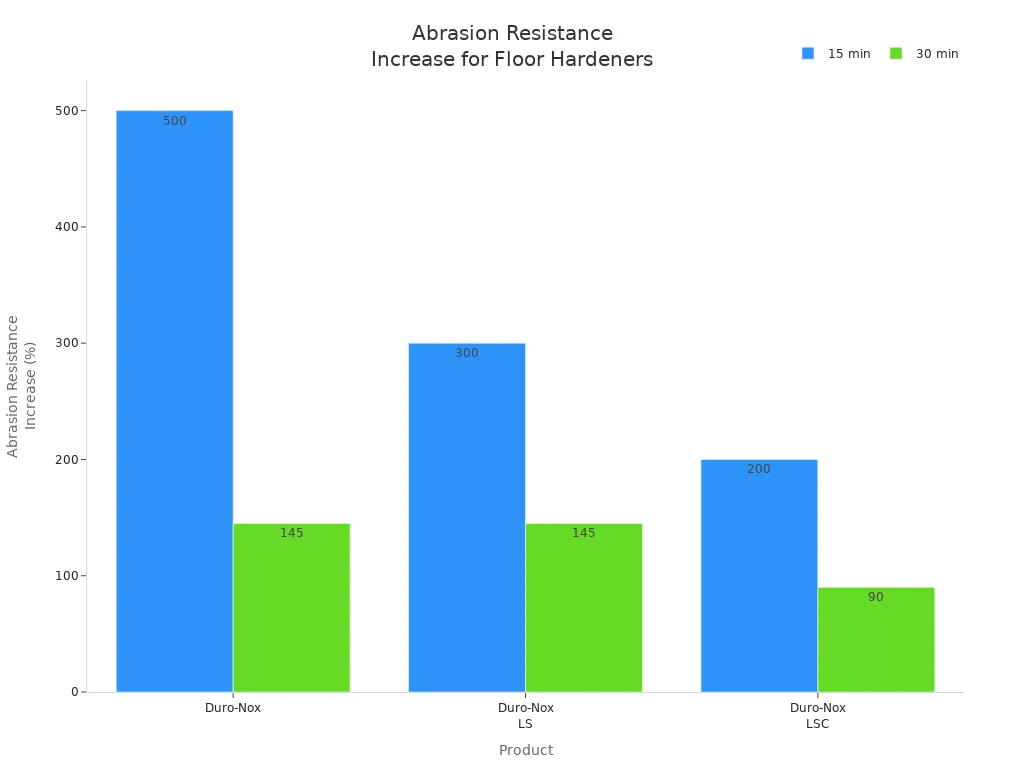
By using a concrete densifier, you can ensure your floors remain strong and reliable, even in the most demanding environments.
Reduced Maintenance
Industrial facilities often face high maintenance costs due to floor repairs and upkeep. Floor hardeners can help you cut these expenses dramatically. By sealing the surface and reducing porosity, they make floors easier to clean and less prone to damage.
Here are some key benefits of reduced maintenance:
Facilities report up to an 80% reduction in maintenance costs compared to untreated floors.
Hardened floors resist stains, spills, and chemical damage, minimizing the need for frequent repairs.
The smoother surface reduces dusting, which keeps your facility cleaner and safer.
Additionally, floor hardeners improve the aesthetic appeal of your space. Colored options not only enhance the visual appeal but also allow you to align the flooring with your brand or design preferences. Whether you’re looking for a polished finish or a decorative touch, a concrete densifier can deliver both performance and style.
By investing in floor hardeners, you’re not just saving money—you’re also creating a more efficient and visually appealing workspace.
Types of Concrete Densifiers
Concrete densifiers come in two main forms: liquid and powdered. Each type has its unique applications and benefits, making them suitable for various industrial environments.
Liquid Densifiers
Liquid densifiers are popular for their ease of application and effectiveness. You can apply them using sprayers, rollers, or brushes, making them versatile for both new constructions and refurbishment projects. Here’s how you can effectively use liquid densifiers in your facility:
Keep the surface saturated and agitated for 30-45 minutes to allow chemical reactions to occur.
Use large ride-on auto scrubbers to apply water, scrub it into the surface, and vacuum up dirty water in one pass.
Ensure the scrub brushes keep the densifier agitated to prevent drying.
After the reaction time, use the auto scrubber to remove densifier residue and clean the concrete.
These methods allow for quick treatment of large surface areas with minimal labor and downtime. Liquid densifiers are particularly effective in environments where you need to enhance the concrete’s strength and durability without extensive disruption to your operations.
Some popular products in this category include Armor L3000. This densifier enhances the density of concrete surfaces and is not a traditional sealer. Instead, it improves the concrete’s strength while allowing it to breathe. When buffed, it can produce a matte shine, making it an excellent choice for facilities that prioritize both performance and aesthetics.
Powdered Densifiers
Powdered densifiers offer a different approach to strengthening concrete. They are often used in specific industrial environments where their unique properties shine. Here’s a quick overview of where powdered densifiers excel:
Industrial Environment | |
|---|---|
Food Processing | Ensures consistent texture, flavor, and shelf life of products, such as powdered beverages and instant soups. |
Pharmaceuticals | Used to form uniform tablets or capsules with optimal density for accurate dosage. |
Recycling Industries | Consolidates waste plastic into compact bales for efficient transportation and storage. |
Construction | Compacts aggregates for concrete production, improving strength and reducing material waste. |
Agriculture | Processes biomass into compact forms for energy production and composting, enhancing sustainability. |
Powdered densifiers, like LIQUI-HARD, penetrate deeply into concrete, enhancing durability and abrasion resistance. They eliminate dusting and pitting, making them ideal for industrial facilities that require low-maintenance solutions.
By choosing the right type of concrete densifier, you can significantly improve the performance and longevity of your floors, ensuring they meet the demands of your operations.
Applications in Industrial Facilities

Warehouses
Floor hardeners shine in warehouse settings. These facilities often deal with heavy machinery and constant foot traffic. By using a concrete densifier, you can enhance the durability of your floors, making them resistant to wear and tear. Here are some key performance requirements for warehouse flooring:
Benefit of Floor Hardener | |
|---|---|
Abrasion resistance | Enhances durability against wear and tear |
Surface strength | Increases load-bearing capacity |
Dust-free performance | Minimizes dust formation in industrial environments |
Resistance to heavy machinery loads | Ideal for high-traffic areas like warehouses |
Compatibility with modern flooring systems | Ensures versatility in application |
With these benefits, you can maintain a cleaner and safer environment while reducing maintenance costs.
Manufacturing Plants
In manufacturing plants, floor hardeners address specific challenges. For instance, products like Met-Top E are designed for heavy impact and abrasion, making them perfect for these environments. You can apply them over existing concrete, enhancing durability in high-traffic areas. Here are some advantages of using floor hardeners in manufacturing:
They minimize damage from abrasions and chips, ensuring longevity.
Seamless flooring solutions prevent contamination, crucial in food and beverage manufacturing.
They reduce the need for frequent repairs, saving you time and money.
By choosing the right floor hardener, you can significantly improve operational efficiency in your facility. Whether you’re in warehousing or manufacturing, these solutions provide the strength and durability you need.
Comparison with Other Flooring Solutions
Densifier vs. Sealer
When comparing concrete densifiers and sealers, you’ll notice some key differences. Here’s a quick look at their features:
Feature | Concrete Densifiers | Concrete Sealers |
|---|---|---|
Primary Function | Harden and strengthen concrete | Provide waterproofing and surface protection |
Resistance | Resists organic growth and efflorescence | Reduces hydrostatic pressure and water vapor transmission |
Surface Finish | Natural concrete finish | Enhanced, natural concrete finish with water beading |
Applications | Warehouses, polished concrete, garage floors | Basements, driveways, sidewalks, garages |
Additional Benefits | Increases abrasion resistance, chemically reacts | Prevents water intrusion and moisture vapor transmission |
Densifiers penetrate deep into the concrete, creating a strong internal structure. This means you won’t have to worry about frequent maintenance. In contrast, sealers form a protective layer that can wear down over time, requiring periodic recoating.
Densifier vs. Epoxy
Now, let’s talk about how concrete densifiers stack up against epoxy coatings. Here are some unique benefits of using densifiers:
They’re economical and enhance the strength and longevity of your concrete.
Densifiers fill pores, reducing pitting and dusting.
The chemical reaction with free lime creates a hard crystal layer, boosting durability.
Treated floors resist moisture, chemicals, and abrasion, making them ideal for industrial settings.
On the other hand, epoxy can chip and delaminate under heavy traffic, especially if the surface isn’t prepared correctly. While epoxy might seem appealing initially, it can lead to higher lifetime costs due to repairs and reapplications. In high-traffic areas, densified concrete often outlasts epoxy, making it a smarter long-term investment.
By understanding these differences, you can make an informed choice that best suits your facility’s needs.
In summary, floor hardeners offer numerous benefits for industrial facilities. Here are the key points to consider:
Increased durability: They make floors resistant to damage from heavy machinery and foot traffic.
Improved strength: Floor hardeners enhance concrete’s compressive strength, reducing cracking risks.
Reduced maintenance: Treated floors need less upkeep, saving you time and money.
Cost-effective: Applying floor hardeners is cheaper than repairing or replacing damaged floors.
Aesthetically pleasing: They come in various colors and finishes, boosting your facility’s visual appeal.
Remember, some misconceptions exist. For instance, many believe that chemical hardeners penetrate deeply into concrete, but they mainly reinforce the surface. Also, using a shake-on hardener doesn’t replace the need for a chemical hardener.
By investing in floor hardeners, you can create a stronger, more efficient workspace that stands the test of time.
FAQ
What is the main purpose of a floor hardener?
Floor hardeners strengthen concrete surfaces, making them more durable and resistant to wear, dusting, and damage from heavy machinery.
How long does it take for floor hardeners to cure?
Curing times vary, but most floor hardeners cure within 24 to 48 hours, depending on environmental conditions and product specifications.
Can I apply a floor hardener myself?
Yes, you can apply a floor hardener yourself, especially liquid densifiers. Just follow the manufacturer’s instructions for best results.
See Also
Understanding Floor Hardeners: Their Function and Benefits
Top Floor Hardening Solutions for UK Industrial Spaces
Essential Information About BANDě Concrete Floor Hardeners
