


Concrete interface agents represent a transformative force in the construction industry. These AI-driven tools enhance efficiency and accuracy in concrete technology. You can expect significant improvements in decision-making through their capabilities. For instance, AI optimizes concrete mix designs, replacing traditional trial-and-error methods. Real-time monitoring systems also detect anomalies, leading to better maintenance planning.
Key Takeaways
Concrete interface agents enhance efficiency in construction by optimizing design processes and improving decision-making.
Real-time monitoring by AI agents ensures concrete quality, preventing defects and enhancing safety during the curing process.
AI tools streamline project management, allowing for better resource allocation and timeline management, ultimately leading to cost savings.
Design AI
AI-Driven Design Tools
Concrete interface agents play a crucial role in optimizing design processes. These AI-driven design tools automate many tasks, allowing you to focus on creativity and innovation. For example, tools like Doxel and Buildots provide automated progress tracking and predictive analytics. They help you identify discrepancies and forecast potential delays, enhancing overall project efficiency.
Tool | Key Features |
|---|---|
Doxel | – Automated progress tracking using AI and autonomous devices. |
– BIM-based analytics to identify discrepancies across construction stages. | |
– Predictive insights for project completion and risk mitigation. | |
– Productivity metrics for optimizing resource allocation. | |
– Integration with existing construction management tools. | |
Buildots | – Automated progress tracking with AI and 360-degree cameras. |
– BIM integration for real-time comparison of project progress. | |
– Predictive analytics to forecast potential delays. | |
– Detailed productivity insights for data-driven optimization. | |
– Collaboration tools for enhanced communication among stakeholders. |
Benefits of Optimized Designs
The benefits of using AI-driven design tools in construction are significant. You can expect improved project accuracy, reduced rework, and enhanced safety. Reports indicate that 75% of Thai construction firms using these tools have experienced better accuracy in their projects. AI-powered analytics can also predict potential project delays and optimize supply chains.
Moreover, these tools streamline the design process. They automate the creation of structural detail drawings and ensure compliance with building codes. This efficiency allows you to generate accurate material quantities early in the design phase, leading to better cost management. By embracing design optimization AI agents, you can transform your approach to concrete construction.
Quality AI
Real-Time Monitoring
Concrete interface agents significantly enhance quality control through real-time monitoring. These AI agents track various factors that affect concrete quality, such as temperature during pouring, material conditions, and hydration levels. For instance, if the temperature in a specific area drops below the required standard, the system can activate heaters immediately. This proactive approach prevents cracking and other quality issues before they escalate.
The following table illustrates how real-time monitoring predicts concrete strength over time:
Time (days) | Predicted Strength (MPa) | Actual Measured Strength (MPa) |
|---|---|---|
1 | 4.2 | 4.8 |
7 | 19.3 | 20.9 |
14 | 26.2 | 25.3 |
By continuously monitoring these parameters, you can ensure that the concrete meets the necessary standards throughout the curing process. This capability leads to improved safety measures and enhances overall project quality.
Predictive Maintenance
AI agents also play a crucial role in predictive maintenance. They analyze data collected from various construction activities to identify potential risks before they occur. This proactive approach allows you to address issues early, reducing downtime and minimizing costly repairs.
The benefits of using AI in quality control and assurance include:
Predictive insights that help you identify potential risks.
Continuous data collection that improves long-term quality control.
By automating quality documentation, AI agents streamline the process, allowing you to focus on critical tasks. This automation not only saves time but also enhances accuracy in reporting. With AI in concrete construction, you can achieve a higher level of quality assurance, ensuring that your projects meet the highest standards.
Embracing these technologies will transform your approach to quality management in construction. You will not only improve efficiency but also enhance the safety and durability of your concrete structures.
Project Management with AI
Resource Allocation
AI agents significantly enhance project management in construction by improving resource allocation. You can leverage these tools to achieve efficiency that scales. For instance, AI tools help you quickly assess design issues, leading to smarter resource allocation. They provide actionable insights instead of busy work. By identifying incomplete designs and discrepancies early, you can focus on critical details. Additionally, AI catches coordination issues before they escalate into costly problems, enhancing overall project planning.
Here’s a summary of how AI improves various project management tasks:
Task Description | Improvement |
|---|---|
Review and Approval | Reduces time from a morning to minutes |
Variation Documentation | Converts verbal issues into documented notices instantly |
Subcontractor Coordination | Proactively monitors and flags delays |
Real-time Job Profitability | Provides ongoing financial insights instead of end-of-month surprises |
Timeline Management
AI agents also optimize timeline management for large-scale concrete construction projects. They integrate data flows, financial logic, and interdependencies to provide a unified view of project management. This integration helps you regain control over timelines. With real-time monitoring of risks, capital flow, and schedules, you can anticipate issues before they arise.
Moreover, AI solutions synchronize procurement, scheduling, and financial reporting. They evaluate the impact of delays and optimize decision-making. By accommodating non-linear progress and logistical complexities, AI ensures that on-site realities reflect in project management. This capability transforms scattered site data into coherent narratives, enabling you to act decisively.
By embracing AI in concrete construction, you can enhance productivity and profitability while managing complexity effectively.
Sustainability and Efficiency
Eco-Friendly Materials
AI in concrete construction promotes sustainability by suggesting eco-friendly materials. These materials reduce environmental impact while maintaining performance. For example, AI agents can recommend alternative binders that lower cement usage. This shift not only conserves resources but also minimizes carbon emissions.
Here are some material alternatives that AI agents might suggest:
Recycled Aggregates: Using crushed concrete or other recycled materials reduces the need for virgin resources.
Geopolymer Concrete: This innovative material uses industrial by-products, significantly lowering carbon footprints.
Bio-based Additives: Incorporating natural materials can enhance concrete properties while being environmentally friendly.
The benefits of these alternatives are substantial. AI-driven solutions can lead to a reduction in cement consumption by up to 25%. This optimization helps you meet sustainability goals while ensuring structural integrity.
Efficient Workflows
AI agents also enhance efficiency in concrete construction workflows. They streamline processes, reduce waste, and improve overall productivity. For instance, AI applications in safety monitoring can reduce workplace accidents and improve labor efficiency. Robotics in masonry can lay bricks three times faster than human workers, significantly speeding up construction timelines.
The following table illustrates the efficiency achieved through various AI applications in concrete construction:
AI Application | Efficiency Achieved |
|---|---|
Safety Monitoring | Reduces workplace accidents and improves labor efficiency |
Robotics in Masonry | Lays bricks three times faster than human workers |
Autonomous Construction Vehicles | Improves efficiency and accuracy in excavation and transport |
Prefabrication and Modular Construction | Enables faster project turnarounds and higher quality |
Construction Scheduling Tools | Optimizes project sequencing and reduces delays |
Resource Allocation | Reduces material waste and cost overruns |
AI-driven sustainability solutions also yield quantifiable environmental benefits. For example, intelligent mix optimization can lead to carbon emissions reductions of 18-30%. Enhanced water efficiency can decrease water usage by 15-20% without compromising workability.
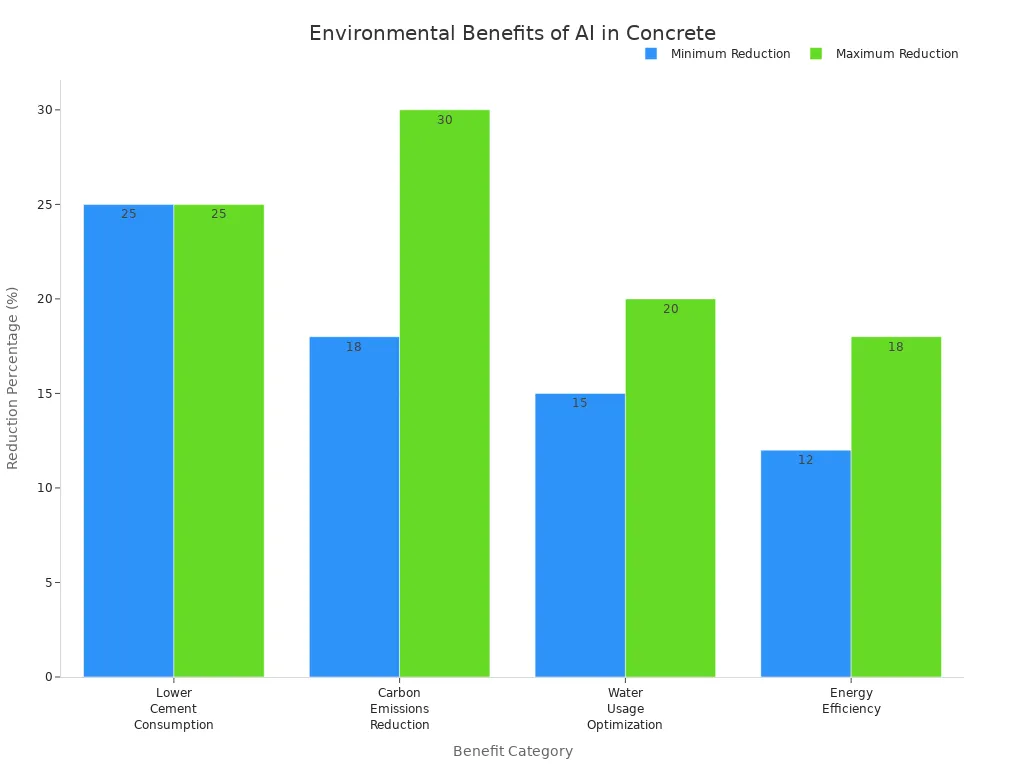
By adopting these AI solutions, you can comply with green building standards more effectively. AI enhances data accuracy, automates compliance processes, and identifies inconsistencies in reporting. This capability reduces the risk of misleading claims and supports your commitment to sustainable practices.
AI agents revolutionize concrete technology, enhancing project outcomes and client satisfaction. You can expect significant improvements in productivity and decision-making speed. Nearly 80% of companies using AI report measurable benefits. Embracing these technologies will position you for success in the evolving construction landscape. 🌍
FAQ
What are concrete interface agents?
Concrete interface agents are AI tools that help you optimize design, monitor quality, and manage projects in concrete construction efficiently and accurately.
How do AI agents improve concrete quality?
AI agents track real-time data like temperature and hydration, alerting you to issues early. This prevents defects and ensures stronger, safer concrete structures.
Can AI help reduce construction costs?
Yes! AI optimizes material use, predicts delays, and improves resource allocation, helping you save money and complete projects faster.
See Also
Essential Insights Into Concrete Bonding Agents You Should Know
BAND’s Comprehensive 2025 Guide for Selecting Concrete Bonding Agents
Understanding The Main Differences Between Hydraulic And Regular Concrete
A Detailed Comparison of Industrial Floor Hardeners for 2025
Selecting The Top Five Concrete Floor Hardeners For Industry Use
