

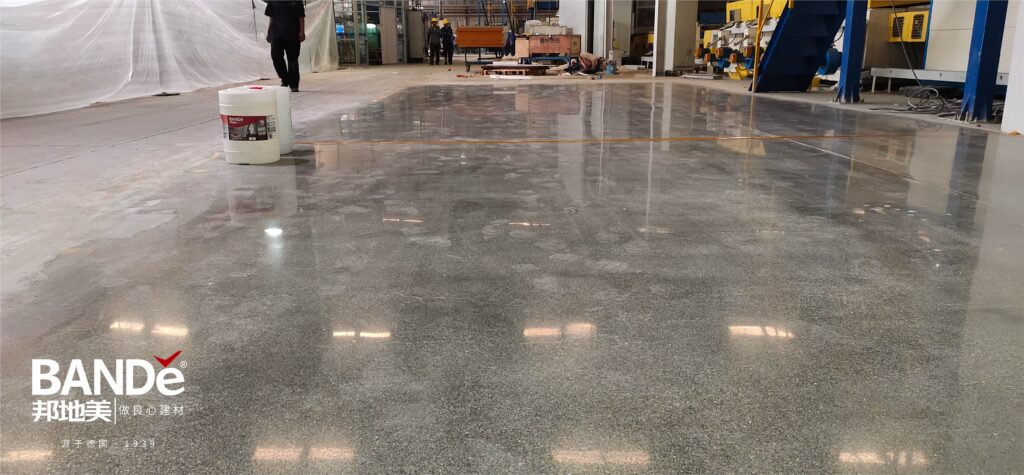
Choosing the right treatment for your concrete floors can be tough. The best choice, be it a crystal floor hardener or epoxy resin, truly depends on your specific needs and desired outcomes for your floors. Both are effective solutions, like epoxy and other resin options, for enhancing concrete. We will help you make an informed decision.
Key Takeaways
Crystal hardeners make concrete stronger from the inside. They are good for places with heavy traffic and a natural look.
Epoxy creates a tough layer on top of concrete. It protects against chemicals and offers many design choices.
Choose between crystal hardeners and epoxy based on your needs. Think about how much traffic, how it looks, and how easy it is to clean.
Crystal Floor Hardener: An Overview
What is Crystal Floor Hardener
You might wonder what a crystal floor hardener actually is. It’s a special treatment you apply to concrete floors to make them stronger and more durable. Think of it as giving your concrete a super shield! These hardeners, especially Quartz Floor Hardener, contain finely graded non-metallic quartz aggregates, plasticizers, and cement binders. These ingredients work together to improve your concrete’s surface.
How Crystal Hardeners Work
How does this magic happen? Silicate-based crystal hardeners, like aqueous silicate solutions and colloidal silica, react with something called calcium hydroxide in your concrete. This reaction creates more calcium silicate hydrate (C-S-H) inside the concrete’s pores. This process reduces the empty spaces, making the concrete denser. This densification significantly increases the concrete’s strength and durability. Calcium chloride also helps by speeding up the hardening process, making the concrete bond faster.
Key Benefits of Crystal Hardeners
You get many great benefits from using a crystal floor hardener. First, it dramatically boosts the strength of your concrete, making it much harder to wear down. This means your floors can handle heavy traffic and last longer. You also get better resistance to abrasion and less dusting, which keeps your space cleaner. Plus, these hardeners often improve the appearance of your concrete, giving it a subtle sheen.
Ideal Applications for Crystal Hardeners
Where do you typically use these hardeners? They are perfect for places needing extra tough floors. You often see them in basement slabs and warehouse floors. For example, a 110,000 sq. ft. distribution facility for Duracell used it to handle heavy forklift traffic. This application is also great for high-end construction projects, coatings, and even composite materials, where you need superior strength and longevity.
Introducing BANDě Concrete Densifier
Deep Penetration and Superior Hardening
You want a concrete densifier that truly works, right? BANDě Concrete Densifier goes deep into your concrete. It creates a much denser surface. This deep penetration significantly boosts the concrete’s internal strength and overall performance. You get a floor that stands up to a lot more.
Lasting Shine and Enhanced Luster
Beyond just strength, BANDě also improves how your floors look. It gives your concrete a lasting shine and enhances its natural luster. You will love the beautiful, polished finish it provides, making your floors more attractive. This improved finish adds value to your space.
Eco-Friendly and Safe Formulation
You can feel good about using BANDě because it’s incredibly safe and eco-friendly. It holds impressive certifications like LEED Verification, SCS Certification, and NSF Certification. It is also an LBC Red List Conformant product. This densifier is VOC-compliant, non-flammable, non-toxic, and low-odor, with 0 g/L VOC content. You get top performance without harmful chemicals.
Stain Resistance and Easy Maintenance
Maintaining your floors becomes much simpler with BANDě. It makes your concrete more resistant to stains and spills. You will find cleaning a breeze, saving you time and effort. This enhanced resistance helps keep your floors looking great for longer.
Exceptional Durability and Longevity
When you choose BANDě, you invest in exceptional durability. It significantly extends the lifespan of your concrete floors. You get superior protection against wear and tear, ensuring your floors maintain their strength and integrity for many years.
Versatile Application for New and Old Floors
BANDě offers incredible versatility. You can use it effectively on both new and existing concrete floors. Its easy application makes it a perfect choice for various projects, giving you consistent, high-quality results every time.
Exploring Epoxy Resin for Floors
What is Epoxy Resin
You might wonder what epoxy resin is, especially for your floors. It’s not just any thin resin; it’s a robust, self-leveling coating specifically designed for flooring. This type of epoxy resin typically involves a monomeric resin, a hardener, an accelerator, and a plasticizer. The most common epoxy resin comes from reacting epichlorohydrin and Bisphenol A. You can customize these systems with pigments for color or slip-resistant additives for safety, enhancing the overall performance of your floors.
Epoxy Application Process
Applying epoxy to your floors involves several key steps. First, you prepare the concrete surface. This means ensuring a proper concrete surface profile (CSP), often through mechanical grinding, and then cleaning it thoroughly. Next, you mix the epoxy resin with its hardener. You add pigment paste to the base component, mix it well, then add the hardener and mix for at least five minutes. After mixing, you immediately pour the main coating onto the floor. You spread the resin with a squeegee and then roll it out for an even finish. You can even add anti-skid granules if you want. Finally, you allow the epoxy to cure.
Key Benefits of Epoxy Floors
Epoxy floors offer fantastic benefits. They provide high resistance to chemicals, stains, moisture, scratches, and dents. This makes them incredibly durability. You will find cleaning these floors very easy, and they can produce a beautiful, shiny, crystal-like finish. Epoxy flooring can withstand chemical exposure for up to 20 years with proper maintenance. This material’s durability and non-porous nature can reduce chemical containment incidents by up to 40%. The high impact resistance of epoxy coatings minimizes wear and tear, ensuring long-lasting durability and extending the life of your floors.
Ideal Applications for Epoxy Floors
You will find epoxy floors in many places that need tough, easy-to-maintain surfaces. They are perfect for kitchens, bathrooms, and basements in homes. Industrially, you see them in manufacturing facilities, automotive shops, and electronics plants. Warehouses and other heavy-duty industrial floors also benefit from epoxy coatings due to their chemical resistance and durability. You can also find this versatile resin in hospitals, cafeterias, restrooms, and even retail stores, where both functionality and aesthetic appeal are important.
Crystal Hardener vs. Epoxy: A Direct Comparison
You are now ready to dive into a direct comparison. You need to understand how crystal hardeners stack up against epoxy for your floors. This section helps you weigh the options.
Durability and Wear Resistance
When you think about how tough your floors need to be, durability is key. A crystal floor hardener works by making your concrete itself denser and stronger. It penetrates the surface. This means the concrete becomes more resistant to abrasion and wear from within. It handles heavy traffic well. On the other hand, epoxy creates a very hard, protective layer on top of your concrete. This layer resists impacts and scratches. Both offer excellent durability, but they achieve it in different ways. Epoxy provides a surface shield. Crystal hardeners strengthen the core.
Appearance and Aesthetic Options
Your floor’s look matters. Crystal hardeners give your concrete a natural, subtle sheen. They enhance the existing concrete appearance. You get a clean, polished look. Epoxy, however, offers a vast array of aesthetic choices. Epoxy flooring kits often come as a standard clear resin. You can enhance the design with various color options. This includes metallics or glitter. Color options are available as separate powder and liquid pigments. Epoxy offers a high gloss, crystal-clear finish for improved aesthetics. It allows for endless color combinations using epoxy pigments. You can even use it with Sparta or Mica-Chip Flakes for industrial and garage floors. This gives you a lot of design freedom.
Maintenance Requirements
Keeping your floors clean is important. Crystal hardened floors are generally easy to maintain. They resist dusting and are simple to sweep or mop. The provided documents do not contain specific cleaning protocols for crystal hardened floors. This suggests their maintenance is often straightforward. For epoxy floors, cleaning involves a more structured process. Sherwin-Williams recommends a five-step protocol for their epoxy floors:
Sweeping: You thoroughly sweep the floor before cleaning.
Application: You apply the cleaning product to the floor surface.
Agitation: You use equipment to move the cleaning product on the surface. This releases foreign material.
Dwell Time: You allow the cleaning product to stand on the surface for 5-10 minutes. This emulsifies foreign material.
Removal: You remove the cleaning product from the floor surface.
Specific cleaning methods vary based on floor size and texture. For small, smooth areas, you sweep with a broom and use a mop for application, agitation, and removal. For large, smooth areas, you use an automatic floor scrubber for all steps. Textured surfaces might require deck brushes or rotary floor machines. You also choose cleaners based on the area. For public areas, you use a neutral slip-resistant floor cleaner. For animal care or commercial kitchens, you use a cleaner/degreaser. Heavy-duty cleaner/degreasers work for factory floors. Clean rooms use neutral floor cleaner. Dairy plants use cleaner/degreasers.
Cost Considerations
Cost is always a factor. Crystal hardeners often have a lower initial cost. They are a simpler application. Epoxy can be more expensive upfront. This is due to the materials and the more involved application process. However, you must consider the long-term value. Both offer excellent durability. The choice depends on your budget and desired finish.
Application Complexity and Curing Time
Applying these solutions differs. Crystal hardeners are typically sprayed or poured onto the concrete. Then, you spread them with a broom or mop. The concrete absorbs the liquid. This process is relatively simple. Curing times for crystal hardeners are not explicitly detailed in the provided documents. They generally involve drying time for the liquid to react. Epoxy application is more complex. You prepare the surface thoroughly. You mix the resin and hardener precisely. Then, you apply it in layers. Curing times for epoxy vary. Quick-set epoxy often cures within 5-20 minutes. Standard epoxy typically takes 24-72 hours to fully cure. For epoxy coatings, seal coats need 4 hours before you apply more layers. Final flood coats take about 72 hours. Non-final flood coats take 4 to 10 hours for partial setting. Deep pouring coats take 72 hours for final cure at specific temperatures. Non-final deep pouring coats take 12 to 24 hours.
Repairability and Longevity
How easy is it to fix damage? How long will your floor last? Crystal hardened floors are part of the concrete itself. Repairs usually involve addressing the concrete. This might mean patching or grinding. The provided documents do not contain specific repair information for crystal hardened floors. Epoxy floors can be repaired. Spot repair costs $3–$5 per square foot. Complete removal and reapplication can cost $10–$15 per square foot. DIY tools and materials cost $200–$500. Professional services average $1,500–$4,000. To repair chips or cracks, you open the area, mix epoxy solution, pour it, and level it. For bubbles, you grind the surface and add epoxy. For peeling, you scrape off the old coating. Full re-coating involves removing the old layer, cleaning the surface, repairing damage, applying primer, and then new epoxy. Both offer good durability and longevity.
Considering Polyurethane and Other Resin Floors
You might also consider polyurethane and other resin floors. Understanding epoxy vs polyurethane is important. Epoxy is very hard and rigid. It has high impact resistance. Polyurethane is softer and more flexible. It offers better scratch resistance. It also prevents concrete cracks from moving through the coating.
Feature | Epoxy | Polyurethane (Urethane) |
|---|---|---|
Strength & Flexibility | Higher strength (up to 2x with quartz blend), but can crack and scratch; better for harder surfaces. | More flexible, better for abrasion, impact, and thermal-shock resistance; good for industrial, manufacturing, and warehouse floors. |
Texture | Hand-troweled, can become chalky or brittle with age. | Smooth, remains smooth over its life; basic finish for industrial and high-traffic areas. |
UV Resistance | UV sensitive, can fade or yellow over time; better for areas not exposed to much sunlight. | High UV resistance, maintains color longer; good for direct sunlight exposure. |
Installation Time | Longer, may require facility closure for multiple days. | Can often be installed quickly, sometimes over a weekend. |
Initial Cost | Not a significant difference initially. | Not a significant difference initially. |
Typically needs replacement every 1.5 years, more expensive over time. | Often lasts 20-30 years, more durable and less expensive over time (pays off in ~2 years). | |
Scratch Resistance | Can scratch easily. | Flexible, good for abrasion and scratch resistance. |
Chemical Resistance | Limited chemical resistance, suitable for commercial kitchen cleaners. | Greater chemical resistance, withstands frequent harsh cleaning; good for food/beverage, production plants, healthcare. |
Temperature Resistance | Some resistance to hot liquids. | Withstands extreme temperature changes and thermal cycling; ideal for breweries, pharmaceutical, industrial manufacturing. |
Moisture Resistance | Moisture resistant, waterproof, slip-resistant when seamless. | Sealed, watertight, higher moisture resistance; hygienic and antimicrobial; ideal over concrete. |
When you consider epoxy vs polyurethane, epoxy offers higher levels of rigidity and adhesion. It is better for harder surfaces like concrete priming. Polyurethane provides enhanced cosmetic performance. It offers holistic protection for the entire system. Epoxy has thick build coats and is self-leveling. It fills cracks and blemishes. Polyurethane has thinner build coats.
You might ask, “when to use epoxy vs polyurethane resin?” Epoxy is great for surface tolerance, excellent adhesion, and chemical resistance. It offers durability and impact resistance. Polyurethane’s key advantages include UV resistance, impact and abrasion resistance, gloss retention, and color stability. The pros and cons of epoxy and polyurethane show that epoxy is typically less expensive initially. Polyurethane typically costs more upfront. However, polyurethane can be more cost-effective in certain applications over time. This is especially true for polyurethane flooring. You can see the durability and longevity comparison. For example, epoxy vs polyurethane for garage floors might lean towards polyurethane for better scratch resistance. Epoxy vs polyurethane for countertops might favor epoxy for its hard finish. Epoxy vs polyurethane for industrial applications often considers chemical and temperature resistance. Epoxy vs polyurethane for outdoor use definitely favors polyurethane due to its UV resistance. Both are types of resin.
Ultimately, the choice between these resin options depends on your specific needs.
Choosing the Right Floor Solution
You have learned a lot about both crystal concrete hardeners and epoxy resin. Now, you need to decide which one is right for your specific needs. Making the right choice means looking closely at what you want your floors to do and how you want them to look.
When to Choose a Crystal Floor Hardener
You should choose a crystal floor hardener when you want to strengthen your concrete from within. This is a great option if you prefer a natural, understated look for your floors. Crystal hardeners enhance the existing concrete. They give it a subtle sheen without adding a thick coating. You get a floor that is much more durable and resistant to wear. This makes it perfect for areas where you expect heavy foot traffic or machinery, but where a highly decorative finish is not your main goal. Think about warehouses, industrial spaces, or even a modern, minimalist home. You get improved durability and less dusting. This solution is also excellent if you want a low-maintenance option that integrates directly into the concrete itself.
When to Opt for Epoxy Resin
You should definitely consider epoxy resin when you need a floor that offers both extreme protection and vast aesthetic possibilities. Epoxy creates a tough, protective layer on top of your concrete. This makes it incredibly resistant to chemicals, stains, and impacts. If your space deals with spills of acids, oils, or other harsh substances, epoxy is a strong contender. You can customize epoxy floors with many colors, patterns, and even decorative flakes. This allows you to create a unique visual impact. The visual impact of your flooring sets the tone for the entire space. You can align it with your brand identity or create a specific atmosphere. This makes epoxy a fantastic choice for retail stores, showrooms, commercial kitchens, garages, and even stylish residential basements. When you need the best resin for floors that combine beauty with serious resilience, epoxy is often the answer.
Key Factors for Your Floors
When you are choosing the right resin for your floors, you need to think about several critical factors. These will guide you to the best decision.
Traffic Volume and Durability: First, assess how much traffic your floors will see. Will heavy equipment roll over them? Do you expect constant foot traffic? For high-traffic areas, durability is a primary consideration. You need materials that offer longevity and resistance to wear. Materials like epoxy or polished concrete are excellent choices. They withstand constant heavy equipment traffic without deterioration. You also need to consider the load-bearing capacity. This is essential for supporting heavy loads without cracking.
Maintenance Requirements: How much effort do you want to put into cleaning? You want flooring that is easy to clean and resists staining. Crystal hardened floors are generally simple to maintain. Epoxy floors, while durable, have specific cleaning protocols. These involve sweeping, applying cleaning products, agitation, dwell time, and removal. Choosing a solution that is easy to clean, repair, and maintain minimizes downtime for your operations.
Aesthetics and Design: What look do you want to achieve? Your floors create a first impression. The color palette, texture, and consistency of your flooring influence perceptions and reinforce branding. Epoxy offers a wide range of colors and finishes. Crystal hardeners provide a natural, polished concrete look. The best flooring choice aligns with your overall design and theme.
Chemical Exposure: Will your floors come into contact with chemicals? This is a huge factor. You need to identify the exact chemicals present and their concentration levels. This ensures compatibility with your flooring system. Epoxy is known for its strong chemical resistance. You also need to consider temperature fluctuations, UV exposure, and moisture. These combined stressors can affect coatings. Always request test data tailored to your specific chemical exposure.
Safety: Is slip resistance important? This is critical, especially in areas prone to spills or moisture. Look for appropriate slip-resistance ratings and textured options.
Cost Considerations: You must evaluate the total cost of ownership, not just the initial price. This includes long-term maintenance expenses and potential replacements. Investing in quality often leads to lower overall costs. While epoxy might have a higher upfront cost, its longevity and reduced need for frequent repairs can make it more cost-effective over time.
Lifespan and Repairability: How long do you expect your floors to last? Crystal hardened floors become part of the concrete. Epoxy floors can last for many years with proper care. You can also repair epoxy floors if they get damaged.
By carefully considering these factors, you can confidently choose between a crystal floor hardener and epoxy for your floors. Both are excellent resin options, but the best one depends on your unique situation.
Both crystal concrete hardeners and epoxy resin offer significant benefits for your floors. Your ultimate decision hinges on project requirements, budget, desired aesthetics, and functional needs. Crystal hardeners strengthen concrete. Epoxy provides a protective, customizable resin layer. This epoxy resin is a versatile resin. You choose the right epoxy. This resin choice is key. This epoxy is a great resin. Consult professionals for the best epoxy resin outcome.
FAQ
Can you apply epoxy over a crystal-hardened floor?
You can apply epoxy, but prepare the surface well. The crystal hardener makes the concrete dense. This affects epoxy adhesion. Always consult an epoxy expert for best results.
How long does an epoxy floor typically last?
An epoxy floor lasts many years. With good care, it can last 10-20 years. Its durability depends on traffic and maintenance. This makes epoxy a great long-term investment.
Is an epoxy floor slippery when wet?
Epoxy can be slippery. You can add anti-slip additives. These make your epoxy floor safer. This is especially important in wet areas. You want a safe epoxy surface.
See Also
Liquid Concrete Solutions: Hardener, Sealer, And Densifier For Floors
Choosing The Ideal Concrete Floor Hardener: Your 2025 Comprehensive Guide
Understanding Concrete Floor Hardeners: Their Purpose And Operational Mechanics
The Mechanics Behind Concrete Surface Hardeners: Unveiling Their Functionality
A Buyer’s Guide To Concrete Densifiers, Hardeners, And Sealers
