

A polished concrete densifier is a chemical treatment that strengthens and seals concrete surfaces. It reduces porosity, which helps prevent dusting and enhances durability. By increasing surface density, densifiers not only make floors more resilient but also improve their overall appearance, giving them a shiny, attractive finish.
Key Takeaways
Polished concrete densifiers strengthen and seal surfaces, reducing porosity and enhancing durability.
Using densifiers minimizes dusting and improves resistance to stains and scratches, making floors easier to maintain.
Densifiers enhance the aesthetic appeal of concrete, providing a glossy finish that can increase property value.
How Densifiers Work
Chemical Composition
Polished concrete densifiers are primarily made up of silicate compounds. These compounds play a crucial role in the densification process. Here’s a quick look at some of the key chemical components:
Chemical Compound | Contribution to Surface Durability |
|---|---|
Sodium silicate | Cheap but may need more cleaning because of alkalinity. |
Potassium silicate | Works like sodium silicate but has different solubility. |
Lithium silicate | Goes deeper and reacts faster, with fewer problems when applying. |
Colloidal silica | Boosts reactivity and surface performance with tiny particles. |
These compounds react with free lime, or calcium hydroxide, found in concrete. This reaction forms a gel known as calcium silicate hydrate (C-S-H), which is essential for enhancing the density and durability of the concrete.
Interaction with Concrete
When you apply a densifier, it penetrates the concrete surface and interacts with the calcium hydroxide. Here’s how the process unfolds:
Active silicates are introduced to the concrete.
These silicates react with calcium hydroxide present in the concrete.
The reaction creates calcium silicate hydrate (C-S-H) gel, which is crucial for concrete strength.
As the C-S-H gel polymerizes, it hardens into globular masses. These masses form layers that enhance strength and durability. The gel fills microscopic pores, increasing density and surface hardness.
The densification process significantly reduces porosity and improves the overall hardness of the concrete. Laboratory studies show that as the concrete ages, its density and compressive strength increase. For instance, after 28 days, the density can reach up to 2560 kg/m³, with a compressive strength of 22.3 MPa. This improvement indicates that applying a densifier not only enhances the surface but also contributes to the longevity of the concrete.
Benefits of Polished Concrete Densifiers
Increased Durability
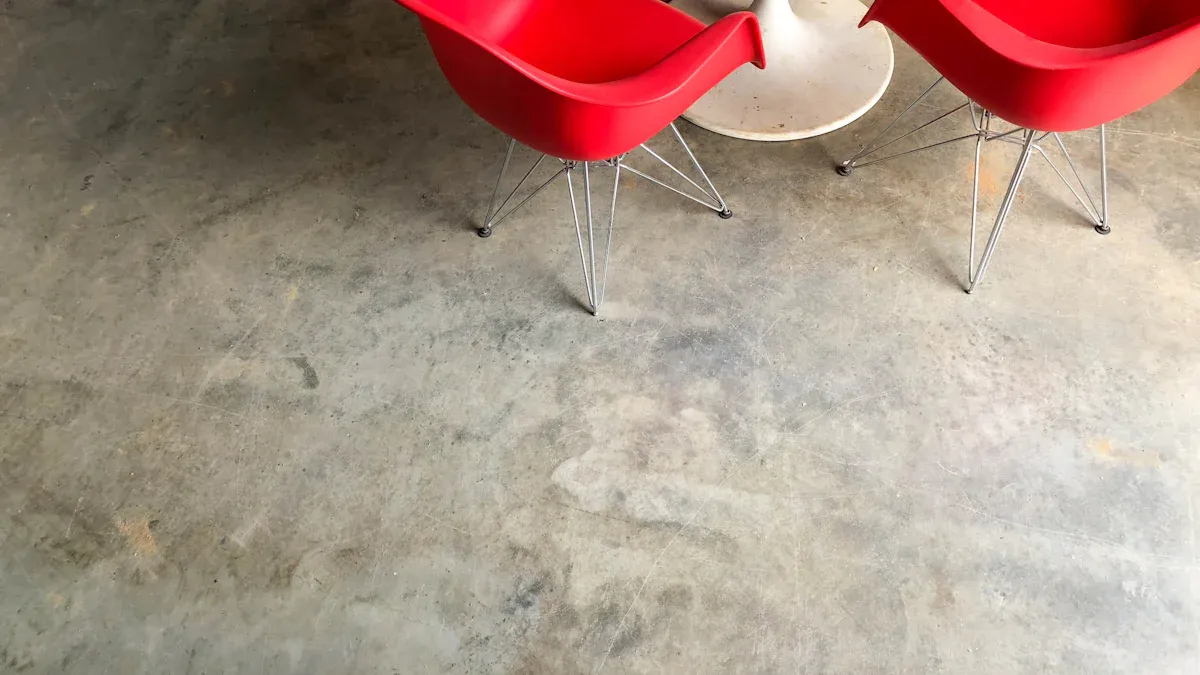
One of the standout benefits of using a polished concrete densifier is the significant increase in durability. When you apply a densifier, it fills the tiny pores in the concrete, making the surface much harder and less prone to damage. This is especially important in high-traffic areas where floors are subjected to constant wear and tear.
Here are some key points about how densifiers enhance durability:
Reduced Dusting: Densifiers help minimize dusting, which is a common issue with untreated concrete. Dusting occurs when the surface breaks down, releasing fine particles into the air. By increasing the density of the concrete, densifiers prevent this breakdown, leading to cleaner environments.
Resistance to Stains and Scratches: A penetrating densifier and top sealer significantly improve resistance to stains and scratches. This is crucial for maintaining polished concrete in busy spaces like retail stores or warehouses.
Longevity: The enhanced density means that the concrete can withstand heavy foot traffic without cracking or chipping. This longevity translates to lower maintenance costs over time.
Benefit | Description |
|---|---|
Polished concrete requires minimal upkeep compared to tile and hardwood, leading to lower expenses. | |
Improved Durability | It withstands heavy foot traffic without cracking, unlike other flooring options. |
Lower Energy Costs | Enhanced reflectivity reduces heating and cooling loads, resulting in energy savings. |
Enhanced Aesthetics
Not only do polished concrete densifiers improve durability, but they also enhance the visual appeal of concrete surfaces. After applying a densifier, you can expect a noticeable improvement in gloss and reflectivity.
Here’s how densifiers contribute to aesthetics:
Increased Gloss: The application of a densifier can elevate the gloss level of concrete surfaces. This is measured using tools like gloss meters, which calculate shine intensity in gloss units (GU). A higher gloss level means a more attractive finish.
Improved Light Reflectance: Densifiers enhance the light reflectance of concrete, making spaces feel brighter and more inviting. The Light Reflectance Value (LRV) measures how surfaces interact with light, indicating how well they illuminate a space.
Cost-Effectiveness: Investing in polished concrete densifiers can save money in the long run. The durability and low maintenance of polished concrete mean fewer repairs and replacements. Plus, the aesthetic appeal can increase property value, making it a smart choice for both residential and commercial properties.
Measurement Technique | Description |
|---|---|
Light Reflectance Value (LRV) | Measures how surfaces interact with light on a scale of 0-100%, indicating illumination efficiency. |
Gloss Meters | Calculate shine intensity in gloss units (GU) by measuring light reflection at fixed angles. |
Distinctness of Image (DOI) | Assesses the clarity of reflections, indicating how sharply objects are mirrored on surfaces. |
Application Process for Concrete Densification
Surface Preparation
Before applying a densifier, proper surface preparation is crucial. Here are the recommended steps to ensure the best results:
Evaluate and Clean the Floor: Start by inspecting the concrete slab. Remove all contaminants like dirt, oil, and old coatings. A clean surface allows for better absorption of the densifier.
Repair Cracks and Surface Damage: Address any significant defects. This prevents flaws from affecting the polished finish later on.
Test Concrete Hardness: Use a Mohs hardness test to determine the right diamond bond type for grinding. This helps in selecting the appropriate tools for the job.
Check Floor Flatness and Thickness: Ensure the concrete is structurally sound. Meeting thickness requirements avoids issues during polishing.
A clean surface is essential for optimal results. Methods like sweeping, vacuuming, or pressure washing can help achieve cleanliness. Sometimes, grinding or shot blasting may be necessary to open up concrete pores for better densifier penetration.
Application Techniques
Once the surface is prepared, it’s time to apply the densifier. Here’s how to do it effectively:
Use a pump sprayer and a microfiber applicator for even coverage.
Spray the densifier generously, ensuring the area remains wet for about 15-20 minutes. This allows for full penetration.
Move any excess material from puddled areas to dry spots for optimal coverage.
Technique | Description |
|---|---|
Surface Preparation | Clean the surface to remove sealers, curing compounds, and debris to ensure proper adhesion. |
Application Method | Flood the surface with densifier and maintain a wet surface for at least 30 minutes for full reaction. |
Rinsing Requirement | Sodium silicates require rinsing after application, while lithium and potassium silicates do not. |
Following these techniques ensures that the densifier reacts effectively with the concrete, enhancing its durability and overall performance.
Curing and Maintenance
After applying the densifier, allow it to cure properly. It’s best to apply the densifier after 28 days for optimal chemical reaction and strength. For maintenance, use silicon-based products to protect the surface and perform light cleaning with pressurized water to maintain quality.
Polished concrete densifiers are essential for achieving durable and visually appealing surfaces. They enhance compressive strength, increase surface hardness, and reduce maintenance needs. Here are some key benefits:
Durability: They extend the lifespan of concrete under heavy foot traffic.
Low Maintenance: Less frequent upkeep is required.
Aesthetic Appeal: Densifiers provide a glossy finish that enhances natural colors.
Investing in densifiers means investing in long-lasting beauty and strength for your concrete surfaces! 🌟
FAQ
What is the best time to apply a densifier?
It’s best to apply a densifier after the concrete has cured for at least 28 days for optimal results.
Can I use densifiers on existing concrete?
Yes, densifiers can be applied to existing concrete surfaces to enhance durability and aesthetics.
How long does the densification process take?
The densification process typically takes a few hours, but full curing may take several days depending on conditions.
See Also
Selecting The Ideal Polished Concrete Densifier For 2025
Transforming Dull Concrete Floors Into Stunning Polished Surfaces
Understanding Concrete Densifiers: Their Function And Benefits
Exploring The Roles Of Densifiers, Hardeners, And Sealers
A Complete Guide To Buying Densifiers, Hardeners, And Sealers
