

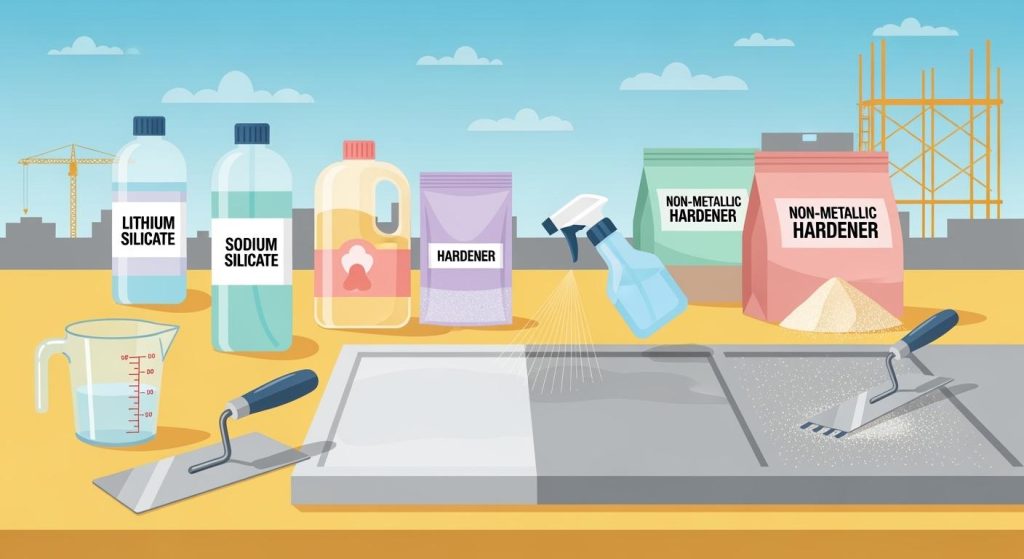
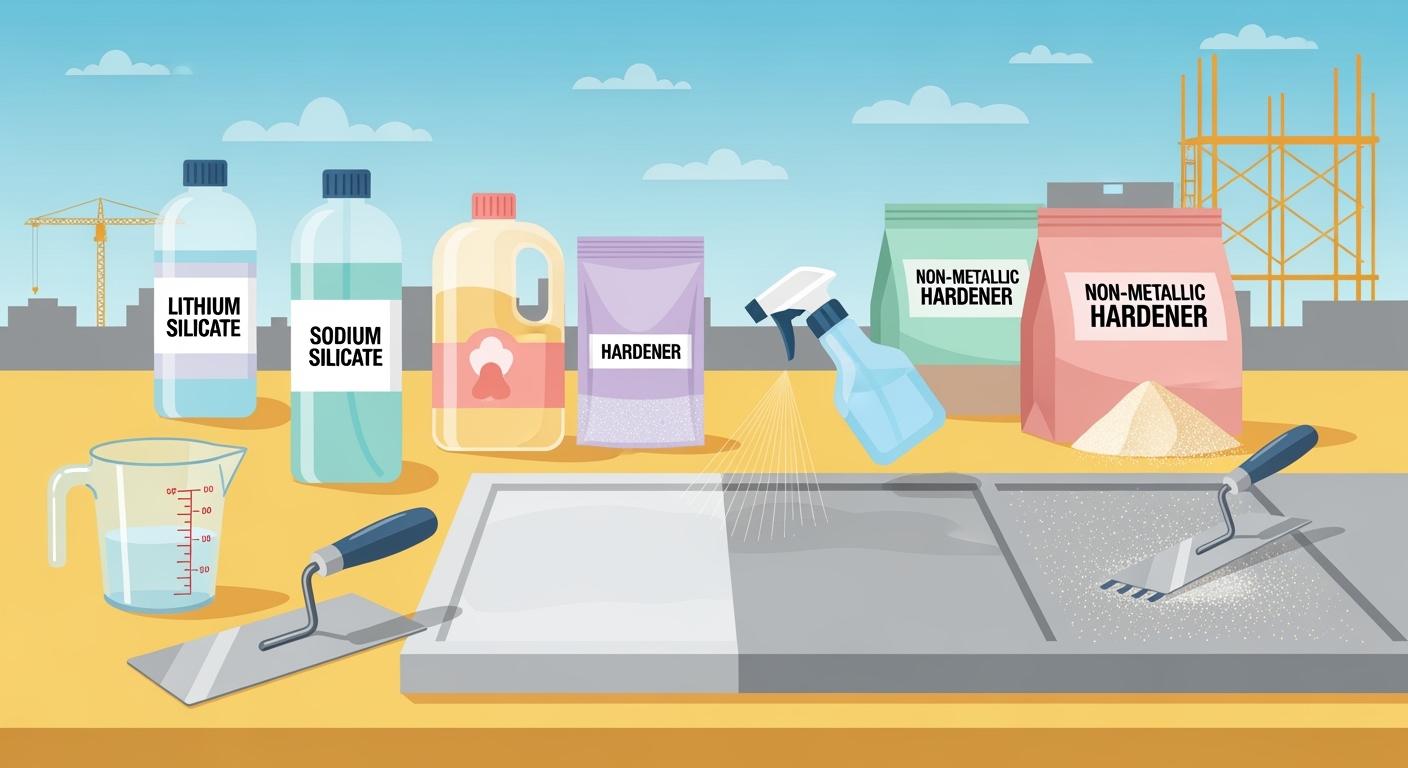
Concrete hardeners are a vital component in construction. They strengthen concrete and enhance its durability, making it crucial for various projects. Whether you’re working on industrial flooring, commercial buildings, or residential driveways, using a concrete hardener can lead to longer-lasting surfaces that resist stains and cracks. Why should beginners care? Because understanding these products can help you make smarter choices for your projects.
Key Takeaways
Concrete hardeners strengthen and enhance the durability of concrete surfaces, making them ideal for various projects.
Proper application is crucial; ensure the surface is clean and follow manufacturer guidelines for the best results.
Using concrete hardeners can lead to longer-lasting surfaces that resist stains, cracks, and wear, saving time and money on maintenance.
Concrete Hardener Overview
How They Work
Concrete hardeners play a crucial role in enhancing the properties of concrete. Essentially, they are specialized products designed to improve the strength and durability of concrete surfaces. When applied, concrete hardeners penetrate the surface and chemically react with the concrete, leading to a more resilient structure.
So, how does this chemical reaction work? When a concrete hardener, such as LIQUI-HARD, is applied, it seeps into the concrete and interacts with calcium hydroxide, a byproduct of the cement hydration process. This interaction generates additional calcium silicate hydrate (C-S-H), which is vital for the strength of concrete. Here’s a quick breakdown of the process:
The hardener penetrates the concrete surface.
It chemically reacts with calcium hydroxide.
This reaction produces more C-S-H, filling internal voids.
The result is a denser and tougher concrete surface.
This process not only enhances the strength but also increases the abrasion and chemical resistance of the concrete. As a result, surfaces treated with concrete hardeners are less prone to damage from wear and tear, making them ideal for high-traffic areas.
It’s important to note that proper application is key to achieving the best results. Common errors, such as inadequate surface preparation or applying the hardener in extreme temperatures, can hinder the effectiveness of the product. To avoid these pitfalls, ensure the surface is clean and dry before application, and follow the manufacturer’s guidelines closely.
Remember, safety is paramount when working with concrete hardeners. Always wear appropriate personal protective equipment (PPE) like gloves and goggles, and ensure good ventilation in your workspace. Neglecting safety precautions can lead to serious health risks.
Types of Concrete Hardeners
Liquid vs. Powdered Hardeners
When it comes to concrete hardeners, you’ll find two main types: liquid and powdered. Each has its unique application methods and benefits.
Liquid Hardener: This type is typically applied to cured concrete surfaces using a spray or mop. It penetrates the surface, enhancing durability and abrasion resistance. However, its effects are mostly superficial, making it suitable for general applications with less traffic.
Powdered Hardener: Also known as dry shake hardeners, these are broadcasted onto fresh, wet concrete and then troweled in. They integrate into the concrete, offering superior durability and impact resistance. This makes them ideal for areas with heavy machinery and high traffic.
Here’s a quick comparison of their features:
Feature | Liquid Hardener | Dry Shake Hardener |
|---|---|---|
Application Method | Applied to cured concrete via spraying or mopping. | Broadcasted on fresh, wet concrete and troweled in. |
Performance | Densifies surface, improves abrasion resistance but is mostly superficial. | Integrates into concrete, offering superior durability and impact resistance. |
Ideal Use | Suitable for general applications with less traffic. | Best for areas with heavy machinery and high traffic. |
Surface Treatments
Surface treatments are another popular option among the types of concrete hardeners. These treatments enhance the surface of existing concrete, providing a protective layer that improves durability and aesthetics.
For instance, products like LIQUI-HARD are water-based densifiers that fill pores and solidify the material. This not only eliminates dusting but also enhances the overall appearance of the concrete. On the other hand, cementitious dry-shake hardeners, such as Sikafloor® MetalTop-200, incorporate metallic aggregates to boost wear and impact resistance.
Benefits of Concrete Hardeners
Enhanced Durability
One of the standout benefits of using a concrete hardener is its ability to enhance durability. When you apply a concrete hardener, you’re not just adding a layer; you’re fundamentally changing the structure of the concrete itself. This process leads to increased strength and reduced permeability, making your surfaces more resilient against wear and tear.
How does this work? Well, concrete hardeners penetrate the surface and react with calcium hydroxide, producing calcium silicate hydrate. This reaction creates a denser, crystalline structure within the concrete. As a result, treated surfaces exhibit a 20% improvement in water permeability compared to untreated ones. This means less water can seep in, which is crucial for preventing damage from freeze-thaw cycles or chemical exposure.
Moreover, concrete hardeners significantly improve abrasion resistance. In fact, treated samples show a remarkable 65% reduction in wear after just one minute of testing. They require about four times more abrasion to penetrate the first 0.5 mm compared to untreated concrete. This makes them ideal for high-traffic areas like warehouses and factories, where durability is non-negotiable.
Improved Surface Finish
Another compelling reason to consider concrete hardeners is the improved surface finish they provide. A well-treated concrete surface not only looks better but also performs better. Products like Sika Chapdur enhance surface durability and wear resistance, making them perfect for heavy-duty industrial floors. Similarly, the DENSIFIER LIQUI-HARD penetrates deeply to improve surface durability and density, ensuring that your concrete remains attractive and functional over time.
The benefits extend beyond aesthetics. A smoother surface finish reduces dusting and makes cleaning easier, which is a significant advantage in commercial settings. Plus, the enhanced surface quality can lead to long-term maintenance benefits. Floors treated with concrete hardeners are virtually maintenance-free, saving facility managers time and money.
Evidence Type | Description |
|---|---|
Lifespan Improvement | Extends concrete floor lifespan considerably, reducing the need for frequent repairs or replacements. |
Cost Efficiency | Long-term savings due to reduced maintenance needs and fewer repairs. |
Maintenance | Floors treated with BANDě are virtually maintenance-free, leading to fewer headaches for facility managers. |
In summary, concrete hardeners enhance strength, durability, and surface finish. Beginners should consider these products for their projects. Here are some key takeaways:
Choose the right type: inorganic, organic, or hybrid hardeners.
Follow proper application steps for best results.
Using concrete hardeners can lead to impressive outcomes! 🌟
FAQ
What is a concrete hardener?
A concrete hardener is a treatment applied to concrete surfaces to enhance strength and durability.
How does a concrete sealer differ from a hardener?
A concrete sealer protects the surface, while a hardener strengthens the concrete by penetrating the concrete and improving its structure.
When should I apply a concrete hardener?
Apply a concrete hardener after the concrete has cured, ensuring the surface is clean for optimal results.
See Also
Understanding Concrete Hardeners: Their Function and Importance
Essential Insights on BANDě Concrete Floor Hardener
A Comprehensive Guide to Concrete Floor Hardeners
